Tag: Sibelius

  • Sibelius Travel Mug Cool Design for Music Lovers

    Sibelius Travel Mug Cool Design for Music Lovers

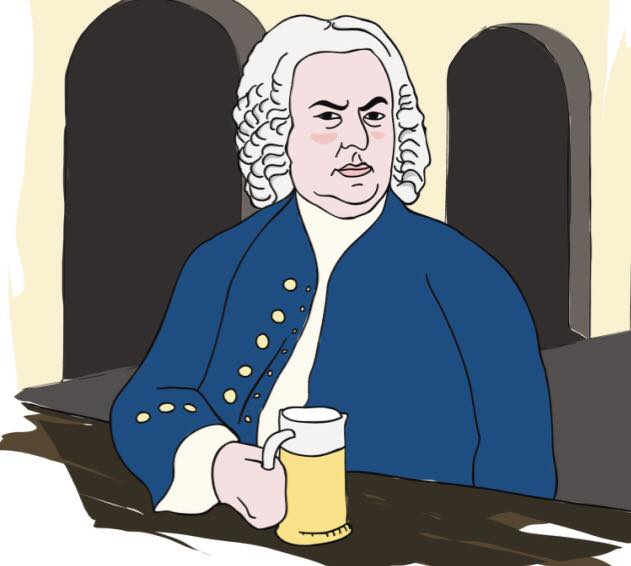
    Look what arrived over the weekend! Bound to inspire envy in anyone who espies me swilling from it, it’s my new Sibelius travel mug.

    When I imbibe from this cool-looking 20 oz. stainless steel vessel, I make the statement that I like my beverages austere, just like my symphonies.

    The snazzy, quasi-1950s design is by artist Irina Ivanova. A lot of her work is inspired by music and musicians. You’ll find more at her shop on society6.com.

    https://society6.com/irinaivanova

    or at her website

    https://iraivanova.wixsite.com/arti/portraits

    The vacuum seal delivers, keeping my joe hot and my shirts looking as fresh and pure as the unsullied snows of Lapland.

    Speaking of Sibelius, we’ll enjoy some of his music, as well as that of his fellow Finns, Tauno Pylkkänen and Oskar Merikanto, among my featured composers today, between 4 and 7 p.m. EDT, on WWFM – The Classical Network and wwfm.org.

  • Bach Membership Success! WWFM Celebrates

    Bach Membership Success! WWFM Celebrates

    We made it!

    Thanks to all 500 of you who came through for us (and counting), we were finally able to crack open the elusive Bach Pot and tally in the additional $17,740 in challenge money. THANK YOU for making this Bach membership opportunity a success. Now we can turn our focus back to the music. Which means plenty of Vaughan Williams and Sibelius ahead, of course. ; )

    You done good. Now join me, won’t you, for a nice, tall tankard of Bach bock.

    Here’s to Johann Sebastian, WWFM – The Classical Network, and wwfm.org!

  • Sibelius Beethoven & Starry Inspiration

    Sibelius Beethoven & Starry Inspiration

    It’s easy to be seduced by a platitude of one’s own creation, especially when it also happens to double as a bon mot. Cassius must have been rather puffed up at his own cleverness when he observed, “The fault, dear Brutus, is not in our stars, but in ourselves.” Yet just because something sounds good or has the ring of truth doesn’t necessarily mean that it’s so.

    When you join me for today’s Noontime Concert on The Classical Network, you will learn that the impetus for the creation of both Jean Sibelius’ Sonatina for Violin and Piano, Op. 80, and Beethoven’s “Razumovsky” Quartet, Op. 59, No. 2, lay at least in part in their composers’ fascination with the heavens.

    Though Sibelius was enthralled by the violin from an early age – he even entertained thoughts for a time of becoming a concert virtuoso – he was 50 years-old by the time he composed his sonatina in 1915. According to an entry in his diary, his nights were filled with dreams of his childhood and his youthful ambitions to become a world-class violinist. He notes that these childhood memories were very much tied up with “the sky of my childhood and stars… lots of stars.”

    If we’re to believe Beethoven pupil Carl Czerny, stars are also at the heart of Beethoven’s quartet of 1806. Allegedly, the composer was inspired to write the slow movement while contemplating the heavens.

    If stars had any influence over neglected Czech composer Zdenek Fibich, it was in the form of star-crossed love, at least for a time. Fibich’s wife died in childbirth when he was in his early 20s. He then married her sister, and though the union lasted for 20 years, he ultimately found true happiness only with a former student, who became the inspiration for many of his mature works. Fibich’s Piano Quintet in D major, Op. 42, of 1893 actually dates from the waning years of his second marriage.

    Fibich was also star-crossed in that he failed to embrace the Czech nationalism of his older contemporaries, especially Antonin Dvořák, and it is probably for this reason more than any other that his music tends not to be remembered. I think you’ll be very pleased to make the acquaintance of Fibich’s quintet. The work exists in two versions: the more frequently encountered instrumentation for piano and strings, and the version we’ll hear this afternoon for the striking combination of piano, violin, clarinet, horn, and cello.

    The heavenly performances will be by superstars of the Lenape Chamber Ensemble: violinists Cyrus Beroukhim and Emily Daggett Smith, violist Catherine Beeson, cellist Arash Amini, clarinetist Alan R. Kay, hornist David Jolley, and pianist Marcantonio Barone. To learn more about this Bucks County-based institution (established by Mary Pitcairn in 1975), visit Lenape’s website, at lenapechamberensemble.org.

    There will be plenty of time – and of course space – for more stellar music following today’s Noontime Concert broadcast. We’ll probe a galaxy of cosmic selections, from 12 to 4 p.m. EST, on WWFM – The Classical Network and wwfm.org.


    IMAGE: Brutus sees stars

  • Finnish Epic Music and the Kalevala

    Finnish Epic Music and the Kalevala

    Whether it was due to human error or a technical glitch, my “Kalevala” program did not air as announced on December 9. Now that the holidays have (mostly) passed, we can return, like steadfast old Väinämöinen, to the world of Finnish legend and lore for a second shot at claiming the Sampo and maintaining our stoicism in the face of star-crossed love.

    This Sunday night on “The Lost Chord,” we’ll have music inspired by this disparate collection of long narrative poems. “The Kalevala” is frequently referred to as the Finnish national epic. Its fantastic and heroic tales informed the work of Finland’s greatest artists at a time when the country began its surge toward independence after 700 years of Swedish rule and another century as a duchy of the Russian Empire.

    Robert Kajanus was Sibelius’ first great champion. He conducted first performances of many of the composer’s major works and led the Helsinki Philharmonic for 50 years. He also wrote over 200 pieces himself. “Aino” was composed in 1885 for the Kalevala Society, to mark the 50th anniversary of the poem’s publication.

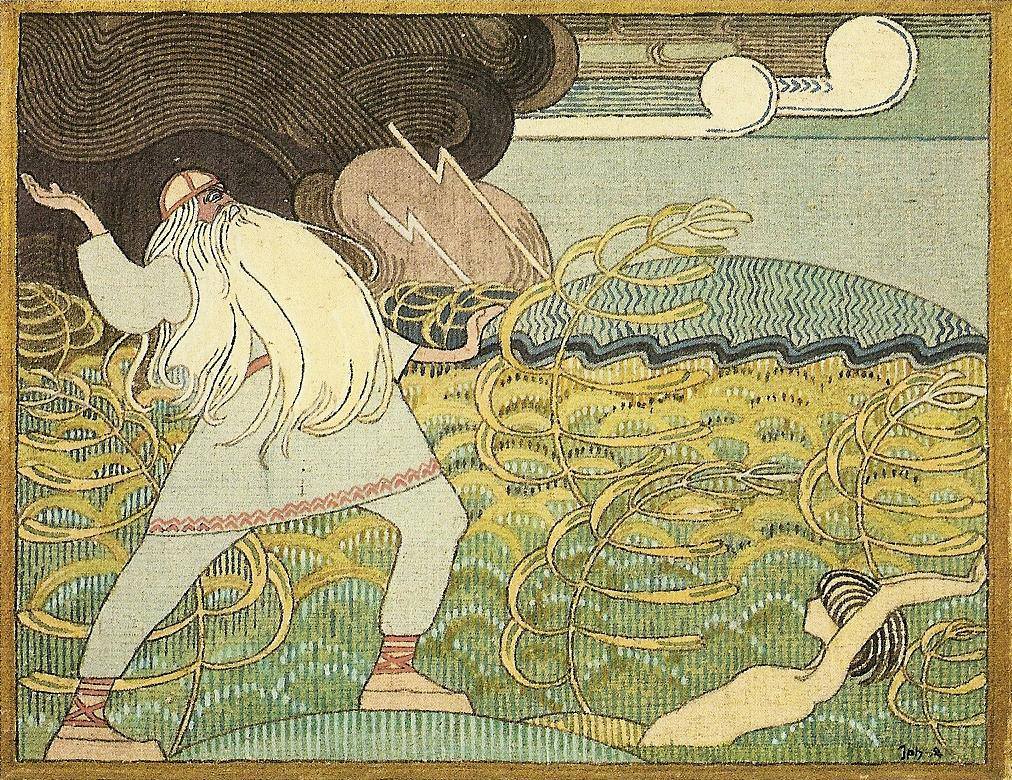
    One of the Kalevala’s heroes, Väinämöinen the wizard, always seems to be plagued by bad luck. He wins a singing contest, plunging his rival, Joukahainen, into a swamp, but when the latter promises him his sister’s hand in marriage if he will save him from drowning, the sister, Aino, drowns herself rather than submit to this seemingly intolerable fate. She returns to taunt the grieving Väinämöinen in the form of a salmon.

    Uuno Klami, one of the most important Finnish composers after Sibelius, brought a degree of French polish back from his studies in Paris, where he fell under the irreverent sway of Les Six. This led to the composition of an unusually anti-heroic take on the “Kalevala” legends, “Lemminkäinen’s Island Adventures.” However, in spite of his occasionally Gallic disposition, Klami grew into one of Finland’s most respected composers. Sibelius recognized his talent and even lobbied for a small lifetime stipend for Klami from the Finnish government.

    Unlike Sibelius’ better-known “Four Legends from the Kalevala,” Klami’s “Kalevala Suite” scrupulously avoids the more swashbuckling elements of the epic’s narrative. He opts instead to paint on a much broader canvas, with movements titled “The Creation of the Earth,” “The Sprout of Spring,” “Terhenniemi” (replete with the sounds of nature and the sunny bliss of a summer’s day), “Cradle Song for Lemminkäinen” (Lemminkäinen’s mother’s song, sung over her son’s dead body, soon to be resurrected), and “The Forging of the Sampo” (a kind of talisman everyone seems to want).

    Of course, no composer had more success drawing on the Kalevala legends than Jean Sibelius. We’ll conclude the hour with a Sibelius rarity, “A Song for Lemminkäinen,” from 1896. This follows on the heels of the composer’s “Lemminkäinen Suite” (also known as “Four Legends from the Kalevala”), written earlier in the decade.

    It’s a second chance to aquire some “Epic Finnish,” this Sunday night at 10:00 EST, on WWFM – The Classical Network and wwfm.org.


    IMAGE: “Väinämöinen Sings Joukahainen into a Fen,” by Joseph Alanen (1885–1920)

  • Finnish Music Epic Tales of the Kalevala

    Finnish Music Epic Tales of the Kalevala

    In a week when Finnish conductors are very much in the news (with announcements that Esa-Pekka Salonen is headed to San Francisco in 2020 and that Osmo Vänskä will be stepping down in Minnesota in 2022), we’ll hear music inspired by movers and shakers of the “Kalevala.”

    The “Kalevala,” a disparate collection of long narrative poems culled from the oral tradition, is frequently referred to as the Finnish national epic. Its fantastic and heroic tales informed the work of Finland’s greatest artists at a time when the country began to surge toward independence after 700 years of Swedish rule and an additional century as a duchy of the Russian Empire.

    In a nod to Finnish endeavor, this Sunday night on “The Lost Chord,” we’ll hear “Aino” by Robert Kajanus. Kajanus was Sibelius’ first great champion, who conducted first performances of many of the composer’s major works and led the Helsinki Philharmonic for 50 years. He also wrote over 200 pieces himself. “Aino” was composed in 1885 for the Kalevala Society, to mark the 50th anniversary of the poem’s publication.

    The subject is the wizard Väinämöinen, one of the poems’ heroes, who always seems to be plagued by ill luck. In this particular tale, he wins a singing contest, plunging his rival, Joukahainen, into a swamp. When the latter promises the wizard his sister’s hand in marriage if Väinämöinen will save him from drowning, the sister, Aino, drowns herself rather than submit to this seemingly unbearable fate. She later returns to taunt the grieving Väinämöinen in the form of a salmon.

    One of the most important Finnish composers after Sibelius was Uuno Klami. Klami brought a degree of French polish back from his studies in Paris, where he fell under the irreverent sway of Les Six. This led to the composition of an unusually anti-heroic take on the Kalevala legends, “Lemminkäinen’s Island Adventures.” However, in spite of his occasionally Gallic disposition, Klami grew into one of Finland’s most respected composers. Sibelius recognized his talent and even lobbied for a small lifetime income for Klami from the Finnish government.

    Klami’s most ambitious Kalevala inspiration is his “Kalevala Suite,” of 1933, which he extensively revised ten years later, when this former “enfant terrible” recognized the importance of his role as an artist in a country at war. Unlike Sibelius’ better-known “Four Legends from the Kalevala,” Klami’s suite scrupulously sidesteps the heroes’ actual adventures. He opts instead to paint on a much broader canvas, with movements titled “The Creation of the Earth,” “The Sprout of Spring,” “Terhenniemi” (replete with the sounds of nature and the sunny bliss of a summer’s day), “Cradle Song for Lemminkäinen” (Lemminkäinen’s mother’s song, sung over his dead body, soon to be resurrected), and “The Forging of the Sampo” (a kind of talisman everyone seems to want).

    Of course, no composer had more success drawing on the Kalevala legends than Jean Sibelius. We’ll conclude the hour with a Sibelius rarity, “A Song for Lemminkäinen,” from 1896. This follows on the heels of the composer’s “Lemminkäinen Suite” (also known as “Four Legends from the Kalevala”), written earlier in the decade.

    I hope you’ll join me in acquiring some “Epic Finnish,” this Sunday night at 10:00 EST, on WWFM – The Classical Network and wwfm.org.

Tag Cloud

Aaron Copland (92) Beethoven (95) Composer (114) Film Music (119) Film Score (143) Film Scores (255) Halloween (94) John Williams (185) KWAX (229) Leonard Bernstein (99) Marlboro Music Festival (125) Movie Music (134) Opera (198) Philadelphia Orchestra (87) Picture Perfect (174) Princeton Symphony Orchestra (106) Radio (87) Ralph Vaughan Williams (85) Ross Amico (244) Roy's Tie-Dye Sci-Fi Corner (290) The Classical Network (101) The Lost Chord (268) Vaughan Williams (102) WPRB (396) WWFM (881)

DON’T MISS A BEAT

Receive a weekly digest every Sunday at noon by signing up here


RECENT POSTS