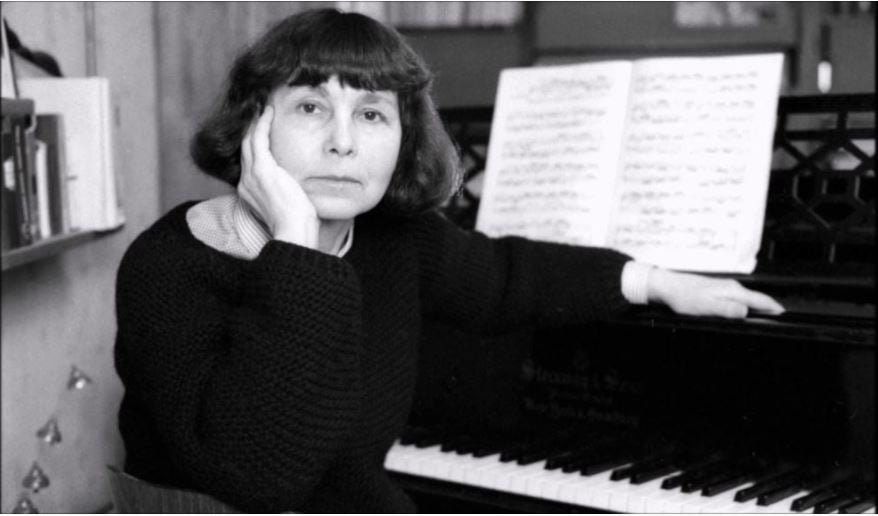
Tag: Soviet Composer

  • Sofia Gubaidulina A Musical Titan Passes

    Sofia Gubaidulina A Musical Titan Passes

    We have lost a major composer in Sofia Gubaidulina. Of the same generation as Alfred Schnittke, Edison Denisov, Nikolai Kapustin, and Rodion Shchedrin, Gubaidulina was driven in her art to address big questions and to communicate what she believed were essential truths – not least among them, faith in God and the transformational power of music. She did so with an adventurous technique (her mature works are full of numerical and structural symbolism), imagination (intellectual constructs are never at the expense of emotion or depth), and an exceptional ear for texture, timbre, and color. There was little about her that could be dismissed as run-of-the-mill.

    Having lived for nearly 60 years under a regime that frowned on too much individuality, she pushed hard against the outside of the box. Her works earned her an international reputation as one of the most important composers to emerge from the USSR during the second half of the 20th century.

    Gubaidulina discovered music at the age of 5. She would go on to study at the Kazan Conservatory. The other great interest of her childhood was spirituality, especially as expressed in the works of the great composers – Bach, Mozart, and Beethoven. Her fascination with religion and spirituality was something she knew intuitively to keep to herself while living in the Soviet Union.

    Music became her escape from socio-political strictures. During her time at the conservatory, there were actually raids on the dormitories, during which scores by decadent Western composers (and Stravinsky!) would be confiscated. Her own music was denounced as “irresponsible.”

    Privately, she was encouraged by Shostakovich. She found a safe outlet for her particular brand of modernist expression in writing for film. Of mixed ethnicity (her father was Tatar), she founded a folk instrument ensemble, Astreja, in the mid-‘70s. In 1979, she was blacklisted for unauthorized participation in festivals of Soviet Music in the West.

    She came to international attention in the late ‘80s thanks to Gidon Kremer, who championed her violin concerto, “Offertorium.”

    Gubaidulina’s highly individual music is steeped in mystical spiritualism. Her works are informed by a kind of longing for human transcendence, a yearning for greater truths central to our being. But she seldom searched the same way twice.

    Since 1992, she made her home in Hamburg. Her awards and honors were many.

    Gubaidulina was 93 years-old. R.I.P.


    “Canticle of the Sun” for cello, chamber choir and percussion (1997)

    “Fachwerk” for bayan, percussion and string orchestra (2009)

    “Concerto for Two Orchestras” for orchestra and jazz band (1970)

    “The Wrath of God” (2019)
  • Aram Khachaturian Composer of the Sabre Dance

    Aram Khachaturian Composer of the Sabre Dance

    Aram Khachaturian may have been the most renowned Armenian composer of the 20th century, but he was actually born in Georgia, in the capital city of Tiflis (Tblisi) or thereabouts, on this date in 1903. Tiflis had a large Armenian population and served as a major Armenian cultural center.

    Following the Sovietization of the Caucasus, Khachaturian moved to Moscow in 1921. There, he studied cello and composition at the Gnessin Musical Institute – which it is said he entered without any formal musical training – and the Moscow Conservatory, where Nikolai Myaskovsky was among his teachers.

    In his lifetime, he was celebrated both at home and abroad. Everyone knows the manic “Sabre Dance” from his ballet “Gayane,” once the preferred music of plate-spinners everywhere, and frequently employed at the circus. Liberace played the “Sabre Dance” on his TV show. In 1968, Stanley Kubrick used the Adagio from “Gayane” on the soundtrack to “2001: A Space Odyssey.” The same year, the Adagio from the ballet “Spartacus” was featured in the film “Mayerling,” starring Omar Sharif and Catherine Deneuve. More recently, the Coen Brothers used “Spartacus” (as well as the “Sabre Dance”) in “The Hudsucker Proxy.”

    In the West, the public loved him, even as his music came in for critical brickbats, variously described as “lightweight,” “pop” and “schlock.”

    At home, that’s precisely what they loved about him. Anyone who got too introspective or innovative was in danger of being labeled “formalist” and “anti-people.”

    From the late 1930s, Khachaturian was rewarded with several high posts in the Union of Soviet Composers. But nobody was allowed to get too big in Stalin’s USSR. So in common with just about every other Soviet composer, Khachaturian was denounced, busted down, and humiliated, only to be built back up when it was thought he had been sufficiently humbled. As punishment, he was sent to Armenia – which I would think would be the equivalent of sending someone to their room, with all their things around them, when grounded!

    Once Khachaturian was restored to favor, he taught at the Gnessin Institute and the Moscow Conservatory. As a conductor, he toured Europe, Latin America, and the United States. In 1957, he was appointed Secretary of the Union of Soviet Composers, a position he held until his death in 1978.

    There’s plenty of great Khachaturian footage on YouTube. Below are some links to “Kach” at your convenience.

    Happy birthday, Aram Khachaturian!


    Khachaturian conducting his Violin Concerto, with a 13-year-old Yoko Sato the soloist

    David Oistrakh and Leonid Kogan have a go at it

    Khachaturian conducts his Piano Concerto, with Nikolai Petrov, the soloist (complete)

    Petrov plays the Concerto-Rhapsody for Piano and Orchestra, in color (complete)

    Mstislav Rostropovich plays the Concerto-Rhapsody for Cello and Orchestra (complete)

    Khachaturian at the keyboard

    Khachaturian conducting his biggest hit, the “Sabre Dance,” at the Bolshoi

    A “making of” featurette with lots of Khachaturian footage

    https://www.youtube.com/watch?v=MsuE8x77id0


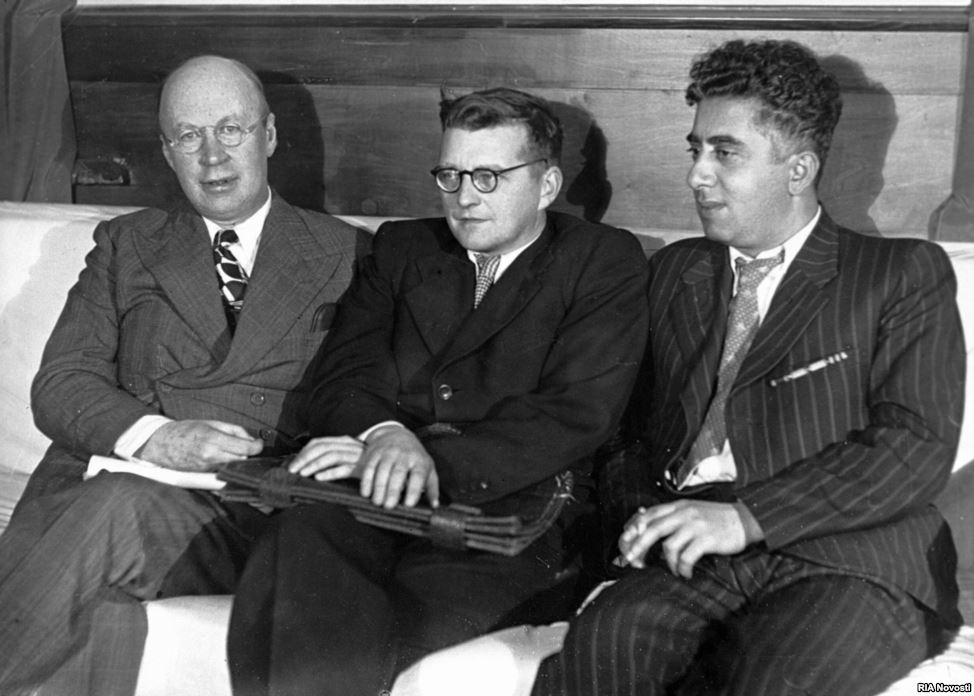
    The Manny, Moe and Jack of Soviet music: (left to right) Prokofiev, Shostakovich, and Khachaturian in 1945

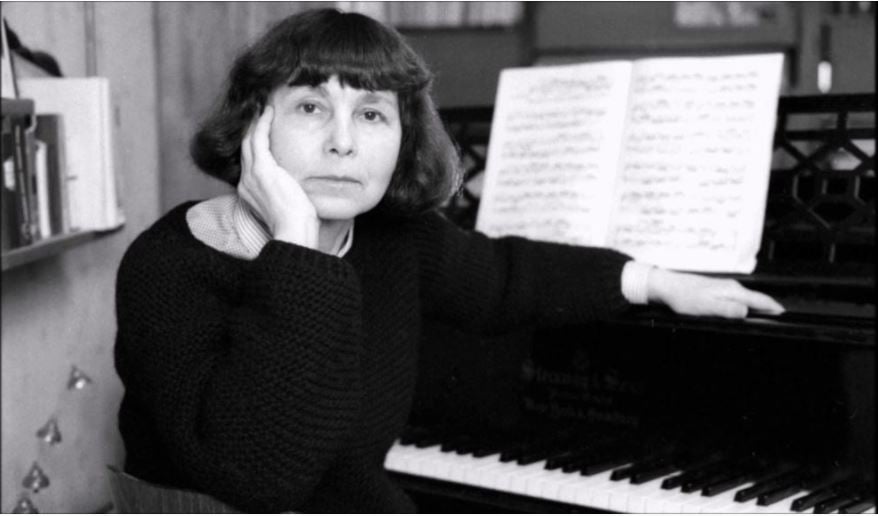
  • Sofia Gubaidulina at 90 A Musical Maverick

    Sofia Gubaidulina at 90 A Musical Maverick

    Sofia Gubaidulina is 90 today. Boy, does she have an ear for color! Actually, there is little about this composer that could be dismissed as run-of-the-mill. Having lived for nearly 60 years under a regime that frowned on too much individuality, she pushed hard against the outside of the box. Her works have earned her an international reputation as one of the most important composers to emerge from the USSR during the second half of the 20th century.

    Gubaidulina discovered music at the age of 5. She would go on to study at the Kazan Conservatory. The other great interest of her childhood was spirituality, especially as expressed in the works of the great composers – Bach, Mozart, and Beethoven. Her fascination with religion and spirituality was something she knew intuitively to keep to herself while living in the Soviet Union.

    Music became her escape from socio-political strictures. During her time at the conservatory, there were actually raids on the dormitories, during which scores by decadent Western composers (and Stravinsky!) would be confiscated. Her own music was denounced as “irresponsible.”

    Privately, she was encouraged by Shostakovich. She found a safe outlet for her particular brand of modernist expression in writing for film. Of mixed ethnicity (her father was Tatar), she founded a folk instrument ensemble, Astreja, in the mid-‘70s. In 1979, she was blacklisted for unauthorized participation in festivals of Soviet Music in the West.

    She came to international attention in the late ‘80s thanks to Gidon Kremer, who championed her violin concerto, “Offertorium.”

    Gubaidulina’s highly individual music is steeped in mystical spiritualism. Her works are informed by a kind of longing for human transcendence, a yearning for greater truths central to our being. But she seldom searches the same way twice.

    Since 1992, she has made her home in Hamburg. Her awards and honors have been many.

    Happy birthday, Sofia Gubaidulina!


    “Canticle of the Sun” for cello, chamber choir and percussion (1997)

    “Fachwerk” for bayan, percussion and string orchestra (2009)

    “Concerto for Two Orchestras” for orchestra and jazz band (1970)

    “The Wrath of God” (2019)
Tag Cloud

Aaron Copland (92) Beethoven (95) Composer (114) Film Music (123) Film Score (143) Film Scores (255) Halloween (94) John Williams (187) KWAX (229) Leonard Bernstein (101) Marlboro Music Festival (125) Movie Music (138) Opera (202) Philadelphia Orchestra (89) Picture Perfect (174) Princeton Symphony Orchestra (106) Radio (87) Ralph Vaughan Williams (85) Ross Amico (244) Roy's Tie-Dye Sci-Fi Corner (290) The Classical Network (101) The Lost Chord (268) Vaughan Williams (103) WPRB (396) WWFM (881)

DON’T MISS A BEAT

Receive a weekly digest every Sunday at noon by signing up here


RECENT POSTS