Tag: Symphony No. 3

  • Roy Harris Neglected Genius of American Symphony

    Roy Harris Neglected Genius of American Symphony

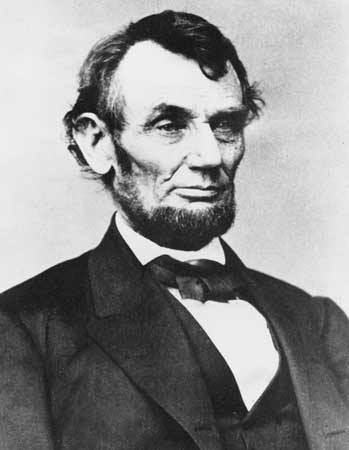
    Roy Harris was born on Lincoln’s birthday, in a log cabin in Lincoln County, Oklahoma. Did he let it go to his head? Maybe. He went on to become one of America’s greatest composers.

    He basically drove a milk truck while studying with “American Indianist” composer Arthur Farwell. Contacts in the East got him touch with Aaron Copland, who put in a good word with Nadia Boulanger. Harris was one of the legions of composers who studied with Boulanger in Paris.

    Back home, he attracted the attention of Serge Koussevitzky, then music director of the Boston Symphony Orchestra. It was Kouss who first performed Harris’ “Symphony 1933.” But the real pay dirt came with Harris’ Symphony No. 3, regarded then, as now, as one of the finest American symphonies. Its tightly-argued, single-movement structure manages to recall Renaissance polyphony, Jean Sibelius, and the American prairie. It was the perfect work for its time, with the world teetering at the brink of war and the country starting to emerge from the Great Depression.

    Yet, for some reason, the composer of this most-revered symphony is also one of our most neglected. In fact a number of his symphonies have yet to be recorded. Why?

    Tune in at 8:30 this morning to enjoy Harris’ Symphony No. 6, “Gettysburg,” which takes its impetus from the Gettysburg Address. It’s all music honoring the presidents, on this, Lincoln’s birthday, until 11:00 this morning on WPRB 103.3 FM and at wprb.com

  • Charles Ives An American Original

    Charles Ives An American Original

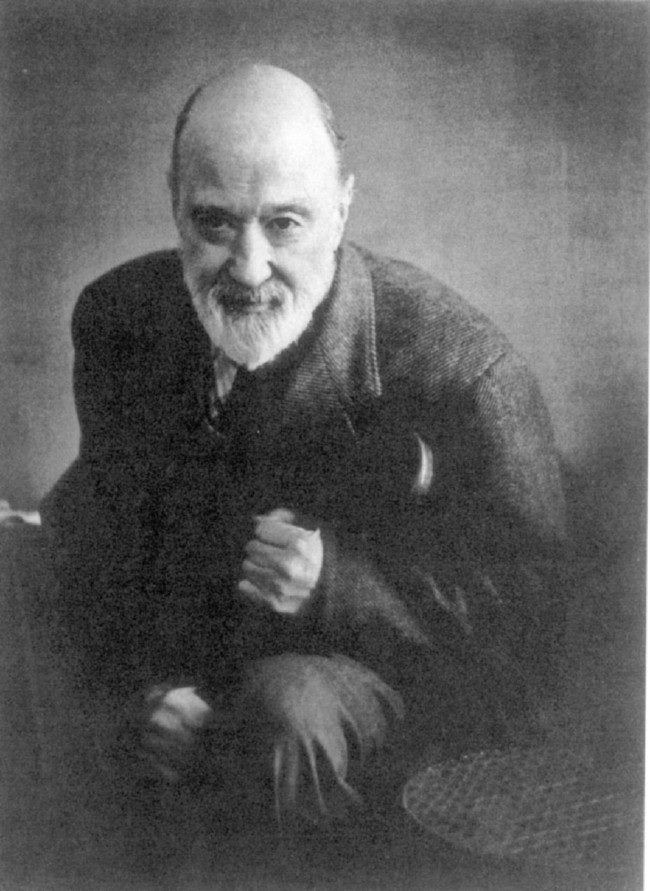
    Today is the birthday of Charles Ives, an American original. Ives wrote the kind of music he wanted to write, stitching hymns and fiddle tunes of his youth into a brilliant crazy quilt of the American experience.

    His father had been something of an original himself, a bandmaster during the Civil War. He taught Ives to sing in one key as he played in another. This instilled in his son, perhaps, the receptivity to recognize, when standing on a street corner during a parade, the natural dissonances and rhythmic complexities that resulted from the clash of sounds as marching bands wrapped around the block.

    He was very successful at his day job in the insurance business (some of his work in the financial field laid the groundwork for modern practices in estate planning). While this would be a claim on his time, it allowed him to pursue his idiosyncratic muse. Ives composed in the evenings, on weekends, and during holidays. For a few years, in the 1890s, he was also an organist and choirmaster at a couple of New York churches.

    He retired in 1930, which finally permitted him to devote himself wholeheartedly to music. Ironically, by then, he found he was no longer able to compose. His wife recalled a day in 1927 when he came downstairs with tears in his eyes and confessed that everything sounded wrong to him. Instead he worked at revision and publication.

    By the time his works began to gain recognition, he had already stopped writing for 20 years. At the time of his death, in 1954, he was still widely misunderstood and much of his music remained unperformed. Nevertheless, he had some important champions. He was a recipient of the Pulitzer Prize for Music in 1947, for his Symphony No. 3, “The Camp Meeting,” a work he composed in 1904. The symphony was given its belated premiere, under Lou Harrison’s direction, in 1946.

    Arnold Schoenberg regarded Ives as a paragon of artistic integrity. After Schoenberg’s death, his widow found the following among his papers: “There is a great Man living in this Country – a composer. He has solved the problem of how to preserve one’s self-esteem and to learn. He responds to negligence by contempt. He is not forced to accept praise or blame. His name is Ives.”

    Here is Ives, in all his patriotic, profane glory, singing “They Are There,” from 1943. Originally written in 1917, for the Great War, the song employs an updated text.

    Ives draws on the lesson of the wrap-around marching bands for “The Fourth of July” – and dig the climactic rocket explosion fading away into sparks!

    Finally, the work that won Ives his Pulitzer, the Symphony No. 3, “The Camp Meeting”:

    Ives’ characteristically gruff reaction: “Prizes are for boys. I’m grown up.” In private, though, he proudly hung the certificate on his wall.

    Happy birthday, Charles Ives!

  • Karol Szymanowski: Seductive & Dangerous Music

    Karol Szymanowski: Seductive & Dangerous Music

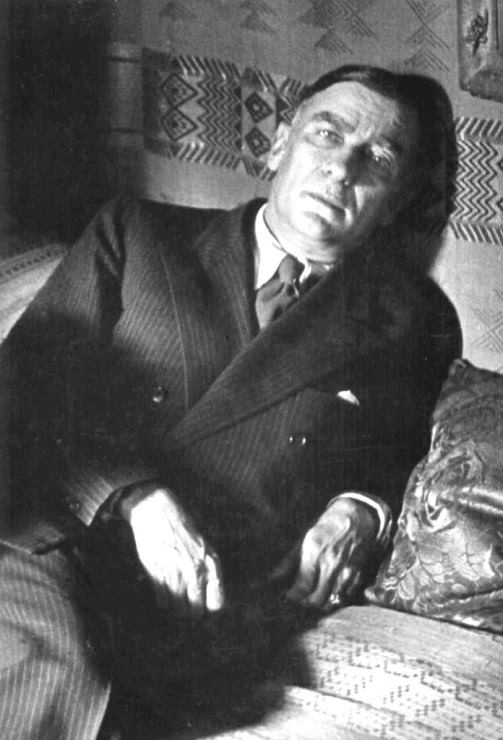
    Arguably the most important Polish composer of his generation, Karol Szymanowski (1882-1937) absorbed the musical influences of Richard Strauss, Alexander Scriabin and Claude Debussy, and then put them through his own creative refinery. Listening to Szymanowski can be a bit like submerging oneself too long in a hot bath – the same low blood-pressure, the increased heart rate, the wooziness. Though the harmonies and melodies suggest the familiar patterns of tonality, the traditional framework has been almost wholly eaten away by the hothouse atmosphere. The music is seductive and dangerous, and one risks being overcome by languor, even as one is overrun by fast-growing vegetation. It may be in poor taste to suggest that so much humidity was bad for the acute tuberculosis that eventually claimed him at the age 55.

    Even so, happy birthday, Karol Szymanowski!


    Symphony No. 2 (1910):

    https://www.youtube.com/watch?v=0OMjbIdQBjc

    Symphony No. 3 “Song of the Night” (1914):

    PHOTO: Languid Szymanowski

  • Elgar’s Third: A Symphony Reborn

    Elgar’s Third: A Symphony Reborn

    The greatest pieces of music are universes in themselves. Just when you think you know everything about a given work or its composer, along comes a fresh interpretation, or you listen to a cherished recording in a different frame of mind, and you’ll notice details you never heard before. Even so, it is sometimes tempting to crave more.

    A composer dies. Over the years, we absorb his canon. We think, wistfully, why couldn’t he have composed eight symphonies, as opposed to seven (Sibelius)? Or ten, as opposed to nine (Mahler and Beethoven)? Sibelius, Mahler and Beethoven all left behind tantalizing sketches of unrealized projects.

    This Sunday night on “The Lost Chord,” we’ll have a remarkably vivid piece of wishful thinking.

    Sir Edward Elgar produced no major works following the death of his wife in 1920. It was his friend and champion, George Bernard Shaw, who, in an attempt to keep one of England’s greatest composers from withering on the vine, persuaded the BBC to commission from Elgar a Third Symphony.

    Elgar, who died in 1934, worked at the piece during the last year of his life, jotting down his ideas – some merely a few bars in length, others, pages in full score. As his health deteriorated, he realized he would never be able to complete the work, and he made contradictory remarks concerning his intentions over the fate of the sketches.

    Another of his friends, the violinist W.H. Reed, passed many hours playing through what existed of the piece, with the composer at the piano. After Elgar’s death, Reed published 40 pages worth of sketches into a memoir, which kept the work at the periphery of the public consciousness.

    Several attempts have been made over the decades to make something more of the sketches, but musicians and musicologists have always been stopped short by the Elgar estate.

    The composer Anthony Payne became interested in the fragments in 1972. For many years, he worked at a realization of the piece, again meeting resistance from Elgar’s heirs, until it became apparent that, due to the publication of the sketches in Reed’s book, the material would soon fall into the public domain. The family opted to capitalize on what control it had left and finally authorized Payne’s efforts.

    His realization was given its premiere in 1998 and granted broad exposure through performances by major orchestras, particularly in England and the United States (including the Philadelphia Orchestra), and the piece has been recorded at least four times.

    The formal title is “Edward Elgar: The Sketches for Symphony No. 3 Elaborated by Anthony Payne,” or the “Elgar/Payne Symphony No. 3,” for short. You’ll have a chance to hear it tonight.

    I hope you’ll join me for “No Payne, No Gain,” this Sunday night at 10 ET, with a repeat Wednesday evening at 6; or that you’ll listen to it later as a webcast at wwfm.org.

    Also, of perhaps related interest, here’s an article about Payne’s completion of Elgar’s “Pomp and Circumstance March No. 6″:

    http://www.telegraph.co.uk/culture/music/classicalmusic/3654077/Finishing-touches.html

    PHOTOS: A Payne on Elgar’s side
  • Carl Nielsen Celebrates 150 Years

    Carl Nielsen Celebrates 150 Years

    For you admirers of great Danes, today marks the 150th anniversary of the birth of Carl Nielsen, Denmark’s most celebrated composer.

    It would be several decades following his death (in 1931, of heart disease) before Nielsen’s music really started to gain traction abroad. It was Leonard Bernstein who prophesied, “I think many people are in for pleasant surprises as they get to know Nielsen: his rough charm, his swing, his drive, his rhythmic surprises, his strange power of harmonic and tonal relationships – and especially his constant unpredictability – all these are irresistible. I feel confident that Nielsen’s time has come.”

    Though Bernstein put his money where his mouth was by turning in one of the great Nielsen recordings (of the Symphony No. 5, in 1962), the composer’s reputation failed to blossom in anywhere near the same way that Bernstein’s other “rediscovery,” Gustav Mahler, had. Even in the pantheon of Nordic symphonists, Nielsen has consistently sat at the feet of Jean Sibelius.

    Which is really too bad. Nielsen’s music may be an acquired taste, but it is a rewarding one. There really is nothing else quite like it. The puckish wit, the ambiguities, the quirky juxtaposition of seemingly disparate melodies, harmonies and key signatures, all shot through very often with a sense of hope and optimism that rises above the chaos.

    Here’s Lenny, conducting the Danes on their own turf, in what may be my favorite Nielsen symphony, the Symphony No. 3:

    https://www.youtube.com/watch?v=d5sbcF7p0Pk

    Happy birthday, Carl Nielsen!

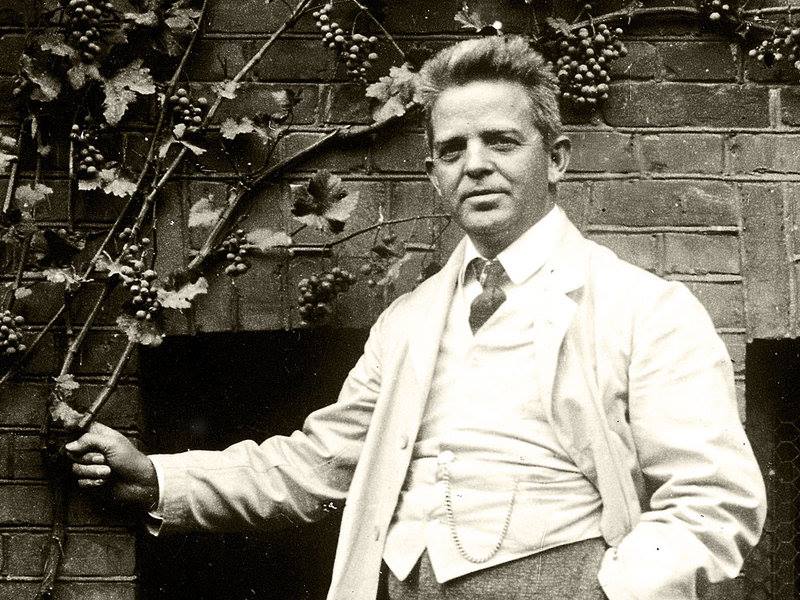
    PHOTO: In his most optimistic gesture, Nielsen wears white to a vineyard

Tag Cloud

Aaron Copland (92) Beethoven (95) Composer (114) Film Music (119) Film Score (143) Film Scores (255) Halloween (94) John Williams (185) KWAX (229) Leonard Bernstein (99) Marlboro Music Festival (125) Movie Music (134) Opera (198) Philadelphia Orchestra (86) Picture Perfect (174) Princeton Symphony Orchestra (106) Radio (87) Ralph Vaughan Williams (85) Ross Amico (244) Roy's Tie-Dye Sci-Fi Corner (290) The Classical Network (101) The Lost Chord (268) Vaughan Williams (102) WPRB (396) WWFM (881)

DON’T MISS A BEAT

Receive a weekly digest every Sunday at noon by signing up here


RECENT POSTS