Tag: Thanksgiving

  • Thanksgiving American Music from Marlboro

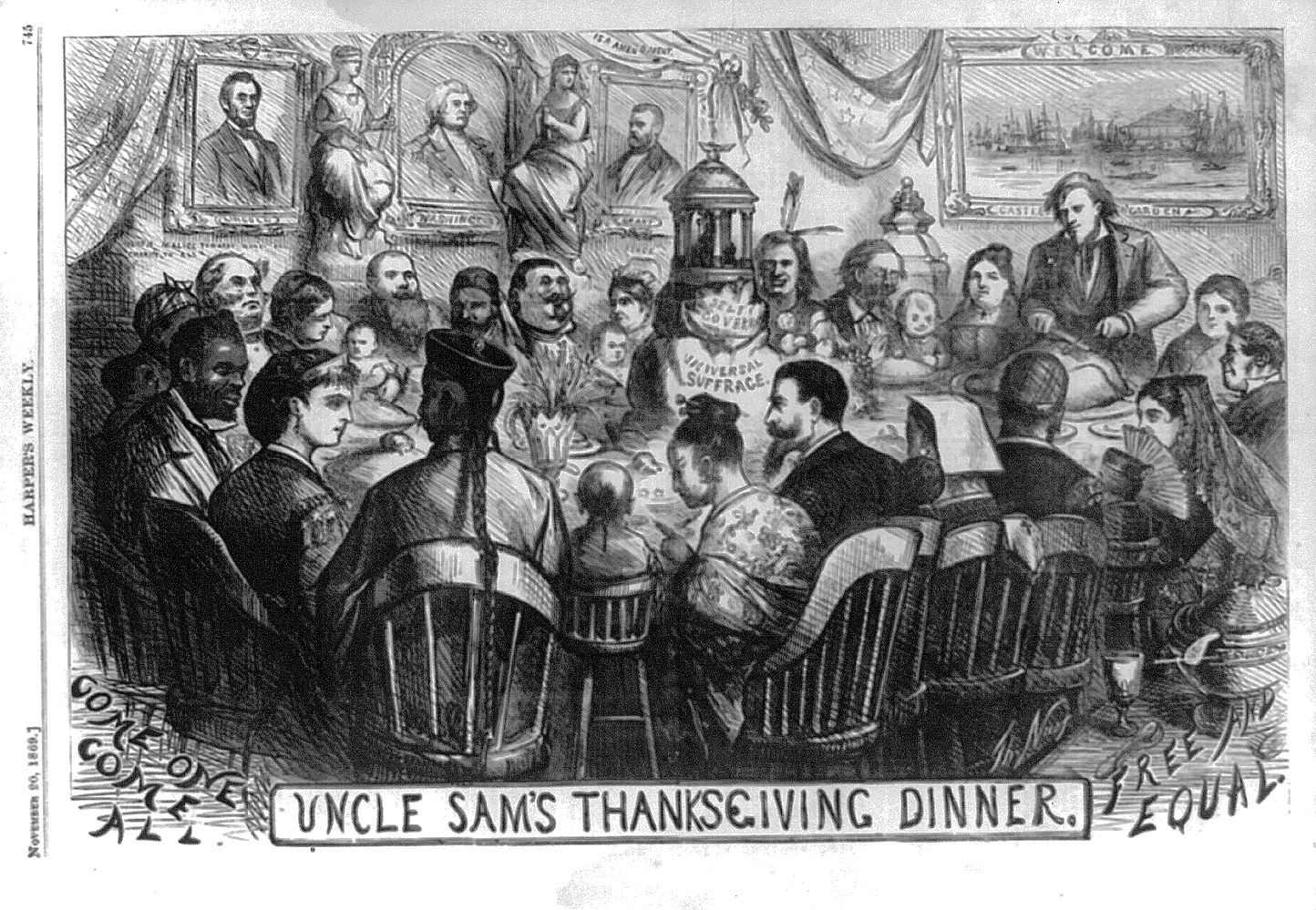
    Thanksgiving American Music from Marlboro

    Happy Thanksgiving to you! On the busiest travel day of the year, we’ve got the perfect soundtrack for your journey over the river and through the woods, with an all-American hour on this week’s “Music from Marlboro.”

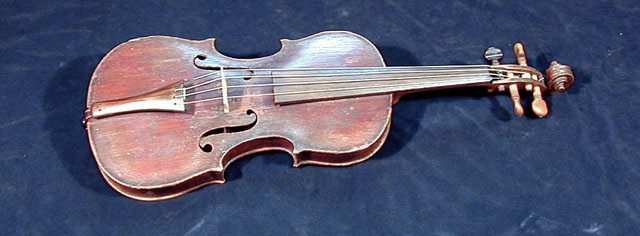
    At the heart of the program will be a work by Moravian composer John Antes (1740-1811). Antes, born in Frederick, Montgomery County, PA, is credited with being one the first composers born on American soil to write chamber music, and as the creator of perhaps the earliest surviving bowed string instrument made in the American colonies. Antes’ violin, made in 1759, is housed in the Museum of the Moravian Historical Society in Nazareth, PA. A viola, made by Antes in 1764 (again believed to be the earliest surviving of American origin), is housed in the Lititz Moravian Congregation Collection in Lancaster County. Antes created at least seven such instruments.

    In 1752, Antes attended school in Bethlehem, PA. In 1760, he was admitted into the Single Brethren’s choir there. From Bethlehem, he travelled to Herrnhut, Germany, the international center of the Moravians, to prepare for a career as a missionary. In the meantime, he also took up watchmaking. He was ordained a minister in 1769, then set out for Egypt. There, he served as a missionary to the Coptic Church in Grand Cairo. After a largely uneventful decade, he was captured and tortured by followers of Osman Bey.

    During his convalescence, he occupied himself with the composition of three string trios. He also sent a copy of six quartets to Benjamin Franklin, whom he had known in America. The quartets are lost (nice job, Ben), but the trios survive. We’ll hear Antes’ Trio in D minor, from the 1976 Marlboro Music Festival.

    To open the hour, from the 1977 festival, we’ll hear a Divertimento for Nine Instruments by two-time Pulitzer Prize winner Walter Piston. In addition to being an important teacher, Piston was regarded as one of our country’s great symphonists. Finally, we’ll have the suite from Aaron Copland’s beloved Pulitzer Prize decorated ballet “Appalachian Spring,” in its original version for 13 instruments, performed at Marlboro in 2006.

    Give thanks for performances of American music from the archives of the celebrated Marlboro Music Festival, this Wednesday evening at 6 EST, on WWFM – The Classical Network and wwfm.org.

    Marlboro School of Music and Festival: Official Page


    PHOTO: The Antes violin (which kind of sounds more like a creation of Salvador Dali), now in Nazareth, PA
  • Thanksgiving Movie Music Picture Perfect

    Thanksgiving Movie Music Picture Perfect

    This week on “Picture Perfect,” we set the table for Thanksgiving.

    Gary Cooper and Dorothy McGuire star in “Friendly Persuasion” (1956), based on the novel by Jessamyn West. The film’s portrayal of family and the resolution of moral conflict, as pacifist Quakers deal with issues both big and small – from the American Civil War, to the introduction of a “sinful” musical instrument into the household – make “Friendly Persuasion,” in my opinion, a good choice for this time of year.

    The film was nominated for six Oscars, with Dimitri Tiomkin’s score nominated twice. The title song went on to become the popular hit “Thee I Love.” Only Dimitri Tiomkin would use balalaikas to depict Quaker life!

    None other than Aaron Copland composed music for a big screen adaptation of Thorton Wilder’s “Our Town” (1940). The play, which opened at Princeton’s McCarter Theatre, won the Pulitzer Prize for Drama only two years earlier. Copland was at the height of his “populist” period. “El Salon Mexico” and “Billy the Kid” had already been written, and “Fanfare for the Common Man,” “A Lincoln Portrait,” “Rodeo” and “Appalachian Spring” would follow within just a few years.

    The concert version of “Our Town” has been in circulation for decades, but it’s only fairly recently that a recording of the complete score was made available. It was issued briefly on the Naxos label, available only as a download. The recording is now extremely scarce, possibly because of copyright issues.

    The film’s portrayal of small town America and the playwright’s poignant observation, “Do any human beings ever realize life while they live it? Every, every minute?,” are timely reminders that there are things we should all be thankful for, while they – and we – are here for us to appreciate them.

    “Witness” (1985) may seem like an unusual choice for Thanksgiving, with its themes of police corruption and violence, but when honest cop Harrison Ford goes on the lam, he experiences the “plain” lifestyle of a close-knit Amish community. The highlight of Maurice Jarre’s score is a sequence called “Building the Barn,” in which the community comes together to raise a barn for a newly married couple.

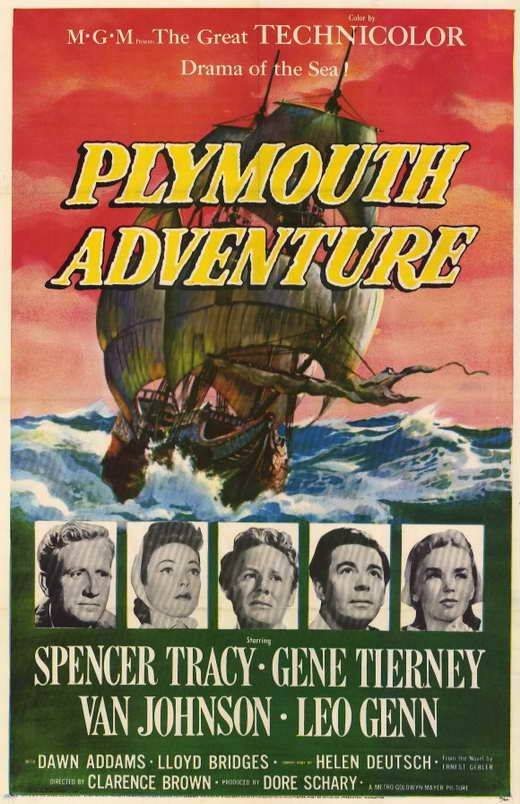
    Finally, we’ll listen to selections from “Plymouth Adventure” (1952), with its depictions of William Bradford, John Alden, Miles Standish and Priscilla Mullins. Spencer Tracy stars as the cynical captain of The Mayflower, Gene Tierney is his forbidden love interest, Van Johnson appears as Alden, and Lloyd Bridges is the first mate. If you’re curious to see the film, Turner Classic Movies: TCM will broadcast it this Sunday at 2 p.m. EST.

    The music is by Miklós Rózsa, who, already at this stage of his career, was MGM’s go-to composer for historical drama. Seven years later, Rózsa would take home his third Academy Award, for his classic score to “Ben-Hur.”

    There’s not a turkey among them! It’s never too early to give thanks this week on “Picture Perfect” – music for the movies – this Friday evening at 6:00 EST, on WWFM – The Classical Network and wwfm.org.

  • Thanksgiving & The Promise of Living

    Thanksgiving & The Promise of Living

    Happy Thanksgiving. We’ve much to be thankful for, including “The Promise of Living.” Thank you, Aaron Copland!

  • Thanksgiving Travel With Philadelphia Music

    Thanksgiving Travel With Philadelphia Music

    Get ready to creep over the river and through the woods – with millions of other folks attempting to do exactly the same thing. I’ll be there to keep you company this afternoon, as you tap the breaks, with a basket full of Thanksgiving goodies.

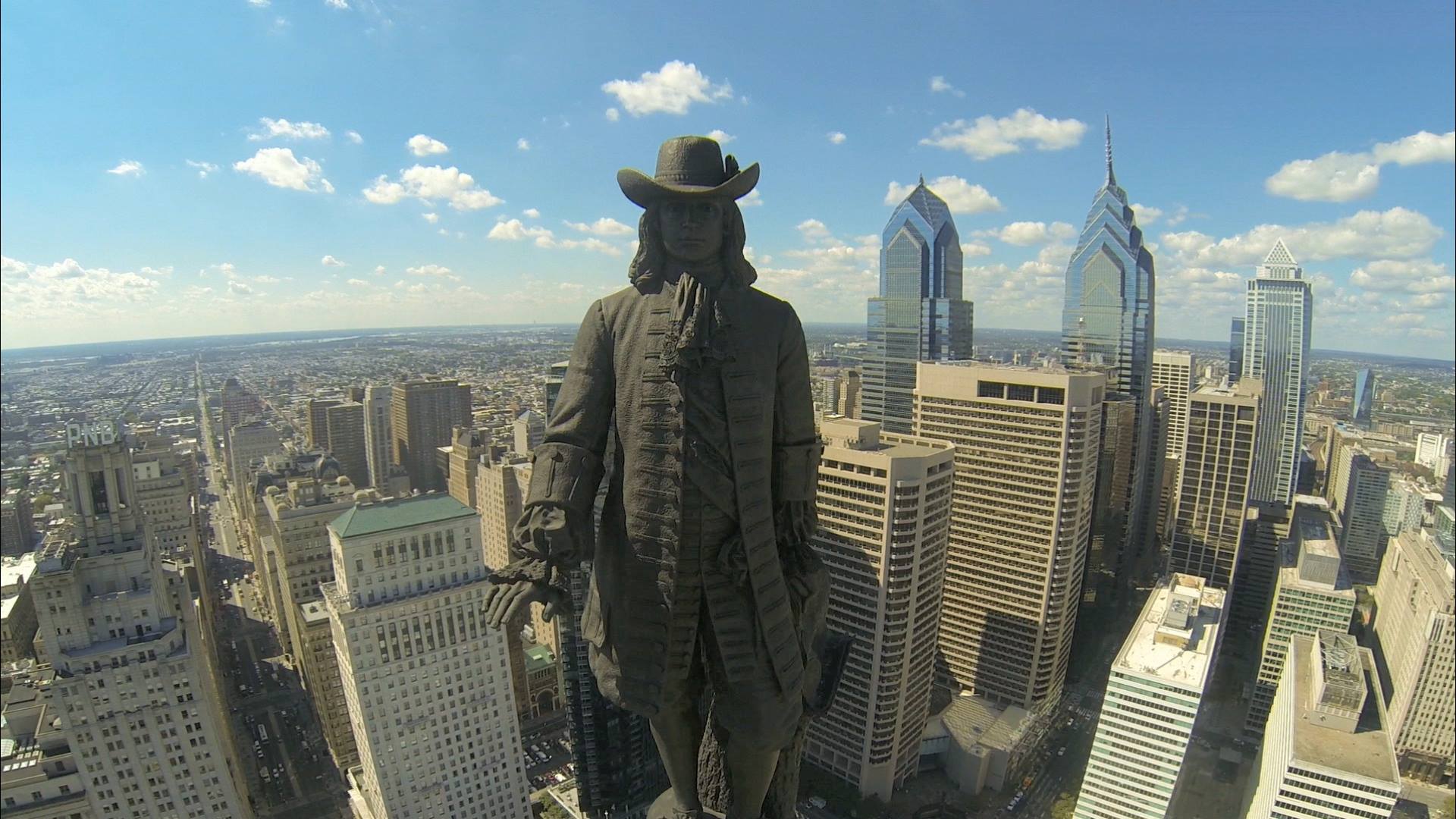
    We’ll anticipate the holiday with an abundance of American music, with the aim of keeping everyone in a positive frame of mind. Just keep repeating to yourself, what would William Penn do?

    That must have been what Louis Gesensway did when he came to write “Four Squares of Philadelphia.”

    Gesensway was born in Latvia in 1906. A violin prodigy, he was one of the founders of the Toronto Symphony Orchestra. He came to Philadelphia at the age of 19, where he played in the orchestra under Leopold Stokowski and Eugene Ormandy.

    In his mid-20s, he took a leave of absence to study composition with Zoltán Kodály. “Four Squares of Philadelphia” was described by the composer as a “symphonic poem for large orchestra, narrator and street criers.”

    The piece opens with a recitation of Penn’s prayer, then continues with musical evocations of Washington Square (captured in early morning, during Colonial times, with street criers hawking their wares), Rittenhouse Square (on a bright and cheerful afternoon), Logan Square (with its fountains at dusk), and Franklin Square (at night, reflective of noisy bridge traffic, with a side excursion into Chinatown, and interjections from the honky tonk joints that used to be located about the square in the 1950s).

    No telling what Penn would have thought of the honky tonk joints, but all in all, he was a pretty fair-minded guy. Also, he knew to be thankful. It took him 60 days to reach his destination, traveling from a cell in London to his “greene country towne” in America. Think of that as you gaze through the windshield at countless taillights stretching to the horizon.

    “Four Squares of Philadelphia” will be among our featured works this afternoon. We’ve much to be thankful for, from 4 to 7:00 EST, on WWFM – The Classical Network and at wwfm.org.


    PHOTO: Statue of Penn high atop the city he founded

  • American Music Thanksgiving on WPRB

    American Music Thanksgiving on WPRB

    Is Thanksgiving making you hungry for American music? Join Marvin Rosen for his 20th annual Thanksgiving special, “Music of the Americas,” on WPRB. The program is a two-parter, and it can be heard on Wednesday and Thursday this week, from 5:30 to 11 a.m. EST.

    According to a post on Marvin’s Facebook page, the programs will feature “music representing people from the entire American continent! (native and immigrants everywhere).” It’s easy to understand the frustration underlying his tone, and his good intentions.

    Let’s all sit down and break bread together. Tune in to Classical Discoveries, on Wednesday and Thursday this week, for “Music of the Americas,” on WPRB 103.3 FM and at wprb.com.

    Thanks, Marvin, and happy Thanksgiving!

Tag Cloud

Aaron Copland (92) Beethoven (95) Composer (114) Film Music (123) Film Score (143) Film Scores (255) Halloween (94) John Williams (187) KWAX (229) Leonard Bernstein (101) Marlboro Music Festival (125) Movie Music (138) Opera (202) Philadelphia Orchestra (89) Picture Perfect (174) Princeton Symphony Orchestra (106) Radio (87) Ralph Vaughan Williams (85) Ross Amico (244) Roy's Tie-Dye Sci-Fi Corner (290) The Classical Network (101) The Lost Chord (268) Vaughan Williams (103) WPRB (396) WWFM (881)

DON’T MISS A BEAT

Receive a weekly digest every Sunday at noon by signing up here


RECENT POSTS