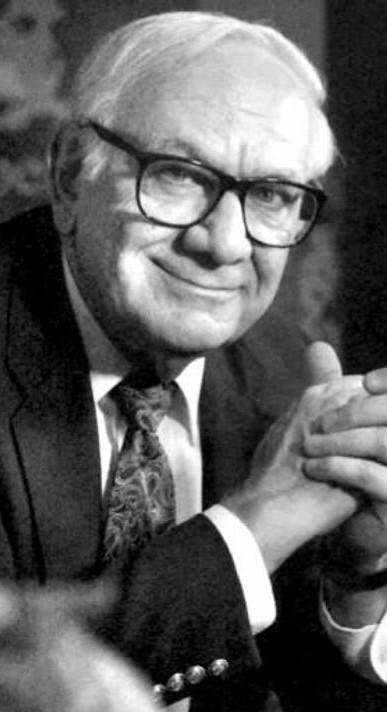
This Sunday night on “The Lost Chord,” I’ll be honoring the late American composer Dominick Argento. Argento died on February 20 at the age of 91. Join me for his “Valentino Dances,” “Six Elizabethan Songs,” and “A Ring of Time.” It’s an hour of “Argento Mementos,” this Sunday night at 10:00 EST, on WWFM – The Classical Network and wwfm.org.
Tag: The Lost Chord
-

Black Composers Garcia & Walker on “Lost Chord”
Hear contrasting works by José Maurício Nunes Garcia and George Walker tonight on “The Lost Chord.”
Walker was the first African-American recipient of the Pulitzer Prize for Music – as recently as 1996 – for his “Lilacs for Voice and Orchestra.” He was the first black musician to graduate from the Curtis Institute of Music. He also studied at the Eastman School and was a pupil of Nadia Boulanger. Tune in for Walker’s Trombone Concerto of 1957.
Then it’s off to South America for Nunes Garcia’s Requiem Mass of 1816. Nunes Garcia was Master of Music of the Royal Chapel in Rio de Janeiro. He composed over four hundred pieces of music, including the first Brazilian opera. The Requiem was written at the request of John VI of Portugal for funeral services for his mother, Maria I.
Join me for this second installment in celebration of the reissue on Sony Classical, after 40 years, of the legendary Black Composers Series. We’re sharing highlights throughout #BlackHistoryMonth, Sunday nights at 10:00 EST, on WWFM – The Classical Network and wwfm.org.
-

Black Composers Series Returns
It took four decades for these landmark recordings to make it to CD. They’ve finally appeared in a box of ten. We’ll be sampling highlights in just about three hours: music by Joseph Bologne (Chevalier de Saint-Georges), Olly Wilson, and Fela Sowande.
That’s “Black to the Future” – selections from Columbia Masterworks’ forward-looking Black Composers Series, reissued now on Sony Classical – on “The Lost Chord,” the first of four parts, for #BlackHistoryMonth, Sunday nights in February at 10:00 EST, on WWFM – The Classical Network and wwfm.org.
-

Rediscovering Ulysses Kay: A Neglected American Voice
Regrettably, the music of Ulysses Kay is under-represented in the current catalogue. His delightful “Six Dances for String Orchestra,” probably the lightest music he ever wrote, has been available sporadically on the Vox label, though always badly in need of a new recording. This Sunday night on “The Lost Chord,” we’ll hear one of those dances as part of an hour devoted to Kay’s music.
Born in Tuscon, AZ, in 1917, Kay was the nephew of jazz musician King Oliver. His uncle encouraged him to study music formally. Likewise, he received moral support from William Grant Still, then recognized as the “Dean of Afro-American Composers.” Kay attended the University of Arizona, before heading on to the Eastman-School, where he studied with Howard Hanson and Bernard Rogers. Also influential were studies with Paul Hindemith at the Berkshire Music Center, and then Yale.
Kay served in the United States Navy during World War II. He then continued his studies at Columbia with Otto Luening. A recipient of multiple scholarships, grants and awards, he was able to live and study abroad, in Rome, where he attended the American Academy, for several years.
From 1953 to 1968, he worked for BMI. He was then appointed professor at Lehman College of the City University of New York, where he remained until his retirement, two decades later. A longtime resident of Teaneck, NJ, he composed orchestral, chamber, choral and instrumental works, and five operas. He died in 1995 at the age of 88.
In addition to that dance for strings, we’ll also hear Kay’s work for trumpet and piano, “Tromba,” from 1985; a long out-of-print LP of his “Concerto for Orchestra,” recorded in 1953; and a suite from his film score to “The Quiet One,” from 1947. A quasi-documentary about an abused African American child and his subsequent coming of age, “The Quiet One” received an Oscar nomination for Best Story and Screenplay, and was listed by the New York Times and the National Board of Review as one of the ten best movies of 1948.
I hope you’ll join me for “Giving Kay His Say,” this Sunday night at 10:00 EST, on WWFM – The Classical Network and wwfm.org.
An interview with Kay conducted by Bruce Duffie:
http://www.bruceduffie.com/kay.html
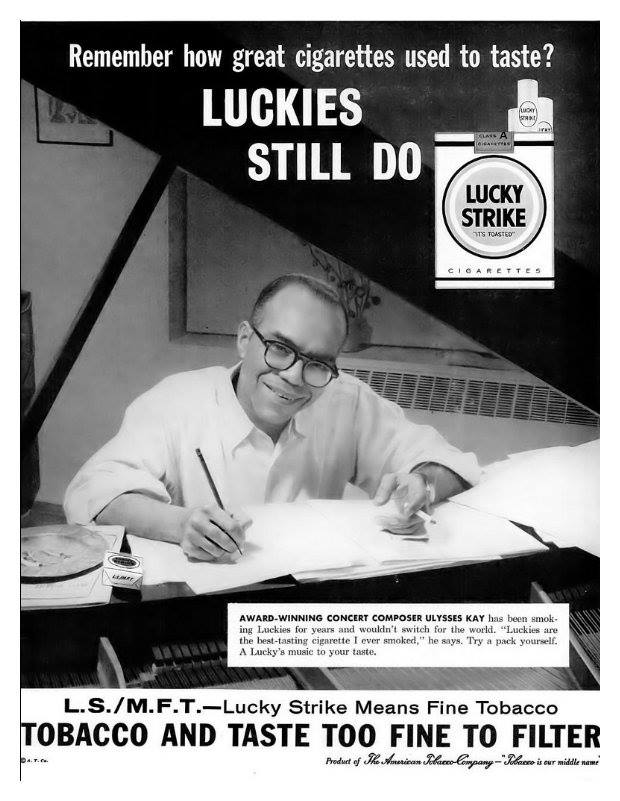
PHOTO: Kay gets Lucky!
-

Beecham’s Byron A Romantic Lost Chord
“Oh God! If it be thus, and thou art not a madness and a mockery, I yet might be most happy…” So laments Lord Byron’s Manfred when confronted by the specter of Astarte.
Manfred is the quintessential Byronic hero, a romantic superman who endures unimaginable sufferings and mysterious guilt in connection with the death of his beloved. He wanders the Alps, longing for extinction, and meets his fate defiantly, rejecting all authority, corporeal and supernatural.
Robert Schumann was intoxicated by Byron’s dramatic poem from the time he first encountered it at the age of 19 in 1829. In 1848, he began to compose music for it, concurrently with that for his “Scenes from Goethe’s ‘Faust.’” Wrote Schumann, “I have never before devoted myself to a composition with such love and such exertion of my powers as to ‘Manfred.’” The piece was given its first performance in Weimar in 1852, with Franz Liszt conducting.
This Sunday night on “The Lost Chord,” we’ll hear highlights from a recording made 102 years later by Sir Thomas Beecham.
When Beecham came to record Schumann’s incidental music in 1954, it was an act of total reimagination. Unquestionably the work, as written, contains much attractive music. However, if we’re to be completely frank, it can be a bit dramatically static at those times when the music falls silent in deference to florid monologue. Beecham recognized this and enlisted the help of Eugene Goossens and Julius Harrison to assist him in orchestrating a number of Schumann’s piano pieces to be used as underscore for some of the spoken dialogue. He also incorporated a couple of part-songs and even invented a ballet. Fear not! Beecham’s license is nowhere in the same league as that he would later take with Handel’s “Messiah.”
Beecham’s Byronic credentials are unimpeachable. Byron was among his favorite poets. Of course, he also happened to conduct one of the great recordings of “Harold in Italy” (after “Childe Harold’s Pilgrimage”), with the violist William Primrose. Furthermore, Beecham had been familiar with Schumann’s “Manfred” since at least 1918, when he led two performances of the complete incidental music at the age of 39. Some 36 years later, he decided to resurrect the work via a broadcast performance and then as a program at Royal Festival Hall.
I first encountered this remarkable recording in the 1980s, in the middle of the night, when it was broadcast over the now-extinct WFLN, for 48 years Philadelphia’s classical music station. Henry Varlack used to play it from time to time on his program, “Sleepers Awake.” Finally, having not heard it for a while, I called in to his Friday night/Saturday morning request show, and he told me with regret that the record had become so worn that it was no longer suitable for airplay.
Imagine my excitement, then, when I learned in the mid-‘90s that it was being reissued on CD. I promptly special-ordered it from England, and it couldn’t get here fast enough. That was on the Beecham Collection label – alas now long out of print. It has since appeared and disappeared (like Astarte?) on Sony.
The recording featuring actors, chorus, and orchestra. Laidman Browne may be a bit long-in-the tooth for Byron’s anti-hero, but no one elongates “eeeeeeeeviiiiiiiiiiiiiiiiiiiiiiiiiilllllllll” quite like him.
I hope you’ll join me for “Byronic Beecham,” this Sunday night at 10:00 EST, on WWFM – The Classical Network and wwfm.org.
Tag Cloud
Aaron Copland (92) Beethoven (95) Composer (114) Film Music (123) Film Score (143) Film Scores (255) Halloween (94) John Williams (187) KWAX (229) Leonard Bernstein (101) Marlboro Music Festival (125) Movie Music (138) Opera (202) Philadelphia Orchestra (89) Picture Perfect (174) Princeton Symphony Orchestra (106) Radio (87) Ralph Vaughan Williams (85) Ross Amico (244) Roy's Tie-Dye Sci-Fi Corner (290) The Classical Network (101) The Lost Chord (268) Vaughan Williams (103) WPRB (396) WWFM (881)