Tag: WWFM

  • Ulysses Kay Rediscovered on The Lost Chord

    Ulysses Kay Rediscovered on The Lost Chord

    Is the time ripe for the return of Ulysses?

    In determining his life’s course, Ulysses Kay (1917-1995), received encouragement from his uncle, King Oliver, and William Grant Still. Among his teachers were Howard Hanson, Paul Hindemith, and Otto Luening. He also attended the American Academy in Rome.

    A longtime resident of Teaneck, NJ, he composed music in all genres. This week on “The Lost Chord,” we’ll sample “Tromba” for trumpet and piano, his Concerto for Orchestra, a suite from the semi-documentary “The Quiet One,” and “Six Dances for String Orchestra.”

    I hope you’ll join me for “Giving Kay His Say.” Ulysses strings his bow, this Sunday night at 10:00 EST, on WWFM – The Classical Network and wwfm.org.


    An interview with Kay conducted by Bruce Duffie:

    http://www.bruceduffie.com/kay.html


    PHOTO: Kay gets Lucky!

  • Danish Classical Music From Dacapo Records

    Danish Classical Music From Dacapo Records

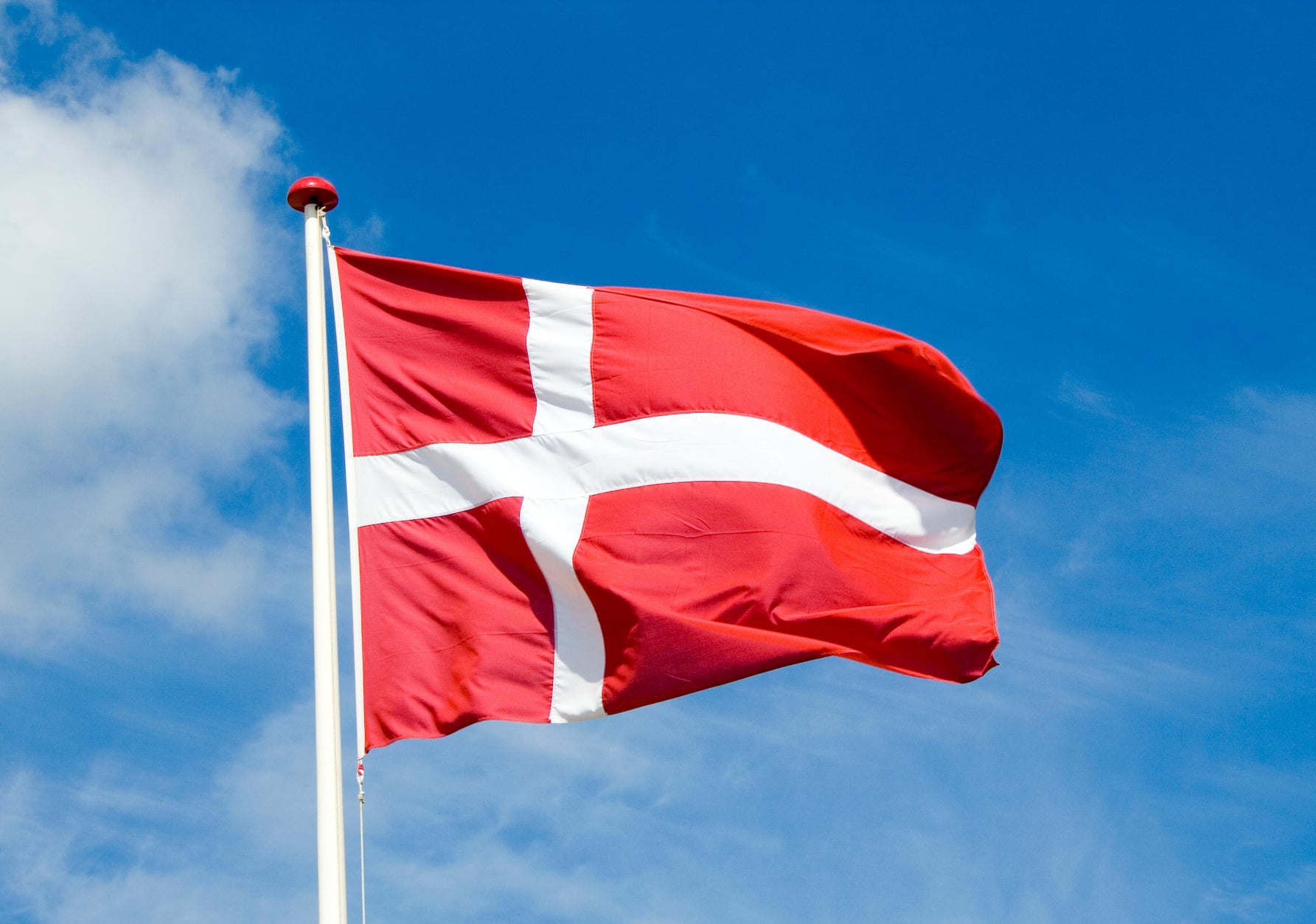
    Dacapo Records, the self-described “Danish National label,” was founded in 1989 to promote the classical music of Denmark. Danish music composed over a period of a thousand years forms the core of the Dacapo discography. This Sunday night on “The Lost Chord,” I hope you’ll “Dane” to join me for representative works by Emil Reesen and Asger Hamerik.

    Reesen made his mark in ballet, opera, and film score. He was also a concert pianist, who studied with Siegfried Langgaard, a pupil of Franz Liszt. In 1927, he was appointed conductor of the Danish Radio Symphony Orchestra. In 1931, he also began work as a ballet conductor at the Royal Danish Theatre. Later in life, he conducted the Vienna Symphony and made recordings with the Berlin Philharmonic.

    Reesen is probably best-known for his operetta “Farinelli.” We’ll hear his “Variations on a Theme by Franz Schubert” (on the eve of Schubert’s birthday), from 1928.

    Asger Hamerik studied at home with J.P.E. Hartmann and Niels Wilhelm Gade, in Berlin with Hans von Bulow, and in Paris with Hector Berlioz. Berlioz would remain a lasting influence, as would Dukas and Franck.

    Hamerik went on to serve as director of the Peabody Institute in Baltimore for over a quarter century (1871-98). Many of his large-scale orchestral works were first performed by the Peabody orchestra.

    He returned to Denmark in 1900. In his lifetime, he was considered the best-known Danish composer after Gade. (Things changed in a hurry with the rise of Carl Nielsen.)

    We’ll hear his final symphony, the Symphony No. 7 – the “Choral” Symphony – from 1897, a work that drew comparisons to the works of Mahler for its sheer size. Its first performance in Baltimore employed hundreds of musicians.

    I hope you’ll join me, as Danish music makes its mark this week, on “Denmarketing” – recordings from the Dacapo Records catalogue – this Sunday night at 10:00 EST, on WWFM – The Classical Network and wwfm.org.


    BONUS: Emil Reesen conducts the “Dance of the Cockerels” from Nielsen’s “Maskarade”

  • Mozart’s Many Names Unveiled Happy Birthday!

    Mozart’s Many Names Unveiled Happy Birthday!

    What’s in name? Wolfgang Amadeus Mozart went by many in his lifetime.

    He was baptized on January 28, 1756 (the day after his birth), as “Joannes Chrysostomus Wolfgangus Theophilus Mozart.”

    Following the custom of the Catholic Church, the first two names represent his saint’s name (“Chrysostomus” meaning “golden mouth”). “Wolfgangus” is the Latin form of “Wolfgang” – “walks with wolves” – the name of Mozart’s maternal grandfather. “Theophilus” is from the Greek – “lover of God.” In German, this would be “Gottlieb,” and in Latin “Amadeus.”

    Later in life, Mozart would refer to himself using the Italian (“Amadeo”) or the French equivalent, which is why you will sometimes encounter the pedantic “Amadè” in concert program notes.

    Admittedly, after 1777, Mozart himself did seem to have a preference for “Amadè,” although he played a little fast and loose with the French accent (variously “Amadè,” “Amadé,” or just plain “Amade”).

    He did use “Amadeus,” albeit facetiously, when signing some of his letters, in mock-Latin (“Wolfgangus Amadeus Mozartus”). But it was only after his death that this form really gained traction, employed even by the composer’s widow. This was taken up by biographers, critics, and musicians and became prevalent by the early 19th century.

    In more recent times, Peter Shaffer’s play and its now-classic film adaptation have cemented “Amadeus” in the public consciousness.

    But Mozart by any other name would smell as sweet. And with his scatological sense of humor, I’m sure he would have something to say about that!

    Enjoy a bouquet of Mozart on his birthday, as WWFM – The Classical Network celebrates one of music’s greatest masters. It will be all-Mozart through 7 pm EST. Support classical music on the air waves and via internet streaming with your gift by calling today at 1-888-232-1212 or contributing online at wwfm.org. Thank you for your generous support!

    https://wwwfm.secureallegiance.com/wwfm/WebModule/Donate.aspx?P=DEFAULT&PAGETYPE=PLG&CHECK=vOU2bz5JCWmgCDbf53nm9ezWDeZ%2beA1M

    However it is you choose to cut his cake, the “art” was there right from the start. Happy birthday, Moz-ART!

  • Leifs Saga Symphony Viking Weekend on WWFM

    Leifs Saga Symphony Viking Weekend on WWFM

    This Sunday night on “The Lost Chord,” Viking Weekend continues! Brace yourself for Icelandic composer Jon Leif’s “Saga Symphony.” Scored for tuned anvils, stones, whip, shields of iron, leather, and wood, great wooden casks played by large hammers, and six ancient long horns, or lurs, the work is an intriguing blend of extravagance and austerity.

    Leifs studied in Leipzig and wound up stranded in Nazi Germany for much of World War II. You’d think the National Socialists would have gone ape for this musical advocate of Norse heroism, but two things worked against him: the modernist language of much of his output, and the fact that his wife and children were Jewish. Also, he found Wagner repellent, asserting that Wagner completely misunderstood the essence and artistic tradition of the North. Public performances of Leif’s works were discouraged (and would have been impractical anyway). Under the circumstances, he preferred to attract as little attention to himself as possible. He found escape in rereading the Icelandic sagas, even as he was used for propaganda purposes to strengthen Germany’s relations with Scandinavia.

    Leifs finally managed to obtain permission to leave Germany in 1944. Unfortunately, suspicion of Nazi associations further hindered acceptance of his music abroad. It was only with a series of compact disc recordings released on the Swedish label BIS, beginning in the 1990s, that Leifs – who died in 1968 – was revealed to be Iceland’s most important composer, with a voice as distinctive as any of his time.

    Iceland of a hundred years ago was a very different place than it is now. Leifs didn’t hear his first orchestra until he traveled to Leipzig. The “Saga Symphony” is a direct response to Franz Liszt’s “A Faust Symphony,” a performance of which sent the young composer into ecstasies. He went home and immediately began work on the piece we’ll hear tonight. However, his own approach to the symphony is quite different from Liszt’s. In terms of symphonic development, there is none to speak of. In its place are evocative fields of static harmonies.

    Each of the work’s five movements is a character portrait of a hero from the Norse sagas: the vitriolic warrior Skarphéðinn Njálsson (Njál’s Saga), who hacks and hews with his battle axe; the strong-willed Guðrún Ósvífsdóttir (Saga of the Laxardals), who avenges herself against her husband’s killer; the latently heroic comic braggart and coward Björn of Mörk, who takes shelter behind the swashbuckler Kári Sölmundarson, as Kári avenges the deaths of Njál and his sons; Grettir Ásmundarson, who vanquishes the ghost of Glámr in a wrestling match, only to be haunted ever after; and the warrior-poet Tormod Kolbrunarskald (The Foster Brother’s Saga), who pulls an arrow from his heart and even in the throes of death formulates an intricate poem.

    Greet your fate with courage and stoicism. Join me for “Liking the Viking,” this Sunday night at 10:00 EST, on WWFM – The Classical Network and wwfm.org

  • New Year Classical Music Deja Vu

    New Year Classical Music Deja Vu

    Everyone begins the new year with hopes for positive change. At the risk of seeming contrarian, this Sunday night on “The Lost Chord,” we acknowledge that the more things change, the more they stay the same – as composers of the past 100 years look back to the 18th century.

    We’ll hear somewhat contemporary works indebted to earlier times, including Lord Berners’ “Fugue for Orchestra,” Norman Dello Joio’s “Salute to Scarlatti,” Ilja Hurník’s “Sonata da camera,” John Corigliano’s “Chaconne” from “The Red Violin,” and Percy Grainger’s “Blithe Bells,” after Johann Sebastian Bach.

    Raise a toast, with new wine in old bottles, on “Déjà Vu All Over Again,” this Sunday night at 10:00 EST, on WWFM – The Classical Network and wwfm.org.

Tag Cloud

Aaron Copland (92) Beethoven (95) Composer (114) Film Music (123) Film Score (143) Film Scores (255) Halloween (94) John Williams (187) KWAX (229) Leonard Bernstein (101) Marlboro Music Festival (125) Movie Music (138) Opera (202) Philadelphia Orchestra (89) Picture Perfect (174) Princeton Symphony Orchestra (106) Radio (87) Ralph Vaughan Williams (85) Ross Amico (244) Roy's Tie-Dye Sci-Fi Corner (290) The Classical Network (101) The Lost Chord (268) Vaughan Williams (103) WPRB (396) WWFM (881)

DON’T MISS A BEAT

Receive a weekly digest every Sunday at noon by signing up here


RECENT POSTS