Tag: WWFM

  • Early Music Festival at Grounds For Sculpture

    Early Music Festival at Grounds For Sculpture

    The mad doctor with the co-hosts for today’s Noontime Concert – Patricia Hlafter and Judith Klotz of the Guild for Early Music.

    The annual Early Music Festival by the Guild for Early Music will be held at Grounds For Sculpture in Hamilton, NJ, this Sunday from 12:30 to 5:30 p.m. The festival is free with admission to the park. Enjoy lots of great music, performed on period instruments. Then take a break to stroll the sculpture gardens. Just watch out for those peacocks!

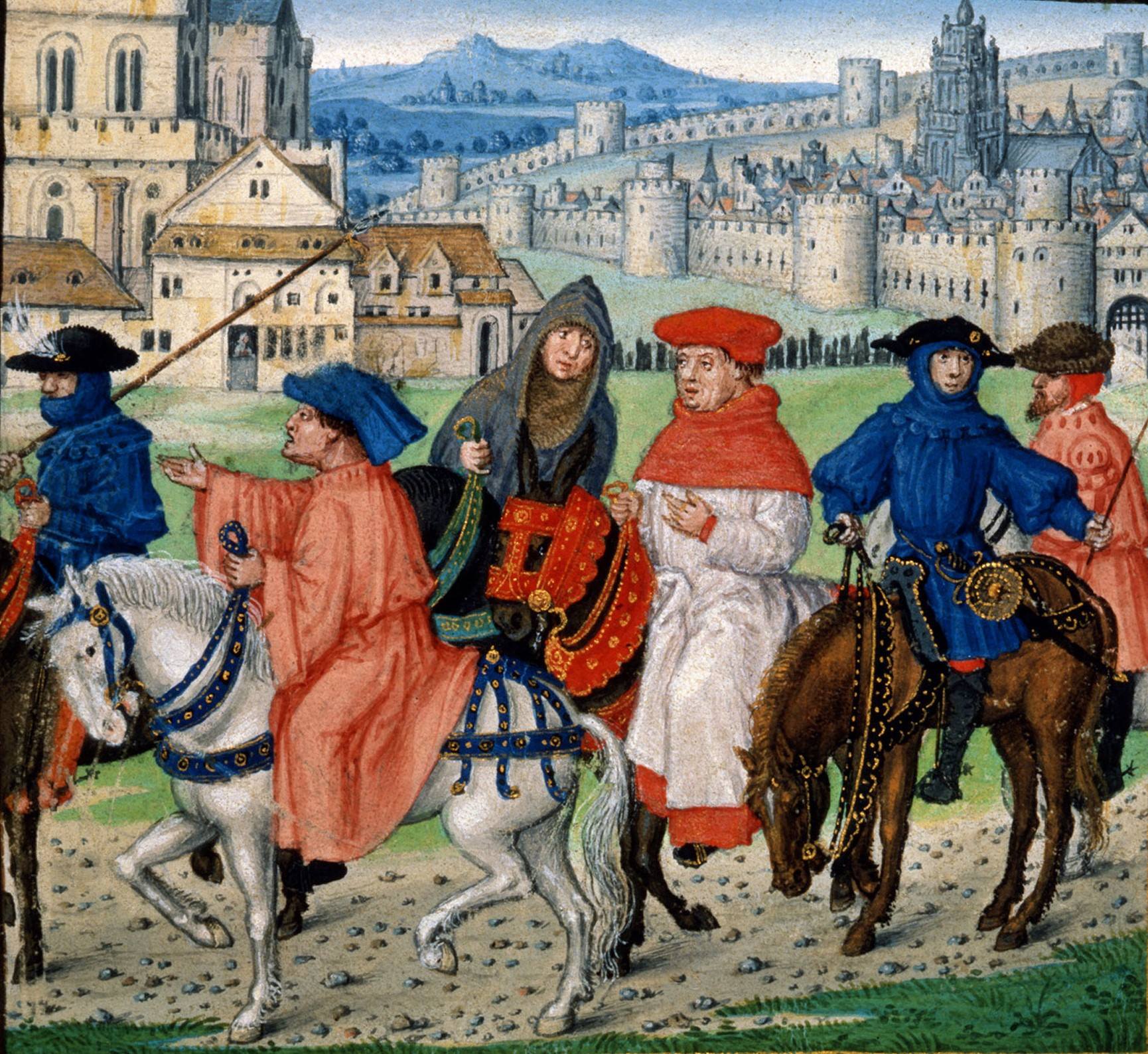
    John Burkhalter and Janet Palumbo of the Guild will be my guests for Friday’s noon concert. Tune in right now to enjoy George Dyson’s choral music masterpiece, “The Canterbury Pilgrims,” after Geoffrey Chaucer’s “The Canterbury Tales,” on WWFM – The Classical Network and wwfm.org.

  • Early Music Month Festival Broadcast

    Early Music Month Festival Broadcast

    March is Early Music Month. Join me this afternoon on The Classical Network for the first of two Noontime Concerts featuring highlights from the 2016 Guild for Early Music Festival.

    Each year, the festival is held at Grounds For Sculpture, the not-for-profit sculpture garden, museum, and arboretum, located in Hamilton, NJ. This year’s festival will take place on the two stages of the Seward Johnson Center for the Arts, with possible supplementary performances held outdoors by strolling musicians, weather permitting, this Sunday, March 18, from 12:30 to 5:30 p.m. To find out more about this year’s Early Music Festival by the Guild for Early Music, look online at guildforearlymusic.org.

    Or tune in: I’ll be joined today by Judy Klotz and Patricia Hlafter and on Friday by John Burkhalter and Janet Palumbo – all Guild musicians and board members – as co-hosts for music from the Medieval through Classical Periods. The fun begins today at noon.

    Following today’s broadcast concert, stick around for a complete performance of “The Canterbury Pilgrims,” George Dyson’s choral music masterwork inspired by Chaucer’s “The Canterbury Tales.” Take a pilgrimage back in time from noon to 4 p.m. EDT, on WWFM – The Classical Network and wwfm.org.

    Early Music America

  • Thomas Arne From Britannia to Elmer Fudd

    Thomas Arne From Britannia to Elmer Fudd

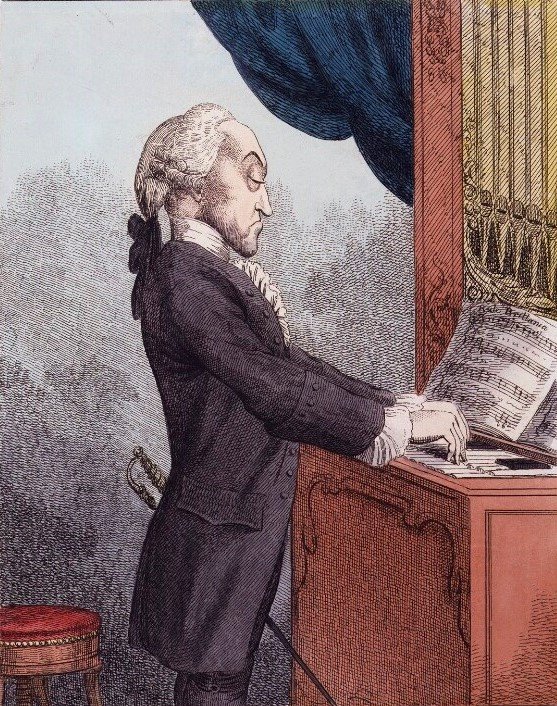
    I suppose it’s fairly common knowledge that Thomas Arne is the composer of the British national air “Rule, Britannia,” which was originally heard as part of his masque “Alfred” in 1740.

    What is perhaps less well known is that he also wrote the national air of Elmer Fudd, “A-Hunting We Will Go.” The maddening ear-worm was conceived for a production of John Gay’s “The Beggar’s Opera” in 1777. I am happy to report that no animals were harmed in the writing of this song.

    Ironically, it turns out that the singing of the British national anthem, “God Save the Queen,” has been identified as an expedient way to rid oneself of earworms, those insistently memorable melodies that continually repeat in our heads until it seems we will teeter over into madness.

    https://www.npr.org/2012/03/12/148460545/why-that-song-gets-stuck-in-your-head

    Join me for a keyboard concerto by Thomas Arne, on the anniversary of his birth, among my featured works today from 4 to 7 p.m. EDT, on WWFM – The Classical Network and wwfm.org.

  • Celebrating Kapralova and Smyth on WWFM

    Celebrating Kapralova and Smyth on WWFM

    In all likelihood you’ll be asleep by that time, thanks to the clock change, but in the event that you’ve overcompensated with too much caffeine, consider joining me tonight for “The Lost Chord,” when the focus will be on outstanding works by two extraordinary female composers.

    Vitězslava Kápralová (1915-1940) was one of the great hopes of Czech music, a figure who undoubtedly would be much better known had she not died of tuberculosis at the age of 25. As it stands, her reputation is only beginning to emerge from the shadow of her teacher and lover, Bohuslav Martinu.

    Kápralová’s String Quartet was written while she was yet a student at the Prague Conservatory, where her teachers included Vitězslav Novák and Václav Talich. (She studied with Martinu later in Paris.) The work was completed in 1936, when Kápralová was about 21 years-old.

    More about Kápralová here, in this article written to mark her centenary in 2015:

    https://www.telegraph.co.uk/culture/music/classicalmusic/11365848/The-tragedy-of-Europes-great-forgotten-female-composer.html

    Ethel Smyth (later DAME Ethel Smyth, 1858-1944) was one of the most vocal advocates of the women’s suffrage movement in England. She overcame early opposition to a career in music on the part of her father to receive the praise of George Bernard Shaw, who called her Mass “magnificent.”

    However, her works were often better-appreciated abroad. Her operas, in particular, were embraced in Germany. One of them, “Der Wald,” was the only opera by a woman composer mounted by New York’s Metropolitan opera for over a century!

    Smyth served time in prison for putting out the windows of politicians who opposed a woman’s right to vote. She also wrote for the cause “The March of the Women.” When Sir Thomas Beecham went to visit her in jail, he witnessed her conducting through the bars of her window with a toothbrush as her associates gathered for exercise in the courtyard.

    Smyth’s “Serenade in D” – a symphony in all but name – was her first orchestral score, composed in 1890, when she was about 32 years-old. In my opinion, it’s better than just about anything composed by her contemporary, Sir Hubert Parry, and much more compelling than the symphonies of Sir Charles Villiers Stanford.

    More about Smyth here, in this piece put together in connection with a revival of her opera, “The Wreckers,” by the great Leon Botstein:

    https://www.npr.org/sections/deceptivecadence/2015/07/23/410033088/one-feisty-victorian-womans-opera-revived

    I hope you’ll join me for music by these two extraordinary women – “A Woman’s Place is in the Concert Hall” – this Sunday night at 10:00 EDT, on WWFM – The Classical Network and wwfm.org.


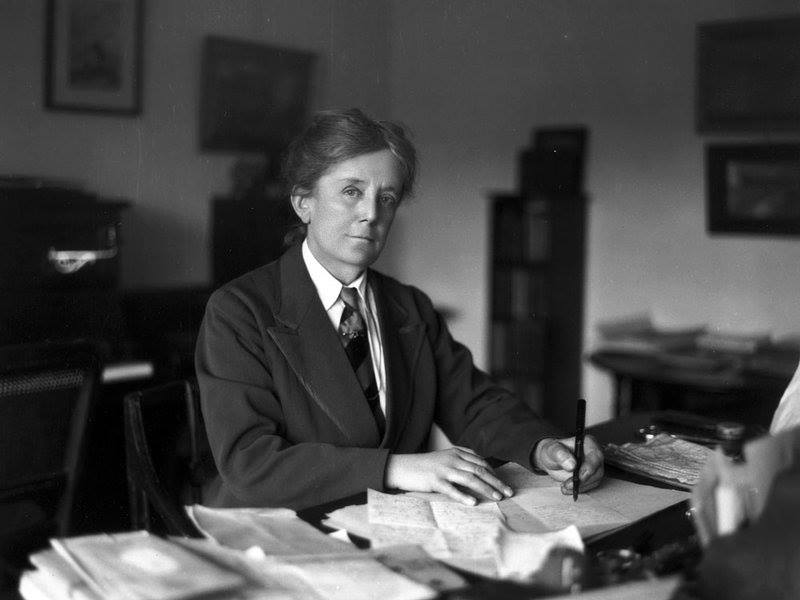
    PHOTOS: Ethel Smyth at her desk (top); Vitězslava Kápralová taking up the baton (she studied conducting in Prague with Václav Talich and in Paris with Charles Munch)

  • Haydn to Rochberg: Marlboro’s Musical Journey

    Haydn to Rochberg: Marlboro’s Musical Journey

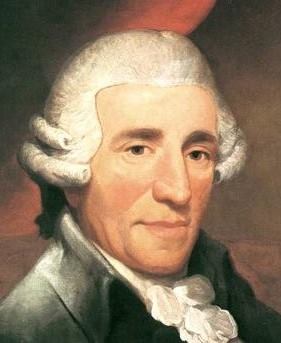
    Where has this music been Haydn?

    Discover music of George Rochberg on this week’s “Music from Marlboro.”

    Rochberg, born in Paterson, NJ, in 1918, studied at the Mannes College of Music and the Curtis Institute in Philadelphia. He later served as chairman of the music department at the University of Pennsylvania.

    His big claim to fame – or, in some circles, notoriety – is that he was one of the first composers to emerge from the predominant serialism of the 1960s to embrace a new tonality, a shift brought on, it is said, by the untimely death of his son. Rochberg found his particular brand of expressionism inadequate to convey his strong emotional upheaval. The inclusion of tonal passages in his works acted as a balm, even as it lit a slow fuse that would blow wide open the future for up-and-coming composers. He is often credited with having ushered in the Age of Pluralism. Now a composer can write any way he or she wants and still be taken seriously. It’s easy to forget that that was not always the case.

    Rochberg’s desire to communicate must have been a latent one, since his Trio for Clarinet, Horn, and Piano, from 1947 (predating his “twelve tone” period), is direct and, in its second movement adagio, introspective and full of feeling. We’ll hear it performed at the 2007 Marlboro Music Festival by clarinetist Charles Neidich, hornist José Vicente Castelló, and pianist Igor Levit.

    The trio will be bookended by two works associated with Franz Joseph Haydn – the String Quartet in B flat major, Op. 33, No. 4, by turns puckish and transporting, and Johannes Brahms’ “Variations on a Theme of Haydn.”

    Who cares that the theme that inspired Brahms to write his variations isn’t by Haydn at all? The “Saint Anthony Chorale” that forms the basis of the slow movement of Haydn’s Divertimento No. 1 in B flat major, Hob. II: 46, is a preexisting melody. In fact, the composer of the divertimento itself has been disputed. None of that really matters in music this well-crafted, especially when performed at the 1976 Marlboro Music Festival by pianists Stephanie Brown and Cynthia Raim.

    Haydn’s Op. 33, No. 4, will open the hour. We’ll hear it played in 1990 by violinists Chee-Yun Kim and Felix Galimir, violist Caroline Levine, and cellist Jean-Guihen Queyras.

    Listen in, as Rochberg emerges from Haydn, on this week’s “Music from Marlboro,” Wednesday evening at 6:00 EST, on WWFM – The Classical Network and wwfm.org.

    Marlboro School of Music and Festival: Official Page

Tag Cloud

Aaron Copland (92) Beethoven (95) Composer (114) Film Music (124) Film Score (143) Film Scores (255) Halloween (94) John Williams (188) KWAX (229) Leonard Bernstein (101) Marlboro Music Festival (125) Movie Music (139) Opera (202) Philadelphia Orchestra (89) Picture Perfect (174) Princeton Symphony Orchestra (106) Radio (87) Ralph Vaughan Williams (85) Ross Amico (244) Roy's Tie-Dye Sci-Fi Corner (290) The Classical Network (101) The Lost Chord (268) Vaughan Williams (103) WPRB (396) WWFM (881)

DON’T MISS A BEAT

Receive a weekly digest every Sunday at noon by signing up here


RECENT POSTS