Tag: WWFM

  • Kuhlau’s Life From Misfortune to Music

    Kuhlau’s Life From Misfortune to Music

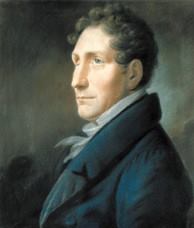
    Into every life a little rain must fall. Tell that to Friedrich Kuhlau, the German-born Danish composer.

    At the age of seven, Kuhlau lost an eye when he slipped on the ice and fell on a bottle. In 1810, he fled to Copenhagen to avoid conscription into Napoleon’s army. There, he struggled to gain acceptance in Danish musical life. It was a bumpy ride, marked by modest success and spectacular failure.

    Then, only a few years after he scored his greatest hit in 1828 with incidental music to the play “Elverhøj” (“The Elf’s Hill”), his house caught fire. He was forced to spend most of the night out in the freezing cold, a result of which he developed a chest ailment that drove him to his death in 1832.

    Happily, his ill-fortune is nowhere in evidence in his flute quintets. We’ll hear one of them this afternoon, on the anniversary of Kuhlau’s birth, alongside works of William Boyce, Arvo Pärt and more, between 4 and 7 p.m. EDT, on WWFM The Classical Network and wwfm.org.


    Friedrich Kuhlau – he’s not winking.

  • Caribbean Classical Music Cordero & Sierra

    Caribbean Classical Music Cordero & Sierra

    Just keep thinking about rum and plantains. This Sunday night on “The Lost Chord,” we recollect sunnier times in the Caribbean.

    We’ll have music by two composers with Puerto Rican connections: Ernesto Cordero (b. 1946), though born in New York, was raised there; Roberto Sierra (b. 1953) was born there and now teaches at Cornell.

    Cordero studied at the Conservatory of Music in Puerto Rico and the Royal Conservatory of Music in Madrid. He did post graduate work in composition in Rome and New York (with Julián Orbón). He also studied guitar under the legendary Regino Sáinz de la Maza (who gave the premiere of Rodrigo’s “Concierto de Aranjuez”) and Alirio Díaz.

    Cordero’s music is distinguished by its Caribbean flavor. He has written at least eight concertos to date. We’ll be listening to his “Concierto Festivo” (2003), dedicated to Pepe Romero.

    Sierra studied composition in Hamburg with György Ligeti. In 1986, his opera, “El mensajero de plata” (“The Silver Messenger”), was given its premiere at the Interamerican Festival in San Juan. In 1985, Zdenek Macal conducted the first performance of Sierra’s first major orchestral composition, “Jubilo,” with the Puerto Rico Symphony Orchestra. Macal took the work to Carnegie Hall in 1987, with the Milwaukee Symphony Orchestra, effectively kickstarting Sierra’s international career.

    Sierra spent three seasons as Milwaukee’s composer-in-residence, from 1989 to 1992. The culmination of his residency was the world premiere of “Tropicalia” (1991). The work falls into three movements: “Foliage” is evocative of a rainforest; “Nocturne” conjures childhood memories of fireflies and “coqui,” Puerto Rican tree frogs; and “Celebration” is full of upbeat, indigenous rhythms.

    Put aside thoughts of catastrophic weather. Join me for “Port of Riches,” this Sunday night at 10:00 EDT, on WWFM – The Classical Network and wwfm.org.

  • WWFM Celebrates 35 Years of Classical Radio

    WWFM Celebrates 35 Years of Classical Radio

    WWFM – The Classical Network began broadcasting on September 6, 1982 – 35 years ago today. When I joined the staff in 1995, it wasn’t even a 24-hour station – we signed off at midnight, and the morning host would have to come in before 5:00 to fire up the transmitter – but the programming was always superb.

    I especially appreciated the fact that virtually everything that gets played on the station by the local hosts, outside of the broadcast concerts, syndicated fare and special promotions, is selected by the hosts. That is a rarity on any professionally-run radio station. If I receive a CD in the mail today, it is conceivable that I could include it on my air shift this afternoon.

    That freedom gives the station personality, it gives the hosts an added sense of purpose, and it allows us to do what we love most – share our enthusiasms with an appreciative audience. It’s been an intimate and exciting voyage of discovery, and I think it’s kept the station vital.

    Listen closely throughout the month of September, as, in honor of our 35th anniversary, certain hours will be devoted to music reflective of different permutations of the numbers 3 and 5. That could include a favorite composer’s Symphony No. 35 (or 53), an Opus 35, a Sonata No. 15 (which is 3 x 5), music composed in 1935, or whatever else a given host can come up with.

    Tune in and marvel at our ingenuity. Also, consider making a gift to the station in the amount of $35 or more, at wwfm.org, to help us celebrate this momentous occasion. We couldn’t have done it without you.

    Thank you for your support, and Happy Birthday, WWFM!

  • Medieval French Music on The Classical Network

    Medieval French Music on The Classical Network

    Pardon my French. You’ll hear a lot of it – and medieval French, no less – as the Noontime Concerts return to The Classical Network.

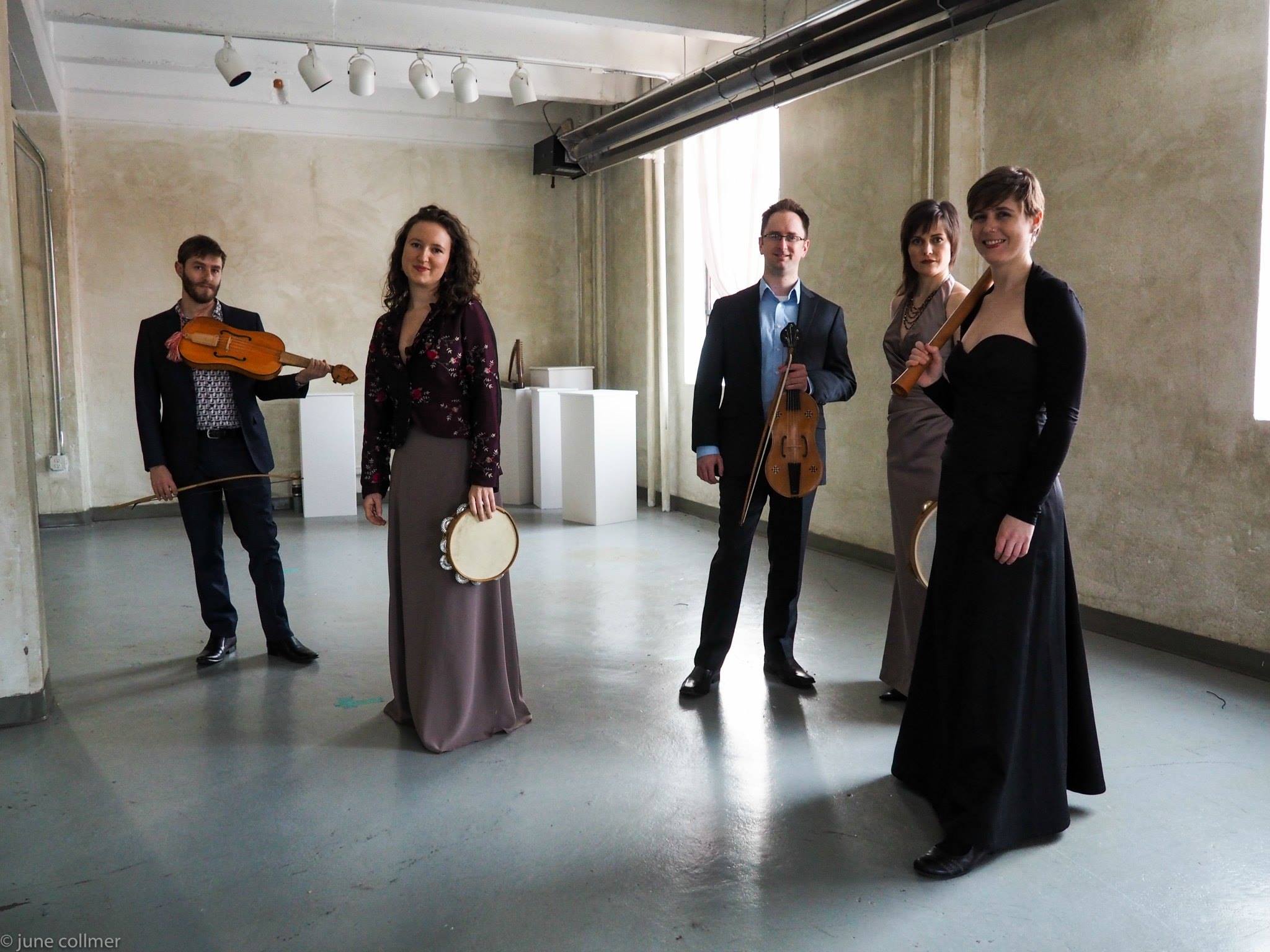
    We continue our partnership with Gotham Early Music Scene (GEMS) with a program titled “Love to My Liking: Refrains of Desire in Gothic France.” The ensemble Alkemie will present music on anonymous texts of the 13th century.

    Alkemie is made up of Tracy Cowart, mezzo-soprano, harp and percussion; David McCormick, vielle; Elena Mullins, soprano and percussion; Sian Ricketts, soprano and recorders; and Niccolo Seligmann, vielle and percussion.

    The concert took place on May 18 at St. Bartholomew’s Church, 50th St. and Park Avenue, in midtown Manhattan. More information about the upcoming season of free lunchtime performances in GEMS’ Midtown Concerts series may be found at midtownconcerts.org.

    Then stick around for a belated birthday celebration for French composer Darius Milhaud, who got lost in the shuffle of American music yesterday for Labor Day. We’ll also have a symphony by Anton Bruckner, also born on yesterday’s date.

    That’s over 600 years of music history, from 12 to 4 p.m., on WWFM The Classical Network and wwfm.org.

  • Antheil’s Ballet Mécanique on WWFM

    Antheil’s Ballet Mécanique on WWFM

    TRENTON MAKES, THE WORLD TAKES.

    Join me this afternoon to “enjoy” the most notorious work by Trenton’s own George Antheil.

    Antheil, the self-proclaimed “Bad Boy of Music,” was born in Trenton, NJ, in 1900. His machine music masterpiece, “Ballet mécanique,” for synchronized player pianos, siren, electric bells, xylophones and airplane propellers, caused a riot at its Paris premiere in 1926.

    Hear it today as part of a program of Labor Day classics, from 4 to 7 p.m. EDT, on WWFM – The Classical Network and wwfm.org.

Tag Cloud

Aaron Copland (92) Beethoven (95) Composer (114) Film Music (124) Film Score (143) Film Scores (255) Halloween (94) John Williams (188) KWAX (229) Leonard Bernstein (101) Marlboro Music Festival (125) Movie Music (139) Opera (202) Philadelphia Orchestra (89) Picture Perfect (174) Princeton Symphony Orchestra (106) Radio (87) Ralph Vaughan Williams (85) Ross Amico (244) Roy's Tie-Dye Sci-Fi Corner (290) The Classical Network (101) The Lost Chord (268) Vaughan Williams (103) WPRB (396) WWFM (881)

DON’T MISS A BEAT

Receive a weekly digest every Sunday at noon by signing up here


RECENT POSTS