
Tonight on “The Lost Chord,” in anticipation of Monday’s solar eclipse, we look to the heavens, with three works inspired by the cosmos: Joaquin Rodrigo’s “In Search of the Beyond” (dedicated to NASA), Enrique Granados’ “Song of the Stars,” and Kaija Saariaho’s “Orion.” That’s “Creating Space,” this Sunday night at 10:00 EDT, on WWFM – The Classical Network and wwfm.org.
Tag: WWFM
-

French Music at Marlboro Festival WWFM
On this week’s “Music from Marlboro,” it’s an all-French affair.
Charles Gounod’s classically proportioned and wholly delightful “Petite symphonie” will be performed by Marlboro wind players, including “the Heifetz of the flute” (Gramophone) Marina Piccinini, principal oboist of the Metropolitan Opera Nathan Hughes, principal oboist of the Minnesota Orchestra Joseph Peters, principal clarinetist of the New York Philharmonic Anthony McGill, New York-based freelance clarinetist Alicia Lee (Orpheus Chamber Orchestra, The Knights, NOVUS and ACME), principal bassoonist of the Princeton Symphony Orchestra Brad Balliett, San Francisco Symphony bassoonist Steven Dibner, newly appointed principal hornist of the Berlin Philharmonic David Cooper, and former principal horn of the Berlin Radio Symphony Orchestra (and now concert soloist) Radovan Vlatković, from a concert given in 2013.
Then veteran pianist Gilbert Kalish will be joined by violinist Catherine Cho (Juilliard School faculty), violist Melissa Reardon (Enso String Quartet), and cellist Raman Ramakrishnan (Horszowski Trio, formerly of the Daedalus Quartet) to perform Gabriel Fauré’s passionate and personal Piano Quartet No. 2 in G minor, Op. 45, from a concert given in 2001.
I hope you’ll join me for more great music-making from the archives of the legendary Marlboro Music Festival, this Wednesday at 6 p.m. EDT, on WWFM – The Classical Network and wwfm.org.
Marlboro School of Music and Festival: Official Page
-
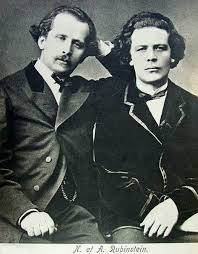
Rubinstein’s “Ocean” Symphony: A Forgotten Masterpiece
His manner of playing could border on the hysterical. His wild hair brought comparisons to Beethoven, while he obliterated orchestras in avalanches of sonority. His lack of restraint turned Clara Schumann’s stomach, while the notoriously prickly critic Eduard Hanslick was forced to concede that the sensual element of his playing carried all before it. “Yes, he plays like a god,” he wrote, “and we do not take it amiss if, from time to time, he changes, like Jupiter, into a bull.”
Anton Rubinstein was one of the most remarkable figures in Russian music. A pianist, composer and conductor – rumored, in fact, to be the illegitimate son of Beethoven (though physically impossible, since he was born 20 months after Beethoven’s death) – Rubinstein founded the Saint Petersburg Conservatory. His brother, Nikolai, the original dedicatee of Tchaikovsky’s Piano Concerto No. 1 (with which he had a complicated history), founded the conservatory in Moscow.
As a composer, Anton amassed a considerable output. He wrote orchestral works, chamber and instrumental music, and songs. His Piano Concerto No. 4 retains a foothold on the repertoire, though it is not nearly as often heard as it should be. The best known of his 20 operas, “The Demon,” remains popular in Russia. Though celebrated at home, throughout Europe and in the United States as a towering virtuoso, nothing is ever heard of his six symphonies.
The original version of his ambitious Symphony No. 2, subtitled “The Ocean,” was written in 1851. The piece grew in scope, through revisions over 29 years, as the composer became absorbed in the developments of Romantic “program” music – music that attempted to evoke extra-musical subjects. Though Rubinstein dedicated the symphony to Franz Liszt, with whom he enjoyed friendly relations and who offered much advice, don’t expect anything along the lines of Liszt’s more revolutionary structures. The revised “Ocean” falls into seven movements (expanded from the original four), but the music is more in line with the quieter innovations of the German classicists than anything from the New German School. Furthermore, there is little about it that sounds particularly “Russian.”
When he undertook the writing of his symphony, Rubinstein was still in search of an individual voice as a composer. In a way, the development of the piece mirrors his perpetual grappling with his own sense of self. “To Jews, I am a Christian; to Christians, I’m a Jew,” he wrote. “To Russians, I’m a German, but to Germans, I’m Russian. To the classicists, I’m an innovator, but to innovators, I’m a reactionary, and so on. The verdict: neither fish nor fowl, a pitiful identity.”
I hope you’ll join me today, from 12 and 4 p.m. EDT, as we set sail on Anton Rubinstein’s “Ocean” Symphony, among my featured works, on WWFM – The Classical Network and wwfm.org.
PHOTO: The amazingly talented and influential Brothers Rubinstein (Anton on the right)
-
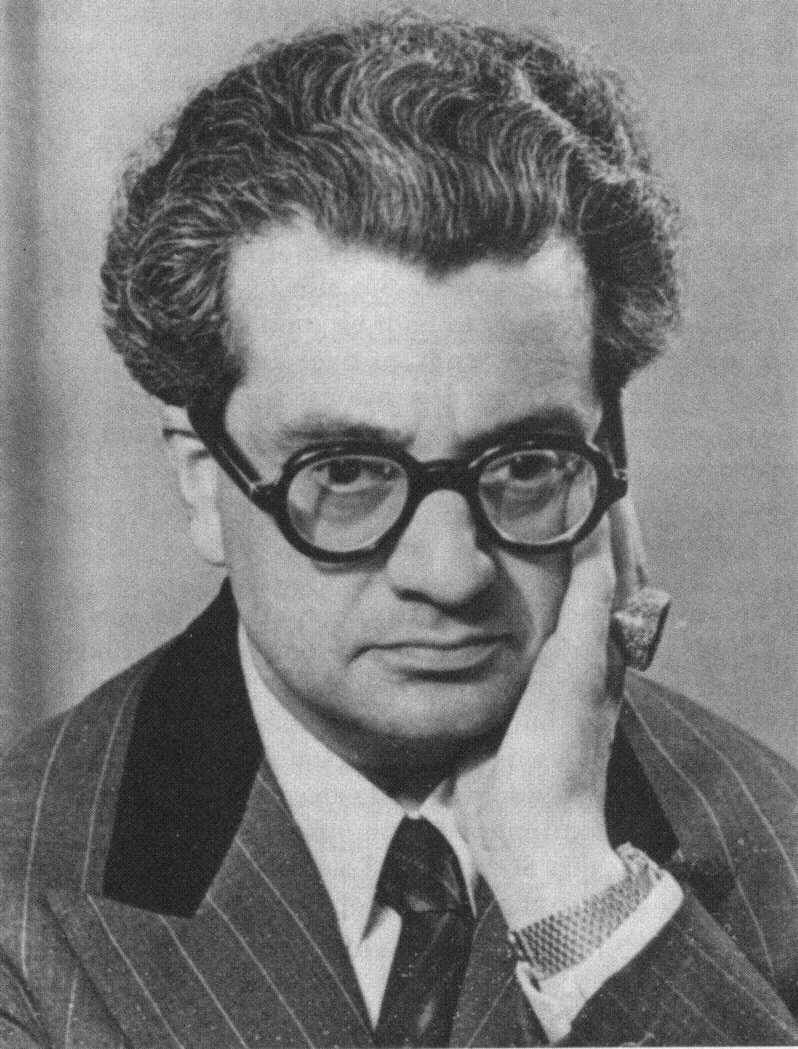
Sorabji’s Anniversary & Epic Piano Music
Today is the anniversary of the birth of the pianist-composer known as Kaikhosru Shapurji Sorabji.
Born Leon Dudley in 1892 to a civil engineer of Parsi parentage and an English mother, Sorabji’s most notorious pieces are even longer than his name. His “Opus clavicembalisticum” clocks in at around four hours in performance. The composer wrote, “The closing 4 pages are so cataclysmic and catastrophic as anything I’ve ever done – the harmony bites like nitric acid – the counterpoint grinds like the mills of God…” Even so, some of his later works make it seem like a mere bagatelle. His “Symphonic Variations for Piano” is roughly nine hours in length.
As if that weren’t enough to place a seal on his obscurity, Sorabji put a ban on public performance of his music for 40 years. Sorabji had the means to live in seclusion, and in seclusion he lived. A complex and at times prickly individual, his scores nevertheless attracted some persistent champions who managed to coax him out of retirement for a final burst of creativity until failing eyesight and difficulty holding a pen caused him to give it up. Sorabji died in 1988, at the age of 96.
Clearly, Sorabji marched to the beat of his own drum. Equally evident is that much of his music is inappropriate for drive time. But join me today, and we’ll sample some of his shorter pieces, among our featured works, to propel you on your afternoon commute, from 4 to 7 EDT, on WWFM – The Classical Network and wwfm.org.
-
Suk’s Summer’s Tale Healing Power of Nature
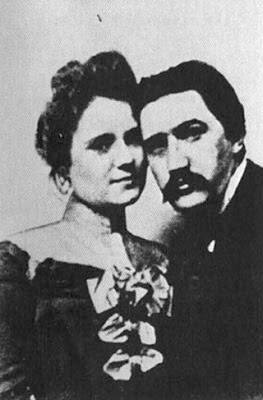
Josef Suk was the one-time pupil and eventual son-in-law of Antonin Dvořák. In fact, his early works very much reflect Dvořák’s influence, in sunny, romantic music full of nationalistic touches.
However, a double tragedy occurred in Suk’s 30th year, in 1905, when he lost both his father-in-law and his beloved wife – Dvořák’s older daughter – Otilie. The events directly inspired Suk’s “Asrael Symphony,” named for the Angel of Death. Not surprisingly, morbidity colors much of his mature output.
“A Summer’s Tale” is the next step in Suk’s emotional rehabilitation. The work is a five-movement symphonic poem, the second of a four-part cycle, which contemplates death and the meaning of life. More affirmative than the grim “Asrael,” which is full of pain, loss and grief, “A Summer’s Tale” explores the healing powers of nature, in a score that at times reflects the epic romanticism of Gustav Mahler and the impressionism of Claude Debussy. It was composed over the course of just six weeks in the summer of 1907. Further tinkering took place over the next year-and-a-half. The work received its premiere in January of 1909.
Suk later described the theme of the piece as “finding a soothing balm in nature.” Tune in tonight and see if you agree.
That’s “Healing by Nature” – Suk’s “A Summer’s Tale” – on “The Lost Chord,” this Sunday night at 10:00 EDT, on WWFM – The Classical Network and wwfm.org.
PHOTOS: Otilie Dvořáková and Josef Suk, in happier days
Tag Cloud
Aaron Copland (94) Beethoven (95) Composer (114) Film Music (149) Film Score (143) Film Scores (255) Halloween (98) John Williams (197) KWAX (232) Leonard Bernstein (105) Marlboro Music Festival (125) Movie Music (164) Mozart (91) Opera (215) Philadelphia Orchestra (90) Picture Perfect (174) Princeton Symphony Orchestra (110) Radio (90) Ross Amico (244) Roy's Tie-Dye Sci-Fi Corner (290) The Classical Network (101) The Lost Chord (269) Vaughan Williams (107) WPRB (397) WWFM (881)