Tag: WWFM

  • Black Composers Rediscovered

    Black Composers Rediscovered

    During Black History Month, I thought it would be good time to share this archived episode of “The Lost Chord,” the first of a four-part series celebrating the efforts of conductor Paul Freeman in reviving 200 years’ worth of neglected repertoire by composers of color.

    The Black Composer Series was originally issued on Columbia Records back in the 1970s, its individual volumes much sought-after by collectors. I almost passed out when I found it had finally been reissued on compact disc as a boxed set, though with astonishingly little fanfare, by Sony Classical. I hadn’t seen anything about it until I discovered it on the shelf at Princeton Record Exchange.

    Some of the composers have since found a toehold on the fringes of the concert repertoire – William Grant Still, George Walker, and the Chevalier de Saint-Georges are being heard with more frequency these days – but there are still many fascinating discoveries to be savored.

    The series originally aired on WWFM – The Classical Network in 2019. I’ll post another segment each Saturday in February. Or you can just binge on all four now.

    Part One features selections by Chevalier de Saint-Georges, Olly Wilson, and Fela Sowande. Follow the link, click “listen,” and enjoy.

    https://www.wwfm.org/post/lost-chord-february-3-black-future

  • Finnish Birdsong Music This Sunday

    Finnish Birdsong Music This Sunday

    This Sunday night on “The Lost Chord,” in this season of bitter temperatures and falling snow, keep your spirits up with music inspired by Finland’s avian life.

    Einojuhani Rautavaara’s concerto for birdsong and orchestra, “Cantus Arcticus,” from 1972, incorporates tape recordings made by the composer on the bogs of Liminka, near the Arctic Circle. More than just a gimmick, the piece is an inspiring triptych that manages to transcend its potentially New Age conceit. The work falls into three movements: “The Bog,” “Melancholy,” and “Swans Migrating.” The final movement takes the form of a long crescendo for orchestra, and incorporates the songs of whooper swans.

    Jean Sibelius’ uplifting Symphony No. 5 culminates in a grand theme inspired by swans in flight around his home on the shores of Lake Tuusula in Järvenpää. The symphony is standard repertoire, but we’ll hear it as it was first performed in 1915, before it was substantially revised to become the masterwork we know today.

    Encountering the Fifth in its original guise illuminates the composer’s remarkable clarity of purpose, uncanny objectivity, and iron will in reshaping his raw materials to achieve a loftier, definitive vision. It’s not for nothing that Sibelius was described by one critic as “a great artist whose imagination has the wings of an eagle.”

    Take flight with Finnish music. Join me for “Snow Birds,” this Sunday night at 10:00 EST, on WWFM – The Classical Network and wwfm.org.

  • Hear Bartók Play Rare Recordings Sunday

    Hear Bartók Play Rare Recordings Sunday

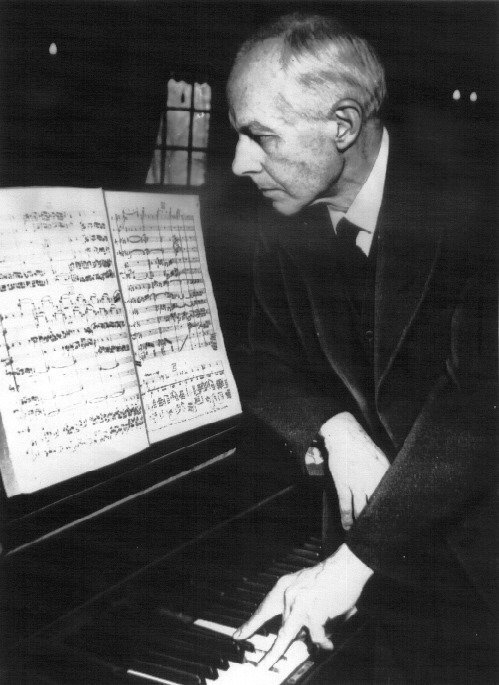
    This Sunday night on “The Lost Chord,” steal some fascinating glimpses of Béla Bartók at the piano, captured in rare, private recordings, preserved on wax cylinders and archival 78s.

    We’ll hear Bartók perform some of his own music, including fragments of the Piano Concerto No. 2, with Ernest Ansermet conducting. He’ll also be the soloist in works for keyboard and orchestra by Bach and Mozart; Ernő Dohnányi will direct the Budapest Philharmonic. Music by Beethoven and Brahms will also be featured. As an added bonus, we’ll get to hear Bartók speak, in English, at a 1944 concert given by his wife, Ditta.

    Hungary for Bartók? The snacks are on wax. Join me for “Saving Private Bartók,” this Sunday night at 10:00 EST, on WWFM – The Classical Network and wwfm.org.

  • Khachaturian Resolve Amidst Anxious Times

    Khachaturian Resolve Amidst Anxious Times

    Anxious about current events?

    This Sunday night on “The Lost Chord,” join me for Leopold Stokowski’s rarely-heard recording of Aram Khachaturian’s Symphony No. 2.

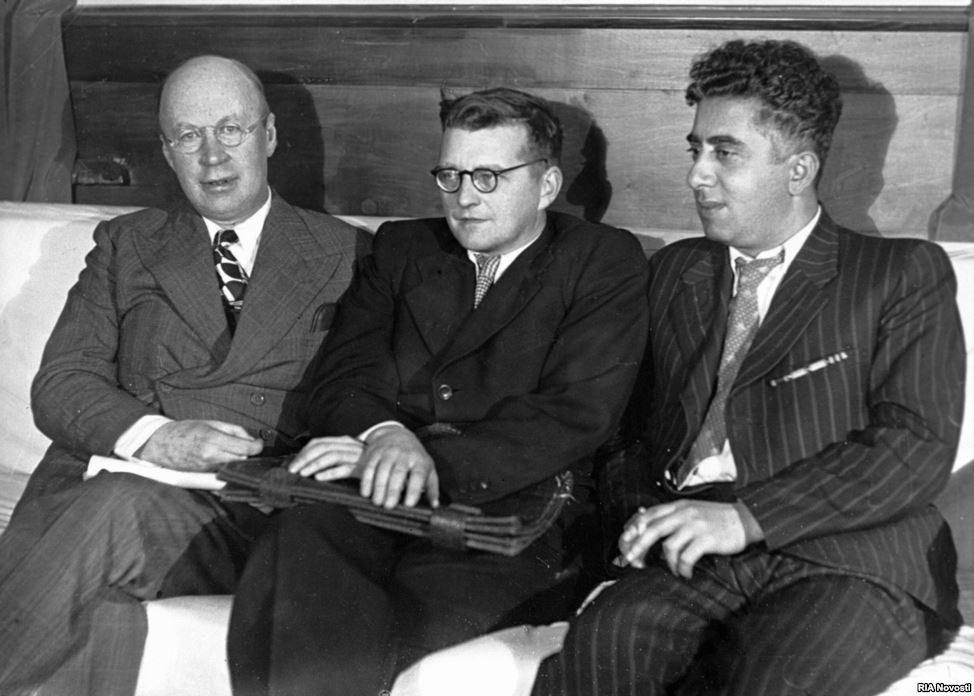
    Khachaturian composed the work in 1943, the height of World War II, while holed up at a Composers Union retreat with Shostakovich, Prokofiev, Miaskovsky, and Glière. He described the piece as “a requiem of protest against war and violence.” Its nickname, “The Bell,” alludes to a kind of alarm that opens and closes the work. Overall, the tone is one of unshakable resolve in the face of tragedy.

    Stokowski’s recording, long unavailable, was originally issued on United Artists Records in the late 1950s. It reappeared briefly on compact disc, on the EMI label, in 1994, and again in 2009, as part of a 10-disc box set of entrancing Stokowski performances.

    Alas, the master tapes have not weathered the years well, so there are moments of distortion, but the power of the work under Stokowski’s direction transcends any technical limitations.

    To round out the hour, we’ll hear Russian-born pianist Nadia Reisenberg in a selection from her 1947 Carnegie Hall recital, Khachaturian’s most famous piano piece, the “Toccata.” Reisenberg studied at Philadelphia’s Curtis Institute of Music under Josef Hoffman.

    I hope you’ll join me for music by Khachaturian other than the “Sabre Dance.” That’s “Khach as Catch Can,” this Sunday at 10:00 EST, on WWFM – The Classical Network and wwfm.org.


    “Sabre Dance” at the Bolshoi, with Khachaturian conducting:

    Khachaturian singing about the glories of Armenian wine!

    https://www.youtube.com/watch?v=vtKHrg7w3_o


    PHOTO: Troika! (Right to left) Khachaturian with Shostakovich and Prokofiev

  • Aurora Borealis Classical Music Sounds North

    Aurora Borealis Classical Music Sounds North

    All signs point north!

    This Sunday night on “The Lost Chord,” keep looking up, with musical responses to the uncanny, natural phenomenon known as the Aurora Borealis.

    Uuno Klami studied in Helsinki, with Erkki Melartin, then in Paris and Vienna. Following the premiere of his “Northern Lights” in 1948, some critics questioned whether the content of the piece lived up to the expectations engendered by its title. Klami remarked, “The northern lights can be much more than the superficial play of colors in the sky. They can be an expression of the infinite loneliness of the human spirit.” Personally, he thought it his best work.

    Geirr Tveitt was born in Bergen, Edvard Grieg’s native city. Though he was very much influenced by folk music of the Norwegian countryside, he too acquired further polish abroad. He studied first in Leipzig and then in Paris, with Arthur Honegger, Heitor Villa-Lobos, and Nadia Boulanger.

    In 1970, a very great tragedy occurred, when a fire swept through Tveitt’s home, a farmhouse in Nordheimsund, destroying most of his unpublished manuscripts – 300 pieces, stored in wooden chests – fully 4/5ths of his compositional output. It also crippled his ability to compose. Tveitt succumbed to alcoholism and died a broken man, with little hope of being remembered, in 1981.

    Happily, since then, a number of these “lost” works have been reconstructed. In the case of his Piano Concerto No. 4, subtitled “Aurora Borealis,” from 1947, the orchestral parts survived, along with a two-piano reduction and an archived broadcast recording.

    The restored concerto falls into three movements: “The Northern Lights awaken above the autumn colors,” “Glittering in the winter heavens,” and “Fading away in the bright night of spring.”

    I hope you’ll join me for an hour of radiant music, on “Aural Borealis,” this Sunday night at 10:00 EST, on WWFM – The Classical Network and wwfm.org.

Tag Cloud

Aaron Copland (92) Beethoven (95) Composer (114) Film Music (124) Film Score (143) Film Scores (255) Halloween (94) John Williams (188) KWAX (229) Leonard Bernstein (101) Marlboro Music Festival (125) Movie Music (139) Opera (202) Philadelphia Orchestra (89) Picture Perfect (174) Princeton Symphony Orchestra (106) Radio (87) Ralph Vaughan Williams (85) Ross Amico (244) Roy's Tie-Dye Sci-Fi Corner (290) The Classical Network (101) The Lost Chord (268) Vaughan Williams (103) WPRB (396) WWFM (881)

DON’T MISS A BEAT

Receive a weekly digest every Sunday at noon by signing up here


RECENT POSTS