Tag: WWFM

  • Piazzolla’s Tango a WWFM Anniversary

    Piazzolla’s Tango a WWFM Anniversary

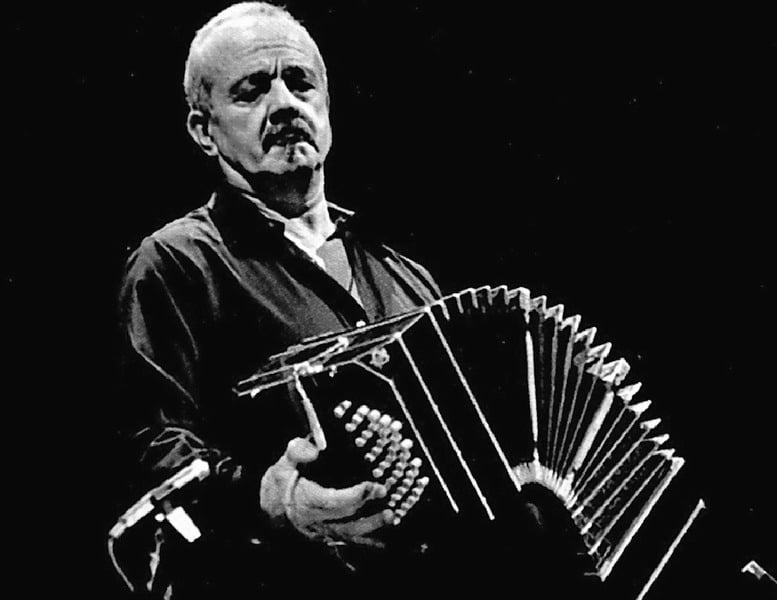
    Today is the 100th anniversary of the birth of Argentinian master Astor Piazzolla. It also marks a year since my last live air-shift at WWFM The Classical Network.

    With the white caps of Covid already beginning to crest on the horizon, hosts scrambled to get five weeks-worth of recorded shows in the can, against the event that the college would have to shut down. I mean, if everyone stayed home for five weeks, cases would dwindle to nil, and we’d all be back to work, right?

    At least I am still selecting my shows from the archive, which is vast, but I think it’s high time to begin assembling a home studio already. Too many significant anniversaries have gone by – including my 25th at the station, and the 10th of “Picture Perfect” – to say nothing of missed holidays and lost musicians who should have been memorialized. At the very least, I should be producing new material. I should not be squandering my time sharing music links on Facebook.

    That said…

    Although Astor Piazzolla wrote in all forms, he is best remembered for reinvigorating the tango. He accomplished this by drawing on modern classical techniques to deepen its expressive possibilities.

    He first discovered the bandonéon – like the accordion, a member the concertina family – when his father purchased one from a pawn shop in Greenwich Village. Piazzolla took up the instrument that would become his constant companion in 1929, at the age of 8. He composed his first tango at 11. At 13, he was invited by Carlos Gardel to join his band. His father forbade it – fortunately, it turns out, since Gardel and his musicians died in a plane crash while on tour.

    Piazzolla also attracted the attention of Alberto Ginastera, with whom he studied for five years. Then, in common with many of the great composers of the 20th century, he traveled to Paris, hoping to broaden his understanding of classical composition under the guidance of Nadia Boulanger. After he played one of his tangos for her, the legendary pedagogue took his hands in hers and said, “Here is the true Piazzolla – do not ever leave him.” Her advice paid off. By embracing Argentina’s national dance, Piazzolla not only secured his place in the hearts of the public, but also in the classical concert repertoire.

    Spring is a time of renewal. With this in mind, here is Piazzolla’s “Four Seasons of Buenos Aires.” The work is often performed these days by violinists – its movements interleaved with those of Vivaldi’s “The Four Seasons” – to charming effect. Here it is, as Piazzolla intended, with the composer on bandonéon:

    Piazzolla plays “Libertango”:

    Happy birthday, Astor Piazzolla!


    In case you’re interested, I’ve appended the playlist, divided into hours, from my last live air shift, on March 11, 2020, which touches on some juicy birthdays: those of American mavericks Henry Cowell and Carl Ruggles, “Beethoven of Kentucky” Anthony Philip Heinrich, Catalan composer Xavier Montsalvatge, and yes, Astor Piazzolla. Not included is “Music from Marlboro,” which followed at 6 pm and consisted of Brahms’ String Sextet No. 2 and the Air from Bach’s Orchestral Suite No. 3. Who knew so much time would pass?
  • Celebrate Bach’s Birthday with Music & More

    Celebrate Bach’s Birthday with Music & More

    March 21st is the birthday of Johann Sebastian Bach. I’ve already got my order in for a cake, and it had to be a big one, in order to accommodate 336 candles.

    The Princeton Symphony Orchestra has just posted the last of its four-part series on Bach’s “The Musical Offering.” PSO musicians perform Bach’s contrapuntal, often chromatic – and for at least one canon, crabby – masterwork, with Assistant Conductor Nell Flanders offering absorbing insights into its history and structure. The series is free. Watch all four installments at princetonsymphony.org.

    On Sunday, The Dryden Ensemble will stream a lecture by Bach scholar Michael Marissen on the musical aims of the “St. John Passion.” Then the following Sunday, March 21st – Bach’s birthday – experience a performance of the oratorio from last year, an especially notable concert, in that it was documented just as the world was shutting down for the pandemic. Both of the Bach events will be made available, on their respective Sundays, at 3 p.m. The lecture is free. More information and tickets for the performance are available at drydenensemble.org.

    Finally, WWFM The Classical Network is in the midst of its annual “Bach 500” challenge. 500 listener donations in any amount will be matched by funds from the station’s “Bach Pot” (fortified by some very generous leprechauns). If the goal is reached, fundraising will be cancelled for Bach’s birthday. The reward will be a euphoric playlist of uninterrupted Bach, free from pecuniary concerns – lutes in place of lucre, concertos supplanting chatter, pipe organs in preference to pitching.

    Won’t you be one of the Bach 500? Make a contribution now, and watch the mercury rise on the Bach thermometer at wwfm.org. Thank you for your support of classical music on WWFM – The Classical Network. It’s because of listeners just like you that we are able to continue to Bach-around-the-clock!

    https://wwwfm.secureallegiance.com/wwfm/WebModule/Donate.aspx?P=DEFAULT&PAGETYPE=PLG&CHECK=vOU2bz5JCWmgCDbf53nm9ezWDeZ%2BeA1M&fbclid=IwAR0gC4oY7VhnwYX0TMEi72BAeDrj68XjjtdSx7OFSJZggVsskJqa4ZI-Vd4


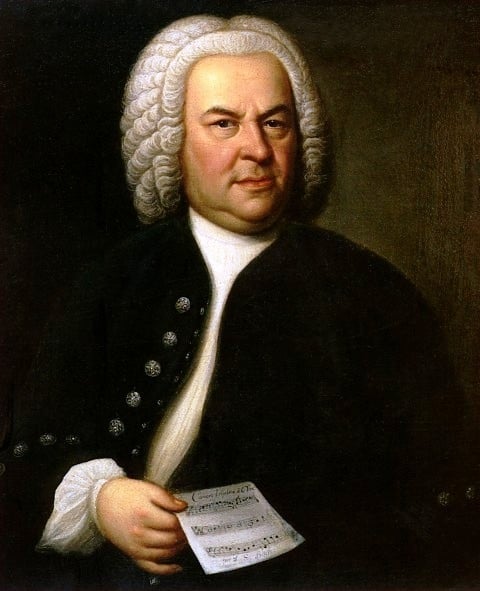
    IMAGE: Bach makes a musical offering in the form of a riddle canon, in the famous Elias Gottlob Haussmann portrait. The painting, which was housed in Princeton for over 60 years, in the private collection of William H. Scheide, was bequeathed by Scheide to the Bach Archive in Leipzig – the city in which Bach spent most of his creative life – where it now resides.

  • Black Composers Rediscovered Black History Month

    Black Composers Rediscovered Black History Month

    Throughout the month of February, to coincide with Black History Month, I’ve been reaching into the archive for relevant material from “The Lost Chord,” originally broadcast over WWFM – The Classical Network.

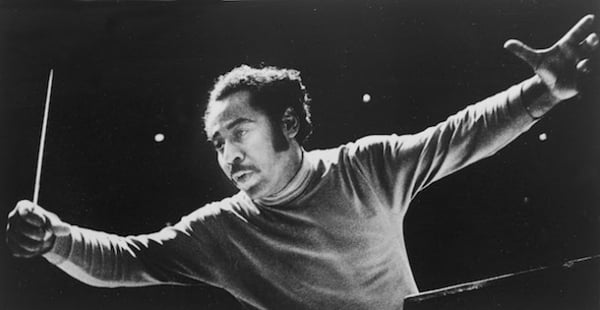
    My four-part survey, “Black to the Future,” celebrates the compact disc reissue – after 40 years – of Columbia Records’ landmark Black Composers Series. These visionary recordings, made under the direction of conductor Paul Freeman (pictured), were originally released on vinyl between 1974 and 1978. Now collected into a 10-CD box set by Sony Classical, they provide a rare overview of 200 years-worth of neglected music, from a time when most of it was essentially unknown. Indeed, there are still plenty of fascinating discoveries to be savored.

    The third installment includes a Romantic violin concerto by Cuban composer José Silvestre de los Dolores White y Lafitte (José White, for short), a cello sonata written for Janos Starker by David Baker, and “Eight Miniatures for Small Orchestra” by Panamanian composer Roque Cordero.

    https://www.wwfm.org/post/lost-chord-february-17-black-future-part-iii

    If you missed it, here’s Part One, with music by Chevalier de Saint-Georges, Olly Wilson, and Fela Sowande:

    https://www.wwfm.org/post/lost-chord-february-3-black-future

    And Part Two, with works by George Walker and José Maurício Nunes Garcia:

    https://www.wwfm.org/post/lost-chord-black-future-part-ii

    Follow the links, click “listen,” and enjoy.

  • Psyche & Eros Valentine’s Special

    Psyche & Eros Valentine’s Special

    This Sunday night on “The Lost Chord,” for Valentine’s Day, Cupid, draw back your bow, for two contrasting treatments of the allegorical myth of Psyche and Eros.

    Frequently interpreted as a metaphor for the elevation of the soul through love, the tale of Psyche and Eros has much in common with that of Beauty and the Beast: the prohibition against a maid glancing at her “captor,” catty stepsisters who conspire to trip her up, and the revelation of the “beast” as a kind of prince – in this case, the God of Love himself.

    In the end, the protagonists pass through travails to triumph, as true love conquers all – a nice change of pace, I think you’ll agree, from the usual classical story arc of being transformed into a stag and devoured by hounds, flying too close to the sun and being struck down by Zeus’ thunderbolt, or accidentally eating one’s own children in a meat pie.

    We’ll hear music from César Franck’s “Psyché,” full of romance and ardor, and a somewhat cheekier version, “Cupid and Psyche” by Lord Berners, which sounds more suited to a ballroom or even an amusement park.

    Get Psyched for Valentine’s Day. Love is blind, then kind, on “Slings and Eros,” this Sunday night at 10:00 EST, on WWFM – The Classical Network and wwfm.org.

  • Black Composers Series Reissue Celebrated

    Black Composers Series Reissue Celebrated

    During Black History Month, I thought it would be good time to share some archived episodes I put together for “The Lost Chord,” on WWFM – The Classical Network, to celebrate the reissue – after 40 years – of Columbia Records’ Black Composers Series.

    The series was the brainchild of conductor Paul Freeman, who drew from 200 years-worth of neglected repertoire written by composers of color. The performances were released on nine LPs. Trying to collect them over the decades has been like panning for gold for us classical music prospectors.

    Astonishingly, the boxed set of ten CDs, now including a bonus disc of spiritual arrangements, was simply dropped on the market with zero advertising, not even on the Sony Classical website. News was circulated strictly through word of mouth and thanks to bloggers and broadcasters like myself. For me, it was totally unexpected, and the adrenaline surged, when I spotted it on the shelf at Princeton Record Exchange.

    Thankfully, in the decades since the project was first undertaken, a handful of the composers have entered the fringes of the concert repertoire, but there are still a number of fascinating discoveries to be savored.

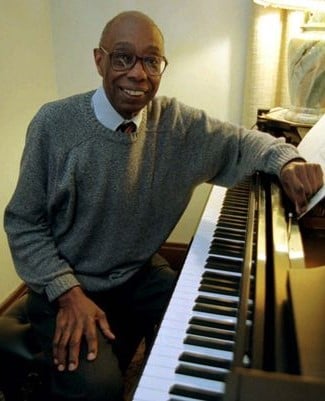
    George Walker’s “Lyric for Strings” (not included in the set) has found particular success recently, and deservedly so. Part Two of my “Lost Chord” broadcasts devoted to the subject (the second of a four-part series) includes Walker’s Trombone Concerto and a Requiem Mass from 1816 by the Brazilian composer José Maurício Nunes Garcia. Walker, not incidentally, was the first African-American recipient of the Pulitzer Prize for Music.

    I am linking webcasts of the individual segments on Saturdays throughout February. Follow the links, click “listen,” and enjoy.

    https://www.wwfm.org/post/lost-chord-black-future-part-ii

    If you missed it, here’s Part One, with music by Chevalier de Saint-Georges, Olly Wilson, and Fela Sowande:

    https://www.wwfm.org/post/lost-chord-february-3-black-future

Tag Cloud

Aaron Copland (92) Beethoven (95) Composer (114) Film Music (124) Film Score (143) Film Scores (255) Halloween (94) John Williams (188) KWAX (229) Leonard Bernstein (101) Marlboro Music Festival (125) Movie Music (139) Opera (202) Philadelphia Orchestra (89) Picture Perfect (174) Princeton Symphony Orchestra (106) Radio (87) Ralph Vaughan Williams (85) Ross Amico (244) Roy's Tie-Dye Sci-Fi Corner (290) The Classical Network (101) The Lost Chord (268) Vaughan Williams (103) WPRB (396) WWFM (881)

DON’T MISS A BEAT

Receive a weekly digest every Sunday at noon by signing up here


RECENT POSTS