Tag: WWFM

  • Vera’s Story Holocaust Remembrance Day

    Vera’s Story Holocaust Remembrance Day

    On this Yom HaShoah, hear the riveting, harrowing, and ultimately inspiring story of Vera Herman Goodkin, as told in her own words.

    Goodkin was just shy of her 9th birthday when the Nazis occupied her hometown of Uzhorod, Czechoslovakia. She spent the next four years in hiding and detention. Ultimately, she was rescued and taken to freedom under the protection of Swedish diplomat Raoul Wallenberg.

    A sweet, articulate, and upbeat personality, Goodkin continues to speak with young people about her experiences and to warn of the dangers of hatred and mistrust.

    “Vera’s Story: A Holocaust Remembrance” will be broadcast on WWFM – The Classical Network and wwfm.org today at 3 & 11 pm EDT.

    The award-winning program will also include music by composers who fled Europe or perished during the war, as well as works written in memory of the millions of victims of the Holocaust.

    Yom HaShoah, or Holocaust and Heroism Remembrance Day, also marks the beginning of the Warsaw Ghetto Uprising of 1943, when Jewish resistance fighters defied the Nazis and fought for freedom and dignity.

    You’ll find more information about “Vera’s Story” and a representative playlist – including works by Gideon Klein, Hans Krasa, Szymon Laks, Franz Waxman, and Eric Zeisl – here:

    https://www.wwfm.org/post/veras-story-holocaust-remembrance#stream/0

  • Howard Ferguson’s Easter Dream of the Rood

    Howard Ferguson’s Easter Dream of the Rood

    This Sunday night on “The Lost Chord,” it’s a Howard Ferguson Easter.

    Born in Belfast in 1908, Ferguson had ambitions to become a composer. To this end, he traveled to London, where he studied at the Royal College of Music with, among others, Ralph Vaughan Williams. He also met and befriended fellow student Gerald Finzi. He achieved early success with works like the Octet of 1933, and no less a personage than Jascha Heifetz recorded his Violin Sonata No. 1.

    Even so, over the decades his music has slipped from consciousness, no doubt helped by the fact that, by mid-life, he felt he had already said everything he had to say as a composer. He devoted his last four decades to musicological pursuits, editing and promoting works of Purcell, Schubert and Finzi. In the 1990s, he also wrote a cookbook, “Cooking Solo.” Ferguson died in 1999, not long after his 91st birthday.

    Thankfully, he lived long enough to hear some fine recordings as part of a modest revival of his music in the 1980s and ‘90s. A number of his chamber works were released on the Hyperion label by fine musicians like Thea King and members of the Nash Ensemble; his Piano Concerto was recorded for EMI by Howard Shelley; and Richard Hickox conducted a disc of his orchestral works for Chandos.

    Also on the latter album is what turned out to be Ferguson’s last completed work, “The Dream of the Rood,” for chorus and orchestra, composed in 1958. After that, the composer embarked on a string quartet, but became frustrated by the lack of a fresh perspective and tore the thing up.

    “The Dream of the Rood” is based on an 8th century Anglo-Saxon poem that marries the Passion story with characteristics of the secular heroic tradition. The poem is framed by a narrator’s vision of a magnificent bejeweled tree. Upon closer inspection, however, he finds its jewels bespattered with blood. It becomes apparent that this tree was the very same upon which Christ was crucified.

    The middle portion of the poem is told from the tree’s perspective, with the tree being cut down and carried away for the purpose of the Crucifixion. The nails pierce the tree, yet man and tree endure, refusing to fall, bearing unimaginable pain for the sake of mankind. Just as Christ is resurrected, so is the Cross resurrected, now adorned with gold and silver. It is honored above all trees, just as Christ is honored above all men. The narrator gives praise to God, filled with hope at the prospect of eternal life and a desire to be nearer the glorious Cross.

    I hope you’ll join me for music of Howard Ferguson on “Rood Awakening,” this Sunday night at 10:00 EDT, on WWFM – The Classical Network and wwfm.org.


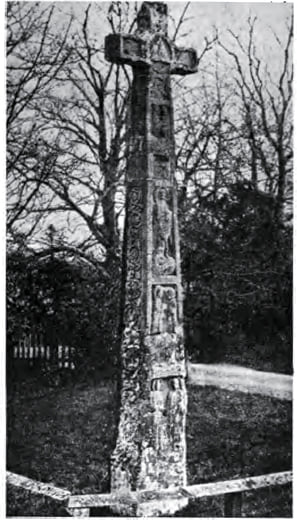
    PHOTO: Portions of the poem are engraved on the 8th century Ruthwell Cross (left, as it appeared between 1823 and 1887; and right, at its current location at Ruthwell Church, Dumfriesshire, Scotland)
  • Kápralová and Smyth: Forgotten Female Composers

    Kápralová and Smyth: Forgotten Female Composers

    This Sunday night on “The Lost Chord,” the focus will be on outstanding works by two extraordinary female composers.

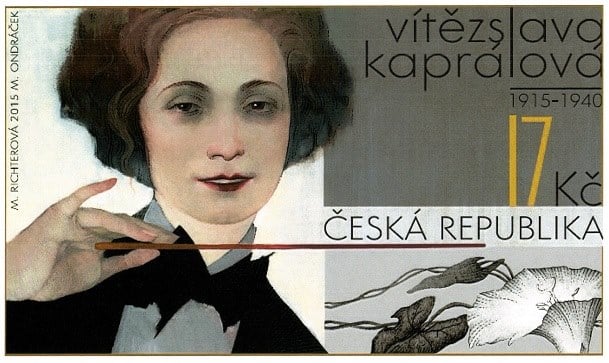
    Vitězslava Kápralová (1915-1940) was one of the great hopes of Czech music, a figure who undoubtedly would be much better known had she not died of tuberculosis at the age of 25. As it stands, her reputation is only beginning to emerge from the shadow of her teacher and lover, Bohuslav Martinu.

    Kápralová’s String Quartet was written while she was yet a student at the Prague Conservatory, where her teachers included Vitězslav Novák and Václav Talich. (She studied with Martinu later in Paris.) The work was completed in 1936, when Kápralová was about 21 years-old.

    More about Kápralová here, in this article written to mark her centenary in 2015:

    https://www.telegraph.co.uk/culture/music/classicalmusic/11365848/The-tragedy-of-Europes-great-forgotten-female-composer.html?fbclid=IwAR1EgKzOjglhAKe-58wHwivhYjI1LtTCPzgr0efhV0xuf0898oeeZYbJHU0

    Ethel Smyth (later DAME Ethel Smyth, 1858-1944) was one of the most vocal advocates of the women’s suffrage movement in England. She overcame early opposition to a career in music on the part of her father to receive the praise of George Bernard Shaw, who called her Mass “magnificent.”

    However, her works were often better-appreciated abroad. Her operas, in particular, were embraced in Germany. One of them, “Der Wald,” was the only opera by a woman composer mounted by New York’s Metropolitan opera for over a century!

    Smyth served time in prison for putting out the windows of politicians who opposed a woman’s right to vote. She also wrote for the cause “The March of the Women.” When Sir Thomas Beecham went to visit her in jail, he witnessed her conducting through the bars of her window with a toothbrush as her associates gathered for exercise in the courtyard.

    Smyth’s “Serenade in D” – a symphony in all but name – was her first orchestral score, composed in 1890, when she was about 32 years-old. In my opinion, it’s better than just about anything composed by her contemporary, Sir Hubert Parry, and much more compelling than the symphonies of Sir Charles Villiers Stanford.

    More about Smyth here, in this piece put together in connection with a revival of her opera, “The Wreckers,” by the great Leon Botstein:

    https://www.npr.org/sections/deceptivecadence/2015/07/23/410033088/one-feisty-victorian-womans-opera-revived?fbclid=IwAR2GIlgZ3p6rwkh8dFa-2H7X27tQPRRKFK_TLnuxWI67kayucG8tuXkOj5I

    I hope you’ll join me for music by these two extraordinary women – “A Woman’s Place is in the Concert Hall” – this Sunday night at 10:00 EDT, on WWFM – The Classical Network and wwfm.org.


    Vitězslava Kápralová honored on a postage stamp; Ethel Smyth taken into custody

  • Bach 500 Goal Achieved! Thanks WWFM

    Bach 500 Goal Achieved! Thanks WWFM

    We made it! 500 donations achieved! We’ve crossed the finish line of this year’s Bach 500! Thank you for your generous support of WWFM – The Classical Network and wwfm.org. Lots more Bach on the way, free of fundraising interruptions.

    Enjoy the music on this lovely spring day, and get on to the important business of Sunday brunch, a winning combination of Bach and pancakes!

  • WWFM Bach 500 Finale Donate & Enjoy Bach All Day

    WWFM Bach 500 Finale Donate & Enjoy Bach All Day

    It’s the final morning for the WWFM Bach 500! Make a donation now, and this afternoon enjoy an all-Bach “Sounds Choral” at 2 pm and an all-Bach “Sunday Opera,” featuring three of his cantatas (since Bach wrote no opera), and more, at 3 pm EDT.

    Of course, you’re getting all-Bach this morning, as well, but the fundraising will stop as soon as we cross the finish line of 500 contributions in any amount.

    Consulting the membership thermometer on the station’s homepage, I see we’ve got just over 50 donations to go. If you haven’t contributed in a while, and you enjoy the service, and you can afford to so, please commit to whatever you can. Even $20 pushes us that much closer to the goal.

    Again, we are looking for numbers of participants in this one, not dollar amounts. Once we reach 500 contributions, fundraising ends, and then we’re on to just Bach’s music.

    Looking forward to that victory lap soon! Have a cup of coffee, then enjoy the “Coffee Cantata.” Your contribution keeps us in beans. Call now at 1-888-232-1212, or join us online at wwfm.org.

    Thank you for your support of WWFM – The Classical Network, and happy birthday, Bach!

    https://wwwfm.secureallegiance.com/wwfm/WebModule/Donate.aspx?P=DEFAULT&PAGETYPE=PLG&CHECK=vOU2bz5JCWmgCDbf53nm9ezWDeZ%2beA1M

Tag Cloud

Aaron Copland (92) Beethoven (95) Composer (114) Film Music (124) Film Score (143) Film Scores (255) Halloween (94) John Williams (188) KWAX (229) Leonard Bernstein (101) Marlboro Music Festival (125) Movie Music (139) Opera (202) Philadelphia Orchestra (89) Picture Perfect (174) Princeton Symphony Orchestra (106) Radio (87) Ralph Vaughan Williams (85) Ross Amico (244) Roy's Tie-Dye Sci-Fi Corner (290) The Classical Network (101) The Lost Chord (268) Vaughan Williams (103) WPRB (396) WWFM (881)

DON’T MISS A BEAT

Receive a weekly digest every Sunday at noon by signing up here


RECENT POSTS