You can tune an orchestra, but you can’t tun-a fish.
This week on “The Lost Chord,” we put the “cat” in Catalan music with selections from Xavier Montsalvatge’s one-act opera “Puss in Boots.”
“Puss in Boots,” Montsalvatge’s first opera, was composed in 1947. We all know the story. The tale, in its best-known guise, was published by Charles Perrault in 1695 as one of the “Tales of Mother Goose.”
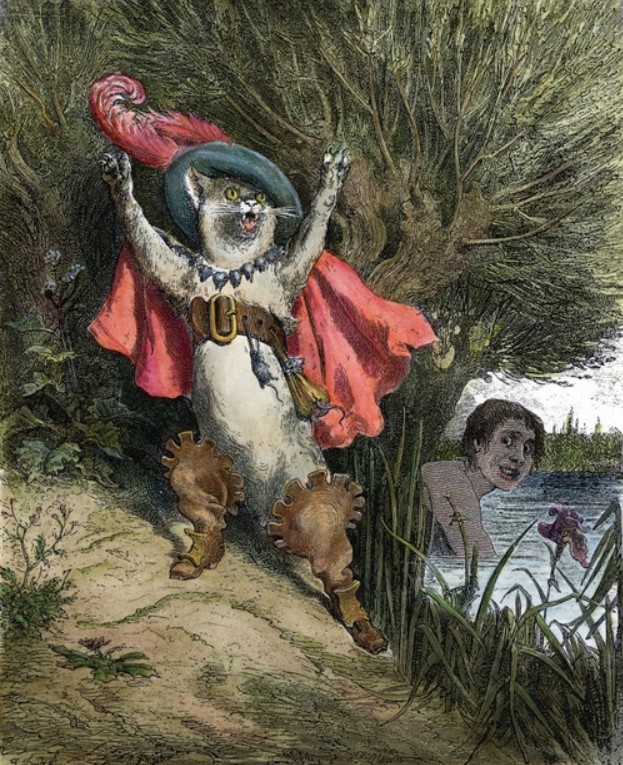
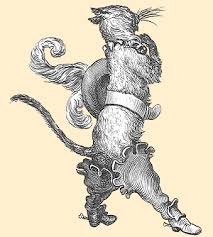
A poor miller laments his inheritance. Most of the family property – the mill and the mules – goes to his elder brothers, and all that’s left for him is an unprepossessing cat. He wonders of what use to him a cat could possibly be. He contemplates eating it, perhaps using the skin to make a hat. The cat, however, promptly endears himself, and offers to gain his master a fortune, a kingdom, and the hand of a beautiful princess. All he asks in exchange is a pair of boots to spare his feet, a stylish hat with a plume, a cape, and a sword fashioned out of bone.
Since the cat presents him with a ring from the hand of the princess, the Miller considers it a fair deal, and sets about getting, by hook or by crook, whatever the cat desires.
Throughout the course of the story, with his cunning and superior wits, the cat is able to deliver on everything he promises.
We’ll heard selections from a 2004 recording on the Columna Musica label, with Argentine mezzo-soprano Marisa Martins as Puss (an unusual take on the traditional “trouser role”) and tenor Antonio Comas as the Miller. The Symphony Orchestra of the Gran Teatre del Liceu is conducted by Antoni Ros Marba.
Listen for charming cat-like touches in the strings and the use of piano throughout to emulate the decorative style of 18th century recitative.
That’s “Fur Love and Valor” – highlights from Xavier Montsalvatge’s “Puss in Boots” – on “The Lost Chord, now in syndication on KWAX Classical Oregon!
——–
Clip and save the start times for all three of my recorded shows:
PICTURE PERFECT, the movie music show – Friday at 8:00 PM EDT/5:00 PM PDT
SWEETNESS AND LIGHT, the light music program – Saturday at 11:00 AM EDT/8:00 AM PDT
THE LOST CHORD, unusual and neglected rep – Saturday at 7:00 PM EDT/4:00 PM PDT
Stream them, wherever you are, at the link!
https://kwax.uoregon.edu
Tag: Xavier Montsalvatge
-
Montsalvatge’s Puss in Boots Opera Highlights
You can tune an orchestra, but you can’t tun-a fish.
This Sunday night on “The Lost Chord,” we put the “cat” in Catalan music with selections from Xavier Montsalvatge’s one-act opera “Puss in Boots.”
“Puss in Boots,” Montsalvatge’s first opera, was composed in 1947. We all know the story. The tale, in its best-known guise, was published by Charles Perrault in 1695 as one of the “Tales of Mother Goose.”
A poor miller laments his inheritance. Most of the family property – the mill and the mules – goes to his elder brothers, and all that’s left for him is an unprepossessing cat. He wonders of what use to him a cat could possibly be. He contemplates eating it, perhaps using the skin to make a hat. The cat, however, promptly endears himself, and offers to gain his master a fortune, a kingdom, and the hand of a beautiful princess. All he asks in exchange is a pair of boots, to spare his feet, a stylish hat with a plume, a cape, and a sword fashioned out of bone.
Since the cat presents him with a ring from the hand of the princess, the Miller considers it a fair deal, and sets about getting, by hook or by crook, whatever the cat desires.
Throughout the course of the story, with his cunning and superior wits, the cat is able to deliver on everything he promises.
We’ll heard selections from a 2004 recording on the Columna Musica label, with Argentine mezzo-soprano Marisa Martins as Puss (an unusual take on the traditional “trouser role”) and tenor Antonio Comas as the Miller. The Symphony Orchestra of the Gran Teatre del Liceu is conducted by Antoni Ros Marba.
Listen for charming cat-like touches in the strings and the use of piano throughout to emulate the decorative style of 18th century recitative.
That’s “Fur Love and Valor” – highlights from Xavier Montsalvatge’s “Puss in Boots” – this Sunday night at 10:00 EDT, on WWFM – The Classical Network and wwfm.org.
-

Catalan Composer Celebrated on The Classical Network
Following up on my series of posts about his family’s fascinating bookplates (on February 23, February 27, and March 5), Xavier Montsalvtage finally gets his day. Join me this afternoon on The Classical Network, as I’ll celebrate the great Catalan composer’s birthday with his “Concerto breve.”
We’ll also hear music by three American originals: Henry Cowell, Carl Ruggles, and “The Beethoven of Kentucky” (and one of the founders of the New York Philharmonic), Anthony Philip Heinrich. AND a work for guitar and bandoneón by Argentinian master Astor Piazzolla.
At 6:00, it’s another “Music from Marlboro.” The highlight this evening will be the String Sextet No. 2, by a young and ardent Johannes Brahms.
We’re always passionate about music, from 4 to 7 p.m. EDT, on WWFM – The Classical Network and wwfm.org.
PHOTOS: Xavier Montsalvatge (left), with (top to bottom) Henry Cowell, Carl Ruggles, and Anthony Philip Heinrich
-

Montsalvatge Bookplates A Composer’s Touch
Rounding off my series on Montsalvatge/Montsalvatje bookplates (previous installments posted on February 23 & 27), this one looks as if it may have actually belonged to the composer. At any rate, I feel like I am getting awfully close.
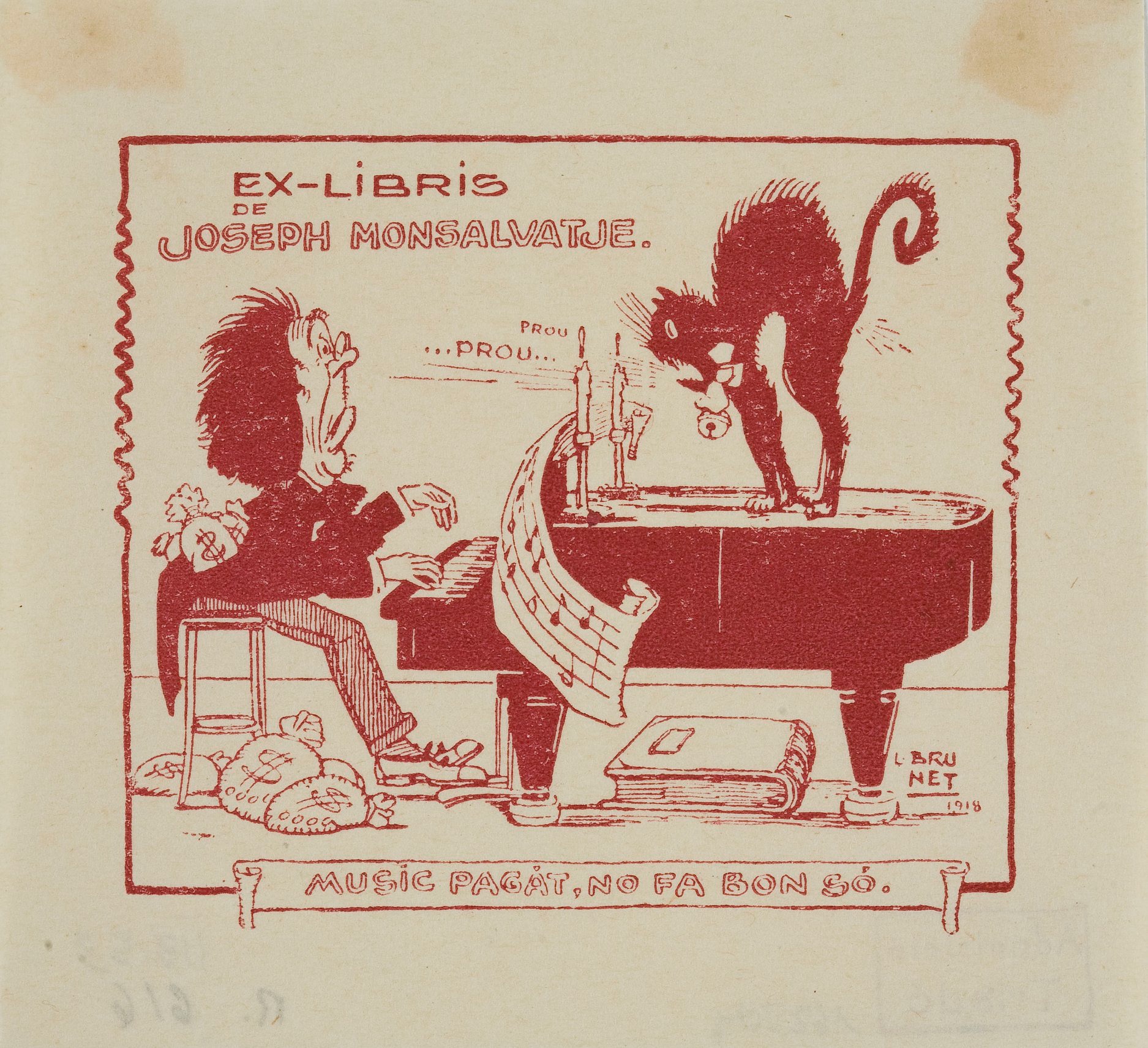
Xavier Montsalvatge was born in 1912. Note also the prevalence of currency and coin. The February 27 plate, designed for one Jordi Montsalvatje I Fossa, bears a humorous image of a musician whose pockets are overflowing with money, yet his music-making frightens the cat.
That plate’s inscription reads “Music pagat, no fa mal sò,” apparently a recognized expression in Catalonia, since a Google search turns up multiple links. The translation is, roughly, “Music paid for makes bad sound,” meaning, as far as I can make out, that when one is paid for one’s work, one doesn’t do it well, or doesn’t do it at all. Perhaps the tag “Banquer” (or banker) is meant to be ironic?
According to the composer’s nephew, there is only one family with the surname Montsalvatge, and its roots are in Catalonia, though an offshoot appeared in the United States in the 19th century. On either side of the Atlantic, the tree hangs heavy with the fruit of both artists and bibliophiles.
Here’s some more music by Xavier Montsalvatge:
-
Montsalvatge Bookplate Mystery Solved
Here’s a follow-up to my post on Sunday, about the J. Montsalvatje bookplate. You may recall, I was wondering if it had once been the property of Catalan composer Xavier Montsalvatge.
I heard back from my contact, which in fact is the composer’s nephew. The composer’s father was the brother of my acquaintance’s grandfather. I had forgotten their exact relationship in my alcoholic haze. (We met at a party.) In any case, it’s not the easiest thing to remember!
According to the nephew, the composer changed the spelling “because in the grammatical catalonia is correct way [sic], but Monsalvatje is the ancient form for writing my last name.
“This last name was born in Girona (Catalonia, Spain) long time ago and only my family has this name in all Spain, it’s true that in States there are person with that name too, because one of my old family went to States in XIX century.”
He goes on to relate that his great grandfather was a collector of books, by the name of Joseph Montsalvatje. Apparently, many of those books are now in museums and private collections. Books are very big in the Montsalvatje family. Also the arts. The family tree is full of artists and musicians.
Since I originally posted, I managed to trace the bookplate, by googling the designer (L. Brunet), to the Rare Book and Manuscript Library at the University of Illinois. The plate is identified as having belonged to one Jordi Montsalvatje i Fossa – probably from the branch of the family Montsalvatge’s nephew says settled in the U.S.
In the meantime, I also managed to uncover a second bookplate (pictured), likely the former property of the same Joseph Montsalvatje cited by my acquaintance. Here I learn that the artist/designer’s full name is Llorenç Brunet Torroll:
The caption reads: “Music pagat, no fa mal sò,” apparently a common expression in that part of the world, since a Google search turns up many results. The translation is roughly, “Music paid for makes bad sound,” meaning, as far as I can make out, that when one is paid for one’s work, one doesn’t do it well, or doesn’t do it at all. Feel free to correct me on that, Catalan speakers.
If you didn’t catch my earlier post on the matter, you can always just scroll down my Facebook page until you find it, if it means that much to you.
For the time being, I’m using the earlier bookplate as my profile pic.
As a reward for reading, enjoy some more music by Xavier Montsalvatge!
Tag Cloud
Aaron Copland (94) Beethoven (95) Composer (114) Film Music (149) Film Score (143) Film Scores (255) Halloween (97) John Williams (197) KWAX (232) Leonard Bernstein (105) Marlboro Music Festival (125) Movie Music (164) Mozart (91) Opera (215) Philadelphia Orchestra (90) Picture Perfect (174) Princeton Symphony Orchestra (110) Radio (90) Ross Amico (244) Roy's Tie-Dye Sci-Fi Corner (290) The Classical Network (101) The Lost Chord (269) Vaughan Williams (107) WPRB (397) WWFM (881)