Category: The Lost Chord

  • “Day of the Dad” on “The Lost Chord”

    “Day of the Dad” on “The Lost Chord”

    It is the eve of Father’s Day. Both my folks are gone, and I had a rather complex relationship with my biological father, who died of cancer in 2018. Still, toward the end, I visited him a lot, and we kind of became friends. At least I developed a better, or more rounded, understanding of him, though we still had a few adventures that reminded me of why it was probably a good thing that my mother herded us out of the nest when she did.

    My old man could be an amusing personality if he were a work of fiction, or if he could be taken in at a safe remove. Also, in his way, he had a kind heart. His circle included a remarkable number of outsiders and societal cast-offs, and he managed to take care of many of them, after his fashion. But he was not one to be bound by rules or, more strictly speaking, the law. At best, he could be considered a bit of a scapegrace; at worst, he was an ardent hellraiser, especially in his prime.

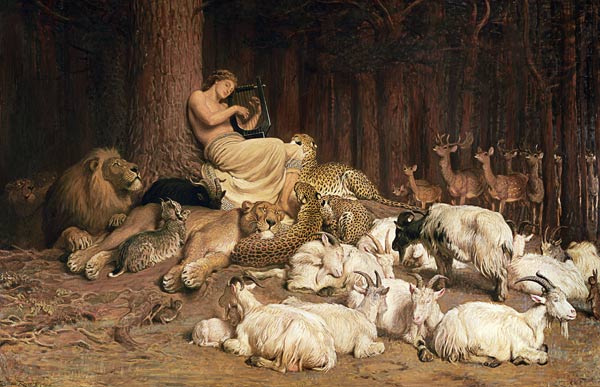
    But spending time with him later in life, it was fascinating to discover that, whether he knew it or not, he did live by a kind of code. Also, given his nature, I learned that a lot of what the rest of us had resented all these years was probably not entirely his fault. He just wasn’t cut out to raise a family. You can’t really fault a striped hyena for not being able to fly.

    I could tell you stories about my dad that would make you howl with laughter or make your blood curdle, but instead I’ll just tie this in with my program today on “The Lost Chord,” which will consist of two pieces by American composers, written in loving memory of their fathers – with perhaps just a transitional bit of advice to get to know your parents, for better or worse, while there’s still time.

    In 1999, composer Eric Ewazen was commissioned by an oboist-friend, Linda Strommen, who had recently lost her father, to write a new work as a kind of memorial tribute. Having recently experienced the death of his own father, the composer embarked on the project with a special sense of poignancy. He recollected that the day his father passed – Christmas Day, 1997 – an essay had appeared in the Cleveland Plain Dealer, by Richard Feagler. It consisted of funny, heartfelt stories of relatives and parents, long since departed. Near the end of the essay, titled “Christmas Past Comes Alive at Aunt Ida’s,” Feagler describes those beloved souls, “moving, though they can’t feel the current, down a river of time.”

    Ewazen borrowed this image for the title of his concerto, “Down a River of Time,” a contemplation of that inexorable, rushing river – the first movement influenced by its ebbs and flows, hopes and dreams; the second attempting to convey emotions felt during times of loss, sorrow, resignation, tenderness, and peace in remembrance of happier, distant times. In the final movement, happier memories prevail, and feelings of strength and determination dominate.

    Ewazen studied at, among other places, the Eastman School of Music. Howard Hanson had been director there for some 40 years. Along with the opera “Merry Mount,” Hanson came to regard his Symphony No. 4 as a personal favorite, a purely orchestral requiem, dedicated to the memory of his father. It falls into four movements, each bearing a Latin subtitle – “Kyrie,” “Requiescat,” “Dies Irae,” and “Lux Aeterna.” The work was given its first performance in 1943, with the composer conducting the Boston Symphony. It was awarded the Pulitzer Prize for Music in 1944.

    It sure as hell beats another necktie. Spare a thought for the Old Man, and then join me for “Day of the Dad,” on “The Lost Chord,” now in syndication on KWAX Classical Oregon!

    ——-

    Clip and save the start times for all three of my recorded shows:

    PICTURE PERFECT, the movie music show – Friday at 8:00 PM EDT/5:00 PM PDT

    SWEETNESS AND LIGHT, the light music program – Saturday at 11:00 AM EDT/8:00 AM PDT

    THE LOST CHORD, unusual and neglected rep – Saturday at 7:00 PM EDT/4:00 PM PDT

    Stream them, wherever you are, at the link!

    https://kwax.uoregon.edu

    ——-

    PHOTO: Father knows beast
  • Lars-Erik Larsson’s Poetic Suites for Radio on “The Lost Chord”

    Lars-Erik Larsson’s Poetic Suites for Radio on “The Lost Chord”

    During his time with the Swedish Broadcasting Corporation (1937-1944), Lars-Erik Larsson provided music for everything from cantatas to radio plays to brief vignettes to accompany the recitation of poetry.

    Material from these projects would frequently find its way into the composer’s concert works. Most notably, three of the six movements of “Hours the Day,” from 1938, were organized into what went on to become the composer’s most famous piece, the “Pastoral Suite.”

    This week on “The Lost Chord,” we’ll hear the world premiere recording, from 1994, of the complete, original, six-movement work, alongside another one of Larsson’s poetic suites for radio, “God in Disguise,” from 1940.

    Larsson had been asked as early as 1930 if he would be interested in setting to music Hjalmar Gullberg’s cycle of poems. Gullberg, then the head of Swedish Radio’s drama division, took as his starting point Euripides’ “Alcestis,” in which the god Apollo, temporarily exiled from Olympus, acts as servant and shepherd to King Admetus of Thessaly.

    It would be a full decade before the project was realized, in part due to the scale of the undertaking. By then, neighboring Denmark and Norway were under Nazi occupation. Gullberg wrote additional text to mold the work into a protest against violence in the world. In spite – or perhaps because – of the harsh reality of the times, “God in Disguise” retains an optimistic and indeed a determinedly pastoral outlook.

    This too will be heard in a world premiere recording, from 1956, featuring speaker Lars Ekborg, soprano Elisabeth Söderström, and the orchestra and chorus conducted by Stig Westerberg.

    Brush up on your Swedish, as we celebrate all that is worthy and simple. I hope you’ll join me for “Best at Verse” – Lars-Erik Larsson’s poetic suites for radio – on “The Lost Chord,” now in syndication on KWAX Classical Oregon!

    ——-

    Clip and save the start times for all three of my recorded shows:

    PICTURE PERFECT, the movie music show – Friday at 8:00 PM EDT/5:00 PM PDT

    SWEETNESS AND LIGHT, the light music program – Saturday at 11:00 AM EDT/8:00 AM PDT

    THE LOST CHORD, unusual and neglected rep – Saturday at 7:00 PM EDT/4:00 PM PDT

    Stream them, wherever you are, at the link!

    https://kwax.uoregon.edu
  • Italian Dressing on “The Lost Chord”

    Italian Dressing on “The Lost Chord”

    It seems as if it was only a matter of time before any Baroque musician of merit would become embroiled in a musical duel.

    In the case of Domenico Scarlatti, he was challenged by none other than George Frideric Handel, in Rome. The resulting contest led to Handel being judged superior to his rival on the organ; however, on the harpsichord Scarlatti was deemed to be supreme. In fact, Scarlatti’s unusual facility at the keyboard has had artists “keyed up” for centuries.

    Born in Naples in 1685 – the same year as Handel and Bach – Scarlatti spent much of his career in the service of the Portuguese and Spanish royal families. He wrote 555 keyboard sonatas, which have been admired by composer-performers from Frederic Chopin to Marc-André Hamelin.

    This week on “The Lost Chord,” we’ll enjoy several works written in tribute to this Baroque master.

    Charles Avison, whose life overlapped Scarlatti’s own (he was born in 1709, when Scarlatti was 23 years-old), arranged a number of his elder colleague’s keyboard works into a set of 12 concerti grossi. We’ll sample one of those, Avison’s Concerto No. 10 in D.

    Then we’ll turn to American composer Norman Dello Joio. Dello Joio was the recipient of the Pulitzer Prize for Music in 1957 for his “Meditations on Ecclesiastes.” From 1979, we’ll hear his four-movement piano work, “Salute to Scarlatti.”

    Dmitri Shostakovich arranged two of Scarlatti’s keyboard sonatas for small wind ensemble and percussion. We’ll enjoy performances of these by members of the former USSR Ministry of Culture Symphony Orchestra conducted by Gennady Rozhdestvensky.

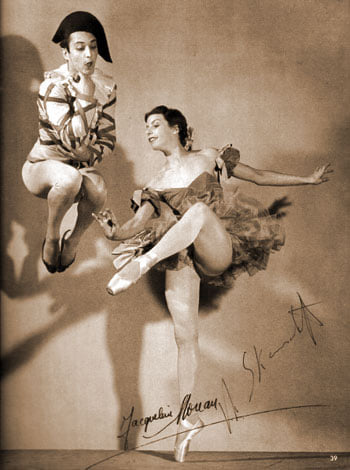
    Finally, Alfredo Casella’s 1926 suite for piano and orchestra, “Scarlattiana,” draws its inspiration from dozens of Scarlatti sonatas. Though unquestionably high-spirited, it was not originally intended for the dance – but since it unabashedly recalls Stravinsky’s “Pulcinella,” it is hardly surprising that some clown decided to choreograph it.

    I hope you’ll join me for a mixed salad of Scarlatti tributes, on “Italian Dressing,” on “The Lost Chord,” now in syndication on KWAX Classical Oregon!

    ——-

    Clip and save the start times for all three of my recorded shows:

    PICTURE PERFECT, the movie music show – Friday at 8:00 PM EDT/5:00 PM PDT

    SWEETNESS AND LIGHT, the light music program – Saturday at 11:00 AM EDT/8:00 AM PDT

    THE LOST CHORD, unusual and neglected rep – Saturday at 7:00 PM EDT/4:00 PM PDT

    Stream them, wherever you are, at the link!

    https://kwax.uoregon.edu

    ——-

    PHOTO: Wladimir Skouratoff (levitating) and Jacqueline Moreau in a 1954 production of “Scarlattiana”
  • “Poland Spring” on “The Lost Chord”

    “Poland Spring” on “The Lost Chord”

    Poland is in bloom! This Saturday on “The Lost Chord,” find refreshment in musical discoveries by four Polish composers.

    We’ll hear a Fantasy for Cello and Piano by Alexandre Tansman. Tansman spent most of his career in Paris, with an interlude during the war years in the United States. Here, he met Arnold Schoenberg, wrote film scores, and developed an affection for American jazz. Still, his most enduring influences were those of his Polish and Jewish roots.

    Hyper-romantic Mieczyslaw Karlowicz lived his life at such a heightened emotional pitch that he was perhaps fated to die young. His music certainly tends in that direction, occupied as most of it is with ecstasy and death. “A Sad Tale,” his last completed work, is a contemplation of suicide. Karlowicz himself was killed in an avalanche while hiking in the Tatras. He was 32 years-old.

    On a lighter note, we’ll enjoy choral music by Andrzej Koszewski – his “Kaszuby Suite,” steeped in folk traditions of northwestern Poland – and a neoclassical woodwind quintet by Wojciech Kilar, who is probably best known in the West for his film scores, including those for “Bram Stoker’s ‘Dracula,’” “The Portrait of a Lady,” and “The Pianist.”

    It’s a flowering of Polish music on “Poland Spring,” on “The Lost Chord,” now in syndication on KWAX Classical Oregon!

    ——-

    Clip and save the start times for all three of my recorded shows:

    PICTURE PERFECT, the movie music show – Friday at 8:00 PM EDT/5:00 PM PDT

    SWEETNESS AND LIGHT, the light music program – Saturday at 11:00 AM EDT/8:00 AM PDT

    THE LOST CHORD, unusual and neglected rep – Saturday at 7:00 PM EDT/4:00 PM PDT

    Stream them, wherever you are, at the link!

    https://kwax.uoregon.edu See less

  • No Picnic:  “Requiescat in pace” on “The Lost Chord”

    No Picnic: “Requiescat in pace” on “The Lost Chord”

    To a great many, Memorial Day is the unofficial start of summer, a time for picnics and trips to the shore, for Hollywood to flood the multiplexes with soulless blockbusters, a signifier of the end of school, and the beginning of three long, lazy months of way too much daylight.

    But it didn’t always bear those associations. The precursor of Memorial Day was Decoration Day, first widely observed in 1868, to honor and remember those who died in the Civil War. It was a time for decorating graves, making solemn speeches, and marching in parades. These customs metamorphosed to the point where, after World War I, Memorial Day was seen as an occasion to honor those who died in ALL American wars.

    Regardless of how one may perceive armed conflict, of whether any given war may be called just or unjust, it is not war itself or conflict in general that is being celebrated. Rather, it is the sacrifice of those who died in defense of a larger cause, and ostensibly that cause has been for the common good.

    One would think, were one an idealist, that by this stage of our collective development, when any disruption in the global fabric obviously effects all of us, that wars would be considered obsolete. But sadly, human nature being what it is, there will probably always be reasons to remember.

    This week on “The Lost Chord,” we’ll salute those who made the ultimate sacrifice, by listening to three works commemorating the dead of World War II, including “For the Fallen,” a berceuse for orchestra by Bernard Herrmann; Aaron Copland’s Violin Sonata, dedicated to Lt. Larry H. Dunham, who was killed in the Pacific in 1943; and the peace cantata “A Time for Remembrance,” by John Duffy.

    Duffy himself was a World War II veteran, who lied about his age when enlisting. He became part of the Amphibious Scouts and Raiders, forerunners to the Navy SEALs, before deploying on the USS Hopping, a destroyer escort in the Pacific. His duties included detonating Japanese mines by shooting them from ship deck. When his ship took fire from shore batteries at Okinawa, the sailor standing next to him was killed. Duffy had to stand guard over the dead man’s body until burial at sea in the morning. That night watch determined the course of his life. “Since our time is so fleeting and unpredictable,” he later commented, “I knew I had to dedicate my life to music.”

    War is no picnic. I hope you’ll join me for “Requiescat in pace,” on “The Lost Chord,” now in syndication on KWAX Classical Oregon.

    ——–

    Clip and save the start times for all three of my recorded shows:

    PICTURE PERFECT, the movie music show – Friday at 8:00 PM EDT/5:00 PM PDT

    SWEETNESS AND LIGHT, the light music program – Saturday at 11:00 AM EDT/8:00 AM PDT

    THE LOST CHORD, unusual and neglected rep – Saturday at 7:00 PM EDT/4:00 PM PDT

    Stream them, wherever you are, at the link!

    https://kwax.uoregon.edu

    ——–

    John Duffy on his war experiences and his decision to become a composer:


Tag Cloud

Aaron Copland (94) Beethoven (95) Composer (114) Film Music (148) Film Score (143) Film Scores (255) Halloween (97) John Williams (196) KWAX (232) Leonard Bernstein (105) Marlboro Music Festival (125) Movie Music (163) Mozart (91) Opera (215) Philadelphia Orchestra (90) Picture Perfect (174) Princeton Symphony Orchestra (110) Radio (90) Ross Amico (244) Roy's Tie-Dye Sci-Fi Corner (290) The Classical Network (101) The Lost Chord (269) Vaughan Williams (107) WPRB (397) WWFM (881)

DON’T MISS A BEAT

Receive a weekly digest every Sunday at noon by signing up here


RECENT POSTS