When I first heard Carl Nielsen’s Symphony No. 3, I was sweating it out in a one-room efficiency in West Philadelphia that I shared with two of my classmates, while making up a math course I had flubbed at Temple University.
It was the summer of ’85, there was no air conditioning, and I studied and slept in a netted hammock suspended from two bicycle hooks I had screwed into the door frames to prevent being surprised by mice. There was always movement in the lone trash bag that sat exposed on the linoleum in the corner of the kitchenette, and to prove a point once I lobbed a sneaker into it, from the safety of my resting place, so that the rodents poured out of it and scurried around the apartment, sending one of my roommates, the one whose name was on the lease, shrieking into his bunk. He had a job canvasing for a political organization, so he was gone all day and would stagger back every night after last-call to sketch with intensity under a bright, exposed lightbulb that shone down in my face. Somewhere along the way, he brought home a turtle, which he kept in the bathtub and fed raw hamburger, until I couldn’t take its imprisonment any longer and finally released it into Fairmount Park.
The other roommate had the good sense to get a girlfriend, so he was never there. His contribution was a makeshift bunk bed hastily assembled from planks he had plucked from the garbage. The top bunk was usually vacant, due to his absence, and the bottom bunk was where my politically-motivated, alcohol-fueled, musky, mulchy-footed friend slept between me and the sole window fan.
Occasionally, I’d glimpse a cockroach making its way down one of the ropes of my hammock, and I’d start rocking about, trying to dislodge it. More than once, one of the bike hooks let go. The roaches were everywhere. There were even roaches in the freezer.
It was under these circumstances, one boxed-in, sweltering afternoon, that I first experienced Carl Nielsen’s Symphony No. 3, subtitled “Sinfonia espansiva.” It was broadcast on WFLN, Philadelphia’s classical music station for nearly 50 years (sadly, now defunct). Nielsen’s aspirational music opened up horizons for me and offered glimpses of larger things.
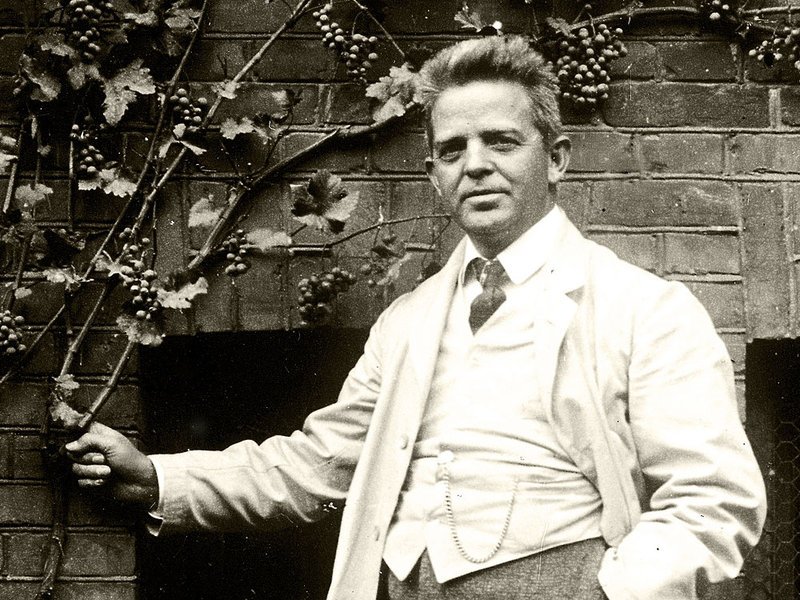
The recording was conducted by Leonard Bernstein. For those of you who aren’t familiar with him, Carl Nielsen is Denmark’s most celebrated composer. Yet, internationally, his music has struggled to take root in the shadow of that other great bard of the North, Jean Sibelius. This is a shame, since, far from being a Sibelius knock-off, Nielsen forged his own, immediately-recognizable style. Bernstein believed Nielsen’s rightful place was as Sibelius’ equal.
“I think many people are in for pleasant surprises as they get to know Nielsen,” he said at a centennial celebration of the composer’s birth, “his rough charm, his swing, his drive, his rhythmic surprises, his strange power of harmonic and tonal relationships – and especially his constant unpredictability – all these are irresistible. I feel confident that Nielsen’s time has come.”
Hey, he was right about Mahler. But that was in 1965, and Lenny’s prophetic lightning failed to strike twice. Fifty-seven years on, with many more recordings and performances to choose from, Nielsen’s music remains, stubbornly, an acquired taste, if a rewarding one. There really is nothing else quite like it – the puckish wit, the ambiguities, the quirky juxtaposition of seemingly disparate melodies, harmonies, and key signatures, all very often shot through with a sense of hope and optimism that rises above the chaos.
I only lived in that hell hole for about a month, one summer session, thankfully, just long enough to make-up my credits, and then it was off to the greenery of my hometown to detox. But I was in the process of selling my soul for a piece of parchment, a degree, so in the fall it was back to Philadelphia.
After the purchase of my first CD-player, in order to feed my habit, I took a part-time job as a clerk at Sam Goody, a record shop then located at 11th and Chestnut Streets, which at the time had the most extensive classical music section in the city. (This was before the arrival of Tower Records.) It was there that I acquired Neeme Järvi’s Prokofiev cycle, Bernard Haitink’s Shostakovich cycle, Adrian Boult’s Vaughan Williams cycle, and my first recording of Nielsen’s Symphony No. 3. Essentially, I signed my paycheck back over to the company in exchange for CDs. I remember my frustration that so much of the good stuff was still only on LP.
The Nielsen recording was not the classic Leonard Bernstein performance I had heard on the radio – which had yet to be transferred to compact disc – but a newer, digital recording with Myung-Whun Chung and the Gothenburg Symphony Orchestra, on the BIS label. And I have to say, giving all credit to Bernstein for his advocacy of Nielsen’s music, I believe Chung’s recording outshines his in every way. To this day, I find it to be one of the most satisfying Nielsen recordings. It must have been within my first ten CD purchases. I remember when I had so few, I could keep them all in a shoebox. Now I’ve got a library of a good 10,000. You might say it has gone “espansiva.”
What exactly did Nielsen mean by that choice of subtitle? Robert Simpson wrote that the use of “espansiva” suggests an “outward growth of the mind’s scope.” There is certainly a sensation of expanding horizons about the piece, which includes a pastoral slow movement complete with wordless solos for soprano and baritone. According to Nielsen, the symphony concludes with “a hymn to work and the healthy activity of living.” All I know is that it fills me with optimism and happiness.
A tip of the blond brush cut to Carl Nielsen on his birthday. Perhaps his time will come. For me, it arrived in a very different climate from that of Copenhagen, in tropical West Philadelphia, in the summer 1985.
Leonard Bernstein conducts the Royal Danish Orchestra on its own turf
Myung-Whun Chung and the Gothenburg Symphony
“Espansiva: A Portrait of Carl Nielsen”
Leave a Reply to Verloskundigen KampenCancel reply