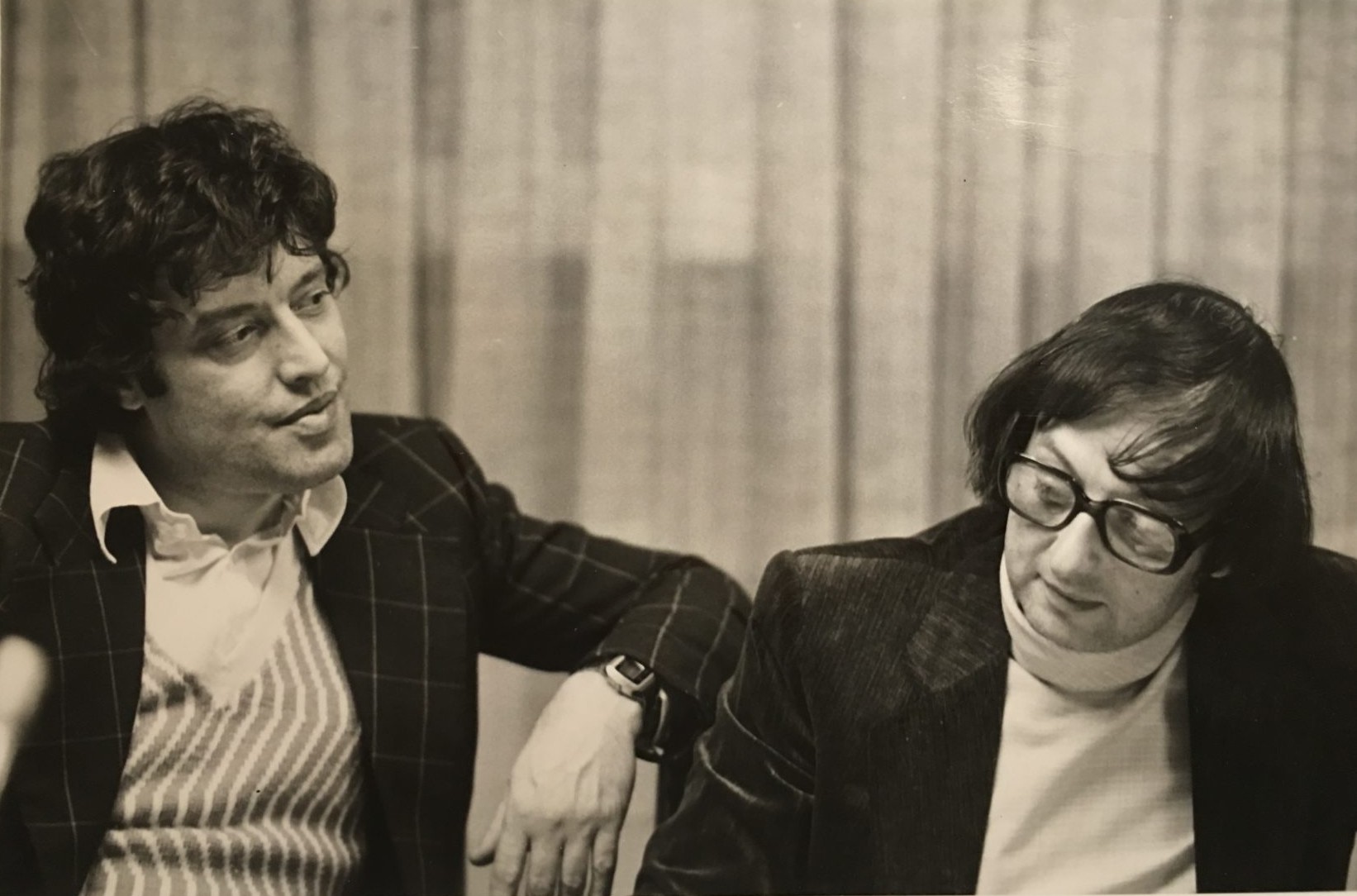
The playwright Tom Stoppard died yesterday at the age of 88. In 1977, composer-conductor André Previn planted the seed for “Every Good Boy Deserves Favour,” a play for actors and orchestra. The title is derived from a popular mnemonic used in music lessons to help students remember the notes of the five lines of the treble clef (E,G, B, D, F). In the U.S., the phrase is often “Every Good Boy Does Fine.”
Stoppard’s play, dedicated to Soviet exiles Viktor Fainberg and Vladimir Bukovsky, concerns a political dissident who is held in a psychiatric hospital with a schizophrenic cellmate who believes he has an orchestra at his disposal. In the recent past, the play was dismissed by some as outdated, since the action is tied to a specific time and place. It was still too “contemporary” to see past the shifting political landscape. But the pendulum has swung and the chilling reality that a tyrannical authority can abuse and reorder facts and distort the perception of truth is again very much au courant, sadly. (Then, hasn’t it always been the case with authoritarian regimes?)
The cost and logistics of employing a full symphony orchestra also work against frequent performances of the play, although the score was subsequently adapted for chamber orchestra. The work runs about an hour in performance. Previn is given co-creator credit in this fascinating document from 1978, with Ian McKellen and Ben Kingsley.
The play and music were previously recorded with the original cast – McKellen and Patrick Stewart – for commercial release on RCA.
Stewart would later direct a touring production in 1992, featuring his castmates from “Star Trek: The Next Generation.”
Previn conducted it in Philadelphia in 2002, in a collaboration between the Wilma Theater and the Philadelphia Orchestra. That production employed the arrangement for chamber orchestra.
An interesting footnote: At the time of Previn’s death in 2019, he was deep into a commission from the Boston Symphony Orchestra, a monodrama for Renée Fleming inspired by Homer’s “The Odyssey,” which was to have been performed in celebration of the composer’s impending 90th birthday. Stoppard, whom Previn had attempted to woo to the project for years (the “mono” aspect of the drama made him hesitant), was the librettist.
Among the challenges in figuring out how much of the work had been completed was making sense of Previn’s shuffled, unnumbered pages and disordered sketches. Stoppard’s text, fragments of which Previn included, eased the way. Previn’s longtime editor, David Fetherolf, was able to decipher the composer’s scrawl and fill out his shorthand, so that the premiere of “Penelope” took place as scheduled.
The project provided closure to a friendship that had spanned 49 years.
R.I.P. Tom Stoppard.
Leave a Reply