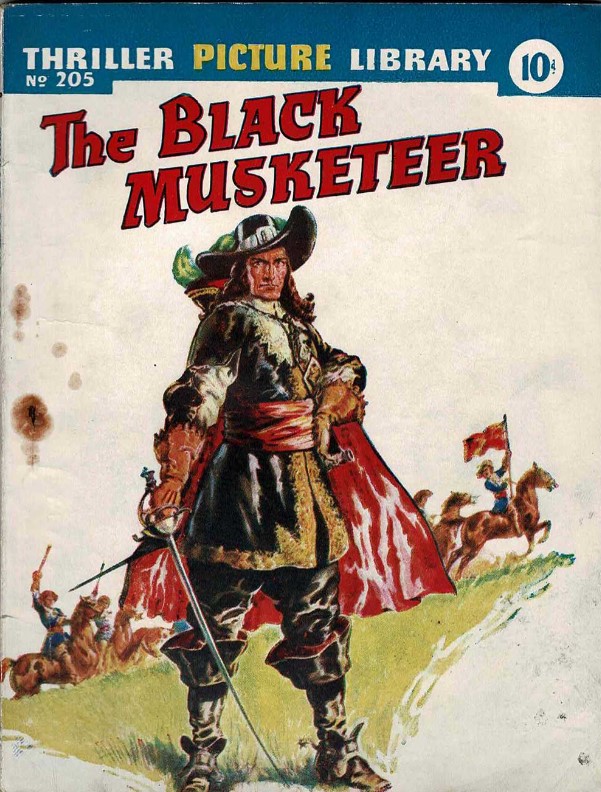
Very little is known about the Chevalier de Meude-Monpas. Among what we DO know is that he was a musketeer in the service of Louis XVI, who went into exile with the onset of the French Revolution. He also studied music in Paris and published six concertos for violin in 1786. In 1997, violinist Rachel Barton (now Rachel Barton Pine) put together a revelatory album for Cedille Records, “Violin Concertos by Black Composers of the 18th and 19th Centuries.” Meude-Monpas’ Violin Concerto No. 4 will be among the featured works this morning on “Sweetness and Light,” cumulatively guaranteed to put a smile on your face.*
Much better known, William Grant Still was regarded in his day as the “Dean of Afro-American Composers.” He the first composer of color to have a symphony performed by a major orchestra, the first to have a symphony widely performed, the first to conduct a major orchestra, and the first to have an opera televised nationally. A pupil of both George Whitefield Chadwick and Edgard Varèse, Still certainly had “serious” credentials, but he also worked in pit bands and wrote arrangements for Hollywood musicals. In many senses, he was the quintessential American composer. Also, he always knew how to write a good tune. This morning we’ll enjoy his “Danzas de Panama,” performed by the Oregon String Quartet.
It took nearly 90 years for Florence Price to become an overnight success. Price was the first African American woman to have a symphony performed by a major orchestra. Her Symphony No. 1 was played by the Chicago Symphony, conducted by Frederick Stock, in 1933. But it’s only fairly recently, after decades of comparative neglect, that her music has finally begun to gain traction. From a 2-disc set devoted to her piano works on the Guild label, we’ll hear Kirsten Johnson play “Dreamboat.”
Duke Ellington requires little introduction. He was a major figure in American music, especially in the field of jazz. But for the past hundred years or so, there has been quite a bit of “blurring of the lines” between genres of art music. In 1943, Ellington composed “New World a-Comin’,” a work for piano and 15-piece band. He never wrote down the piano part, so it was reconstructed by ear by Maurice Peress from a recording made of an Ellington concert at Carnegie Hall in 1943. Subsequently, Peress expanded the jazz band to full orchestra. The soloist on the recording we’ll hear, Jeffrey Biegel, obtained permission from Sir Roland Hanna to transcribe the improvised final cadenza from a recording Hanna made with the American Symphony Orchestra under Peress’ baton.
We’ll be enjoying our coffee black on “Sweetness and Light,” this Saturday morning at 11:00 EST/8:00 PST, exclusively on KWAX Classical Oregon!
Stream it, wherever you are, at the link:
https://kwax.uoregon.edu/
——–
* Please note: Meude-Monpas is not to be confused with that other swashbuckling composer, the Chevalier de Saint-Georges, whose music also appears on Barton Pine’s record.
Enjoy Your Coffee Black on “Sweetness and Light”
by
2 responses
Black History Month Chevalier de Meude-Monpas Duke Ellington Florence Price Rachel Barton Pine William Grant Still
Comments
2 responses to “Enjoy Your Coffee Black on “Sweetness and Light””
-
Dumas père comes to mind.
-
Not to mention Rachel Barton Pine’s life.
-
Tag Cloud
Aaron Copland (92) Beethoven (94) Composer (114) Film Music (116) Film Score (143) Film Scores (255) Halloween (94) John Williams (185) KWAX (228) Leonard Bernstein (99) Marlboro Music Festival (125) Movie Music (131) Opera (197) Philadelphia Orchestra (86) Picture Perfect (174) Princeton Symphony Orchestra (106) Radio (86) Ralph Vaughan Williams (85) Ross Amico (244) Roy's Tie-Dye Sci-Fi Corner (290) The Classical Network (101) The Lost Chord (268) Vaughan Williams (99) WPRB (396) WWFM (881)
Leave a Reply