Category: Daily Dispatch

  • Remembering Skrowaczewski: A Life in Music

    Remembering Skrowaczewski: A Life in Music

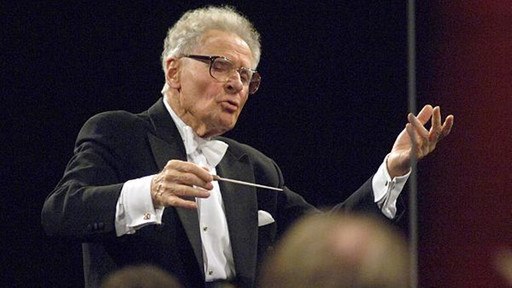
    Stanisław Skrowaczewski has been part of my life for over 30 years. The conductor and composer died yesterday at the age of 93.

    Skrowaczewski, born in Lwów (then in Poland), was forced to abandon his dream to become a concert pianist after sustaining a hand injury during World War II. Nevertheless, music served him well. By 1946, he had already begun his conquest of the great Polish orchestras, becoming music director in turn of the Wrocław, Katowice, and Krakow Philharmonics. He also studied composition in Paris with Nadia Boulanger.

    He made his American debut conducting the Cleveland Orchestra at the invitation of George Szell. This led to a music directorship with the Minneapolis Symphony, beginning in 1960 (the organization was rebranded the Minnesota Orchestra during his tenure, against his protests). After 1979, he maintained a long relationship with the orchestra as conductor laureate. For many, it would have been considered an honorary title, but Skrowaczewski really did return just about every season to conduct.

    He was also principal conductor of the Hallé Orchestra from 1983 to 1992. He served as artistic adviser to the Milwaukee Symphony Orchestra from 1995 to 1997, and in 1988 he was composer-in-residence for the Philadelphia Orchestra’s summer season at Saratoga. His composition, “Passacaglia Immaginaria,” was nominated for the Pulitzer Prize for Music in 1997.

    As a budding record collector, I cut my teeth on a number of Skrowaczewski’s recordings that were issued on the Vox label. I still find his Ravel to be particularly fine. I am also partial to his recordings for Mercury, including an “Italian Symphony” framed by some unusually fleet outer movements. In concertos, he accompanied the label’s most distinguished soloists, artists such as Gina Bachauer, Byron Janis, and János Starker.

    Later, I discovered his Bruckner recordings with the Deutsche Radio Philharmonie Saarbrücken Kaiserslautern (now on Oehms Classics), interpretations that render the composer’s student symphonies with as much logic and dignity as his mature works.

    Skrowaczewski lived a long and productive life. He conducted his last concert (in Minnesota) in October. I will do my best to honor him today, from 4 to 7 p.m. EST, on WWFM – The Classical Network and at wwfm.org.


    Skrowaczewski conducts Bruckner’s 9th in Frankfurt:
  • Babbitt and Ballet on The Classical Network

    Babbitt and Ballet on The Classical Network

    Where else but on The Classical Network will you hear Milton Babbitt and Léo Delibes within a single afternoon?

    Today’s noontime concert will bring you Babbitt’s “All Set” for jazz ensemble, alongside works by Wolfgang Rihm, David Rakowski, Curt Cacioppo, Ingrid Arauco, and Robert Capanna, all performed by the Philadelphia-based Network for New Music.

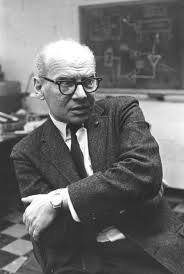
    Babbitt, a longtime faculty member at Princeton University, was born in Philadelphia in 1916. A pioneer of integral serial and electronic music, he became one of the most controversial of composers when an editor at High Fidelity magazine changed the title on an article he had submitted from “The Composer as Specialist” to the more inflammatory “Who Cares If You Listen?” Babbitt was incensed (the article was also aggressively edited), and his critics invoked the title whenever they sought an easy cudgel for the remainder of his career. Though not always easily understood, Babbitt was obviously brilliant and inspirational to generations of rising composers. He received numerous honors, including a Pulitzer Prize citation in 1982. Network for New Music did not shy away from celebrating Babbitt’s centenary during its 2015-2016 season.

    The next program of Network for New Music, now in its 32nd season, will be presented on two concerts, on Sunday at 3 p.m., at the Settlement Music School in Philadelphia, and on March 5 at 3 p.m., at Delaware County Community College’s Large Auditorium, located in the campus’ Academic Building. “Poetry through Music” will include works inspired by Friedrich Hölderlin’s novel “Hyperion,” either directly or by way of a new poem by Susan Stewart, with musical contributions by Georg Friedrich Haas, Gerald Levinson, Andrew Rudin, Eliza Brown, Benjamin Krause, Robert Capanna, and Ke-Chia Chen.

    Following the noon concert we’ll do a one-eighty and listen to one of the most ingratiatingly melodic ballets in the repertoire, a complete recording of Léo Delibes’ “Coppélia,” on this, Delibes’ birthday. Sure, “Coppélia” is overflowing with earworms that will ruin the rest of your day (and boy, do I hate the term earworm), but in actuality it is a terrible adaptation of one of the most effective of E.T.A. Hoffmann’s weird tales of mechanism and madness, a story called “The Sandman.” I prefer good old fashioned paper to reading online, but here’s a link, if you think it won’t take something away from it for you to read it on your computer.

    http://germanstories.vcu.edu/hoffmann/sand_e.html

    The anodyne libretto, by Charles-Louis-Étienne Nuitter, completely Disneyfies the subject matter, but Nuttier must have been on to something. 100 of his 500 libretti were produced, taken up by composers such as Offenbach, Lalo, and Lecocq. His opera translations from German and Italian into French were praised by Wagner and Verdi. He also worked as an archivist, though at the end of the day, it was the law that really paid the bills.

    I hope you’ll join me this afternoon for new music and mindless enjoyment, from 12 to 4 p.m. EST, on WWFM – The Classical Network and at wwfm.org.


    It will be Babbitt and ballet today on The Classical Network

  • Presidents Day Musical Celebration

    Presidents Day Musical Celebration

    Presidents Day. Hopefully you hit the white sales early, so that now you can sit back and enjoy the music. We’ll have works inspired by Washington and Lincoln, with observances of a number of other, musical birthday anniversaries along the way, from 4 to 7 p.m. EST, on WWFM – The Classical Network and at wwfm.org.

  • Margaret Bonds & Her Influential Teachers

    Margaret Bonds & Her Influential Teachers

    Margaret Bonds was one of the first black composers and performers to gain recognition in the U.S. Born in Chicago on March 3, 1913, she is perhaps best-remembered for her collaborations with Langston Hughes and for her piano work “Troubled Water.”

    This Sunday night on “The Lost Chord,” we’ll pay tribute to Bonds and her notable teachers, Florence Price and William Levi Dawson, both of whom were also important figures in the history of African American art music.

    Price is considered the first African American woman to have composed symphonies. She wrote three of them (one was performed by the Chicago Symphony Orchestra). She also wrote orchestral works, chamber music, instrumental music, and numerous choral and vocal pieces. She and Bonds shared not only a teacher-student relationship, but also became very good friends. Tonight, we’ll hear Price’s “Fantasie Negre.”

    In addition to his many, many fine works for chorus, Dawson is notable for having written one of the most successful symphonies by an African-American composer, the so-called “Negro Folk Symphony.” The work was composed in 1934 and given its first performance by the Philadelphia Orchestra, under Leopold Stokowski. Dawson revised the piece in 1952, following a trip to West Africa, where he was influenced by the indigenous rhythms he encountered there. Stokowski later recorded the piece, as did Neeme Jarvi with the Detroit Symphony Orchestra. I have a preference for the latter recording.

    In 1933, Bonds appeared as a piano soloist with the Chicago Symphony. She performed Price’s Piano Concerto with the Women’s Symphony Orchestra of Chicago the next year. In 1939, she moved to New York, where she continued her studies at the Juilliard School. She also studied privately with Roy Harris.

    For all her accomplishments, her collaborations with Langston Hughes, her establishment of a cultural community center in Harlem, and the composition of two ballets and several theatre works, the Bonds discography is woefully thin. She’ll be represented tonight by her cycle of four songs, “Ah! Love But a Day,” and by her most-recorded piano work, “Troubled Water.”

    Shortly before her death in Los Angeles in 1972 (at the age of 59), Bonds’ “Credo” for baritone, chorus and orchestra was performed by the Los Angeles Philharmonic, under the direction of Zubin Mehta. Would that they had recorded it!

    I hope you’ll join me for “Educational Bonds” – music by Margaret Bonds and her teachers – this Sunday night at 10:00 EST on WWFM – The Classical Network and at wwfm.org.

  • Lincoln Symphonies Rare Finds for Presidents Day

    Lincoln Symphonies Rare Finds for Presidents Day

    If you’re looking for something unusual to listen to on this Presidents Day weekend, here are a couple of links to extremely rare symphonies inspired by Lincoln, neither of which, to my knowledge, has ever received a commercial recording:

    Daniel Gregory Mason’ Symphony No. 3 “Lincoln” (1936)

    Jaromir Weinberger’s “Lincoln Symphony” (1941)

    Yes, that’s the same Weinberger who composed “Schwanda the Bagpiper!”

    #AbrahamLincoln

Tag Cloud

Aaron Copland (93) Beethoven (95) Composer (114) Film Music (139) Film Score (143) Film Scores (255) Halloween (94) John Williams (195) KWAX (229) Leonard Bernstein (103) Marlboro Music Festival (125) Movie Music (154) Mozart (89) Opera (210) Philadelphia Orchestra (89) Picture Perfect (174) Princeton Symphony Orchestra (108) Radio (88) Ross Amico (244) Roy's Tie-Dye Sci-Fi Corner (290) The Classical Network (101) The Lost Chord (268) Vaughan Williams (103) WPRB (396) WWFM (881)

DON’T MISS A BEAT

Receive a weekly digest every Sunday at noon by signing up here


RECENT POSTS