Category: Daily Dispatch

  • Dryden Ensemble: Music & Medicine

    Dryden Ensemble: Music & Medicine

    Okay, so the Philadelphia Orchestra is going to be at McCarter Theatre in Princeton on Saturday night at 8:00. Denis Kozhukhin will be the soloist for Rachmaninoff’s Piano Concerto No. 3, and Stéphane Denève, the orchestra’s principal guest conductor (whose contract has just been extended through the 2019-20 season), will conduct. I know. They don’t need my help. The concert is an automatic sell-out, or should be.

    Instead, allow me to direct your attention to The Dryden Ensemble, which will administer “Le Médicin & La Musique,” a program that’s good for what ails you, in two concerts, on Saturday at 7:30 p.m. at Trinity Episcopal Church, Solebury, PA, and Sunday at 3 p.m. at Miller Chapel on the campus of Princeton Theological Seminary.

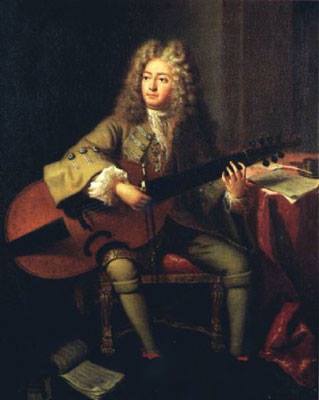
    Central to the program of medical curiosities will be a musical response by Marin Marais to his own gallbladder surgery, “Le tableau de l’opération de la taille” (“A Description of the Removal of a Stone”), rendered on bass viol and continuo.

    Marais’ surgery was successful, if painful, in an era before modern anesthesia. “They held you down,” says Dryden’s artistic director Jane McKinley. “They also didn’t use alcohol, because they were afraid that it would affect the blood. Because of the particular nature of the surgery, I’m not posting a picture in the program!”

    Not so fortunate was Jean-Baptiste Lully, the most powerful musician at the court of Louis XIV. “Lully had his own issues,” McKinley says. “He was performing his ‘Te Deum’ to celebrate the success of surgery that was performed on Louis XIV and inadvertently hit his foot with the pointed end of the staff that he was conducting with.” It was Lully’s custom to strike the floor with a heavy staff in order to keep time for larger ensembles.

    “So that got infected and turned to gangrene, and he refused to have his toe amputated. Then it spread to his leg. He refused to have his leg amputated, because he wanted to be able to be able conduct his own compositions and to dance – he was a very fine dancer – and he died a little over two months later.”

    The ensemble will perform a piece written in Lully’s memory, “Le tombeau de Monsieur Lully,” by Jean-Féry Rebel. “A tombeau is almost like a funerary tribute to a mentor or composer or writer, and this one is particularly effective,” McKinley says.

    Also on the program will be two works for solo harpsichord, “La convalescente” (“The Convalescent”) by Francois Couperin and ‘L’affligée” (“The Afflicted One”) by his cousin, Armand-Louis Couperin.

    Actor Paul Hecht will provide readings from French medical writings of the 17th and 18th century.

    I prescribe reading more about it in my article in today’s Trenton Times.

    http://www.nj.com/times-entertainment/index.ssf/2017/02/classical_music_dryden_ensembl.html


    Marin Marais’ rolling stone collects no moss in two concerts to be performed by the Dryden Ensemble this weekend
  • Leontyne Price 90th Birthday Celebration

    Leontyne Price 90th Birthday Celebration

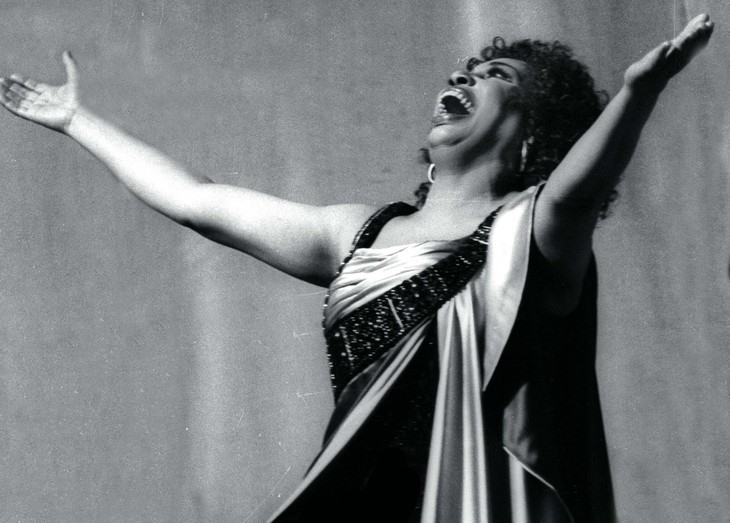
    With talent like that of Leontyne Price, the Price is always right. Join me today on The Classical Network, as we celebrate this extraordinary soprano on her 90th birthday.

    We’ll hear a recording of the Verdi Requiem, made toward the beginning of her career, in the late 1950s, opposite Jussi Björling, who was getting toward the end of his (he died three months later). Filling out the vocal quartet will be Rosalind Elias and Giorgio Tozzi. It’s a fascinating document full of great singing and an unusual, mercurial touch lent by conductor Fritz Reiner, who will lead the Vienna Philharmonic Orchestra.

    Then we’ll have a blistering account of Beethoven’s Symphony No. 9, Price lending her voice to Schiller’s celebratory text, alongside Maureen Forrester, Philadelphia’s David Poleri, and Giorgio Tozzi, as a possessed Charles Munch shovels hot coals under the players of the Boston Symphony Orchestra.

    Finally, a more intimate side of Price will be revealed in the “Hermit Songs” of Samuel Barber, with the composer at the piano.

    All this to follow our noontime concert today, which will feature the Quatuor Modigliani in music of Mozart, Schumann and Dvorak, on a program captured live at the Cathedral Church of the Nativity in Bethlehem, Pa., as presented by the Chamber Music Society of Bethlehem.

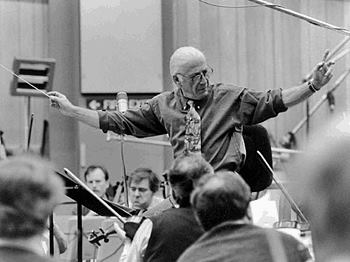
    At 6:00, it’s “Picture Perfect,” music for the movies. I’ll fill you in on a little more about that on my Facebook page later on this afternoon. Suffice it to say, if you tune in early, I will treat you to a medley of some of Jerry Goldsmith’s best-loved themes on this, the anniversary of his birth. Goldsmith died in 2004.

    It will be a long day for Classic Ross Amico, but worth every minute, from noon to 7 p.m. EST, on WWFM – The Classical Network and at wwfm.org.

  • Trains in Movies Music from Hitchcock and More

    Trains in Movies Music from Hitchcock and More

    Traditionally, trains have been very good for drama. They are symbols of departures and arrivals. They are conveyors of prisoners and vehicles of escape. They are objects of romance and objects to “hobo around” on. They are the harbingers of civilization, and they are transports be robbed. You can fight on top of them. You can make out with Eva Marie Saint, or you can protect Marie Windsor so that she can testify against the mob. You can shuffle off to Buffalo.

    For decades, trains have provided good escapist fun at the movies. This week on “Picture Perfect,” we’ve got an hour of music from four memorable films in which trains play an important role.

    In “Strangers on a Train” (1951), arguably Alfred Hitchcock’s most underrated film of the 1950s, Farley Granger plays a tennis pro who unwittingly becomes involved in a double-murder plot through a chance encounter on a passenger train with a psychopath named Bruno (probably Robert Walker’s finest performance). The music is by Dimitri Tiomkin, who scored four films for Hitch – including “Shadow of a Doubt,” “I Confess,” and “Dial M for Murder.”

    Burt Lancaster stars in a film titled, simply, “The Train” (1964), as a reluctant railroad inspector who is persuaded to join the French Underground’s efforts to delay the transport of masterpieces looted from the museums of Paris by the Nazis, since Allied liberation of France is imminent. Paul Scofield plays the art-loving German officer determined to move the art at all costs. Real trains were destroyed in the making of the film, real dynamite was used, and Lancaster, as was often the case, did all his own stunts. The score is by Maurice Jarre.

    “Murder on the Orient Express” (1974) is based on one of the best-known Agatha Christie vehicles conceived for her recurring character, the celebrated detective Hercule Poirot. Albert Finney plays Poirot most memorably in this, the first and best of the all-star Christie thrillers, set on a long-distance passenger train connecting Paris to Istanbul. He’s joined by Lauren Bacall, Martin Balsam, Ingrid Bergman, Sean Connery, John Gielgud, Anthony Perkins, Richard Widmark, and Michael York. The unforgettable score is by Richard Rodney Bennett.

    Finally, we turn to the lighthearted caper film “The Great Train Robbery” (1979), starring Sean Connery, Donald Sutherland, and Leslie-Anne Down. Michael Crichton wrote the screenplay, after his own novel, which in turn was based on an actual historical incident – an 1855 heist, in which an unbelievable amount of gold disappeared from a moving train. Crichton also directed the film. The music is by Jerry Goldsmith.

    We’ll be taking the train today, on “Picture Perfect,” this Friday evening at 6:00 EST, on WWFM – The Classical Network.


    Since today happens to be Jerry Goldsmith’s birthday, join me a little early, as I’ll be cueing up a medley of some of his greatest film themes, to help get you in the mood, starting around 5:30.

  • Snow Day No Ross Amico on WPRB

    Snow Day No Ross Amico on WPRB

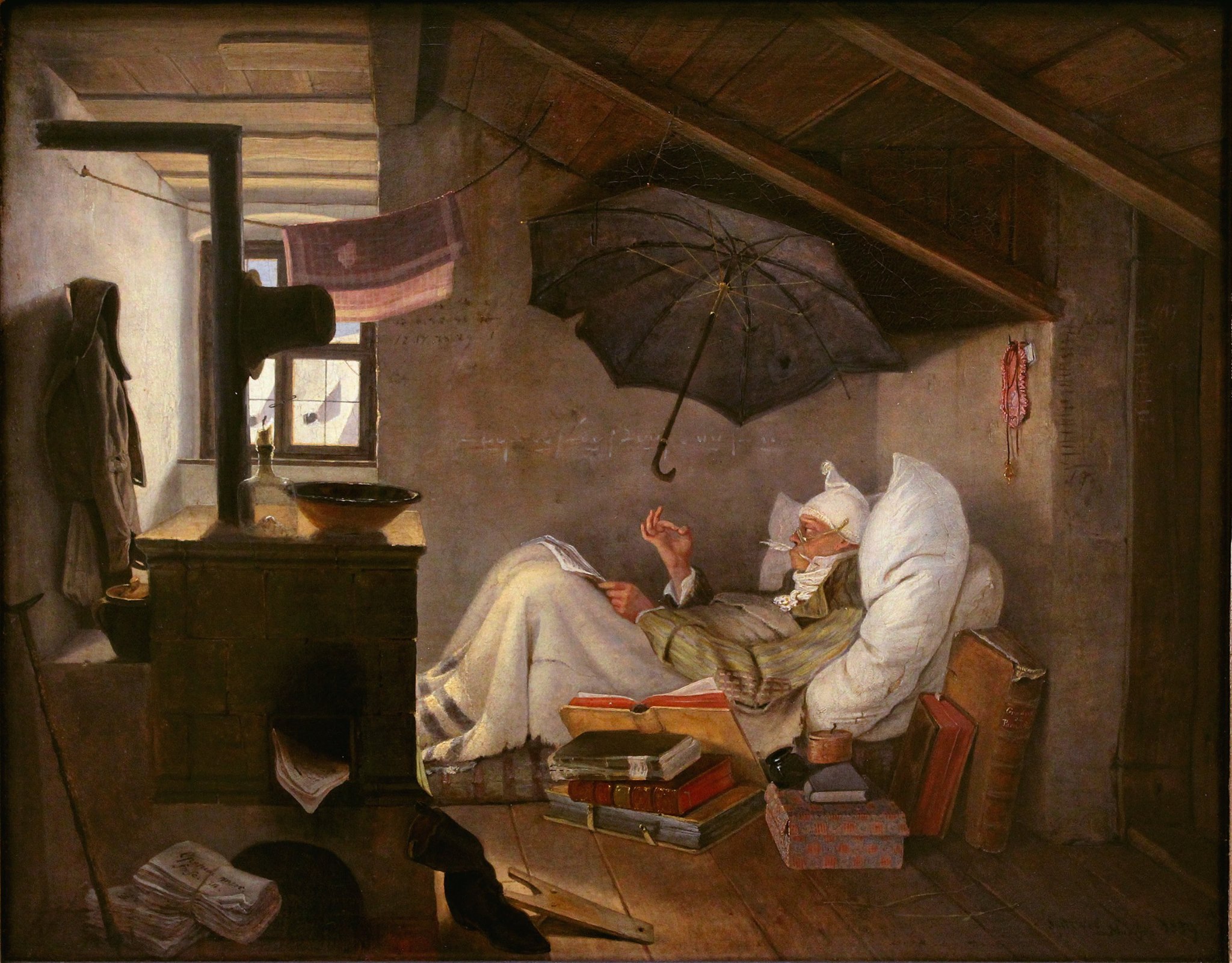
    Due to the impending weather event (up to 12 inches of snow according to some sources), I hope you won’t mind too awfully if I sit out for “Classic Ross Amico” tomorrow morning on WPRB. My car is barely road-worthy even under the best of circumstances, and anyway I’ve been sick for the past two days (hence my paper-thin tone by the end of my air shifts). Taking a break will allow me to sit in my pajamas all day, propped up in bed, reading a book.

    Who or what, exactly, will take my place is uncertain. It might be a Princeton student or at any rate someone within walking distance of the station, or it might be the automation, which could not by any means pass for classical. (I’m told this will change, beginning in the 5 a.m. hour, in the coming weeks.) For as much as I would love to do a snow show, it would hinge on my actually being able to get to the station to do one! All in all, this could be a good time to reacquaint yourselves with your CD collections.

    Thank you for your interest. I’m hoping to be back next Thursday, from 6 to 11 a.m., on WPRB 103.3 FM and at wprb.com, with Classic Ross Amico.


    UPDATE: It looks as if the shift will be split between two student DJs, Nicky and Bobby, starting at 7 a.m. They’ll likely draw pretty heavily from the station’s arcana section, so a lot of the music will be contemporary and/or avant-garde. The name Pauline Oliveros has been bandied. Thanks, guys!

  • Radio Days Snowstorm to Pantaloon Slumber

    Radio Days Snowstorm to Pantaloon Slumber

    When I was a lad I would brave all weather in order to get to a radio shift.

    On one notable occasion, I remember being nearly snowed in on the job. New Jersey literally shut down its highways just as I was crossing the Scudder Falls Bridge into Pa. All of Bucks County stretched out before me like a field of amorphous snow cones. I could scarcely distinguish road from countryside, and there was no one in front of me, so I had to do my best to navigate across the tops of the scoops.

    By the time I got back to Philly the snow as so high, I could scarcely get traction. There was no way I would be able to parallel park, so it was very fortunate indeed that there was a legal parking space open at the end of a line of cars. Sure it was six blocks from my apartment, but beggars can’t be choosers. I was certainly more fortunate than the evening board-op, who literally rode into the station on the plow and had to sleep there, rising early to spin CDs all by herself into the following evening. Such was the dedication of the radio host.

    That was then. Now that I am a middle-aged pantaloon I’d just as soon stay in bed. Thanks again to Bobby and Nicky for filling in for me this morning on WPRB 103.3 FM and at wprb.com. Tune in before 11:00 EST if electronic, minimalist and drone music are your thing.


    All the world’s a stage,
    And all the men and women merely players;
    They have their exits and their entrances,
    And one man in his time plays many parts,
    His acts being seven ages. At first, the infant,
    Mewling and puking in the nurse’s arms.
    Then the whining schoolboy, with his satchel
    And shining morning face, creeping like snail
    Unwillingly to school. And then the lover,
    Sighing like furnace, with a woeful ballad
    Made to his mistress’ eyebrow. Then a soldier,
    Full of strange oaths and bearded like the pard,
    Jealous in honor, sudden and quick in quarrel,
    Seeking the bubble reputation
    Even in the cannon’s mouth. And then the justice,
    In fair round belly with good capon lined,
    With eyes severe and beard of formal cut,
    Full of wise saws and modern instances;
    And so he plays his part. The sixth age shifts
    Into THE LEAN AND SLIPPERED PANTALOON,
    With spectacles on nose and pouch on side;
    His youthful hose, well saved, a world too wide
    For his shrunk shank, and his big manly voice,
    Turning again toward childish treble, pipes
    And whistles in his sound. Last scene of all,
    That ends this strange eventful history,
    Is second childishness and mere oblivion,
    Sans teeth, sans eyes, sans taste, sans everything.

Tag Cloud

Aaron Copland (93) Beethoven (95) Composer (114) Film Music (139) Film Score (143) Film Scores (255) Halloween (94) John Williams (195) KWAX (229) Leonard Bernstein (103) Marlboro Music Festival (125) Movie Music (154) Mozart (89) Opera (210) Philadelphia Orchestra (89) Picture Perfect (174) Princeton Symphony Orchestra (108) Radio (88) Ross Amico (244) Roy's Tie-Dye Sci-Fi Corner (290) The Classical Network (101) The Lost Chord (268) Vaughan Williams (103) WPRB (396) WWFM (881)

DON’T MISS A BEAT

Receive a weekly digest every Sunday at noon by signing up here


RECENT POSTS