Category: Daily Dispatch

  • Moross’s Western Soundscapes Celebrated

    Moross’s Western Soundscapes Celebrated

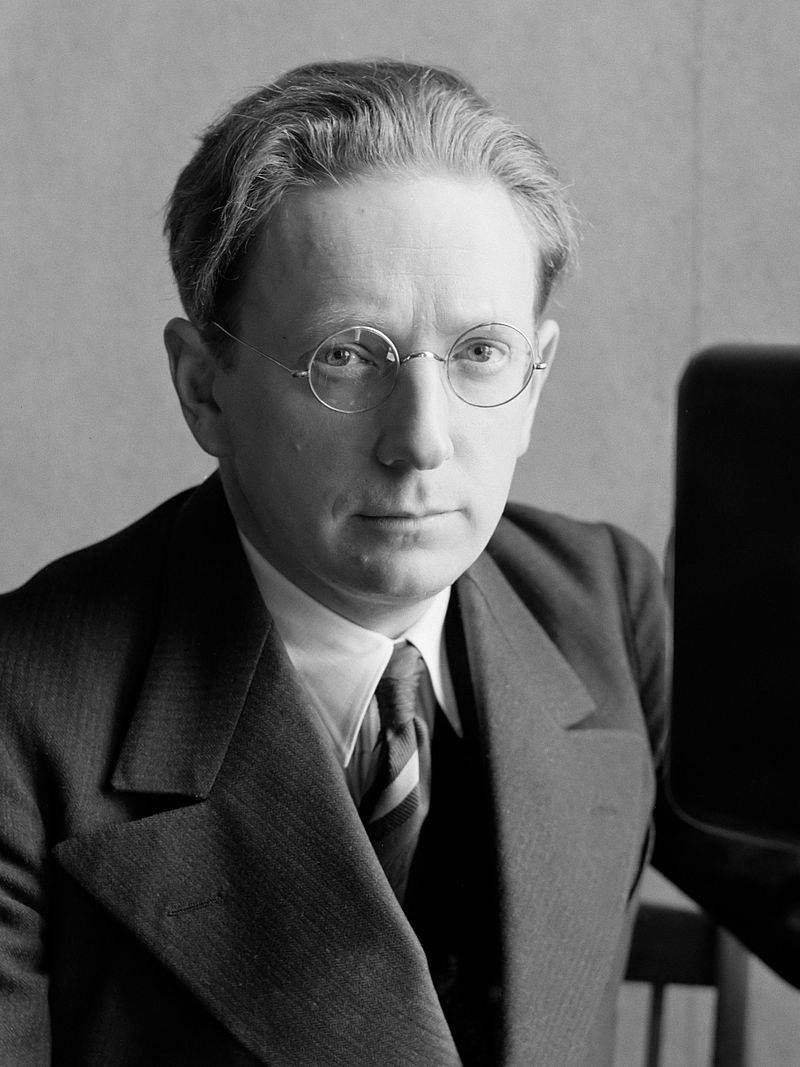
    When “Porgy and Bess” concluded its New York run in 1935, George Gershwin invited Jerome Moross to join the show, on tour, as a pianist. It was on a bus trip to Los Angeles to participate in “Porgy’s” west coast premiere that the 23 year-old composer made a stop in Albuquerque.

    “[A]s we hit the Plains I got so excited,” Moross recollected. “. . .[T]he next day I got to the edge of town and then walked out onto the flat land with a marvelous feeling of being alone in the vastness, with the mountains cutting off the horizon. The whole thing was just too much for me . . . it was marvelous, and I just fell in love with it.”

    The experience served him well, as some of his most famous music, the Academy Award-nominated score for “The Big Country,” enshrines that sense of excitement in the face of sweeping vistas. Western high-spirits and American jazz color most of Moross’ output, whether for the silver screen, musical theater, or concert hall.

    We’ll celebrate the composer’s birthday this afternoon, with selections from all three, during my air shift, from 4 to 7 p.m. EDT, on WWFM – The Classical Network and at wwfm.org.

    Also listen for selections by Enrique Granados and Ernst von Dohnányi, left over from last Wednesday, when my car broke down on the way to the station. Get a horse!

  • Czech Composers Love and Masterpieces

    Czech Composers Love and Masterpieces

    Anyone at all acquainted with the life story of Leoš Janáček knows about his relationship with Kamila Stasslova. Stasslova was the married woman, 38 years Janáček’s junior, who was the recipient of his “intimate letters” (hence, the subtitle of his autobiographical String Quartet No. 2). Though the relationship was chaste one, she instilled in the composer an ardor which propelled him into the creation of a series of masterworks that spanned his final decade. This is the music which essentially made Janáček’s reputation.

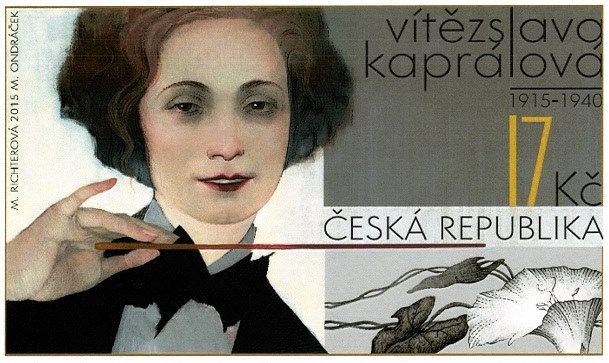
    This Sunday night on “The Lost Chord,” we’ll have two more examples of Czech extramarital love that resulted in flowering creativity. Vitězslava Kaprálová undoubtedly would be much better known had she not died of tuberculosis at the age of 25. The brilliant Kaprálová seemed poised to become the best-known woman composer and conductor in Europe. Her teachers included Vitězslav Novák, Václav Talich, Charles Munch, Nadia Boulanger and Bohuslav Martinů.

    Her relationship with Martinů deepened into one of romantic love, which fueled some of the older composer’s most powerful works, as he grappled with his emotional turmoil, caught as he was between his wife and an irresistible attraction to his star pupil.

    Kaprálová reciprocated, producing a number of pieces under Martinů’s influence, generally submitting them for his approval. One such work was the “Partita for Piano and String Orchestra,” composed in 1938 and 1939. Martinů is said to have made a substantial contribution to its final version.

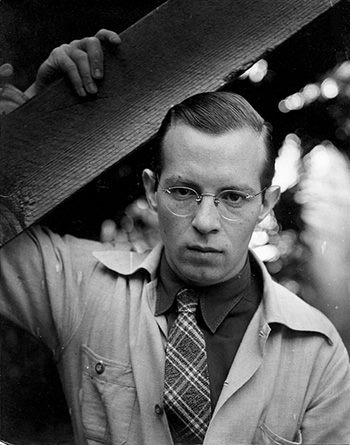
    The idea for this particular thesis came from a consideration of Zdeněk Fibich, the unsung Czech master who was roughly nine years younger than Dvořák. Fibich led something of a turbulent emotional life. When his first wife was about to give birth to twins, one of her sisters came to help out with the delivery. The sister and one of the newborns fell ill and died. They were followed within two years by the other child and Fibich’s wife.

    Fibich promptly married another of his wife’s sisters, only to abandon her and the son she bore him, in favor of one of his pupils, Anežka Schulzová. He documented the affair, musically, in his collection of piano pieces, “Moods, Impressions and Reminiscences,” composed between 1892 and 1899. He referenced material therein in a number of works written during the last decade of his life.

    One of these was the Symphony No. 2, which incorporates the musical reminiscence about the day he declared his love to Schulzová. This occurs in the second movement of the symphony, with another full-blown statement in the finale.

    Join me for this hour of unbalanced Czechs – “Bohemian Lifestyle: Illicit Love in Czech Music” – this Sunday night at 10 EDT on WWFM – The Classical Network; or listen to it later as a webcast, at wwfm.org.


    PHOTOS: The woman who stole Martinů’s heart gets her own postage stamp (top); and Zedněk Fibich, lady killer
  • Jón Leifs Icelandic Heroism in Music

    Jón Leifs Icelandic Heroism in Music

    Jón Leifs’ music can be austere to the Nth degree, its severity reflective of the unforgiving yet sublime Icelandic landscape and the stoicism of the heroes of the Icelandic sagas. His is a wholly unique voice in 20th century music, which deserves to be much better known.

    Leifs, who studied at the Leipzig Conservatory, was caught in Nazi Germany through much of World War II. On the surface, his celebration of Norse heroism should have been just the thing to endear him to the National Socialists. However two things worked against him: the modernistic language of his music, and the fact that his wife and children were Jewish.

    Performances of Leifs’ music were derided or discouraged. This, apparently, he took in his stride, delighting in re-reading the Icelandic Sagas and living vicariously through the exploits of their heroes. Because of his family’s precarious safety, Leifs tried not to draw a lot of attention to himself. He was still useful for propaganda purposes in Germany’s relations with Scandinavia.

    For the record: despite their shared interest in Nordic themes, Leifs found Wagner’s “Ring Cycle” repellent, feeling that Wagner had completely misunderstood the essence and artistic tradition of the North. In fact, he went so far as to state that much of his output was written as a specific protest against Wagner.

    Leifs finally managed to obtain permission to leave Germany in 1944. His family temporarily settled in Sweden. He and his wife divorced, and Leifs returned to Iceland, where he found himself regarded with suspicion for his “Nazi assocations.”

    It didn’t help that much of his music was conceived on such a gargantuan scale – and scored for such outlandish instruments – there was no way it could be practically performed. A lot of it simply went unheard in his lifetime.

    His works are notable for their sparsity, their passages of stasis, and for their unconventional use of wooden hammers, tree stumps, chains, anvils, shields and Viking long horns.

    Leifs had a tendency to write on a scale worthy of his subject matter: the heroism of the Norse sagas and the grandeur of the Icelandic landscape, with its geysers, waterfalls and volcanoes. His orchestral work “Hekla,” about a volcanic eruption, has the reputation of being the loudest piece of orchestral music ever written. Here it is:

    Happy birthday, Jon Leifs (1899-1968).

  • Gordon Turk’s Jongen at Ocean Grove

    Gordon Turk’s Jongen at Ocean Grove

    It seems that organist Gordon Turk has found the ideal demonstration piece for the outsized acoustical marvel that is the Great Auditorium in Ocean Grove.

    Turk, who has been organist in residence at Ocean Grove since 1974, will be the soloist in Joseph Jongen’s “Symphonie Concertante,” a work that he has described as “the biggest and most magnificent piece written for the combination of organ and orchestra.”

    The work will conclude the “Summer Stars” classical concert series in grand fashion on August 4 at 7:30 p.m. The MidAtlantic Opera Company Orchestra will be conducted by Jason Tramm. Also on the program will be Paul Dukas’ “The Sorcerer’s Apprentice.” Mezzo-soprano Margaret Mezzacappa, a Metropolitan Opera National Auditions winner, will sing famous arias from Italian opera.

    The “Symphonie Concertante” is probably the most celebrated work by Jongen, who was born in Liège, Belgium, in 1873. The piece was commissioned by Rodman Wanamaker in 1926 for performance in his Philadelphia department store on the largest functioning pipe organ in the world. Wanamaker died before the project could come to fruition. It wasn’t until 2008 that the work was performed on the instrument for which it was originally intended, with Peter Richard Conte at the console and Rossen Milanov conducting the Philadelphia Orchestra.

    Originally installed in 1908 by Robert Hope-Jones, the auditorium’s organ is one of the 20 largest in the world. It has been restored and greatly expanded by Turk and curator John Shaw. The organ has five manuals, 190 ranks and 11,753 pipes.

    Remarkably, the Great Auditorium was constructed by shipbuilders in only 90 days in 1894. It is the largest enclosed auditorium in New Jersey. The picturesque, wooden structure houses 6,250 seats. Its barrel-vaulted ceiling is a practical throwback to the days before amplification. In its original layout, the hall had close to 10,000 seats, reflective of its mission as a facility for camp meetings. The auditorium continues to host religious services and visiting evangelists.

    The venue’s enormous capacity and superior acoustical properties made it a popular venue for musicians from the golden age, from Enrico Caruso to John Philip Sousa. Leonard Bernstein affectionately called it “The Great Barn,” comparing its acoustics favorably to those of Carnegie Hall.

    You can find out more about the concert, the performers, the instrument, and this remarkable structure in my article in today’s Trenton Times.

    http://www.nj.com/times-entertainment/index.ssf/2016/07/classical_music_gordon_turk_mi.html

  • American Composers Road Trip on WPRB

    American Composers Road Trip on WPRB

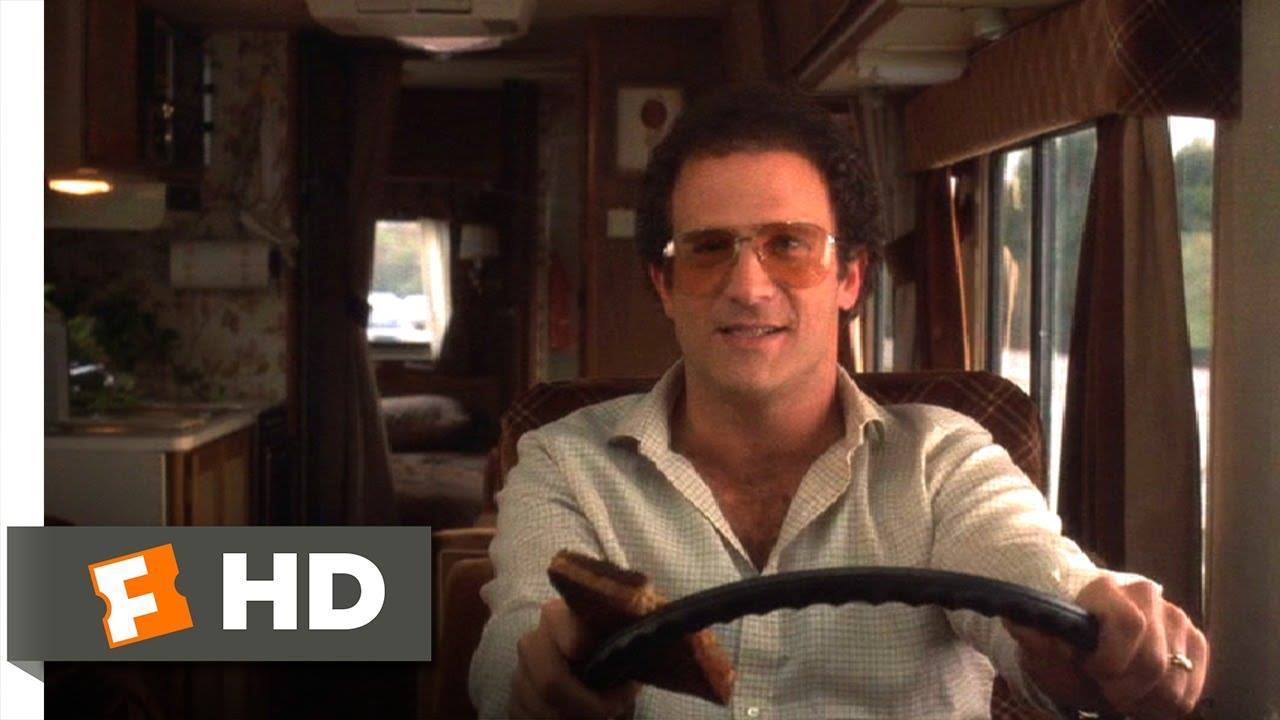
    Why is it I feel like Albert Brooks in “Lost in America?” Maybe because I’ve decided to sell my house, liquidate my assets, and drop out of society, “just like in ‘Easy Rider.’” Just kidding. I don’t have any assets. What I do have, however, is a bag full of CDs featuring music by American composers reflective of their experiences traveling across this picturesque country of ours.

    We’ll hear works inspired by the nation’s highways and byways, its cities, its vacation spots and its natural wonders. Sure, there’s every chance we may get lost (as in Paul Lansky’s “Travel Music”) or have to top off the tank (as in Virgil Thomson’s “Filling Station”), but that’s all part of the experience, isn’t it?

    At any rate, the RV is all gassed up and ready to go. We hit the road from 6 to 11 EDT on WPRB 103.3 FM and at wprb.com. We’ll try not to blow the nest egg, on Classic Ross Amico.

Tag Cloud

Aaron Copland (93) Beethoven (95) Composer (114) Film Music (139) Film Score (143) Film Scores (255) Halloween (94) John Williams (195) KWAX (229) Leonard Bernstein (103) Marlboro Music Festival (125) Movie Music (154) Mozart (89) Opera (210) Philadelphia Orchestra (89) Picture Perfect (174) Princeton Symphony Orchestra (108) Radio (88) Ross Amico (244) Roy's Tie-Dye Sci-Fi Corner (290) The Classical Network (101) The Lost Chord (268) Vaughan Williams (103) WPRB (396) WWFM (881)

DON’T MISS A BEAT

Receive a weekly digest every Sunday at noon by signing up here


RECENT POSTS