
I am pleased to announce that I will be returning to WWFM – The Classical Network for regular air shifts for the first time in over two years. For the rest of the summer and for the foreseeable future, you’ll be able to enjoy my dulcet tones (and, more importantly, my impeccable taste in music) by tuning in on Monday, Wednesday and every other Friday from 4 to 7 p.m. I’ll also be filling in on Tuesday early afternoon for an indefinite period, from noon to 4 p.m. Listen locally at 89.1 FM or online at wwfm.org. A complete list of frequencies is available at the station’s website. Like a phoenix rising from the ashes… It will be interesting to get back to doing live air work again on The Classical Network.
Category: Daily Dispatch
-
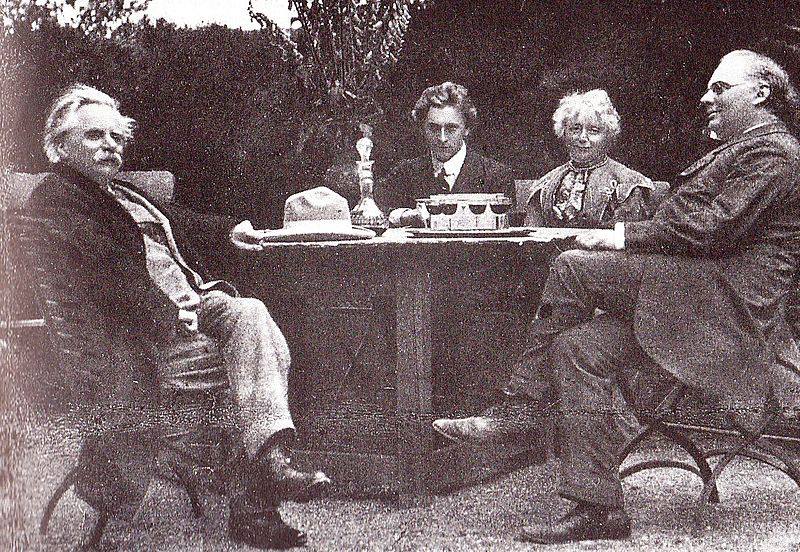
Grieg’s Circle: Friends & Admirers
By all accounts, Edvard Grieg was a gentle-though-principled, generous soul. He was certainly Norway’s most important composer, and his example provided an inspiration not only to Scandinavians, but also to musicians worldwide seeking to find a way around an Austro-German stranglehold on music.
Is it any wonder that he attracted such a devoted following? Tchaikovsky dedicated his “Hamlet Fantasy Overture” to Grieg. Liszt performed his piano concerto. Antonin Dvořák was a friend. Frederick Delius worshipped him.
This Sunday night on “The Lost Chord,” we’ll listen to an hour of music dedicated to Grieg by his friends and admirers.
The American composer Edward MacDowell never actually met Grieg, though they shared a certain musical affinity. He contacted the Norwegian to ask permission to dedicate to him his Piano Sonata No. 3, which he subtitled the “Norse.” Grieg was full of compliments about the piece, and he enthusiastically accepted. The two men enjoyed an admiring, though unfortunately short-lived correspondence, since both were already nearing the end of their lives. MacDowell died in 1908, at the age of 47; he was already in the throes of the illness that would claim him at the time Grieg passed in 1907, at the age of 64.
Though Julius Röntgen was born in Leipzig, by his early 20s he had settled in Amsterdam. He went on to become one of the most important figures in Dutch music, establishing the city’s music conservatory and participating in the founding of the Concertgebouw. Röntgen was successful in becoming a good friend not only of Johannes Brahms (no mean feat), but also Grieg, whom he visited in Norway 14 times. The result was a number of works he composed on Norwegian themes. Röntgen dedicated his suite “Aus Jotunheim,” inspired by a hike he had taken with the composer through the Norwegian mountains, to Grieg and his wife, on the occasion of their 25th wedding anniversary.
Finally, Grieg encountered the tireless Australian pianist Percy Grainger only toward the end of his life, but he was convinced he had found his ideal interpreter. He invited Grainger to perform his Piano Concerto in A Minor under his own direction. Sadly, Grieg died before it could come to pass. Nevertheless, Grainger continued to champion Grieg’s music for the rest of his life. Also, he dedicated a number of folk-inspired works to the memory of the Norwegian master. We’ll hear two historical recordings: one of Grainger playing music of Grieg and then another of the pianist playing one of his own such works.
I hope you’ll join me for “Grieg-arious,” music by Grieg’s dedicated friends. You can enjoy it tonight at 10 ET on WWFM – The Classical Network, or listen to it later as a webcast at wwfm.org.
PHOTO: (left to right) Grieg, Grainger, Nina Grieg & Röntgen at Grieg’s home, Troldhaugen, in 1907
-
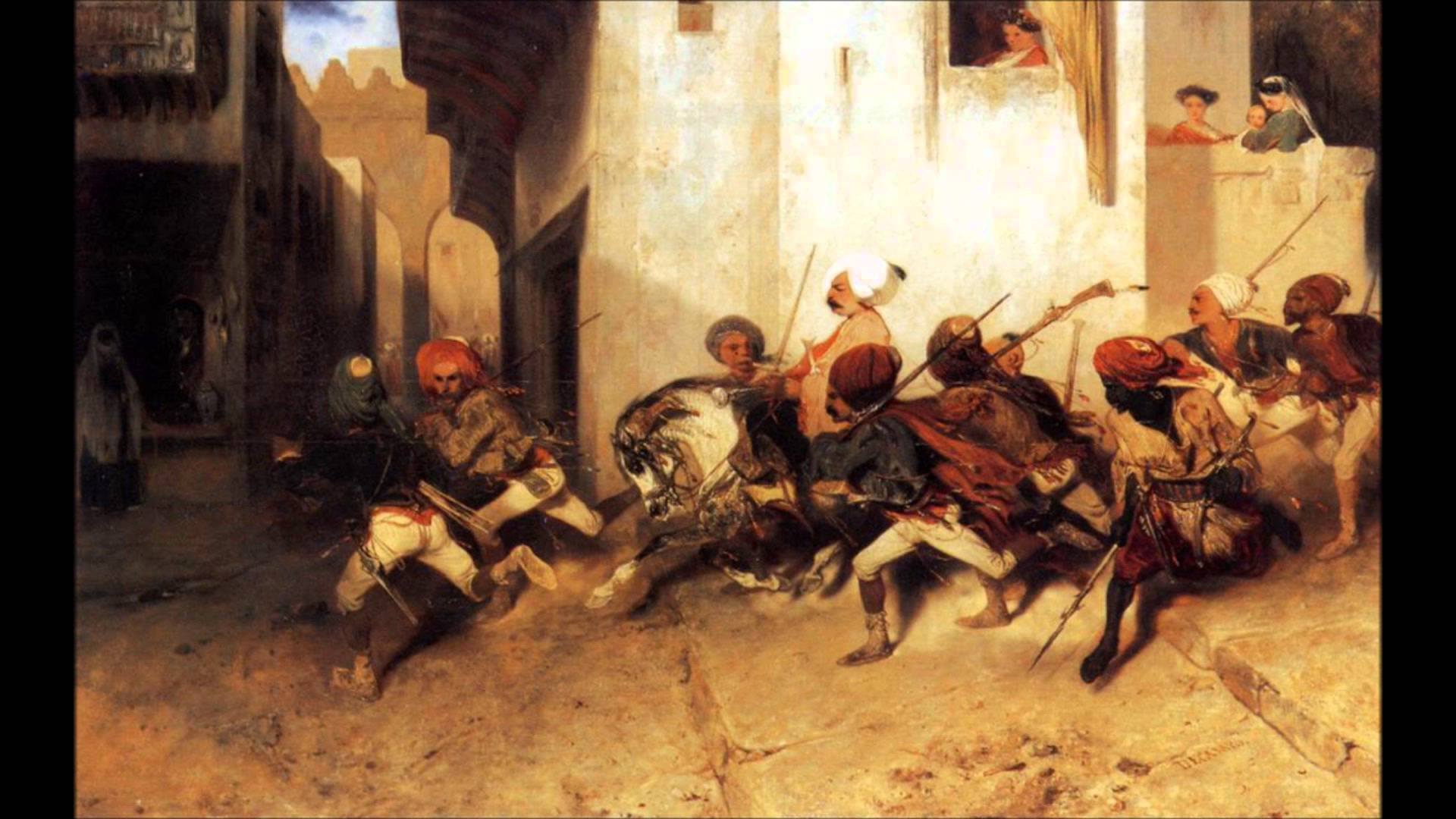
Turkey Coup Pennsylvania Connection?
Good lord! There was an attempted coup in Turkey now, with hundreds dead? Medical science seems to be able to keep ahead of the pandemics, yet we just keep killing one another off.
Allegedly the coup’s mastermind has been operating out of Saylorsburg, Pennsylvania – just 25 minutes north of the town of my birth. What happened to soda fountains, five-and-dimes, farmers markets and drive-in movies? Now they’re overthrowing governments? We’ve come a long way from Mayberry, alas.
https://www.theguardian.com/world/live/2016/jul/15/turkey-coup-attempt-military-gunfire-ankara
https://www.theguardian.com/world/2016/jul/16/fethullah-gulen-turkey-coup-erdogan
Here’s the Symphony No. 1 by Turkish composer Ulvi Cemal Erkin:
-
NJSO Institute: Launching New Composers
“There are three facets to the mentoring – artistic, practical, and career development,” says composer Steven Mackey, director of the New Jersey Symphony Orchestra Edward T. Cone Composition Institute. “If you’re writing for your friends, it’s one thing. When you’re dealing with an orchestra, it really becomes a big business. Orchestral rehearsal time costs so much. Gaining the trust of an orchestra to get your music played is already a huge endeavor. It requires a lot of people to put their faith in you.”
For four composers at the beginning of their careers, the institute is an invaluable experience – six days of intensive evaluations and consultations, culminating in a live performance of their music by a major symphony orchestra under a world-class conductor. The program, now in its third year, brings together the New Jersey Symphony Orchestra and the Princeton University Department of Music to promote new music and emerging composers.
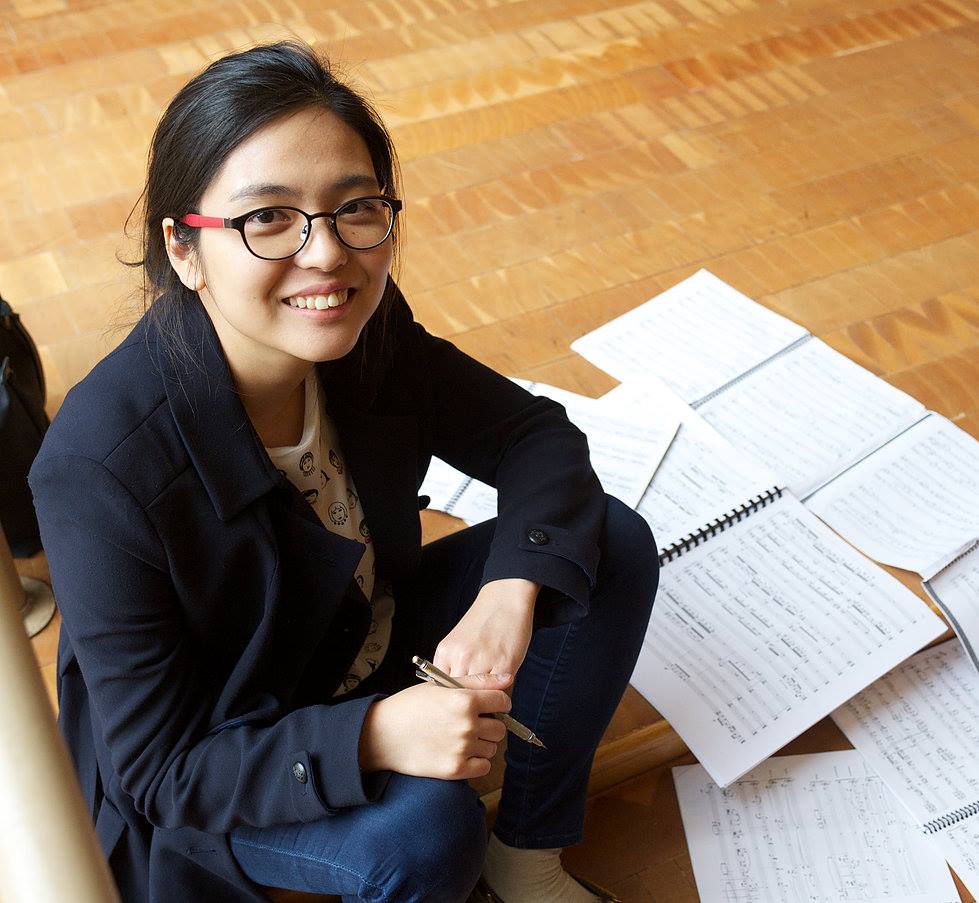
This year’s participants include James Anderson, Matthew Browne, William Stackpole and Jung Yoon Wie. An NJSO concert made up of each composer’s music will take place on Saturday at 8 p.m. at Princeton University’s Richardson Auditorium.
The orchestra will be under the baton of David Robertson, who in the fall will begin his 12th season as music director of the St. Louis Symphony. Robertson is also chief conductor and artistic director of Australia’s Sydney Symphony Orchestra.
Mackey’s “Turn the Key,” written in 2006 for the New World Symphony on the occasion of the opening of the Miami Performing Arts Center, will conclude the Saturday concert.
Also on the program will be Anderson’s “Places with Pillars,” a metaphorical reflection on the search for meaning in our lives; Browne’s “Farthest South,” a tone poem inspired by the Heroic Age of Antarctic Exploration; Stackpole’s “… Ask Questions Later,” a meditation on gun violence and the permanence of consequences; and Wie’s “Water Prism,” inspired by the phenomenon of light passing through a prism to create a rainbow.
You can read more about the institute – and tomorrow night’s concert – in my article in today’s Trenton Times.
http://www.nj.com/times-entertainment/index.ssf/2016/07/classical_music_njso_performin.html
Participants in this year’s NJSO Edward T. Cone Composition Institute: Jung Yoon Wie (top); left to right, James Anderson, William Stackpole and Matthew Browne
-
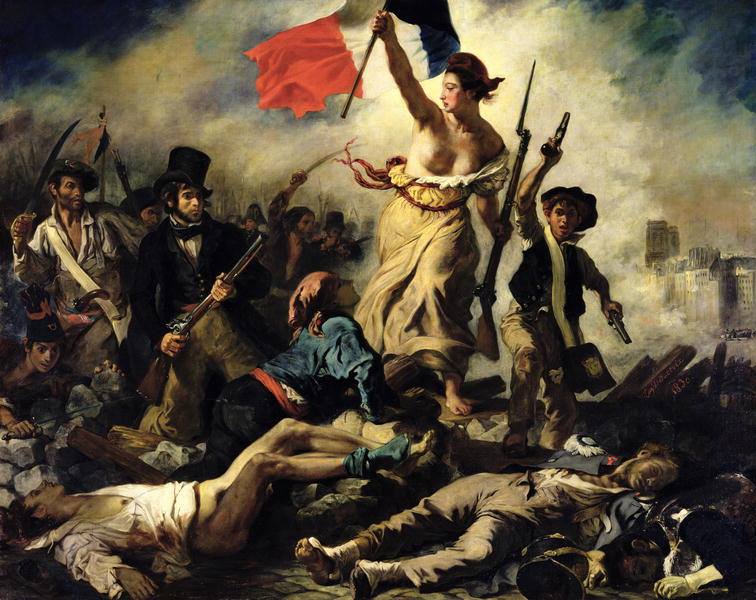
French Revolutions in Music
How many revolutions has France had, anyway? 1789, of course; then 1830; the “Les Miserables” revolution of 1832; another big one in 1848; a failed one in 1871… You might say, all throughout the 19th century, the French were a rather revolting people.
This morning on WPRB, we’ll hear musical responses to revolutionary France, including many by native composers, including Darius Milhaud’s martial Symphony No. 4, written to mark the centenary of the February Revolution of 1848.
We’ll also have Hector Berlioz’s “Symphonie funèbre et triomphale,” composed to honor those who died during the July Revolution of 1830. Of course, that was the heyday of the gunslinger-pianist, and Paris was teeming with foreign keyboard artists like Frederic Chopin and Franz Liszt. The conflict of 1830 inspired Liszt to write a symphonic poem, “Héroïde funèbre.”
But Bastille Day is really all about 1789, so we’ll also include music by Luigi Cherubini and Étienne Nicolas Méhul, both important figures during what is commonly known as THE French Revolution.
Otherwise, there will be abundant apolitical celebrations of France in general and Paris in particular, including the surrealist ballet “Les mariés de la tour Eiffel” (“The Wedding Party on the Eiffel Tower”), a collaborative work by members of Les Six, and plenty of musical joie de vivre courtesy of composers like Jacques Ibert and Jean Françaix.
We’ll slather everything with French dressing this morning, from 6 to 11 EDT, on WPRB 103.3 FM and at wprb.com. Je suis le grand fromage, on Classic Ross Amico.
Tag Cloud
Aaron Copland (93) Beethoven (95) Composer (114) Film Music (139) Film Score (143) Film Scores (255) Halloween (94) John Williams (195) KWAX (229) Leonard Bernstein (103) Marlboro Music Festival (125) Movie Music (154) Mozart (89) Opera (210) Philadelphia Orchestra (89) Picture Perfect (174) Princeton Symphony Orchestra (108) Radio (88) Ross Amico (244) Roy's Tie-Dye Sci-Fi Corner (290) The Classical Network (101) The Lost Chord (268) Vaughan Williams (103) WPRB (396) WWFM (881)