Tomorrow is the birthday of Gustav Mahler. Rather than pummel you with the expected symphonies, I thought I would take a more circuitous route on WPRB and celebrate the great composer by way of the influence of seminal German romantic Clemens Brentano.
Brentano (1778-1842) was the force not only behind the collection of folk poems which were published as “Des Knaben Wunderhorn” (“The Youth’s Magic Horn”) – which he compiled and embellished with his brother-in-law Achim von Arnim – but also the spark that set the Brothers Grimm to work on their imaginative quest to document fairy tales of the German people.
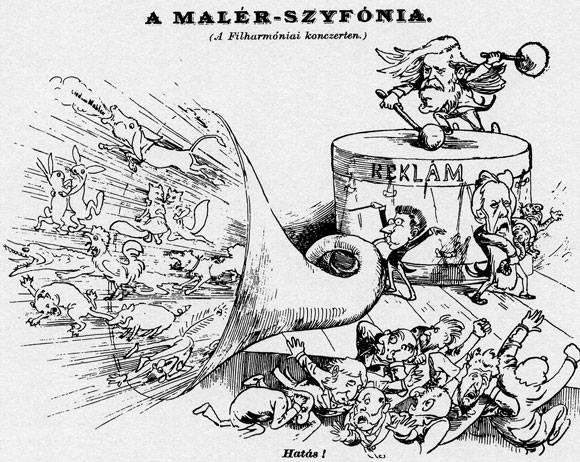
The influence of “Des Knaben Wunderhorn” on Mahler is well-known. He set many of the poems, both individually and as parts of song cycles, and the melodies of a good number of those pervade his symphonies.
Less well known is the influence of the Brothers Grimm. We’ll hear Mahler’s rarely-performed cantata “Das klagende Lied” (“Song of Lamentation”), inspired by the Grimm tale, “The Singing Bone.” The work is an early one, dating from Mahler’s final year at the Vienna Conservatory, and it underwent heavy revisions over the years, with the composer even dropping the first third of the piece. A two-part version entered the repertoire, but since the late 1960s, when the excised material again came to light, it has often been the practice to perform the cantata in its original three-part form. How Mahler would have felt about that is anyone’s guess – it probably would have infuriated him – but artists are not always the best judges of their own work. Anyway, the more Mahler, the merrier (or maybe not).
For the rest of the morning, we’ll have music inspired by other tales from the Brothers Grimm, including Hansel and Gretel, Snow White, Aschenputtel (Cinderella), Little Briar Rose (Sleeping Beauty), Little Red Riding Hood, Rapunzel, Rumpelstiltskin, The Brave Little Tailor and The Juniper Tree.
It will be a very Grimm playlist indeed, from 6 to 11 a.m. EDT on WPRB 103.3 FM and at wprb.com. We’re always at our grimmest when the heat index hits 100, on Classic Ross Amico.
William Billings was the greatest of the Yankee tunesmiths to spring up in the Boston area during the 18th century. Most of them were composers by avocation, pursuing more respectable trades like tanner, blacksmith and horse breeder.
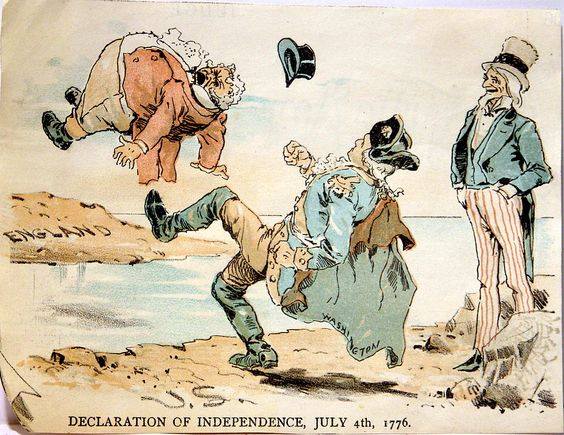
Billings’ “Chester” became one of the firebrands of the American Revolution. Like most of the anthems composed during the era, it has little to do with the town of its name. Instead, it rails against the tyranny of British occupation and trumpets the inevitability of American victory.
This might be my favorite verse:
“The Foe comes on with haughty Stride;
Our troops advance with martial noise,
Their Vet’rans flee before our Youth,
And Gen’rals yield to beardless Boys.”
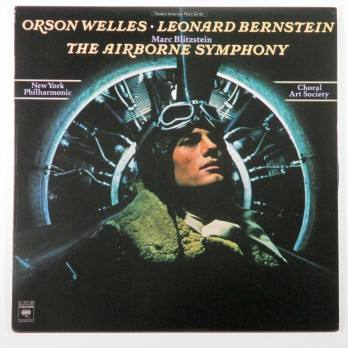
This Sunday night on “The Lost Chord,” we’ll highlight a single, patriotic work: Marc Blitzstein’s “Airborne Symphony.” Written on a commission from the U.S. Army while Blitzstein was serving in its Air Force, the work traces the evolution of flight from its conception in theory to its use in modern warfare.
The work was envisaged by the composer as a big symphony on the theme of “the sacred struggle of airborne free men of the world… to crush the monstrous fascist obstructionist in their path.”
Blitzstein began the work in 1943, at the height of World War II. It would not be completed until after the war, in 1946. Leonard Bernstein conducted the premiere virtually while the ink was still wet on the page. He recorded it twice. We’ll be listening to the second of the two recordings, from 1966, with Orson Welles as the narrator, vocal soloists, the New York Philharmonic, and the men of the Choral Arts Society.
Join me for this forgotten relic of WWII – “Flight of Fancy” – tonight at 10 EDT on WWFM – The Classical Network; or listen to it later as a webcast at http://www.wwfm.org/
“The Gilded Age” was a term coined by none other than Mark Twain to describe the era extending roughly from the end of Reconstruction (following the Civil War) to the turn of the 20th century. He didn’t mean it as a compliment. A gilded age is one which conceals serious social problems beneath a veneer of gold. This week on “Picture Perfect,” we have an hour of music from films based on novels of, or about, the period.
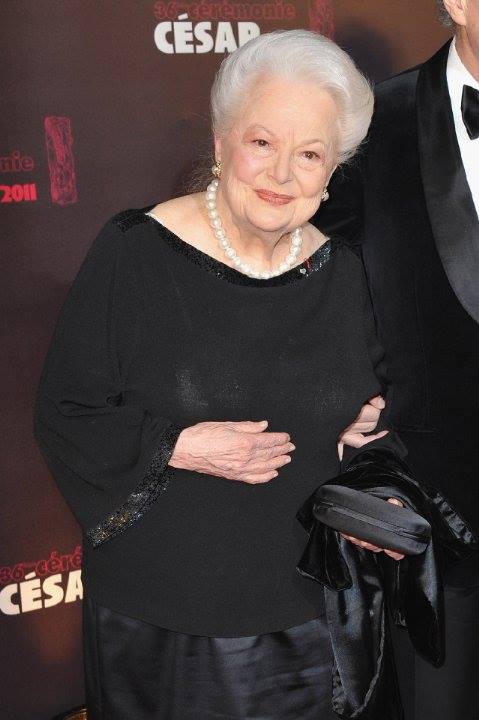
“The Heiress” (1949) is based on a play by Ruth and Augustus Goetz, which in turn was adapted from Henry James’ novel, “Washington Square.” Olivia De Havilland is the “plain Jane” heiress of the title, Ralph Richardson her overbearing father, and Montgomery Clift, the adventurer who may or may not be out for her fortune. De Havilland (100 years-old today!) won an Oscar for her portrayal, as did the music, by Aaron Copland.
“The Age of Innocence” (1993) is based on a novel by one-time James correspondent and close friend, Edith Wharton. The book was published in 1920, but looks back to the 1870s, its story dealing with the impending marriage of an upper class couple and the appearance of a disreputable interloper who threatens their happiness. The title is an ironic play on the outward manners of New York society, in contrast to its inward machinations. The novel earned a Pulitzer Prize, the first Pulitzer awarded to a woman.
The film, which starred Daniel Day-Lewis, Michelle Pfeiffer and Wynona Rider, was something of a curve ball from director Martin Scorsese. Veteran composer Elmer Bernstein provided a lovely, Brahmsian score.
“The Magnificent Ambersons” (1942) is based on another Pultizer Prize winner, this time by Booth Tarkington, from 1918. The novel is part of trilogy that tells the story of the declining fortunes of three generations of an aristocratic Midwestern family, between the end of the Civil War and the early years of the 20th century. With industrialism on the rise, the Ambersons’ “old money” wealth and prestige wane.
“Ambersons” became the basis for only the second film directed by Orson Welles. By that time, however, the fall-out from “Citizen Kane” caused the film to be removed from Welles’ control and re-cut by the studio, shaving a full hour off the original running time. It says something about the quality of the film that it yet remains in itself a magnificent achievement.
The score was by Bernard Herrmann, CBS staff composer from Welles’ radio days. Herrmann had followed Welles to Hollywood to provide the music for “Citizen Kane.” Like the film, the score was drastically edited, with half the music removed. The famously irascible Herrmann, who had just written his Academy Award winning music for “The Devil and Daniel Webster,” was so angry that he threatened legal action if his name was not removed from the credits.
The action of “Mr. Skeffington” (1944), based on a 1940 novel by Elizabeth van Arnim, begins at a point some consider the end of the Gilded Age, the eve of World War I. Bette Davis stars as a woman so enamored of her own beauty and the suitors it attracts that she fails to value the affections of the man who eventually becomes her husband. Mr. Skeffington, played by Claude Rains, is a Jewish financier, riding high in the ‘teens, but whose fortunes change when he’s caught in Europe during the rise of the Nazis.
Both Davis and Rains earned Academy Award nominations for their work. The vivid score is by Franz Waxman. Davis was going through a period of emotional turmoil during the filming, so that she was allegedly insufferable to everyone during the entire shoot. Someone finally poisoned her eyewash. When the police questioned the director, Vincent Sherman, he wished them good luck with their investigation. “If you asked everyone on the set who would have committed such a thing, everyone would raise their hand!”
Clearly all that glitters is not gold. We peel back the veneer of prosperity with “Novels of the Gilded Age,” on “Picture Perfect,” this Friday evening at 6 EDT, on WWFM – The Classical Network; or listen to it later as a webcast at wwfm.org.
Olivia de Havilland receives her Oscar for “The Heiress,” with the orchestra playing a few bars of Aaron Copland’s score:
#OliviaDeHavilland 100
PHOTOS: (Clockwise from left) Olivia de Havilland today; in “The Heiress;” and with her Oscar in 1950