Category: Daily Dispatch

  • Cinco de Mayo Music & Princeton Arts Preview

    Cinco de Mayo Music & Princeton Arts Preview

    ¡Buenos dias, amigos! I hope you’re enjoying the Mexican music this morning, as we celebrate Cinco de Mayo. There’s certainly plenty more to come.

    We can also expect visits from two special guests:

    Composer Sarah Kirkland Snider will drop by in the 9:00 hour to talk a little but about her new work, “Hiraeth,” which will be heard on a concert of the Princeton Symphony Orchestra at Richardson Auditorium on May 15 at 4 p.m. In addition, the PSO will host a performance of Snider’s song cycle, “Penelope,” at Princeton High School Performing Arts Center on May 17 at 7:30 p.m.

    Then around 10:00., Lyn Ransom, artistic director of VOICES Chorale, will join us to talk about the choir’s season finale, which will include a performance of Gabriel Fauré’s Requiem. Dr. Ransom is an advocate of performing the work in the French style. We’ll find out exactly what that means during the course of our conversation. The performance will take place at St. Paul Roman Catholic Church in Princeton on Friday at 8 p.m.

    Otherwise, we’re south of the border, with music by Mexican composers and composers of the United States influenced by Mexico, including José Pablo Moncayo, Mario Lavista, Robert Xavier Rodriguez, Conlon Nancarrow and Silvestre Revueltas, among others.

    The Mexican army defeated the French forces at the Battle of Puebla against overwhelming odds on this date in 1862. Celebrate with us until 11 EDT on WPRB 103.3 FM and at wprb.com

    More about the origins of the holiday here:

    http://www.banderasnews.com/1405/nr-why-mexico-celebrates-cinco-de-mayo.htm

    #CincoDeMayo

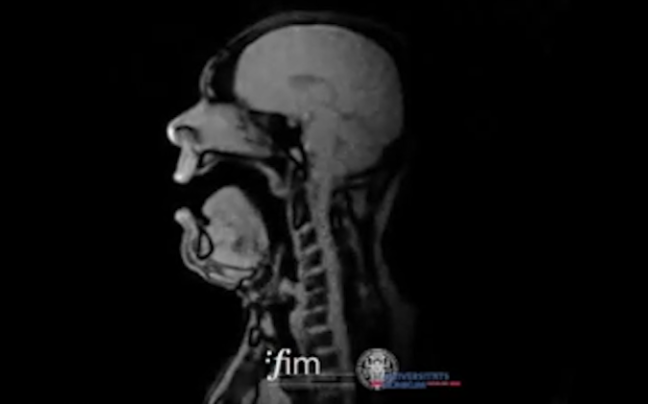
  • Singing in an MRI Machine Vocal Science

    Singing in an MRI Machine Vocal Science

    Depending on your constitution, you might find this fascinating or a tad nauseating. Or perhaps some combination of the two.

    Baritone Michael Volle sings “Song to the Evening Star” from Wagner’s Tannhäuser – in an MRI machine:

    On a related note, Sarah Willis plays exercises on a specially outfitted MRI chamber horn:

    I hope I didn’t catch you during lunch.

  • Cinco de Mayo Music & Local Arts on WPRB

    Cinco de Mayo Music & Local Arts on WPRB

    Do you have that “cincing” feeling? Then it must be almost Cinco de Mayo!

    May 5 is the anniversary of the day in 1862 when the Mexican army routed the superior forces of the French at the Battle of Puebla, quite possibly saving the United States’ bacon. You see, Napoleon III was not entirely unaware of a little something raging here in the U.S. called the Civil War. It was Napoleon’s idea that by moving in while the nation was compromised he might strike an alliance with the Confederacy and then sweep across the country. If not for the events of Cinco de Mayo, we could all be wearing berets right now and saying things like “mais oui.” Think about that the next time anyone talks about building a wall.

    Join me in hoisting a glass of tequila to our brothers and sisters to the south, tomorrow morning on WPRB, as we listen to music mostly by Mexican composers and some by composers of the United States who wrote music on Mexican themes. Two in particular fell head-over-heels for the country: Aaron Copland and Conlon Nancarrow.

    We can expect two visitors:

    Composer Sarah Kirkland Snider will drop by around 9 a.m. to talk about her new work, “Hiraeth,” which will be heard on a concert of the Princeton Symphony Orchestra at Richardson Auditorium on May 15 at 4 p.m. The PSO will host a performance of her song cycle “Penelope” at Princeton High School Performing Arts Center on May 17 at 7:30 p.m.

    Snider will be joined by PSO assistant conductor John Devlin at Princeton Public Library tonight at 7 to discuss Penelope, a central figure from Homer’s “The Odyssey,” her influence on the creation of the piece, and preparations for the performance of Snider’s work. The event is free and open to the public. Refreshments will be provided.

    Then at 10 a.m., Lyn Ransom, artistic director or VOICES Chorale, will join us to tell us a little bit about the group’s season finale, which will include a performance of Gabriel Fauré’s heart-melting Requiem. Dr. Ransom is an advocate of performing the work in the French style. We’ll find out exactly what that means during the course of our conversation. The performance will take place at St. Paul Roman Catholic Church in Princeton on Friday at 8 p.m.

    Since Mexico’s victory at the Battle of Puebla, acquisitive European forces have thought twice before trying to invade any country in the Americas, I can tell you. We’ll do our best not to spill our margaritas all over the equipment tomorrow morning from 6 to 11 EDT, on WPRB 103.3 FM and at wprb.com. We’ll be up to our wrists in guacamole and salsa, on Classic Ross Amico.

    #CincoDeMayo

  • Lionel Barrymore Composer Actor Artist

    Lionel Barrymore Composer Actor Artist

    Very interesting. I’d always known that actor Lionel Barrymore was also a composer, but this is the first time I’ve been able to locate any of his music. Barrymore, of course, was part of the great acting dynasty that also included his famous siblings, John and Ethel Barrymore. He is the great-uncle of Drew Barrymore.

    Lionel was a fabulous character actor, who played a variety of roles on screen, though he seemed to specialize in curmudgeons. He played the irascible Dr. Gillespie in the “Doctor Kildare” movies of the 1930s and ‘40s. He was Ebenezer Scrooge in annual radio broadcasts of “A Christmas Carol.” Of course, he is probably most familiar these days as the soul-crushing capitalist Mr. Potter from “It’s a Wonderful Life.”

    Barrymore, born in Philadelphia in 1878, won an Academy Award for Best Actor for his performance in “A Free Soul” (1931). Despite his natural aptitude and widely acknowledged success in the field, it had never been his ambition to act. Instead, he was interested in being a visual artist. He even trained in Paris, and his prints and etchings were widely circulated.

    As a composer, several of his piano works were published. Apparently his “Tableau Russe” was played, in both its piano and orchestral versions, in the film “Dr. Kildare’s Wedding Day.” His orchestral piece, “In Memoriam,” written to the memory of his brother John, was performed by the Philadelphia Orchestra. He also wrote an historical novel, “Mr. Cantonwine: A Moral Tale.”

    Barrymore died in 1954. He had suffered from crippling arthritis for decades, which is why you’ll generally see him a wheelchair in most of his later films. He also broke his hip twice. He required morphine and cocaine to get through a shoot and to get to sleep at night. It was only through frequent injections of painkillers that he was able to get through “You Can’t Take It With You” on crutches.

    Barrymore’s “Halloween Suite” can be heard here, beginning at the 36 minute mark.

    http://randsesotericotr.podbean.com/2009/10/29/hollywood-bowl-pgm-78/

    Barrymore is the narrator. Mario Lanza also appears on the concert. Miklós Rózsa conducts.

  • May Day Music: Sullivan & Bax Celebrate Spring

    May Day Music: Sullivan & Bax Celebrate Spring

    Happy May Day, everyone! It’s been a raw and clammy day in the Philadelphia/Princeton area. Hopefully your ribbons and hobby horses didn’t get too damp.

    This Sunday night on “The Lost Chord,” we don our finery and caper around the Maypole, with two works by English composers. The first is by Sir Arthur Sullivan – he of Gilbert & Sullivan fame – who, in 1897, set to music a “Jubilee Hymn,” as part of the Diamond Jubilee celebrations surrounding the reign of Queen Victoria, which were held in May of that year.

    Concurrently, he was commissioned to write a ballet to mark sixty years of the Alhambra Theatre in Leicester Square. The result was “Victoria and Merrie England,” which was made up of nationalistic tableaux celebrating the history, legends, and royalty of Great Britain.

    We’re going to be listening to Scenes II & III from the ballet, together titled “May Day in Queen Elizabeth’s Time” (this alluding, of course, to the reign of Elizabeth I). The suite includes colorful descriptive subsections like “Procession of the Mummers and the Revelers,” “Knights and Rose Maidens,” “Friar Tuck and the Dragon” and “Maypole Dance.”

    My original intention had been to cobble together selections from operas and ballets featuring maypoles, but I didn’t have time to distill the high points of Howard Hanson’s “Merry Mount,” Antonin Dvořák’s “The Cunning Peasant,” and Ferdinand Hérold’s “La Fille mal gardée.”

    So instead we’ll fill out the hour with one of the earliest programmatic works by Arnold Bax (later SIR Arnold Bax). “Spring Fire,” composed in 1913 and 1914, is meant to suggest the awakening of mythological beings in early spring.

    The subject matter was an attempt to cash in on the fashionable “paganism craze” sparked by the Ballets Russes and its composers. Bax’s affection for the writings of Algernon Swinburne had recently yielded the symphonic poem “Nympholept.” Quotations from Swinburne also adorn portions of the score to “Spring Fire.”

    The piece was scheduled for performance several times, but repeatedly cancelled, first because of the outbreak of war, then because of the work’s difficulty. In fact, it would never be performed during Bax’s lifetime. The manuscript was consumed in a fire in 1964, and all hope of ever hearing the score vanished. Fortunately, a copy was discovered, and the piece was finally recorded in 1986.

    The work is meant to evoke a woodland sunrise in early spring, as ancient denizens of the forest shrug off their winter sleep. They skip with mad antics down the glades. Forest lovers loll in their ecstatic dreams, until they are rudely awakened by a turbulent rout of satyrs and maenads. Sounds like spring to me.

    I hope you’ll join me for “Spring into May Day,” this Sunday night at 10:00 EDT, with a repeat Wednesday evening at 6; or that you’ll listen to it later as a webcast at wwfm.org.

    I know I said I wouldn’t post about Shakespeare anymore for a while, but here’s an interesting piece about Shakespeare, May Day and the hobby horse:

    Shakespeare, May Day and the Hobby Horse

    Another about Thomas Morton vs. The Puritans, and the Maypole of Merry Mount:

    The Maypole That Infuriated the Puritans

Tag Cloud

Aaron Copland (93) Beethoven (95) Composer (114) Film Music (139) Film Score (143) Film Scores (255) Halloween (94) John Williams (195) KWAX (229) Leonard Bernstein (103) Marlboro Music Festival (125) Movie Music (154) Mozart (89) Opera (210) Philadelphia Orchestra (89) Picture Perfect (174) Princeton Symphony Orchestra (108) Radio (88) Ross Amico (244) Roy's Tie-Dye Sci-Fi Corner (290) The Classical Network (101) The Lost Chord (268) Vaughan Williams (103) WPRB (396) WWFM (881)

DON’T MISS A BEAT

Receive a weekly digest every Sunday at noon by signing up here


RECENT POSTS