Category: Daily Dispatch

  • NJSO Institute: Launching New Composers

    NJSO Institute: Launching New Composers

    “There are three facets to the mentoring – artistic, practical, and career development,” says composer Steven Mackey, director of the New Jersey Symphony Orchestra Edward T. Cone Composition Institute. “If you’re writing for your friends, it’s one thing. When you’re dealing with an orchestra, it really becomes a big business. Orchestral rehearsal time costs so much. Gaining the trust of an orchestra to get your music played is already a huge endeavor. It requires a lot of people to put their faith in you.”

    For four composers at the beginning of their careers, the institute is an invaluable experience – six days of intensive evaluations and consultations, culminating in a live performance of their music by a major symphony orchestra under a world-class conductor. The program, now in its third year, brings together the New Jersey Symphony Orchestra and the Princeton University Department of Music to promote new music and emerging composers.

    This year’s participants include James Anderson, Matthew Browne, William Stackpole and Jung Yoon Wie. An NJSO concert made up of each composer’s music will take place on Saturday at 8 p.m. at Princeton University’s Richardson Auditorium.

    The orchestra will be under the baton of David Robertson, who in the fall will begin his 12th season as music director of the St. Louis Symphony. Robertson is also chief conductor and artistic director of Australia’s Sydney Symphony Orchestra.

    Mackey’s “Turn the Key,” written in 2006 for the New World Symphony on the occasion of the opening of the Miami Performing Arts Center, will conclude the Saturday concert.

    Also on the program will be Anderson’s “Places with Pillars,” a metaphorical reflection on the search for meaning in our lives; Browne’s “Farthest South,” a tone poem inspired by the Heroic Age of Antarctic Exploration; Stackpole’s “… Ask Questions Later,” a meditation on gun violence and the permanence of consequences; and Wie’s “Water Prism,” inspired by the phenomenon of light passing through a prism to create a rainbow.

    You can read more about the institute – and tomorrow night’s concert – in my article in today’s Trenton Times.

    http://www.nj.com/times-entertainment/index.ssf/2016/07/classical_music_njso_performin.html


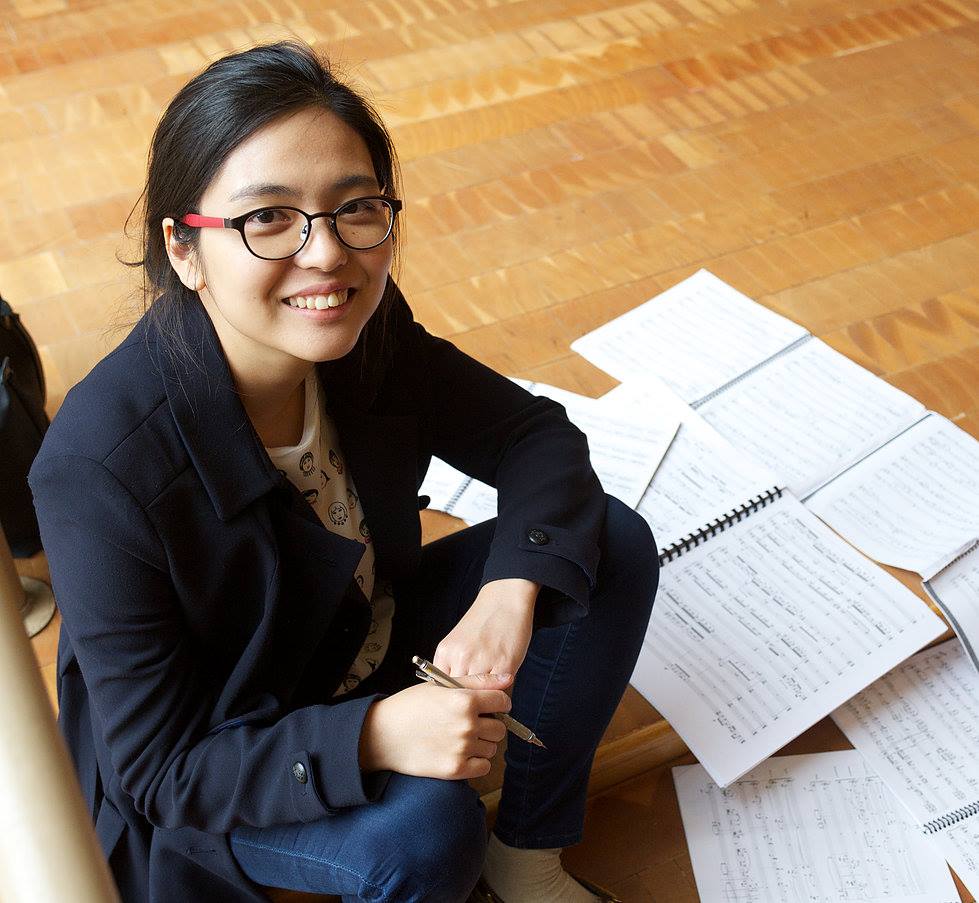
    Participants in this year’s NJSO Edward T. Cone Composition Institute: Jung Yoon Wie (top); left to right, James Anderson, William Stackpole and Matthew Browne
  • Bastille Day Music on WPRB: Eiffel Tower & Revolutions

    Bastille Day Music on WPRB: Eiffel Tower & Revolutions

    Nobody knew how to revolt like the French. French history reads like a wine list of revolution, from 1789 forward. With that in mind, we’re celebrating Bastille Day today on WPRB.

    Few symbols of French pride are more widely recognized than the Eiffel Tower. Yet to come this morning, we’ll hear the collaborative ballet, “Les mariés de la tour Eiffel” (“The Wedding Party on the Eiffel Tower”), by members of Les Six – Georges Auric, Arthur Honegger, Darius Milhaud, Francis Poulenc and Germaine Tailleferre (only Louis Durey opted out) – a surreal romp conceived by Jean Cocteau. The action takes place on a deck of the tower on Bastille Day, July 14.

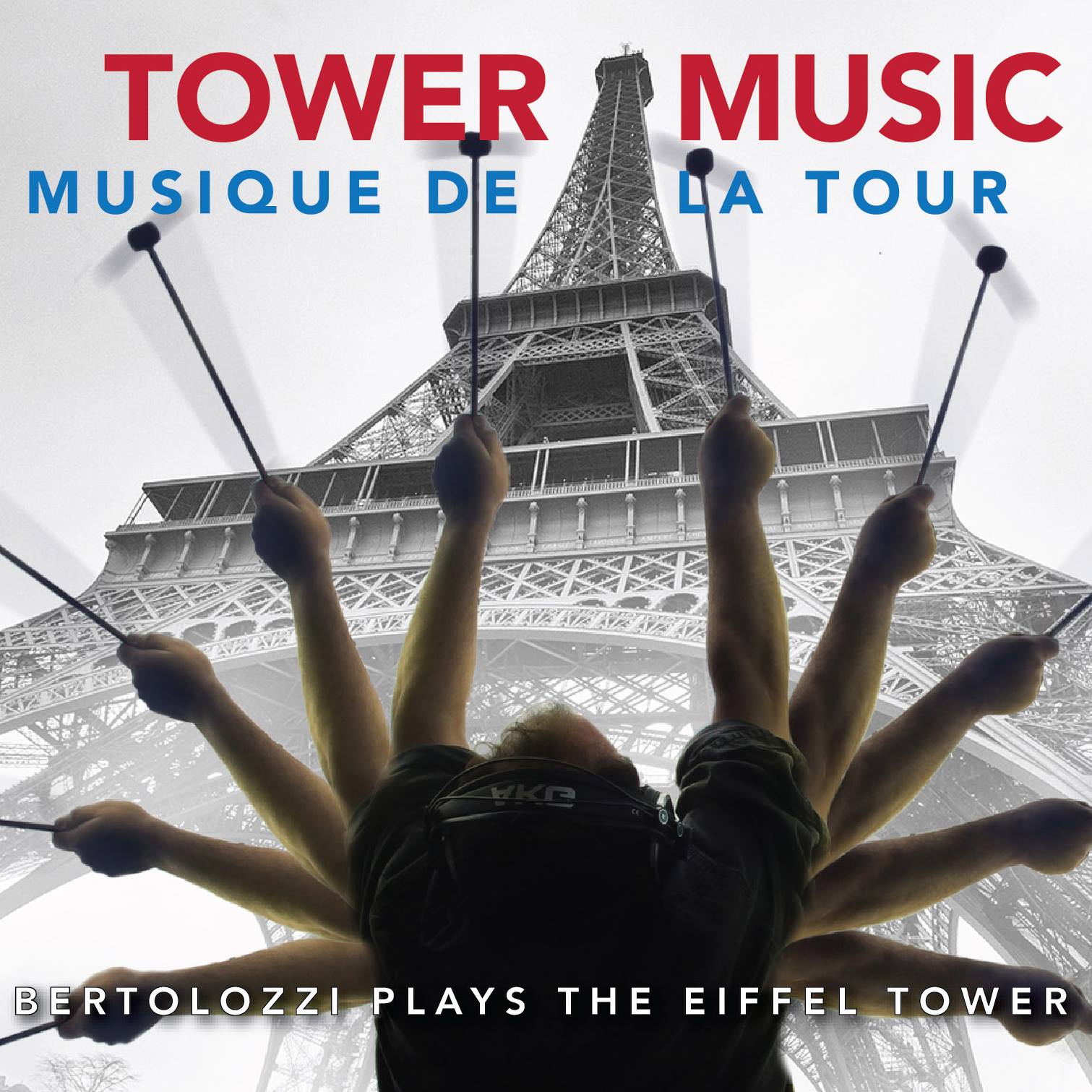
    We’ll also hear selections from the album “Tower Music,” a recent release on the Innova Recordings label, on which mad visionary Joseph Bertolozzi plays the actual Tour Eiffel like a giant percussion instrument. Bertolozzi will present a multi-media concert, Joseph Bertolozzi’s Bridge & Tower Music (he’s also played the Mid-Hudson Bridge), tonight at 7:00 at Live at The Falcon in Marlboro, NY.

    Right now, we’re listening to Franz Liszt’s “Héroïde funèbre,” his memorial to the fallen heroes of the July Revolution of 1830. We’ll also have an opportunity to hear Hector Berlioz’s “Symphonie funèbre et triomphale,” which was written to accompany the dead as their remains were transferred to a newly erected monument in the Place de la Bastille.

    I’ll be asking you to pardon my French until 11 EDT on WPRB 103.3 FM and at wprb.com. What’s creepier than a crêpe? Why, Classic Ross Amico, of course.

  • French Revolutions in Music

    French Revolutions in Music

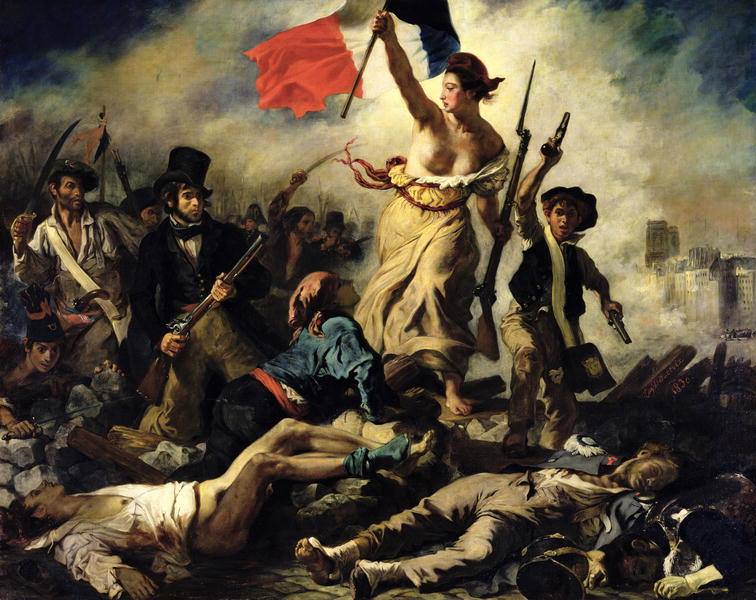
    How many revolutions has France had, anyway? 1789, of course; then 1830; the “Les Miserables” revolution of 1832; another big one in 1848; a failed one in 1871… You might say, all throughout the 19th century, the French were a rather revolting people.

    This morning on WPRB, we’ll hear musical responses to revolutionary France, including many by native composers, including Darius Milhaud’s martial Symphony No. 4, written to mark the centenary of the February Revolution of 1848.

    We’ll also have Hector Berlioz’s “Symphonie funèbre et triomphale,” composed to honor those who died during the July Revolution of 1830. Of course, that was the heyday of the gunslinger-pianist, and Paris was teeming with foreign keyboard artists like Frederic Chopin and Franz Liszt. The conflict of 1830 inspired Liszt to write a symphonic poem, “Héroïde funèbre.”

    But Bastille Day is really all about 1789, so we’ll also include music by Luigi Cherubini and Étienne Nicolas Méhul, both important figures during what is commonly known as THE French Revolution.

    Otherwise, there will be abundant apolitical celebrations of France in general and Paris in particular, including the surrealist ballet “Les mariés de la tour Eiffel” (“The Wedding Party on the Eiffel Tower”), a collaborative work by members of Les Six, and plenty of musical joie de vivre courtesy of composers like Jacques Ibert and Jean Françaix.

    We’ll slather everything with French dressing this morning, from 6 to 11 EDT, on WPRB 103.3 FM and at wprb.com. Je suis le grand fromage, on Classic Ross Amico.

  • Bastille Day on WPRB Radio!

    Bastille Day on WPRB Radio!

    Vive la France! Tomorrow morning on WPRB, we celebrate Bastille Day.

    Among other musical confections, we’ll enjoy the collaborative ballet, “Les mariés de la tour Eiffel” (“The Wedding Party on the Eiffel Tower”), by members of Les Six, a surreal romp set on the Parisian landmark on July 14.

    We’ll also hear selections from the album “Tower Music,” a recent release on the Innova Recordings label, in which mad visionary Joseph Bertolozzi plays the actual Tour Eiffel like a giant percussion instrument.

    There will also be music by French Revolution Era composer Étienne Nicolas Méhul, Napoleon’s cellist, Jean-Louis Duport, and Hector Berlioz’s setting of “La Marseillaise.”

    I’ll be chain-smoking baguettes, tomorrow morning from 6 to 11 EDT, on WPRB 103.3 FM and at wprb.com. “Liberté, égalité, fraternité” is our motto, on Classic Ross Amico.

  • Gomes’ “Il Guarany” a Rio Olympics Inspiration

    Gomes’ “Il Guarany” a Rio Olympics Inspiration

    Let’s get ready for the 2016 Summer Olympics in Rio by marking the birthday today of Brazilian composer Antônio Carlo Gomes (1836-1896). Gomes is reputed to have been the first composer from the New World whose music was embraced in Europe. In fact, his opera, “Il Guarany,” was a sensation when it was given its premiere at La Scala in 1870. Giuseppe Verdi called it a work of “true musical genius.”

    When he came to write it, Gomes was in quest of a truly Brazilian subject. He settled on the romance novel “O Guarani,” by Brazilian writer José de Alencar. Alencar was a major proponent of a literary tradition known as “Indianism.” His book was the first of three to focus on the foundations of the Brazilian nation, with an emphasis on its indigenous peoples and cultures.

    For his achievement, Gomes was decorated by Italy’s King Victor Emmanuel II. “Il Guarany” was performed in all the major musical capitals of Europe. When Gomes organized the opera’s first performance at home, in Rio, the Brazilians went similarly mad for it.

    Of perhaps local interest, Gomes composed the hymn “Il salute del Brasile” to mark the centenary of American Independence. It was performed in Philadelphia, at the Centennial Exposition in Fairmount Park, on July 19, 1876.

    Gomes wrote eight operas in all. Happy birthday, o mustachioed one!


    Caruso with Emmy Destinn singing a duet from “Il Guarany”:

    https://www.youtube.com/watch?v=-H-EfLq3_ok

    The complete opera, with Domingo:

    https://www.youtube.com/watch?v=hgjf2nJQUlE

Tag Cloud

Aaron Copland (94) Beethoven (95) Composer (114) Film Music (153) Film Score (143) Film Scores (255) Halloween (107) John Williams (198) KWAX (233) Leonard Bernstein (105) Marlboro Music Festival (125) Movie Music (168) Mozart (92) Opera (222) Philadelphia Orchestra (91) Picture Perfect (174) Princeton Symphony Orchestra (110) Radio (90) Ross Amico (244) Roy's Tie-Dye Sci-Fi Corner (290) The Classical Network (101) The Lost Chord (269) Vaughan Williams (107) WPRB (397) WWFM (881)

DON’T MISS A BEAT

Receive a weekly digest every Sunday at noon by signing up here


RECENT POSTS