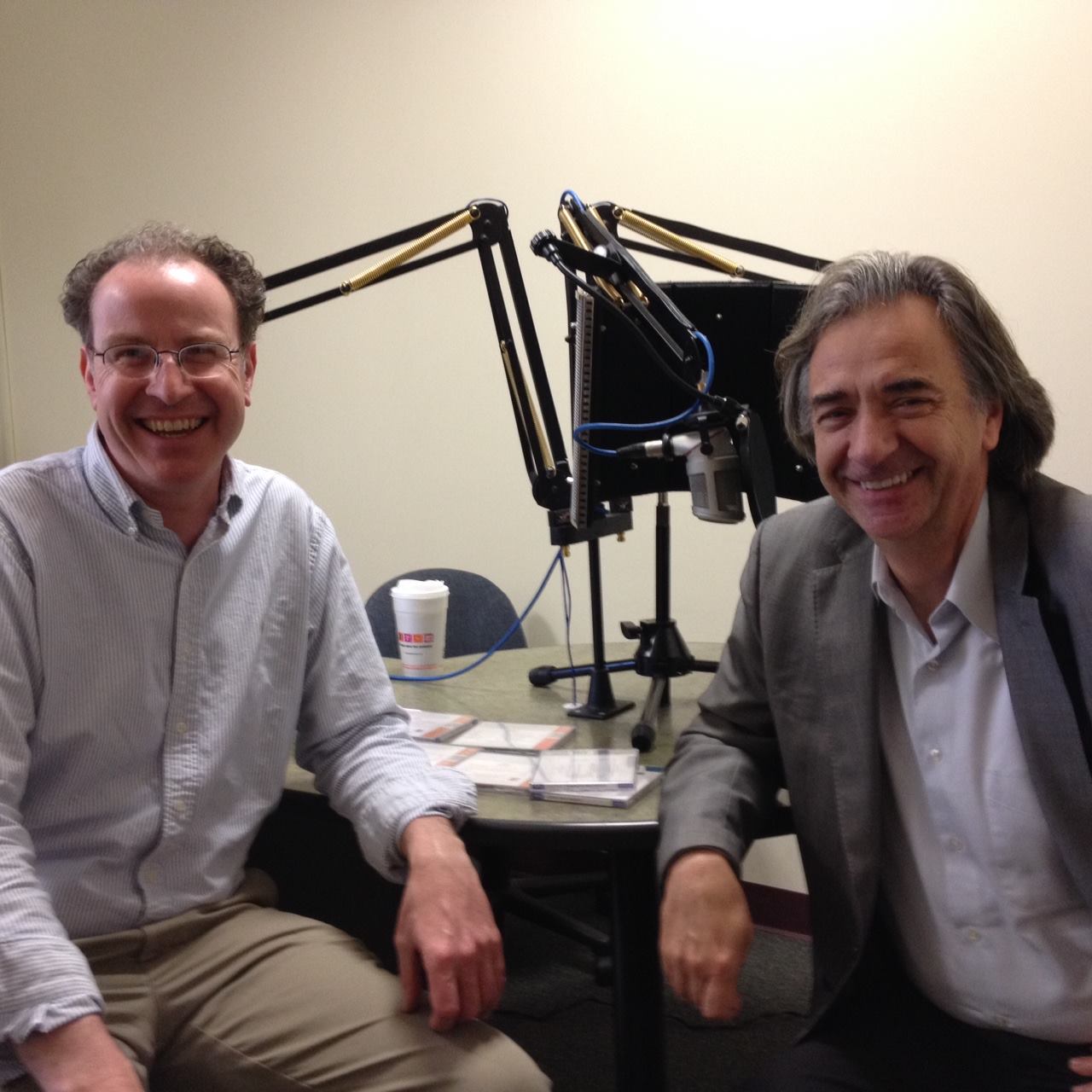
I’m very excited to have just had Mariusz Smolij into the studios at WWFM The Classical Network to talk about his outstanding recordings of music by Eugene Zádor, Miklós Rózsa and Grażyna Bacewicz for the Naxos label. We’ll enjoy some of these, along with Maestro Smolij’s insights, on two upcoming episodes of “The Lost Chord.”
Smolij will conduct the Riverside Symphonia in music by Warlock, Bach, Grieg, and Haydn this Friday night at 8:00 at St. Martin of Tours Church in New Hope, PA.
I find it fascinating that Germaine Tailleferre waited out World War II in Philadelphia. And yet I can never seem to find out very much about what she did while in exile.
Tailleferre was the only female member of Les Six, that loose collective of composers who rose to prominence in Paris in the late ‘teens and 1920s, under the guiding hand of Jean Cocteau. Her famous peers included Francis Poulenc, Darius Milhaud, Arthur Honegger, and Georges Auric. Louis Durey, a hard-line communist who went on to set poems by Ho-Chi Minh and Mao Zedong, is the one nobody remembers. (I wonder why.)
Tailleferre was strong-willed from the beginning. Her birth name was Taillefesse, but she changed it to spite her father, since the old man opposed her musical studies. However, she took piano lessons with her mother and was admitted to the Paris Conservatory. It was there that she met her future colleagues and that the prizes began to pile up. She also earned the friendship and received the support of Maurice Ravel.
In 1925, she married Ralph Barton, an American caricaturist, and moved to New York. Two years later, the couple returned to France, then divorced. Her career thrived in the 1920s and ‘30s. With the outbreak of World War II, however, she beat it back to the United States, leaving most of her scores at her home in Grasse, and, as I said, passed the war years in Philadelphia.
After the war, she again returned to France, where she resumed her career. As she got older, her pieces tended to be shorter, as she suffered from arthritis. She also wrote a lot for children and young pianists. She composed virtually right up until the time of her death in 1983, when she was 91 years-old. She wrote so much, in fact, that a lot of the music of her later years has never been published, and fresh discoveries from her output are being recorded all the time.
Happy birthday, Germaine Tailleferre! If anyone has any information on her activities in Philadelphia, I would be most curious to know.
The Concertino for Harp and Orchestra:
The lovely and wistful “Arabesque” for clarinet and piano:
The recipients of the centennial Pulitzer Prizes were announced this afternoon at 3:00 EDT. The final category to be addressed was that of the Pulitzer Prize for Music. And the winner is…
Henry Threadgill, for “In for a Penny, In for a Pound.”
Threadgill, 72, studied at the American Conservatory of Music in Chicago. He is a composer, saxophonist and flautist, whose compositions have pushed boundaries for the past 50 years. His orchestral, chamber, and solo instrumental works have been performed at BAM, Bang on a Can, and Carnegie Hall. Peter Watrous of The New York Times described Threadgill as “perhaps the most important jazz composer of his generation,” though Threadgill has distanced himself from any such easy categorization.
You can read a review of the recording here. Threadgill plays sax in the embedded video
Here’s another sample of his work (NOT “In for a Penny,” which has not, to my knowledge, been posted), this time with the composer on flute and sax, from the Library of Congress in Washington, DC:
And a conversation with Threadgill, also from the Library of Congress:
In other music news, Lin-Manuel Miranda was recognized with the Pulitzer Prize for Drama for his Broadway juggernaut “Hamilton.”
First, from the 1947 potboiler “Carnegie Hall,” which contrives to string together appearances by some of the greatest classical music talent of the day (including Jascha Heiftez, Gregor Piatigorsky, Arthur Rubinstein, Rise Stevens, Ezio Pinza, Bruno Walter and Fritz Reiner) using the flimsiest and hokiest of plots (renegade young pianist scandalizes – and ultimately makes good – with his new jazz concerto).
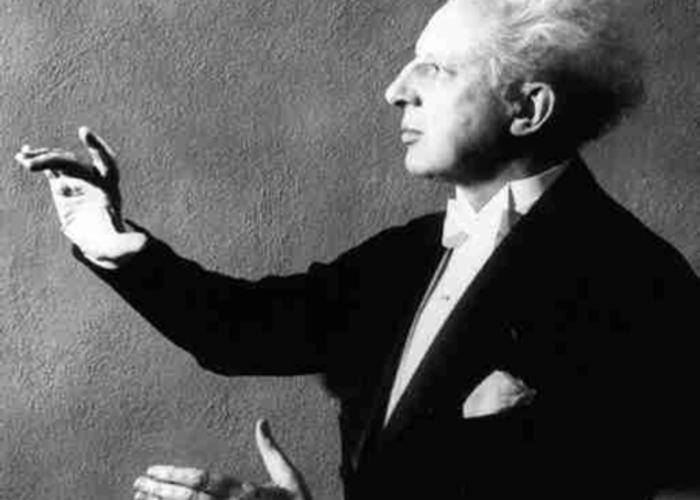
Stokowski provides the musical high point of the picture, with the director, low budget maestro Edgar G. Ulmer – who was a set designer on “Metropolis” and “M” – indulging in Expressionist tricks (low-angle camera set-ups and stark lighting) to accentuate Stoky’s majesty, to say nothing of his hair.
Second, Stokowski rehearsing the American Symphony Orchestra in 1968, at the age of 85. He still had ten years of conducting ahead of him. His talent, temperament – and hair – remain undiminished.