Category: Daily Dispatch

  • Pulitzer Prize Winning Music on the Radio

    Pulitzer Prize Winning Music on the Radio

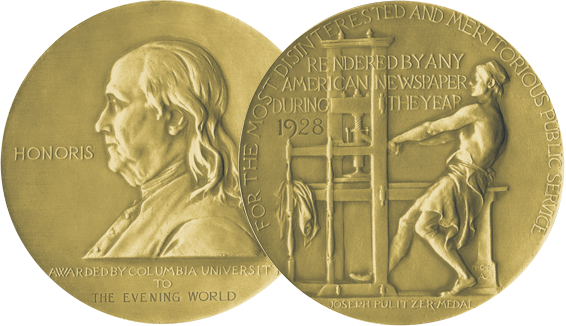
    April is Pulitzer Prize time. This year marks the centennial of the award, which honors excellence in journalism and the arts. Media interest is cresting in advance of the naming of the 2016 honorees, which will take place tomorrow.

    This Sunday night on “The Lost Chord,” we’ll take a look at the Pulitzer Prize for Music. The first Pulitzer Prizes were awarded in 1917, in the fields of journalism, education, letters and drama. The music prize didn’t come along until 1943.

    Of the dozens of pieces honored over the years, surprisingly few have remained in the public consciousness. Only Aaron Copland’s “Appalachian Spring” and perhaps Charles Ives’ Symphony No. 3 “The Camp Meeting” have established themselves firmly in the repertoire – though the operas of Gian Carlo Menotti and Robert Ward are occasionally revived.

    I thought we’d spend yet another hour in what has become an annual salute with some perhaps lesser-known works, though their lack of familiarity is certainly no reflection on the quality of the music or the talent of the composers themselves.

    We’ll hear a piece by Norman Dello Joio, who was awarded a Pulitzer for his “Meditations on Ecclesiastes” in 1957. You know the famous Bible verse, from Book Three of Ecclesiastes, which begins “To everything there is a season.” Its twelve sections consist of an introduction, a statement of a theme, and then ten variations on that theme, calibrated to reflect the verses’ inner meanings. We’ll hear the strings of the Oregon Symphony conducted by James DePriest.

    Then we’ll turn to a deserving work from more recent times. Caroline Shaw, currently a Ph.D. candidate at Princeton University, was 30 years old when she received her award in 2013, making her the youngest Pulitzer winner in her category.

    She was recognized for a virtuosic piece of “a cappella” writing, her “Partita for 8 Voices,” composed between 2009 and 2012. Shaw wrote it for performance by her ensemble, Roomful of Teeth, of which she is a founding member. Roomful of Teeth is well-versed in world styles, and the “Partita” reflects the group’s mastery of a broad array of genres and idioms.

    The Pulitzer committee cited Shaw’s creation as a “highly polished and inventive a cappella work uniquely embracing speech, whispers, sighs, murmurs, wordless melodies and novel vocal effects.” Its four movements are titled after baroque dance forms – Allemande, Sarabande, Courante and Passacaglia. The texts are drawn from instructions for a wall drawing by Sol Lewitt, “Wall Drawing 305,” currently on display at the Massachusetts Museum of Contemporary Art. The performance on this recording, issued on New Amsterdam Records, is incredible.

    I hope you’ll join me for “Pulitzer Prized” – music by recipients of one of music’s most prestigious awards – this Sunday night at 10 ET, with a repeat Wednesday evening at 6; or that you’ll listen to it later as a webcast at wwfm.org.

  • Henry Mancini Celebrating the Pink Panther Composer

    Henry Mancini Celebrating the Pink Panther Composer

    Happy birthday, Henry Mancini (1924-1994)!

    “The Pink Panther” theme

    “A Shot in the Dark”

    Inspector Clouseau Theme (“The Pink Panther Stikes Again”)

    Audrey Hepburn sings “Moon River” (from “Breakfast at Tiffany’s)

    https://www.youtube.com/watch?v=BOByH_iOn88

    Baby Elephant Walk (from “Hatari”)

    Main title from “Charade”

    https://www.youtube.com/watch?v=teRRczT0U5Q

    Theme from “Peter Gunn”

    More about Mancini — who wrote much beside these popular hits — here:

    https://en.wikipedia.org/wiki/Henry_Mancini

  • Shakespeare Music Princeton NJ Anniversary

    Shakespeare Music Princeton NJ Anniversary

    If music be the food of love, play on.
    Give me excess of it that, surfeiting,
    The appetite may sicken, and so die.

    • Duke Orsino, “Twelfth Night,” Act I, scene 1

    Are you played out on the Bard yet? April 23rd marks the 400th anniversary of the death of William Shakespeare, and area musicians prepare to strut and fret their hour upon the stage.

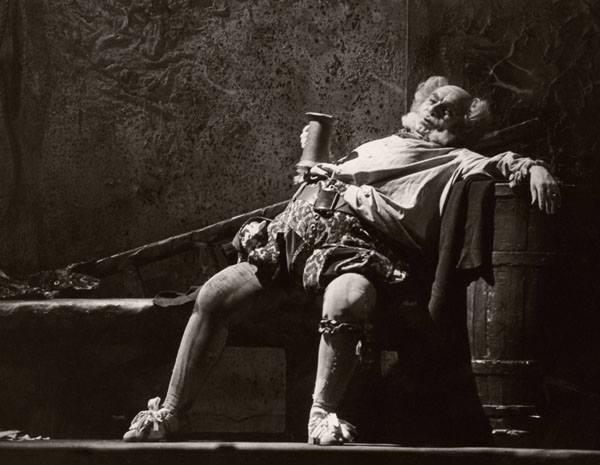
    Westminster Opera Theatre will present two performances of Verdi’s “Falstaff,” tonight and tomorrow at 7:30 p.m. at the Robert L. Annis Playhouse on the campus of Westminster Choir College in Princeton. Allegedly the run is sold out, but there could be turn-ins.

    On Sunday at 3 p.m., Westminster Conservatory of Music faculty singers Danielle Sinclair, Tracy Chebra, Timothy Urban and Krishna Raman will share a recital of Shakespeare in song as part of the Kaleidoscope Chamber Series. The free concert will take place in Gill Chapel on the campus of Rider University in Lawrenceville.

    Next Thursday at 12:15, Mary Greenberg will present a program of Bard-inspired music for the keyboard, interlaced with readings from the Shakespearean sources, as part of Westminster Conservatory’s noontime concert series. The free recital will be given in the Niles Chapel of Nassau Presbyterian Church in Princeton.

    Next weekend, on Saturday, the actual anniversary of the Bard’s death (also traditionally held to be the anniversary of his birth, 52 years earlier), The Princeton Singers will present “Brush Up Your Shakespeare” at 5:30 and 8 p.m. The concerts will be held at Princeton University Art Museum.

    Finally, on Tuesday, April 26 at 7 p.m., The Merrie Companions – Rebecca Mariman, soprano, John Burkhalter, Renaissance recorders, and John Orluk Lacombe, lute – will present “Hamlet’s Castle, or Mr. Shakespeare’s Musicke.” The free concert will take place in the Community Room of Princeton Public Library.

    Words, words, words. You can read more about it in my article in today’s Trenton Times.

    http://www.nj.com/times-entertainment/index.ssf/2016/04/classical_music_westminster_op_1.html

  • Patrick Doyle’s Shakespeare Soundtracks

    Patrick Doyle’s Shakespeare Soundtracks

    Our #Shakespeare400 celebration continues this week on “Picture Perfect,” as we focus on the music of Patrick Doyle composed for the films of Kenneth Branagh.

    Doyle joined Branagh’s Renaissance Theatre Company in 1987, for which he provided incidental music. In 1989, Branagh – and by extension, Doyle – made a leap to the big screen, where they achieved a remarkable feat, rethinking Shakespeare’s “Henry V.” Remember, this is the play that propelled Laurence Olivier to worldwide fame in 1944, both as a filmmaker and the Bard’s most celebrated interpreter, and William Walton’s score is regarded as one of the best of all time.

    Branagh’s version is quite different. Though equally rousing, it doesn’t shy away from Henry’s more complicated nature and the grittier aspects of what it means to go to war. It was a bold gamble, but one that paid off. Not only did this revisionist “Henry” receive nearly universal acclaim, the film was a box office success, and Branagh would be nominated for two Academy Awards, like his predecessor, in the categories of Best Actor and Best Director. Certainly the film’s score deserved to be recognized – but in the year of “The Little Mermaid,” it failed even to secure an Academy Award nomination.

    An interesting footnote: Doyle himself is the baritone who introduces “Non nobis Domine,” a prayer of thanksgiving, following the Battle of Agincourt.

    In 2006, Branagh directed an adaptation of “As You Like It.” As has become his custom, he took a celebrity approach to its casting, although perhaps not so widely uneven as some of the cameos in his big screen “Hamlet.” Kevin Kline appears as Jacques; Alfred Molina is the fool, Touchstone; and Branagh regulars, Brian Blessed and Richard Briers appear, as well.

    The most radical liberty taken with the play is that Branagh recasts the events to take place among English traders in 19th century Japan. The language remains firmly rooted in Shakespeare’s text, although there are striking cross-cultural elements, including ample kimonos, kabuki theatre, ninjas, and a sumo wrestler. Still, it’s a long way off from the astounding bomb that was Branagh’s American Songbook-interpolated “Love’s Labour’s Lost.”

    While Olivier’s “Hamlet” won four Academy Awards in 1948, including those for Best Picture and Best Actor, Branagh’s 1996 version is cinema’s first adaptation of the complete text. It is, perhaps, an uneven interpretation, with some puzzling casting choices – including walk-ons by Jack Lemmon, Robin Williams and Gerard Depardieu – but there are enough merits, certainly, to make the four-hour trek worthwhile.

    Finally, Branagh teamed with his then-wife, Emma Thompson, for a titanic battle of wits as Benedick and Beatrice in his 1993 adaptation of “Much Ado About Nothing.” Again, the film features an eclectic supporting cast of classically trained actors and pop Hollywood phenomena. Briers, Blessed, and Imelda Staunton share screen time with Denzel Washington, Michael Keaton and Keanu Reeves. Yet, somehow, despite the different nationalities, ethnicities, and accents, the entire enterprise works. There is an exuberance to the over-the-top opening sequence which sets up a momentum that carries through the rest of the film.

    How could you not love a movie that opens like this?

    I hope you’ll join me for the Shakespeare scores of Patrick Doyle on “Picture Perfect,” this Friday evening at 6, with a repeat Saturday morning at 6; or that you’ll listen to it later as a webcast at wwfm.org.
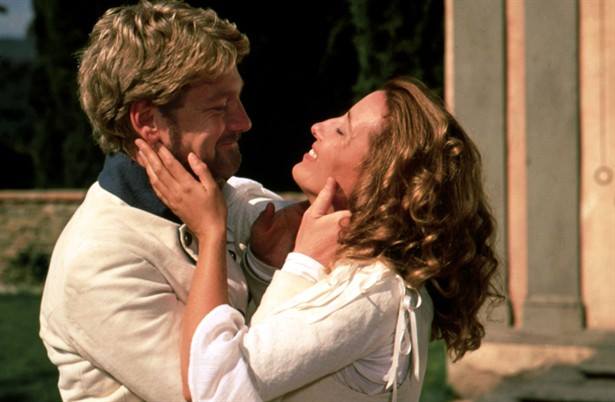

    ‘Swounds! If it isn’t Emma Thompson’s birthday today!

  • Shakespeare’s Music A Classic Radio Celebration

    Shakespeare’s Music A Classic Radio Celebration

    The Bard ain’t all brooding and codpieces. But even if he were, what’s not to like?

    It’s certainly difficult to dislike the music of Gerald Finzi. Enjoy his incidental music written for a production of “Love’s Labour’s Lost,” around 6:30 this morning.

    FUN FACT: If you find Shakespeare’s language a challenge to absorb, just try to wrap your head (and tongue) around “honorificabilitudinitatibus.” It is the longest word to appear in any of the Shakespeare plays – spoken by Costard in Act V, scene 1 – and can be defined as “the state of being able to achieve honors.” You won’t catch me trying to pronounce it at 6:30 in the morning.

    In the 7:00 hour, it’s the tragedy of “King Lear,” with incidental music by Mily Balakirev, played with gusto by the forces of the Russian State Academic Symphony Orchestra. Tchaikovsky’s “Romeo and Juliet Fantasy Overture” would not exist without Balakirev, certainly not in the form we know it today. The older composer suggested the subject to Tchaikovsky and shepherded him through a series of revisions, in fact rather immodestly offering his own “King Lear” Overture as a model.

    The 8:00 hour brings the symphonic study “Falstaff,” by Sir Edward Elgar, which the composer regarded as his finest piece (though it failed to catch on with the public); and then starting in the 9:00 hour, we’ll enjoy the dramatic symphony “Romeo and Juliet” by Hector Berlioz, a work seldom heard in its entirety due to its extraordinary length (about an hour and 40 minutes).

    These are merely highlights, as we continue with our observation of the quadricentennial of the death of William Shakespeare (on April 23, 1616), on WPRB 103.3 FM and at wprb.com. We thrill to the quill, every Thursday morning in April from 6 to 11 EDT, on Classic Ross Amico.

Tag Cloud

Aaron Copland (93) Beethoven (95) Composer (114) Film Music (139) Film Score (143) Film Scores (255) Halloween (94) John Williams (195) KWAX (229) Leonard Bernstein (103) Marlboro Music Festival (125) Movie Music (154) Mozart (89) Opera (210) Philadelphia Orchestra (89) Picture Perfect (174) Princeton Symphony Orchestra (108) Radio (88) Ross Amico (244) Roy's Tie-Dye Sci-Fi Corner (290) The Classical Network (101) The Lost Chord (268) Vaughan Williams (103) WPRB (396) WWFM (881)

DON’T MISS A BEAT

Receive a weekly digest every Sunday at noon by signing up here


RECENT POSTS