Category: Daily Dispatch

  • Vinyl Week on WPRB Rare Classical LPs

    Vinyl Week on WPRB Rare Classical LPs

    Right now we’re listening to Philadelphia composer Paul Nordoff’s “Winter Symphony,” a prized recording on the Louisville Orchestra’s First Edition Records label. Join me later on in the hour as Lee Holdridge does his best Erich Wolfgang Korngold impression, with his Violin Concerto No. 2.

    Ruth Ochs, music director of the Westminster Community Orchestra, will drop by around 9:00 to talk a little bit about the upcoming Westminster Conservatory of Music showcase concert, which will take place on Sunday at 3 p.m. at Princeton University’s Richardson Auditorium. The program will include performances by community ensembles, students and conservatory competition winners. Ochs is also conductor of the Princeton University Sinfonia.

    Yet to come this morning: works by Wallingford Riegger, Carl Ruggles, Earl Kim, Richard Yardumian and Alan Hovhaness – all heard on LP, all otherwise unavailable. Out-of-print recordings for your delectation, as part of WPRB’s Vinyl Week. It’s all vinyl through Sunday, and all Classic Ross Amico through 11 a.m., on WPRB 103.3 FM and at wprb.com.

  • WPRB All-Vinyl Week: Ross Amico’s Throwback

    WPRB All-Vinyl Week: Ross Amico’s Throwback

    The medium is the message this week, as Classic Ross Amico tosses his hat into the ring for WPRB’s All-Vinyl Week. That’s right, WPRB is playing wall-to-wall, honest-to-goodness records until Sunday night. No CD players. No laptops. No iPhones. It’s radio the way it used to be, back when I started in 1986. Back then, if I wanted to play a CD, I had to bring my own player (a component; there was no such thing as a portable) and go around to the back of the board and hook it up myself.

    There’s still something magical about holding an album in my hands. And the smell… the smell! To this day, I am propelled back through the decades whenever I happen to catch a whiff of whatever kind of paper they used for the original “Star Wars” two-LP set.

    Those were the days, the days when I’d spend hours in my bedroom, flat on my back, every aspect of the packaging seared into my brain as I listened repeatedly to the music. Album covers were a work of art then. The covers were like canvases, large enough for the images to have an impact, and for the listener to be able to take in all the detail. Frequently there was enough tantalizing information on the back cover to keep one engaged and salivating until one got home from the record store.

    The arrangement of the tracks was an art in itself, a fading one in danger of extinction in this day of digital downloads. There was so much care lavished on every aspect of an LP release. It had much more resonance for me, personally, to buy a record then, than it does for me to walk home with a stack of used CDs now. And when one listened, one tended to really listen. It was an active pursuit, not just background.

    Having grown up in the era that I did, marked by the twilight of the LP, I possess a certain longing to listen to the radio in the middle of the night, and sense the presence of stylus in groove, the soft whir, the occasional pop. There was something very human and reassuring in those things.

    Now, on the unfortunately rare occasions when I do play an LP, comparative listening with its compact disc remastering(s) almost always reflects poorly on the later incarnations. I don’t really consider myself an audiophile, but to me the depth and inherent warmth of an LP recording are immediately evident.

    Finally, with every change in format, something is lost. Even in this age of previously undreamt of access to a seemingly unfathomable wealth of recordings, there is still much which, sadly, is simply no longer available. Combing through the WPRB library last week, I was happily taken by surprise again and again by albums that have never been reissued. There is a veritable Aladdin’s Cave awaiting rediscovery.

    Augmented by a few gems from my own collection – the odd Louisville First Edition, major performers playing works by neglected contemporary composers – tomorrow’s show should be a fascinating journey on many levels. There will be plenty of snap, crackle and pop, from 6 to 11 ET, on WPRB 103.3 FM and at wprb.com, as we’ll be giving you the needle, on Classic Ross Amico.

  • Handel Praised by Beethoven Mozart Haydn

    Handel Praised by Beethoven Mozart Haydn

    Beethoven is remembered to have praised Handel on numerous occasions. “Handel is the greatest composer who ever lived,” he said. “I would uncover my head and kneel down on his tomb.” On his deathbed, he indicated an edition of Handel’s works and said, “There is the truth.”

    Upon hearing the “Hallelujah Chorus,” Haydn wept and declared, “He is the master of us all.”

    Mozart said, “He understands effect better than any of us – when he chooses, he strikes like a thunderbolt.”

    Berlioz? Berlioz called him “a tub of pork and beer.” Knowing what I do of Handel, he probably would have enjoyed that best of all.

    Happy birthday, George Frideric Handel (1685-1759).


    “Ariodante” was the opera I hated most when I first heard it in 1990. Now I hold it dear. Funny how things change.

    “Scherza infida”

    “Dopo notte”

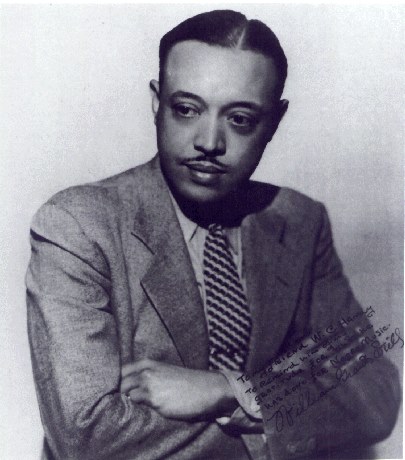
  • William Grant Still American Composer

    William Grant Still American Composer

    They say that still waters run deep.

    William Grant Still, the so-called “Dean of Afro-American Composers,” composed a lot of attractive music, much of it informed by the black experience. This Sunday night on “The Lost Chord,” we’ll hear Still’s delightful Symphony No. 2, subtitled “Song of a New Race,” and a more serious work fueled by racial considerations, “And They Lynched Him on a Tree,” for double-choir, narrator and orchestra.

    Still, who lived from 1895-1978, emerged from unlikely circumstances – born in Woodville, Mississippi; raised in Little Rock, Arkansas – to become a major force in American music. Having abandoned a career in medicine for studies at the Oberlin Conservatory of Music and the New England Conservatory in Boston, where he studied with George Whitefield Chadwick, Still was a “first” in many respects.

    His Symphony No. 1, the “Afro-American Symphony,” was the first written by a black composer to be performed by a major orchestra (the New York Philharmonic). He was the first to be given the opportunity to conduct a major orchestra (the Los Angeles Philharmonic, at the Hollywood Bowl). His opera, “Troubled Island,” became the first to be produced by a major company (the New York City Opera). Another of his operas, “A Bayou Legend,” was the first to be performed on national television (as late as 1981). His works were performed internationally by the Berlin Philharmonic, the London Symphony Orchestra, the BBC Symphony, and the Tokyo Philharmonic.

    Perhaps the least likely pupil of Edgard Varèse, he incorporated jazz and blues elements into his concert music. He cut his teeth writing arrangements for Paul Whiteman, W.C. Handy and Artie Shaw. According to Eubie Blake, one of Still’s improvisations in the pit band during Blake’s revue “Shuffle Along” became the basis for Gershwin’s hit tune “I Got Rhythm.” Still didn’t appear to be bitter about the appropriation (which Blake conceded was probably inadvertent), and in fact Still and Gershwin were on friendly terms and made it a point to attend performances of one another’s music.

    Pay particular attention to the second movement of Still’s Symphony No. 2, first performed in 1936 by Leopold Stokowski and the Philadelphia Orchestra, and see if you agree that Gershwin would have killed to have composed its second movement.

    We’ll follow that with a very different piece, Still’s choral ballad “And They Lynched Him on a Tree,” composed in 1940. The libretto is by the poet Katherine G.C. Biddle, the niece of Charlotte Mason, the so-called “Godmother of the Harlem Renaissance.” The work calls for a contralto soloist, as the mother of the victim, a “white chorus” to depict the mob, a “black chorus” to discover the lynching, a narrator, and a small orchestra. The composition is almost exactly contemporary with Abel Meeropol’s “Strange Fruit.” It was given its first performance by the New York Philharmonic, conducted by Artur Rodzinski.

    There will be just a few minutes left at the end of the show, during which we’ll decompress with Still’s miniature “Summerland.”

    I hope you’ll join me for “Still Runs Deep” – an hour of music by William Grant Still – this Sunday night at 10 ET, with a repeat Wednesday evening at 6; or that you’ll listen to it later as a webcast at wwfm.org.

  • Holiday Inn’s Forgotten Washington’s Birthday

    Holiday Inn’s Forgotten Washington’s Birthday

    February 22. Washington’s birthday. Not the contemporary holiday (a.k.a. Presidents Day), mind you, but the actual anniversary of his birth.

    Anybody else a fan of “Holiday Inn” (1942), with Bing Crosby and Fred Astaire? Irving Berlin astounds with a dozen songs constructed on holidays from the American calendar. Some have earned their immortality (“White Christmas” and “Easter Parade”). Others are completely forgettable. The song celebrating Washington’s Birthday falls soundly into the latter category – which, I argue, only makes it all the more enjoyable.

    I find “Holiday Inn” vastly superior to its remake-of-sorts, “White Christmas” (1954), which pairs Crosby with Danny Kaye. Unfortunately Berlin’s celebration of Lincoln’s Birthday as a jaw-dropping black face number hasn’t aged particularly well. (At one point, Bing actually interjects, “Who dat?”) These days, the segment is edited out of most television airings of the film, with the exception of those broadcast on TCM, which doesn’t attempt to white wash history.

    This number, more than anything, is probably what damns “Holiday Inn” to comparative obscurity – next to “White Christmas,” anyway – which is a shame, because it is very entertaining. Every time I check YouTube, there’s not even a clip of Washington’s Birthday, which features Bing in a disheveled powdered wig attempting to undermine Astaire, his rival in love, with a schizophrenic musical accompaniment that ping-pongs wildly (in the film) between 18th century minuet and 1940s big band.

    Oh well. At least we have this recording, with Berlin’s excruciatingly contrived lyrics. They can’t all be “White Christmas,” you know.

    https://www.youtube.com/watch?v=o9Ejy1B4m80

Tag Cloud

Aaron Copland (93) Beethoven (95) Composer (114) Film Music (139) Film Score (143) Film Scores (255) Halloween (94) John Williams (195) KWAX (229) Leonard Bernstein (103) Marlboro Music Festival (125) Movie Music (154) Mozart (89) Opera (210) Philadelphia Orchestra (89) Picture Perfect (174) Princeton Symphony Orchestra (108) Radio (88) Ross Amico (244) Roy's Tie-Dye Sci-Fi Corner (290) The Classical Network (101) The Lost Chord (268) Vaughan Williams (103) WPRB (396) WWFM (881)

DON’T MISS A BEAT

Receive a weekly digest every Sunday at noon by signing up here


RECENT POSTS