Category: Daily Dispatch

  • Shakespeare Music on WPRB

    Shakespeare Music on WPRB

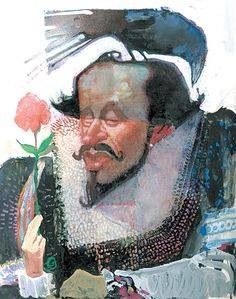
    Fear no more the heat o’ the sun. At least for today in the Princeton area, with increasing clouds, afternoon showers anticipated, and highs in the upper 50s. The musical forecast, however, is for 100 percent Shakespeare.

    We’ll round out our month-long, Thursday morning salute to the Bard with the last of four installments commemorating the quadricentennial of his death, on April 23, 1616. Is the date etched into your memory yet? Fret thee not: the next major anniversary will be the 500th anniversary of his birth, in 2064 – by which time, I fancy, many of us will be able to congratulate him in person.

    In this first hour, we’ll have musical greatness thrust upon us, with selections from Ernest Chausson’s “The Tempest,” Gabriel Fauré’s incidental music for “Shylock” (after “The Merchant of Venice”) and Sir Alexander Mackenzie’s merry – and extended – overture for “Twelfth Night.”

    Those now a-bed shall think themselves accursed they were not here, from 6 to 11 EDT on WPRB 103.3 FM and at wprb.com. The fewer the listeners, the greater the share of honour, on Classic Ross Amico.

    Hark, hark! the lark at heaven’s gate sings,
    And Phoebus ‘gins arise,
    His steeds to water at those springs
    On chaliced flowers that lies;
    And winking Mary-buds begin
    To ope their golden eyes:
    With every thing that pretty is,
    My lady sweet, arise:
    Arise, arise.

    • “Cymbeline,” Act II, scene 3

    BTW: The birders among you might be interested to know that, according to the Scottish geologist Sir Archibald Geikie, in his 1916 book “The Birds of Shakespeare,” the Bard references all of the following in his plays: the Blackbird, Bunting, Buzzard, Chough, Cock, Cormorant, Crow, Cuckoo, Dive-dapper, Dove and Pigeon, Duck, Eagle, Falcon and Sparrowhawk, Finch, Goose, Hedge Sparrow, House Martin, Jackdaw, Jay, Kite, Lapwing, Lark, Loon, Magpie, Nightingale, Osprey, Ostrich, Owl, Parrot, Partridge, Peacock, Pelican, Pheasant, Quail, Raven, Robin, Snipe, Sparrow, Starling, Swallow, Swan, Thrush, Turkey, Vulture, Wagtail, Woodcock and the Wren.

    Interestingly, the House Sparrow gets four mentions – in “Hamlet,” “As You Like It,” “The Tempest” and “Troilus and Cressida.”
  • Shakespeare on WPRB This Morning

    Shakespeare on WPRB This Morning

    Roughly two hours to go in our month-of-Thursdays salute to William Shakespeare.

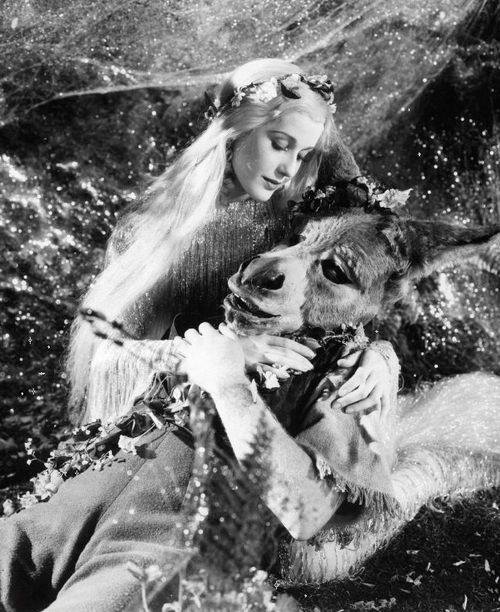
    Yet to come: Frank Bridge’s “There is a willow grows aslant a brook,” his atmospheric reflection on the death of Ophelia; Gerald Finzi’s “Let us Garlands bring,” song settings of some of the Bard’s memorable texts; a suite from Florent Schmitt’s “Antony and Cleopatra,” in a recent recording by the Buffalo Philharmonic Orchestra, conducted by JoAnn Falletta; and a special treat from the pen of Erich Wolfgang Korngold – his imaginative arrangements of music by Felix Mendelssohn made for a 1935 film version of “A Midsummer Night’s Dream,” which starred James Cagney, Olivia de Havilland, and a 15 year-old Mickey Rooney as Puck.

    How now, spirit! Whither wander thee? It’s all Shakespeare this morning until 11:00 EDT, on WPRB 103.3 FM and at wprb.com.

    If we shadows have offended,
    Think but this, and all is mended,
    That you have but slumber’d here
    While these visions did appear.
    And this weak and idle theme,
    No more yielding but a dream,
    Gentles, do not reprehend:
    if you pardon, we will mend…

  • Cincinnati Music Hall Built on Graves

    Cincinnati Music Hall Built on Graves

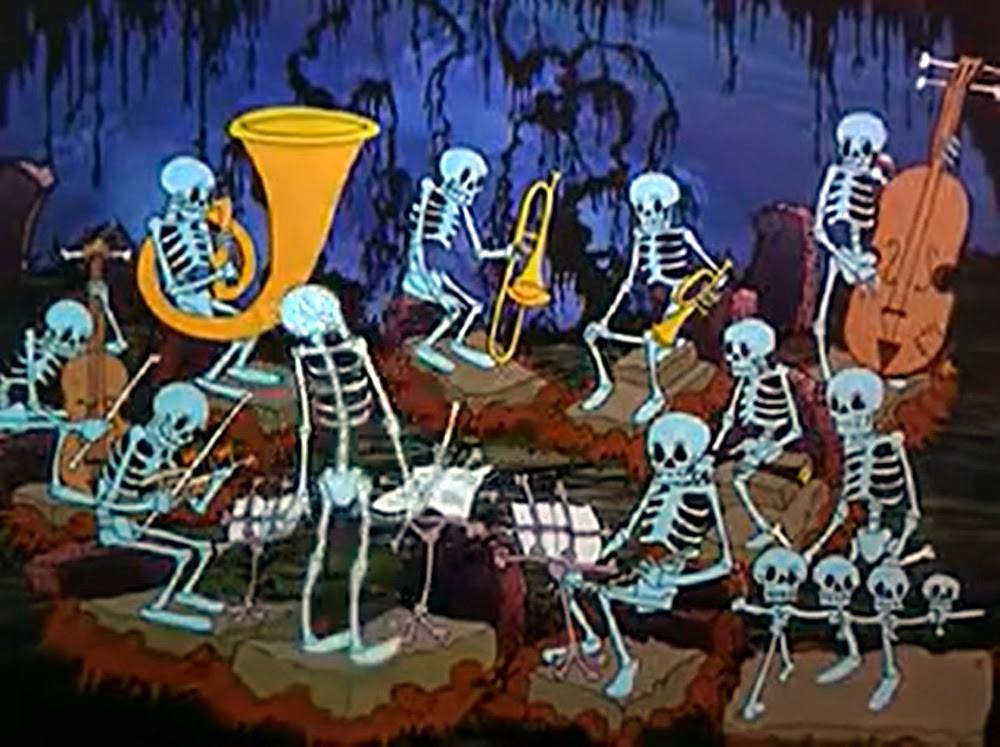
    Human remains have been found under Cincinnati’s Music Hall, home of the Cincinnati Symphony. Apparently the building was constructed on a cemetery. Now this is the “Poltergeist” movie I want to see!

    http://www.wlwt.com/news/graves-human-remains-found-during-music-hall-renovation/39221846

  • Shakespeare on WPRB Final Show April 28

    Shakespeare on WPRB Final Show April 28

    Time is growing short.

    Tomorrow marks the final installment of our four-part salute to William Shakespeare on WPRB. Every Thursday morning in April, we have been honoring the Bard with music inspired by his writings, to mark the 400th anniversary of his shuffling off this mortal coil on April 23, 1616 (also the anniversary of his birth, though 52 years earlier).

    We have five hours in which to hear any or all of the following: Frank Bridge’s “There is a willow grows aslant a brook,” Ernest Chausson’s “The Tempest,” Cecil Cole’s “Comedy of Errors Overture,” Gabriel Fauré’s “Shylock,” Gerald Finzi’s “Let us Garlands bring,” Florent Schmitt’s “Antony and Cleopatra,” Bedrich Smetana’s “Richard III,” and Johan Wagenaar’s “The Taming of the Shrew Overture,” among others.

    ‘Tis a consummation devoutly to be wished, tomorrow morning from 6 to 11 EDT, on WPRB 103.3 FM and at wprb.com. Conscience does make cowards of us all, on Classic Ross Amico.

    #Shakespeare400

  • Ives’ Symphony No. 4: Stokowski’s 1965 Premiere

    Ives’ Symphony No. 4: Stokowski’s 1965 Premiere

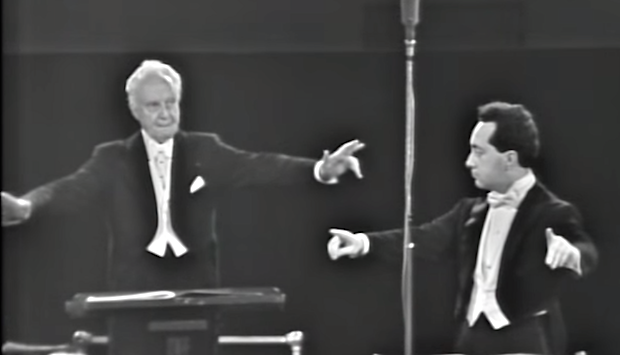
    It was on this date in 1965 that Leopold Stokowski gave the world premiere of Charles Ives’ Symphony No. 4. The performance took place at Carnegie Hall with the American Symphony Orchestra and the Schola Cantorum of New York. At the time, the work’s complex, kaleidoscopic tempos and layered, shifting meters required multiple conductors, and Stokowski enlisted the aid of David Katz and a young Jose Serebrier (pictured).

    The piece was composed between 1910 and the mid-1920s. Given the source, it’s hardly surprising that the music was decades ahead of its time. The first two movements had been performed by members of the New York Philharmonic under the direction of Eugene Goossens in 1927. This was the only occasion on which Ives would hear any of the music from the Fourth Symphony performed live by an orchestra. The composer died in 1954.

    Bernard Herrmann conducted an arrangement of the lovely third movement, the simplest and most conservative of the four (why, then, the need for an arrangement?), in 1933. The music as Ives wrote it was not heard until the complete performance in 1965.

    The composer’s biographer, Jan Swafford, describes the work as “Ives’ climactic masterpiece.”

    Stokowski recorded the symphony a few days after the premiere and led a televised studio performance, which can be seen here:

    Stokey kicks off twenty minutes of spoken introductory material (including commentary from producer John McClure) at the 4:30 mark. The symphony proper begins 25 minutes in.

    When’s the last time you saw anything like this on television?

Tag Cloud

Aaron Copland (94) Beethoven (95) Composer (114) Film Music (153) Film Score (143) Film Scores (255) Halloween (107) John Williams (198) KWAX (233) Leonard Bernstein (105) Marlboro Music Festival (125) Movie Music (168) Mozart (92) Opera (222) Philadelphia Orchestra (91) Picture Perfect (174) Princeton Symphony Orchestra (110) Radio (90) Ross Amico (244) Roy's Tie-Dye Sci-Fi Corner (290) The Classical Network (101) The Lost Chord (269) Vaughan Williams (107) WPRB (397) WWFM (881)

DON’T MISS A BEAT

Receive a weekly digest every Sunday at noon by signing up here


RECENT POSTS