Category: Daily Dispatch

  • ASCAP Founded in 1914: Protecting Music Rights

    ASCAP Founded in 1914: Protecting Music Rights

    It was on this date in 1914 that ASCAP – the American Society of Composers, Authors and Publishers – was organized in New York City. The not-for-profit performance rights organization was set up to protect its members’ musical copyrights through monitoring public performance (and later broadcast) of their works. ASCAP collects licensing fees on behalf of its members and then distributes them in the form of royalties.

    None other than Victor Herbert spearheaded the organization’s founding, to the benefit of a great many Tin Pan Alley composers and publishers. Early members included Irving Berlin, Rudolf Friml, Jerome Kern and John Philip Sousa.

    Michael Kownacky will be sampling works by some of the ASCAP founders on his program “A Little Night Music,” which can be heard locally on WWFM 89.1 FM, tonight at 10 ET, with a repeat next Saturday at 12 a.m. Of course, you can also listen to it later as a webcast at wwfm.org.


    PHOTO: Victor Herbert (front left), standing next to John Philip Sousa and Irving Berlin

  • John Williams Scores Presidents for Presidents Day

    John Williams Scores Presidents for Presidents Day

    Presidents Day is on the way.

    Over the course of his 60-year career, John Williams has had the opportunity to score just about every kind of film. Not surprisingly, this would include several fictionalized accounts of American presidents. This week on “Picture Perfect,” we’ll sample music from four of them.

    “JFK” (1991) was one of three collaborations between Williams and director Oliver Stone. The film had more to do with conspiracy theories surrounding Kennedy’s assassination than anything to do with his presidency. A controversial feature, no doubt – still, a compelling piece of cinema. It certainly inspired an effective score.

    Kevin Costner plays New Orleans district attorney Jim Garrison; Sissy Spacek, his wife; Gary Oldman, Lee Harvey Oswald; Tommy Lee Jones and Joe Pesci are unforgettable as a pair of outlandish conspirators; and Donald Sutherland is a government whistleblower who identifies himself merely as “X.”

    Williams and Stone had previously worked together on “Born on the Fourth of July.” Later, they would team on a second presidential collaboration, a character study of Richard Milhous Nixon, called – well, “Nixon” (1995). Anthony Hopkins played the president, heading an impressive cast, which included Joan Allen, Powers Boothe, Ed Harris, Bob Hoskins, E.G. Marshall, David Hyde Pierce, Paul Sorvino, Mary Steenburgen and James Woods.

    Williams also wrote the music for Steven Spielberg’s “Amistad” (1997). The film, about a mutiny on board a slave ship in 1839, and subsequent courtroom drama, featured two American presidents: Nigel Hawthorne plays Martin van Buren, the sitting president; and again, Anthony Hopkins appears, in a memorable supporting turn, as aging former president John Quincy Adams. Adams argues the defense of the Africans who took part in the mutiny.

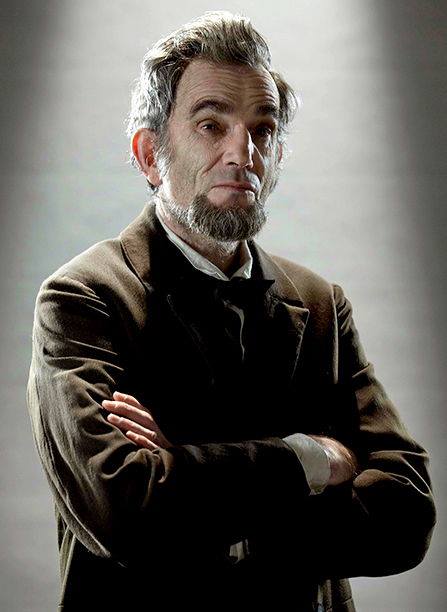
    Daniel Day-Lewis plays the nation’s 16th president, in Spielberg’s “Lincoln” (2012). He’s lent able support by Sally Field as Mary Todd Lincoln, David Strathairn as Secretary of State William Steward and Tommy Lee Jones as Thaddeus Stevens.

    It’s a bold assessment, but Day-Lewis elevates “Lincoln,” the film, to greatness, with arguably one of the most amazing performances in cinematic history. Day-Lewis’ gentle – but shrewd – Man of Destiny would go to any lengths to hold the country together. Williams tapped into America’s proud musical heritage, clearly influenced by Copland and Ives, to create a score of stirring nobility. BTW – In case you missed it, today is Lincoln’s birthday.

    I hope you’ll join me, as John Williams does the presidents, on “Picture Perfect,” tonight at 6 ET, with a repeat tomorrow morning at 6; or that you’ll listen to it later as a webcast at wwfm.org.


    PHOTOS: (clockwise from left) Day-Lewis as Lincoln; Hopkins as Nixon; poster for “JFK;” Hopkins as John Quincy Adams

  • Roy Harris Neglected Genius of American Symphony

    Roy Harris Neglected Genius of American Symphony

    Roy Harris was born on Lincoln’s birthday, in a log cabin in Lincoln County, Oklahoma. Did he let it go to his head? Maybe. He went on to become one of America’s greatest composers.

    He basically drove a milk truck while studying with “American Indianist” composer Arthur Farwell. Contacts in the East got him touch with Aaron Copland, who put in a good word with Nadia Boulanger. Harris was one of the legions of composers who studied with Boulanger in Paris.

    Back home, he attracted the attention of Serge Koussevitzky, then music director of the Boston Symphony Orchestra. It was Kouss who first performed Harris’ “Symphony 1933.” But the real pay dirt came with Harris’ Symphony No. 3, regarded then, as now, as one of the finest American symphonies. Its tightly-argued, single-movement structure manages to recall Renaissance polyphony, Jean Sibelius, and the American prairie. It was the perfect work for its time, with the world teetering at the brink of war and the country starting to emerge from the Great Depression.

    Yet, for some reason, the composer of this most-revered symphony is also one of our most neglected. In fact a number of his symphonies have yet to be recorded. Why?

    Tune in at 8:30 this morning to enjoy Harris’ Symphony No. 6, “Gettysburg,” which takes its impetus from the Gettysburg Address. It’s all music honoring the presidents, on this, Lincoln’s birthday, until 11:00 this morning on WPRB 103.3 FM and at wprb.com

  • Presidential Music Lincoln Washington & More

    Presidential Music Lincoln Washington & More

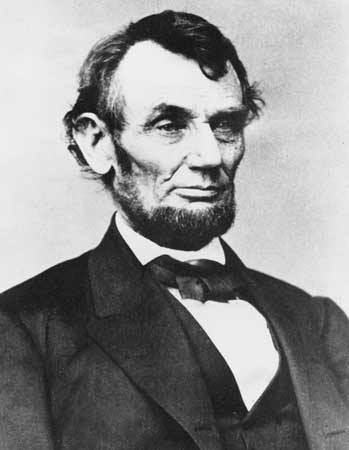
    I was thinking of ol’ Abe Lincoln, who was known to walk 20 miles through all weather to borrow and return books, as I trudged from the parking lot this morning with temperatures in the mid-teens. For those of you who are unfamiliar with the layout of the Princeton University campus, the parking lot is not close. But Abe would have done it, uphill through a raging snow storm, in order to enrich your day with music about the presidents.

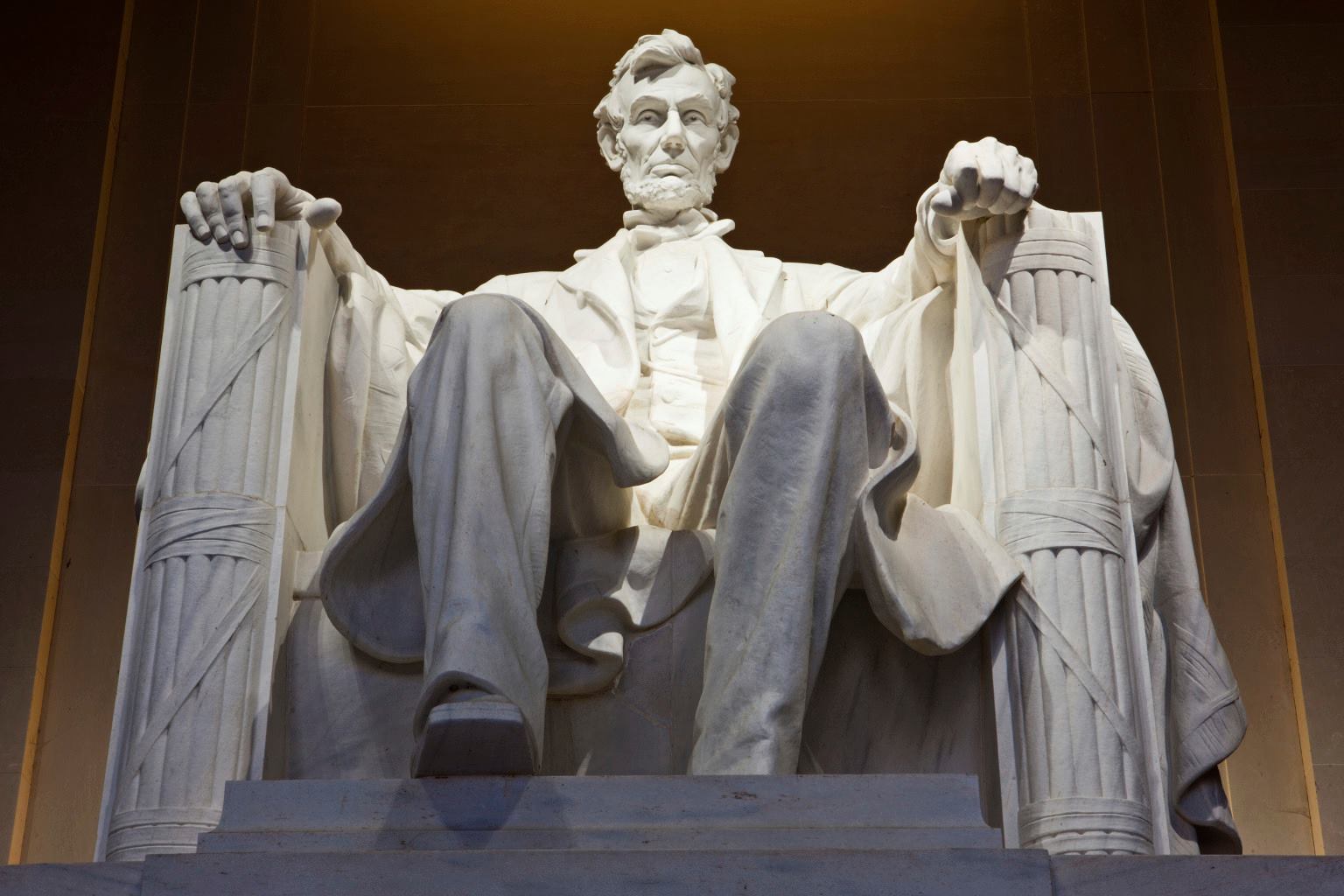
    Today is Lincoln’s birthday (born 1809). We’ll honor our 16th president, with Lincoln-inspired music by George Frederick McKay, David Diamond, Robert Russell Bennett, Roy Harris and John Williams, among others. Since Monday is a federal holiday established to honor the birth of George Washington (in 1732), we’ll have works inspired by him, as well, composed by Virgil Thomson, Seymour Bernstein and John Lampkin, again among others.

    In addition, we’ll have music written for or inspired by some of our other presidents, including John F. Kennedy, Richard Nixon, Franklin Delano Roosevelt and Chester A. Arthur. As time allows, we may also hear some 19th century campaign songs.

    It will be like hurling silver dollar after silver dollar across the Potomac this morning, from 6 to 11 ET, on WPRB 103.3 FM and at wprb.com. I cannot tell a lie, on Classic Ross Amico.

    #AbrahamLincoln

  • Lincoln & Washington: Presidential Music on WPRB

    Lincoln & Washington: Presidential Music on WPRB

    “You cannot escape the responsibility of tomorrow by evading it today.”

    Taking to heart the wisdom of Abraham Lincoln, I’ll attempt to break with tradition by actually planning in advance my radio show for tomorrow on WPRB.

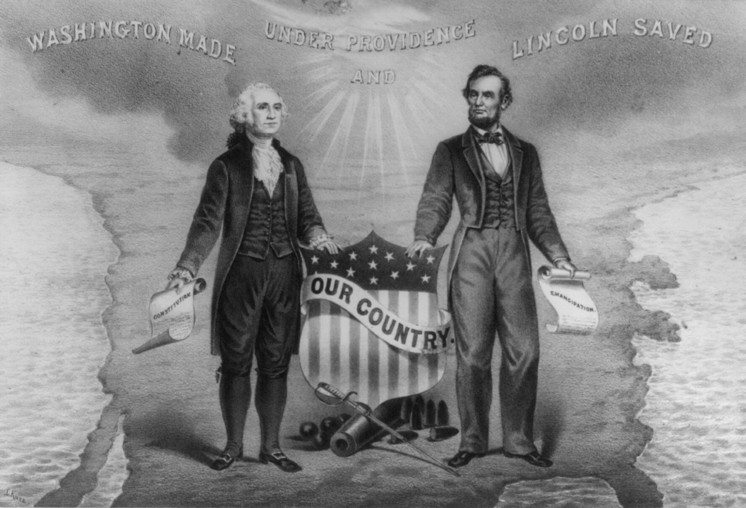
    February 12 is Lincoln’s birthday. We will honor our 16th president and look ahead to the three-day weekend with music inspired by Lincoln and also George Washington (whose birthday is February 22), for whom, after all, the holiday, known in the colloquial as Presidents Day, was coined.

    A conflict arises in that while combing my collection I’ve also come across a number of interesting pieces written for other presidents, such as JFK, Nixon, Franklin Delano Roosevelt, and Chester A. Arthur. Do I include them, or do I follow a strict Lincoln-Washington regimen? Decisions, decisions. A house divided against itself cannot plan!

    If it comes down to an Iowa-style coin toss, one thing is certain: you can still count on plenty of presidential music, with works like George Antheil’s “McKonkey’s Ferry (Washington in Trenton),” Roy Harris’ Symphony No. 6 “Gettysburg,” Virgil Thomson’s “Parson Weems and the Cherry Tree,” John Lampkin’s “George Washington Slept Here,” Paul Turok’s “Lincoln and Liberty,” and selections from John Williams’ score for the Steven Spielberg film, “Lincoln.”

    We’ll be doing our best to get you in the mood for the white sales, tomorrow morning from 6 to 11 ET, on WPRB 103.3 FM and at wprb.com. You can fool all of the people some of the time, and some of the people all of time, but you cannot fool all of the people all of the time, on Classic Ross Amico.


    To tide you over, here are a couple of links to extremely rare symphonies inspired by Lincoln, neither of which, to my knowledge, has ever received a commercial recording:

    Daniel Gregory Mason’ Symphony No. 3 “Lincoln” (1936)

    Jaromir Weinberger’s “Lincoln Symphony” (1941)

    Yes, that’s the same Weinberger who composed “Schwanda the Bagpiper!”

    #AbrahamLincoln

Tag Cloud

Aaron Copland (93) Beethoven (95) Composer (114) Film Music (139) Film Score (143) Film Scores (255) Halloween (94) John Williams (195) KWAX (229) Leonard Bernstein (103) Marlboro Music Festival (125) Movie Music (154) Mozart (89) Opera (210) Philadelphia Orchestra (89) Picture Perfect (174) Princeton Symphony Orchestra (108) Radio (88) Ross Amico (244) Roy's Tie-Dye Sci-Fi Corner (290) The Classical Network (101) The Lost Chord (268) Vaughan Williams (103) WPRB (396) WWFM (881)

DON’T MISS A BEAT

Receive a weekly digest every Sunday at noon by signing up here


RECENT POSTS