Fresh in from the TMI Desk:
This afternoon marked the ritual shaving of my sick beard. No photos posted upon request.
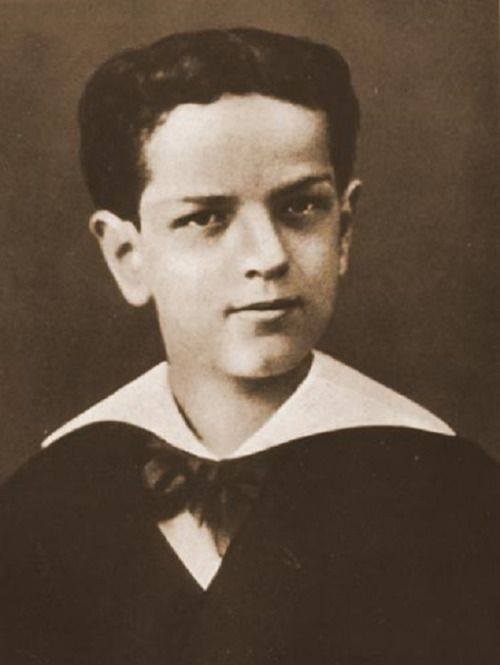
Except for these: Beardless Debussy (left) and beardless Brahms
Fresh in from the TMI Desk:
This afternoon marked the ritual shaving of my sick beard. No photos posted upon request.
Except for these: Beardless Debussy (left) and beardless Brahms
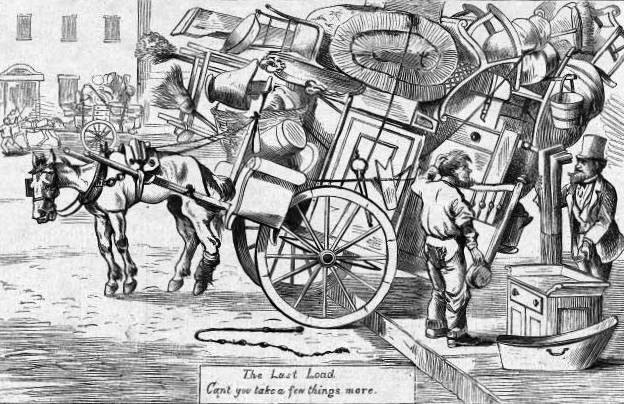
It’s only fitting, I think, that on Moving Day that I’d have stayed up half the night. So be good friends, won’t you, piece out my imperfections with your thoughts, and do be careful with my stuff.
This morning, Classic Ross Amico moves to its new time slot on WPRB. It may be a difference of only 24 hours, but I’m never one to do anything by half-measures. We’ll employ so many modes of transportation as to make Phileas Fogg’s head spin – automobile, ship, airplane, train, bicycle, skates, sleigh, and even sun chariot – all represented in works by 20th and 21st century composers. Come to think of it, a time machine would have come in handy. Leave it to me to invoke the wrong Verne novel.
We settle into our new digs this morning, from 6 to 11 ET, on WPRB 103.3 FM and at wprb.com. Get ready to cover a lot of ground, on Classic Ross Amico.
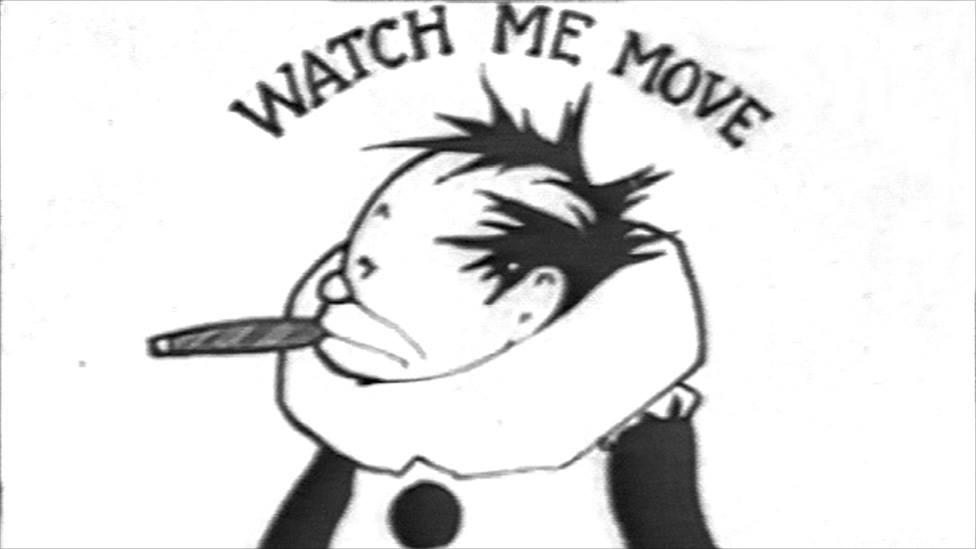
On second thought, don’t just watch – give me a hand with some of these boxes! Today is Moving Day for Classic Ross Amico. I hope you’ll join me at my new time, Friday morning from 6 to 11. That’s me wandering around the rest stop, buckling under the stress and exertion, gibbering like an idiot.
Lots of great music, though! Right now, we’re listening to baritone John Shirley-Quirk, singing “Songs of Travel” by Ralph Vaughan Williams. Yet to come: Robert Moran’s “Points of Departure,” Paul Lansky’s “Travel Diary,” and Marc Blitzstein’s “Airborne Symphony,” among others.
It’s all music about the experience of moving and different modes of transportation until 11:00 ET, here on WPRB 103.3 FM and at wprb.com. I’ll be keeping you in beer and pizza, on Classic Ross Amico.
PLEASE NOTE: “Classical with Kevin,” which formerly aired from 8:30 to 11, has moved to Monday!

The shrieking violins of “Psycho.” The menacing double-basses of “Jaws.” Both exemplify the lingering power of exceptionally well-suited music and visuals.
Both will be represented on a concert of the Princeton Symphony Orchestra, which will take place at Princeton University’s Richardson Audition tomorrow night at 8:00. The orchestra’s annual “Saturday Evening POPS!” is a sequel of sorts to last year’s “Silver Screen Salute.”
The program will include music from classic films like “Ben-Hur” and “Star Wars,” with songs from more recent favorites like “Titanic” and “Frozen.”
Lucas Richman will conduct. Richman has worked in films for nearly a quarter century. He’ll be joined by Broadway vocalist Jessica Hendy for some classic love songs by George Gershwin and Marvin Hamlisch.
You can read more about it in my article in today’s Trenton Times:
http://www.nj.com/times-entertainment/index.ssf/2016/02/classical_music_pso_cnso_perfo.html
PHOTO: The hand of Hendy
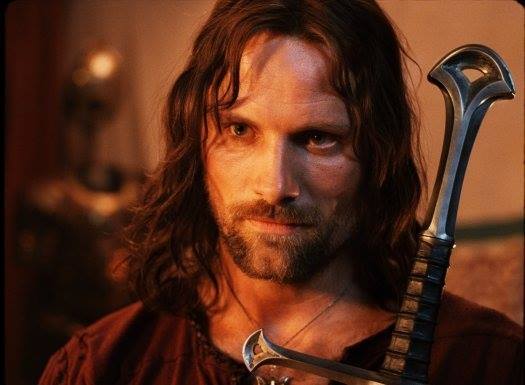
Hey! What’s Viggo doing with my “sick beard?”
This week on “Picture Perfect,” it’s an hour of music from movies about fantasy quests.
For decades, “The Lord of the Rings” had been a kind of Holy Grail for genre fans, and anticipation ran high in regard to when exactly there would be a decent live action adaptation of J.R.R. Tolkien’s magnum opus. Alas, either filmmakers couldn’t acquire the rights, or they were hampered by technological limitations. Though the realization of Tolkien’s richly-imagined world of hobbits, orcs and balrogs eluded many, fantasy films of a derivative nature were thick on the ground. Some were good, some not so good. But many of them had outstanding scores.
“The Dark Crystal” (1982), though produced by Jim Henson and company, was a long way from Big Bird and Ernie & Burt, with some pretty dark scenes. The score by Trevor Jones is first rate, given the full romantic treatment and recorded by the London Symphony Orchestra, augmented by Fairlight and Synclavier synthesizers, as well as the occasional period instrument.
“Willow” (1988) allegedly grew out of George Lucas’ desire to film “The Hobbit.” Rather than fork over a sizeable portion of his earnings to the Tolkien estate, he opted instead to take the “Star Wars” approach of synthesizing archetypal images, from the Old Testament through Ray Harryhausen films, to create his own original story. Except the influences weren’t so cleverly assimilated this time. Composer James Horner followed suit, with a score rich in allusions to Schumann, Wagner, Grieg, Tchaikovsky, Rachmaninoff and especially Prokofiev.
The first feature-length adaptation of “The Lord of the Rings” (1978) was literally rendered in animation. The film manages only to cover the first book-and-a-half of the trilogy, and the last half hour or so is probably incomprehensible to anyone who hasn’t read it. It had been director Ralph Bakshi’s plan to divide the trilogy into two parts – already a concession to the studio – but the first film’s modest performance meant there was no funding for a second.
Two-time Academy Award winner Leonard Rosenman was engaged to write the score. Rosenman was responsible for composing the music for the James Dean classics “East of Eden” and “Rebel Without a Cause. Bakshi had originally wanted to use Led Zepplin songs. He later expressed his dislike for Rosenman’s score, which he found to be too conventional – somewhat ironic in that Rosenman, a pupil of Arnold Schoenberg, Roger Sessions and Luigi Dallapiccola, was known for writing some of the most challenging scores in film history, including the uncompromising music for “Fantastic Voyage.”
It would be over two decades before another feature film based upon Tolkien’s source material was mounted. Peter Jackson’s “The Fellowship of the Ring” (2001) is brimful of state-of-the-art special effects, so much so that a great many important details from Tolkien’s novel are lost in the shuffle. Still, Jacksons’ trilogy went on to garner 30 Academy Award nominations, of which it won 17. Howard Shore’s music was recognized with Oscars for the first and third installments. The third, “The Return of the King” (2003), inexplicably went on to become one of the most decorated films of all time.
I hope you’ll join me for an hour of fantasy quests, this Friday evening at 6 ET, with a repeat Saturday morning at 6; or that you’ll listen to it online at wwfm.org.
PLEASE NOTE: Today is “Five Buck Friday” at WWFM. Become a sustaining member for only $5 a month at wwfm.org. Strider thanks you!
Aaron Copland (93) Beethoven (95) Composer (114) Film Music (139) Film Score (143) Film Scores (255) Halloween (94) John Williams (195) KWAX (229) Leonard Bernstein (103) Marlboro Music Festival (125) Movie Music (154) Mozart (89) Opera (210) Philadelphia Orchestra (89) Picture Perfect (174) Princeton Symphony Orchestra (108) Radio (88) Ross Amico (244) Roy's Tie-Dye Sci-Fi Corner (290) The Classical Network (101) The Lost Chord (268) Vaughan Williams (103) WPRB (396) WWFM (881)