Category: Daily Dispatch

  • Happy Birthday Prokofiev Hear Him Sing Play

    Happy Birthday Prokofiev Hear Him Sing Play

    Happy birthday, Sergei Prokofiev (1891-1953)!

    Check out this nifty footage of the composer playing and talking about his own music:

    Prokofiev sings!

    Allegedly it’s also his voice on the soundtrack of the troika sequence in the film “Lieutenant Kijé.” It can be heard – and seen – around the 45 minute mark here:


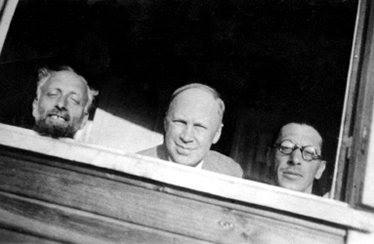
    PHOTO: (left to right) Ernest Ansermet, Sergei Prokofiev and Igor Stravinsky acting like knuckleheads

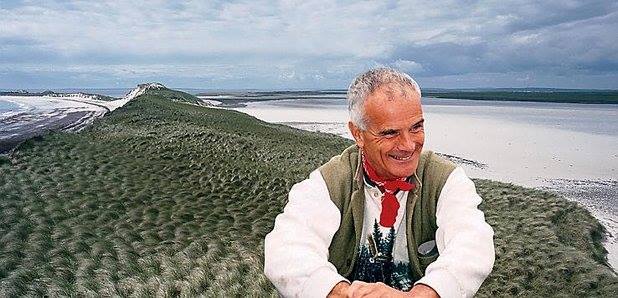
  • Remembering Sir Peter Maxwell Davies

    Remembering Sir Peter Maxwell Davies

    He burst onto the British musical scene as a fiery iconoclast. Then late in life he ascended to the ultimate Establishment post of Master of the Queen’s music. He was a passionate advocate both of music education for the young and the importance of music in (and from) the community, yet a good many of his major works could be rather forbidding. He wrote pieces that seem to thumb their nose at centuries-old traditions, lacing them with trifling foxtrots. Yet he embraced and elevated that most standardized of forms, the symphony. He ping-ponged back and forth from irreverence to austerity to genuine popular acceptance with folk-inflected works like “An Orkney Wedding with Sunrise” (which he wrote for the Boston Pops). To say that Sir Peter Maxwell Davies was a man of contradictions is an understatement.

    This Sunday night on “The Lost Chord,” we remember Max, who died on March 14 at the age of 81. It was exceedingly difficult to find three works that could encapsulate the most distinctive and disparate aspects of his creative personality, but I believe I’ve finally done so. Part of the challenge is that the symphonies are so blooming long, with all of them (of the ones I know, with the exception the Fifth) running to an hour in length. At last, I struck upon “The Beltane Fire,” which grew out of a ballet commission, but took on a life of its own. The work is meant to suggest the historical conflict between the Reformation clergy and the pagan traditions of the Orkney Islands, located off the northern coast of Scotland. Max enlivens the rather austere sound world of the symphonies with populist interludes in the kind of folk style that worked so well in “An Orkney Wedding.”

    We’ll begin with a cheeky little piece from his “enfant terrible” period inspired by Henry Purcell – a “realisation” (so called) of a “Fantasia and Two Pavans.” The Fantasia employs a shrill piccolo, suggestive of a baroque organ, and the “pavans” are actually foxtrots. Listen for some great aural jokes in the second of them, including a simulation of a Victrola winding down and being wound up again, and then of the “white noise” at the end of a record.

    We’ll conclude with one of Max’s most beloved pieces, a moving work for piano called “Farewell to Stromness.” It was actually written in protest against a proposed uranium mine, which would have been located not far from the town of the title, again located in the Orkney Islands. Though Max was born in Lancashire, he made his home in the Orkneys since 1971.

    A point of local interest: Max, a product of the University of Manchester and the Royal Manchester College of Music (later amalgamated into the Royal Northern College of Music), traveled to Princeton in 1962 to study with Roger Sessions, Milton Babbitt and Earl Kim.

    I hope you’ll join me for “Farewell to Max,” as we remember Sir Peter Maxwell Davies, this Sunday night at 10 EDT, with a repeat Wednesday evening at 6; or that you’ll listen to it later as a webcast at wwfm.org.

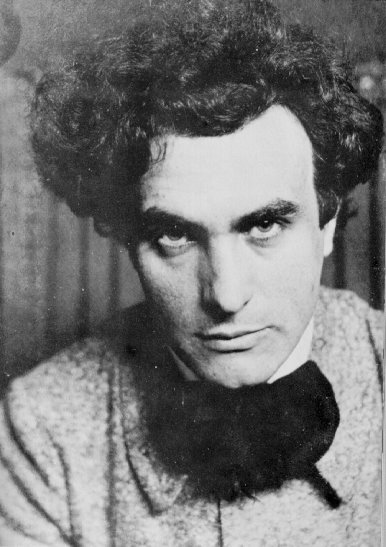
  • Varese’s Amériques Premiere Orchestra History

    Varese’s Amériques Premiere Orchestra History

    On this date in 1926, Leopold Stokowski conducted The Philadelphia Orchestra in the first performance of Edgard Varese’s “Amèriques.” With these two guys at the helm, what could possibly go wrong?

    Here it is, conducted by Christopher Lyndon-Gee. The notorious siren makes its first appearance at the 2:30 mark.

    https://www.youtube.com/watch?v=RbPzNBvwnsM

    Next season, Lyndon-Gee will guest conduct the Princeton Symphony Orchestra in music of Elgar and Nielsen.

  • Carmen Opera NJ This Weekend

    Carmen Opera NJ This Weekend

    This weekend, Boheme Opera NJ will present THE opera for people who think they don’t like opera, Georges Bizet’s “Carmen.” Even if someone thinks singing isn’t their thing, they can while away the time counting the staggering number of hit tunes, surely recognizable from their incessant use in cartoons, movies and television commercials.

    The fully staged production will be sung in French with English supertitles, with dialogue spoken (as Bizet intended) in English translation.

    Performances will take place tonight at 8 p.m. and Sunday at 3 p.m. in the Kendall Main Stage Theater at The College of New Jersey Center for the Arts in Ewing.

    No bulls were harmed in the making of this opera. Read more about it in my article in today’s Trenton Times.

    http://www.nj.com/times-entertainment/index.ssf/2016/04/classical_music_boheme_opera_p_1.html


    “Carmen” figure skating
    https://www.youtube.com/watch?v=AEOrLz6fl_Q&nohtml5=False

    Tom and Jerry “Carmen Get It!”
    https://www.youtube.com/watch?v=A98i15hguPY

    “Bad News Bears” Carmen

    Comcast “Carmen”

    Marx Brothers “Carmen”

  • Shakespeare’s Cinematic Legacy: Walton & Olivier

    Shakespeare’s Cinematic Legacy: Walton & Olivier

    April 23 marks the 400th anniversary of the death of William Shakespeare. We’ll honor the Bard on “Picture Perfect” over the coming weeks with music from film adaptations of his plays.

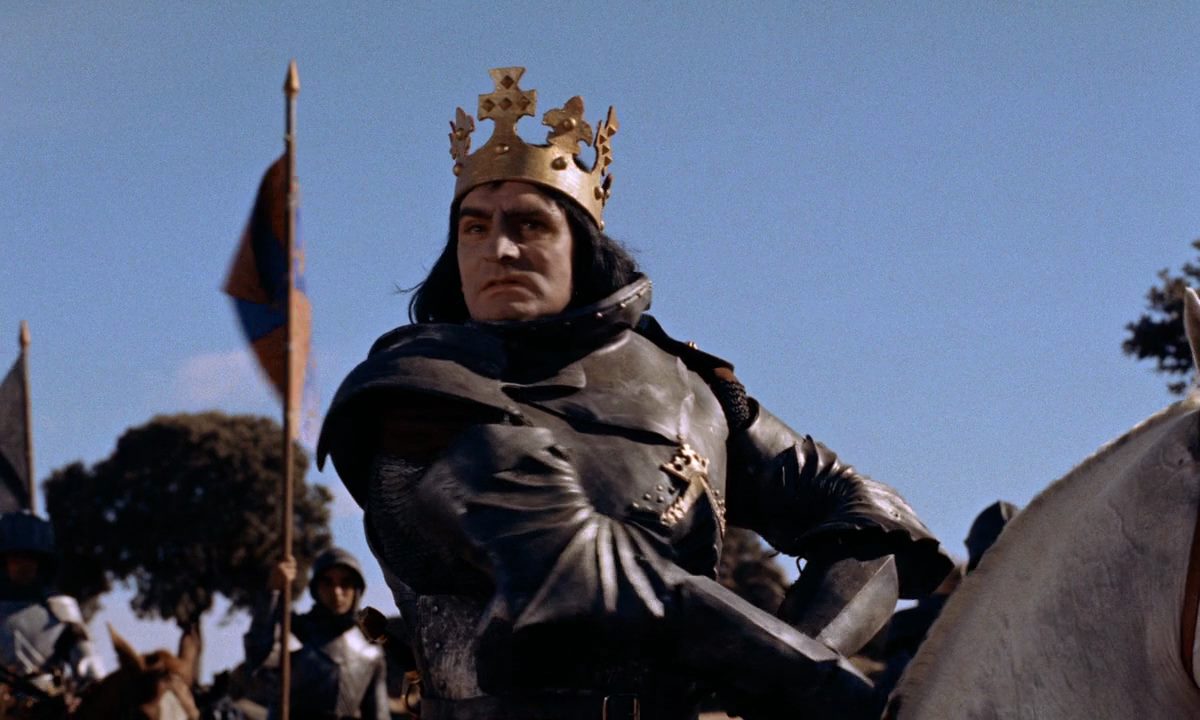
    William Walton may be the composer most associated with the cinematic Bard, thanks to his collaborations with Laurence Olivier. While Walton participated in three superb Olivier productions, beginning with “Henry V” in 1944, and continuing with “Hamlet” in 1948 and “Richard III” in 1955, the two had actually been brought together on an earlier Shakespeare project, in which Olivier appeared solely as an actor – a very charming version of “As You Like It.” The 1936 film was directed by Paul Czinner and starred his wife, Elisabeth Bergner, as Rosalind. Olivier appeared as the love-struck Orlando.

    Walton’s “Henry V” would become one of the most celebrated film scores of all time, certainly in terms of a so-called concert composer working in the cinema. The music is best known in a concert arrangement by Muir Mathieson, who conducted the orchestra on the film’s actual soundtrack. We’ll hear a recording that restores the composer’s original orchestration AND incorporates the chorus, as in the film.

    For Walton’s work on Olivier’s 1948 adaptation of “Hamlet,” the composer was nominated for an Academy Award for Best Original Score. The film won four Oscars in all, including that for Best Picture. Olivier directed himself in an Academy Award-winning performance. It was the first foreign film to be honored as Best Picture.

    Finally, we’ll turn to “Richard III,” from 1955, by which time both Olivier and Walton could be addressed as “Sir.” (Olivier was knighted in 1947; Walton received his knighthood in 1951.) Olivier gives a wry performance as the scheming Duke of Gloucester. While he very much enjoyed their ongoing partnership, Walton felt there was a limit to just how many ceremonial fanfares and battle charges he could compose. Across the head of the score he inscribed the instruction, in Italian, “Con prosciutto, agnello e confitura di fragole” – “With ham, lamb and strawberry jam.” Nevertheless, he manages to turn in yet another superb score.

    I hope you’ll join me for an hour of fanfares and battle charges, with an interlude of brooding over the skull of Yorick, this Friday evening at 6 EDT, with a repeat Saturday morning at 6; or that you’ll listen to it later as a webcast at wwfm.org.

    Here’s an appreciation of Walton’s Shakespearean achievements that ran in The Telegraph during the composer’s centenary in 2002, rightly noting his influence on John Williams:

    http://www.telegraph.co.uk/culture/music/classicalmusic/3574714/The-last-great-movie-composer.html

    #Shakespeare400
Tag Cloud

Aaron Copland (94) Beethoven (95) Composer (114) Film Music (153) Film Score (143) Film Scores (255) Halloween (107) John Williams (198) KWAX (233) Leonard Bernstein (105) Marlboro Music Festival (125) Movie Music (168) Mozart (92) Opera (222) Philadelphia Orchestra (91) Picture Perfect (174) Princeton Symphony Orchestra (110) Radio (90) Ross Amico (244) Roy's Tie-Dye Sci-Fi Corner (290) The Classical Network (101) The Lost Chord (269) Vaughan Williams (107) WPRB (397) WWFM (881)

DON’T MISS A BEAT

Receive a weekly digest every Sunday at noon by signing up here


RECENT POSTS