Category: Daily Dispatch

  • Vitězslava Kápralová Czech Composer

    Vitězslava Kápralová Czech Composer

    Vitězslava Kápralová became the mistress of her teacher, Bohuslav Martinu. She was also one of the great hopes of Czech music. Kápralová died of tuberculosis in 1940, aged only 25 years, but left behind an impressive body of work – as well as a forlorn Martinu, whom she left to marry writer Jiří Mucha. Her music was championed by Rafael Kubelik and Rudolf Firkušný. In 1946, the Czech Academy of Sciences and Arts awarded Kápralová a membership, in memoriam.

    We’ll enjoy her “Partita for String Orchestra with Piano” in the 9:00 hour. It’s all music by female composers this morning until 11 ET, as we celebrate Women’s History Month on WPRB 103.3 FM and at wprb.com.

  • Women Composers on WPRB

    Women Composers on WPRB

    Works by women composers permeate my record collection like so many veins of ore. Women’s History Month provides the perfect excuse to mine some of these and share them with a listening audience, which I will endeavor to do tomorrow morning on WPRB.

    However, until the start of the March, I had forgotten all about Marvin Rosen’s annual, month-long “In Praise of Woman” celebration, presented over four Wednesdays on his show Classical Discoveries. In putting together tomorrow’s playlist, I will plan to avoid as much as possible composers from the eras which are Marvin’s principle focus – that is to say, the medieval and Renaissance periods and music of our own time.

    All of the composers we’ll hear will have shuffled off this mortal coil, with a great emphasis on artists who lived and worked during the Romantic Era and into the first half of the 20th century. There may be one or two exceptions, but they will all be quite dead.

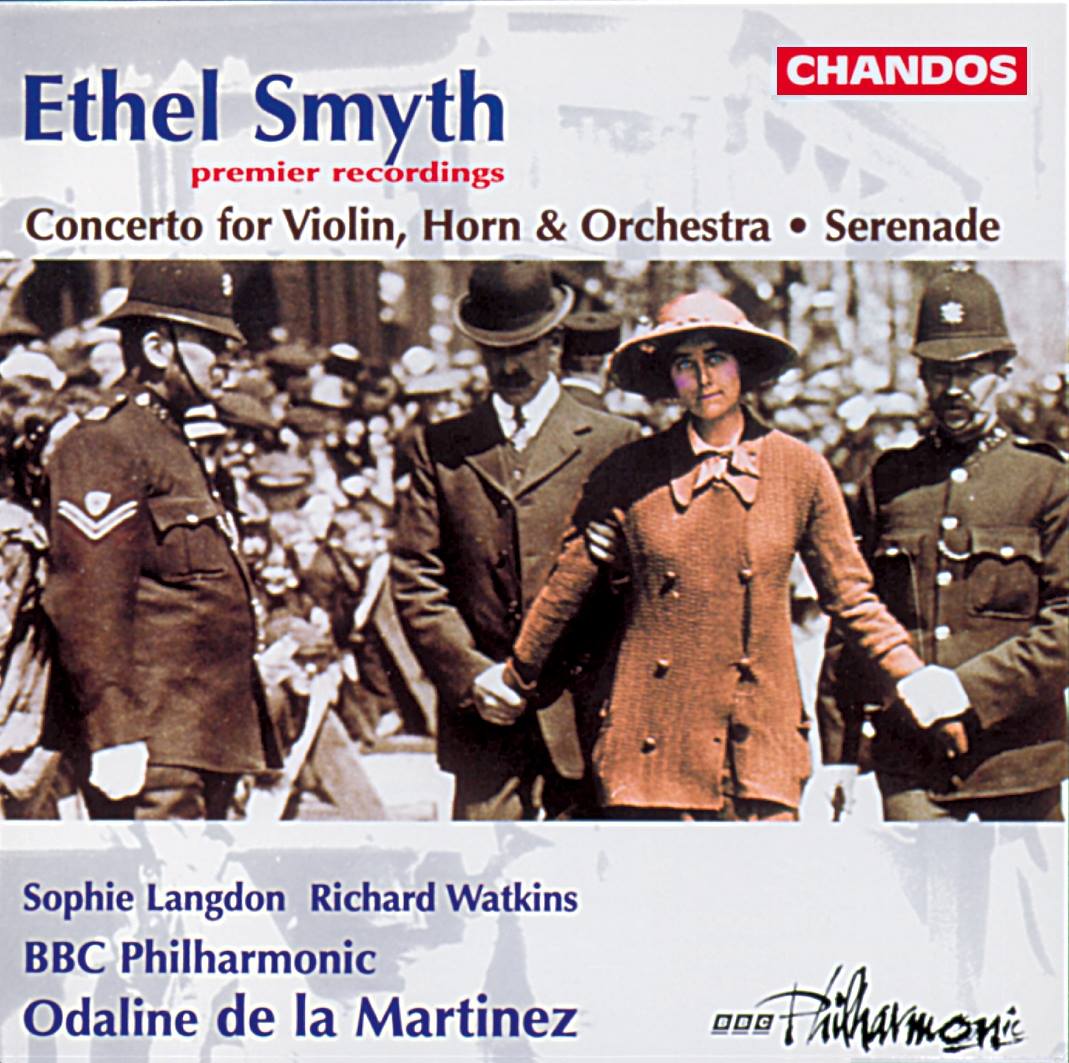
    This will allow me to supplement Marvin with music by a broad array of truly talented and neglected figures that have been eclipsed by even third-rate composers among their male contemporaries. For example, I took down from the shelf yesterday an orchestral serenade by Dame Ethel Smyth that knocked me sideways.

    Smyth, born in 1858, was a world-class rabble-rouser who became one of the most vocal advocates of the women’s suffrage movement in England. She overcame early opposition to a career in music on the part of her father to receive the praise of George Bernard Shaw, who called her Mass “magnificent.”

    However, her works were often better-appreciated abroad. Her operas, in particular, were embraced in Germany. One of them, “Der Wald,” was the only opera by a woman composer mounted by New York’s Metropolitan Opera for over a century! (Next season, the Met has finally decided to take a chance on another, when it will stage Kaija Saariaho’s “L’Amour de loin.”)

    Smyth served time in prison for putting out the windows of politicians who opposed a woman’s right to vote. She also wrote for the cause “The March of the Women.” When Sir Thomas Beecham went to visit her in jail, he witnessed her conducting through the bars of her window with a toothbrush as her associates gathered for exercise in the courtyard.

    To my ears, her “Serenade in D” is better than just about anything composed by Sir Hubert Parry (whose music I happen to enjoy) and much more compelling than the symphonies of Sir Charles Villiers Stanford.

    Tune in tomorrow morning to see if you agree. It’s all music by female composers, from 6 to 11 ET, on WPRB 103.3 FM and at wprb.com. We take a walk on the distaff side, on Classic Ross Amico.

  • Hovhaness’ Cat Rajah A Musical Muse

    Hovhaness’ Cat Rajah A Musical Muse

    Why can’t my cat be as well-behaved as Rajah Mahatma Hoyden? Rajah was the favorite cat of composer Alan Hovhaness.

    Hovhaness dedicated his work “Sosi: Forest of Prophetic Sounds” to Rajah. No telling how his little friend would have reacted to this piece for violin, piano, horn, timpani, giant tam-tam and strings. Many cats aren’t too fond of the violin, but I would think the giant tam-tam would have sealed it. However, Rajah seemed to be of a particularly placid disposition.

    Long after Rajah’s death, Hovhaness’ correspondence alluded to ongoing spiritual visitations from his little companion, and he continued to leave milk out for him overnight.

    Happy birthday, Alan Hovhaness (1911-2000). God bless your beautiful music and your beautiful heart.

  • Ravel Poe Toys and the Soul of the Machine

    Ravel Poe Toys and the Soul of the Machine

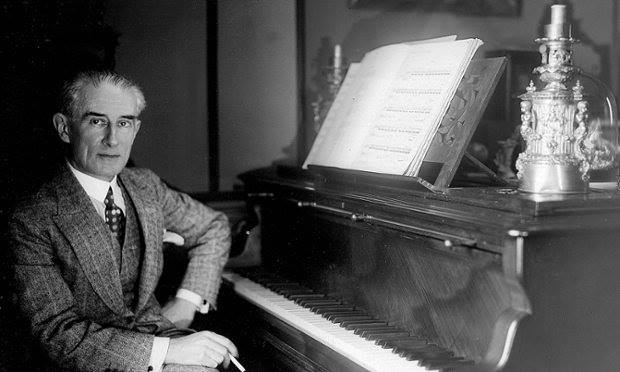
    Maurice Ravel credited Edgar Allan Poe as his “teacher in composition.” From Poe, he learned that “true art is a perfect balance between pure intellect and emotion.”

    Ravel was fond of toys, lots of mechanical toys. His cottage in Montfort-l’Amaury, southwest of Paris, was full of them, including a singing nightingale with a moving beak.

    And he was a natty dresser. He once held up a performance for half an hour so that he would have the correct shoes. His music is as elegant and perfect as was his sartorial sense.

    You can detect the mechanical influence in much of his music, including of course “Bolero” and the opening of the Piano Concerto in G. Miles Davis was obsessed with this classic recording by Arturo Benedetti Michelangeli:

    The slow movement is as good as it gets. Nothing mechanical about it. It’s the soul at the heart of the machine.

    Happy birthday, Maurice Ravel (1875-1937).

  • Early Music Month: Renaissance Sounds on The Lost Chord

    Early Music Month: Renaissance Sounds on The Lost Chord

    This Sunday night on “The Lost Chord,” we continue our celebration of Early Music Month with three works by contemporary American composers who look back to the Renaissance.

    William Kraft (b, 1923), long associated with the Los Angeles Philharmonic, composed “Vintage Renaissance” for the Boston Pops. The work incorporates two 15th century melodies: “Danza,” by Francesco de la Torre, and an anonymous “bransle.”

    George Frederick McKay (1899-1970), the so-called “Dean of Northwest Composers,” founded the composition department at the University of Washington, where he taught for over 40 years. His “Suite on Sixteenth Century Hymn Tunes” is based on works by Louis Bourgeois (c. 1510-1559), compiler of Calvinist hymn tunes and composer of the Protestant doxology known as the “Old 100th.”

    Lukas Foss (1922-2009), the German-born musical prodigy who settled in the United States in 1937, composed his “Renaissance Concerto” in 1986. The work, for flute and orchestra, falls into four movements: “Intrada;” “Baroque Interlude” (on a theme of Rameau); “Recitative” (after Monteverdi); and “Jouissance” (after a 1612 madrigal by a composer of the name David Melville).

    I hope you’ll join me for “It’s Never Too Late to Be Early,” this Sunday night at 10 ET, with a repeat Wednesday evening at 6; or that you’ll listen to it later as a webcast at wwfm.org.

    #EarlyMusicMonth

    Early Music America

Tag Cloud

Aaron Copland (94) Beethoven (95) Composer (114) Film Music (153) Film Score (143) Film Scores (255) Halloween (107) John Williams (198) KWAX (233) Leonard Bernstein (105) Marlboro Music Festival (125) Movie Music (168) Mozart (92) Opera (222) Philadelphia Orchestra (91) Picture Perfect (174) Princeton Symphony Orchestra (110) Radio (90) Ross Amico (244) Roy's Tie-Dye Sci-Fi Corner (290) The Classical Network (101) The Lost Chord (269) Vaughan Williams (107) WPRB (397) WWFM (881)

DON’T MISS A BEAT

Receive a weekly digest every Sunday at noon by signing up here


RECENT POSTS