Category: Daily Dispatch

  • Lenten Choral Concerts in Princeton & Trenton

    Lenten Choral Concerts in Princeton & Trenton

    Is nothing sacred? Actually, it turns out a good deal is sacred, as two area choral groups offer intriguing programs for this Lenten season. Both will strive to present “authentic” experiences in Gothic Revival structures this weekend.

    Princeton Pro Musica (Saturday at 8 p.m.) will offer contrasting works at Princeton University Chapel in the form of Josef Rheinberger’s “Stabat Mater” and Eriks Esenvalds’ “Passion and Resurrection;” and VOICES Chorale (Sunday at 3 p.m.) will present a reconstruction of an event which took place at Trenton’s Trinity Cathedral 45 years ago: a performance under the composer’s direction of Maurice Duruflé’s “Requiem.”

    Rheinberger, everyone’s favorite composer from Lichtenstein, will also be represented on the Princeton Pro Musica concert by his Organ Concerto No. 2, with Princeton University organist Eric Plutz as the soloist. PPM artistic director Ryan James Brandau will conduct.

    A recreation of Duruflé’s 1971 Requiem performance in Trenton will feature VOICES Chorale, under the direction of its founder, Lyn Ransom, along with members of Princeton High School Choir and the Trinity Cathedral Absalom Jones Inspirational Choir. Barbara Rearick will be the mezzo-soprano soloist. The organist, David Enlow, will perform a solo recital on the concert’s first half, with music by Bach and Louis Vierne, as well as Duruflé’s own “Prélude et Fugue sur le nom d’Alain.”

    Details in my article in today’s Trenton Times.

    http://www.nj.com/times-entertainment/index.ssf/2016/03/classical_music_ppm_voices_cho.html


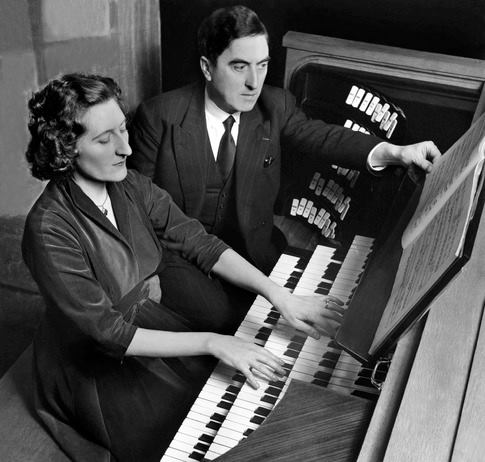
    PHOTOS: Rheinberger (left) in Princeton and Duruflé in Trenton – two compelling reasons to get you to church this weekend
  • Airport Movies A Picture Perfect Playlist

    Airport Movies A Picture Perfect Playlist

    This week on “Picture Perfect,” the focus is on airports and airplanes. Believe it or not, I actually had the idea before I learned of the death of George Kennedy on Sunday at the age of 91. Kennedy appeared in all four of the “Airport” films – “Airport,” “Airport 1975,” “Airport ’77,” and “The Concord: Airport ‘79” – as cigar-chomping airline troubleshooter Joe Patroni. Only Patroni could fire a flare out the window of the Concorde and not have his arm ripped off.

    In the original “Airport” (1970), producer Irwin Allen established the pattern for disaster movies of all stripes by placing an aging all-star cast in spectacular peril. Burt Lancaster! Dean Martin! Jean Seberg! Jacqueline Bisset! Helen Hayes! The list goes on and on, longer than the longest runway. The bongo-laden theme was by veteran composer Alfred Newman, from the last of his over 200 film scores.

    Another movie with something of the same feel is “The V.I.P.s” (1963), allegedly inspired by a real-life love triangle made up of Vivien Leigh, Laurence Olivier and Peter Finch. The story is set at London Heathrow Airport, where flights are delayed because of a dense fog. The film was written by Terrence Rattigan, and sports a laundry list of stars, including Elizabeth Taylor, Richard Burton, Louis Jourdan, Maggie Smith, Rod Taylor and Orson Welles, with Margaret Rutherford in an Academy Award-winning performance. The music was by Miklós Rózsa.

    By contrast, Steven Spielberg’s “The Terminal” (2004) is an (intentionally) comic take on the predicament of an Eastern European who finds himself in a kind limbo, trapped in an international arrivals airport terminal in New York after his country erupts into civil war and his passport and other documentation are no longer valid. His plight mirrors that of real-life Mehran Karimi Nasseri, an Iranian who lived 17 years in a terminal at Charles de Gaulle Airport.

    Tom Hanks plays the unfortunate traveler, who makes the terminal his home, and Catherine Zeta-Jones the airline attendant with whom he strikes up a relationship. The music was by regular Spielberg collaborator John Williams, and I think you’ll find it quite different from the Williams known for his work on “Star Wars” and “Indiana Jones.”

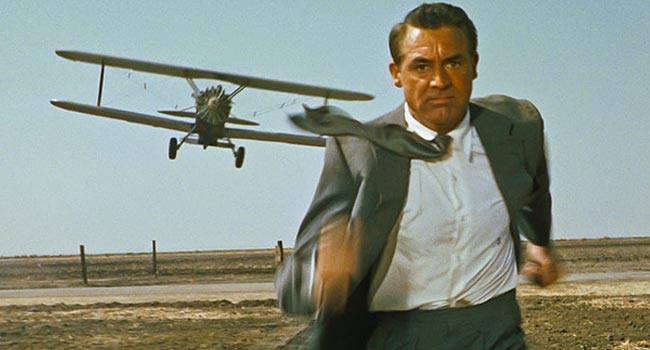
    Finally, we turn to the Alfred Hitchcock thriller, “North by Northwest” (1959), a film which had Cary Grant encountering love and danger in, on, and from a variety of planes, trains and automobiles. Planes are particularly significant. Over the course of the film, we find out the title is a play on a Northwest Airlines flight; Eva Marie Saint learns she must do all she can to avoid getting on another; and of course the film’s most iconic image is that of Grant fleeing a strafing crop duster. Bernard Herrmann’s opening fandango propels us into the adventure.

    I hope you’ll join me for an hour of music from films featuring airports and airplanes this week on “Picture Perfect,” tonight at 6:00 ET, with a repeat tomorrow morning at 6; or that you’ll listen to it later as a webcast at wwfm.org.

  • Early Music Month on WPRB: Medieval & Renaissance Inspired Sounds

    Early Music Month on WPRB: Medieval & Renaissance Inspired Sounds

    My, but it’s Early – Early Music, that is!

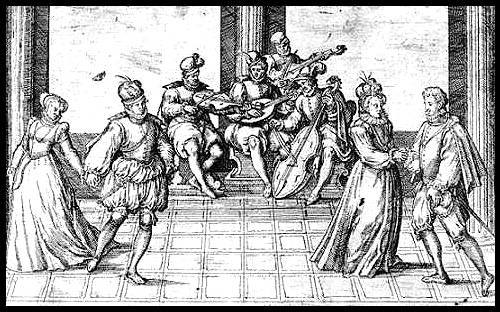
    This morning on WPRB, in honor of Early Music Month, we’ll be quaffing dances, quaffing chant, quaffing madrigals, and quaffing hymn tunes, as “contemporary” composers – composers who have worked over the course of the past century – look back for inspiration to music of the Middle Ages and the Renaissance.

    Maurice Duruflé would fall soundly into that category. Duruflé, a former choirboy at the Cathedral of Rouen and one of the greatest organists of his time, drew on his love of chant in the composition of his Requiem. Lyn Ransom, founder and artistic director of VOICES Chorale, will drop by this morning in the 9:00 hour to talk a bit about the ensemble’s upcoming presentation of the work on Sunday, at Trenton’s Trinity Cathedral, in a reconstruction of a performance given under the direction of the composer while on a visit there with his wife in 1971.

    Our playlist this morning will also include music inspired by Elizabethan dances, a guitar concerto based on Renaissance madrigals, a violin concerto on modes derived from Gregorian chant, and wind music based on some early lute pieces, among others. Around 9:45 or 9:50, we’ll enjoy a recording of Philadelphia composer, writer, and radio personality Kile Smith’s “Vespers,” ably performed by The Crossing and Piffaro, The Renaissance Band.

    It’s a taste of Merrie Olde Princeton, from 6 to 11 ET, on WPRB 103.3 FM and at wprb.com. The bodkins are perpetually at odds, on Classic Ross Amico.

    #EarlyMusicMonth

    #EarlyMusicAmerica

  • Early Music’s Influence on Modern Composers

    Early Music’s Influence on Modern Composers

    The pull of history is strong this morning. We’re celebrating Early Music Month, examining the influence of the Middle Ages and the Renaissance on “contemporary” composers – that is to say, composers who lived within the past 100 years. In fact, several of them (Sir Peter Maxwell Davies, William Kraft, and Kile Smith) are still very much with us.

    Lyn Ransom, founder and artistic director of VOICES Chorale, will join me in the 9:00 hour to talk a little bit about the ensemble’s upcoming performance on Sunday, at Trenton’s Trinity Cathedral, of Maurice Duruflé’s Requiem, a work imbued with the composer’s lifelong love of chant, in a reconstruction of a performance given there under Duruflé’s direction in 1971.

    Plenty more to come, including Respighi’s “Concerto Gregoriano,” Carl Orff’s “Kleines Konzert,” and Kile Smith’s “Vespers,” featuring Philadelphia-based Piffaro, The Renaissance Band.

    It’s all tonsures and codpieces until 11:00 ET, on WPRB 103.3 FM and at wprb.com.


    PHOTO: Husband and wife Maurice and Marie-Madeleine Duruflé

    #EarlyMusicMonth

    #EarlyMusicAmerica

  • Early Music Month on WPRB: Medieval Sounds Today

    Early Music Month on WPRB: Medieval Sounds Today

    It’s never too late to be Early.

    This week on WPRB, we’ll celebrate Early Music Month with a morning full of “contemporary” works – works composed over the course of the past century – that were influenced in some way or another by music of the Middle Ages and Renaissance.

    We’ll hear works like Sir Peter Maxwell Davies’ “Renaissance Scottish Dances,” George Frederick McKay’s “Suite on Sixteenth Century Hymn Tunes,” Joaquin Rodrigo’s “Concierto Madrigal,” Vittorio Rieti’s “Variations on Two Cantigas de Santa Maria,” William Alwyn’s “Elizabethan Dances,” Igor Stravinsky’s “Momentum pro Gesualdo di Venosa ad CD annum,” Ottorino Respighi’s “Concerto Gregoriano,” William Kraft’s “Vintage Renaissance,” Carl Orff’s “Kleines Konzert,” Lukas Foss’ “Renaissance Concerto,” and Kile Smith’s “Vespers” (in a recording featuring Philadelphia-based Piffaro, The Renaissance Band) – or as many of those as we can get to.

    Lyn Ransom, founder and artistic director of VOICES Chorale, will visit in the 9:00 hour to talk a little bit about the ensemble’s upcoming performance on Sunday, at Trenton’s Trinity Cathedral, of Maurice Duruflé’s Requiem, in a reconstruction of a performance given there under the direction of the composer in 1971. The Requiem’s otherworldly melodies are steeped in the language of medieval chant.

    Even if you’re running late, it’s nice to know that the music will be running Early, from 6 to 11 ET on WPRB 103.3 FM and at wprb.com. We’re usually living in the past, on Classic Ross Amico.

    #EarlyMusicMonth

    #EarlyMusicAmerica

Tag Cloud

Aaron Copland (94) Beethoven (95) Composer (114) Film Music (153) Film Score (143) Film Scores (255) Halloween (107) John Williams (198) KWAX (233) Leonard Bernstein (105) Marlboro Music Festival (125) Movie Music (168) Mozart (92) Opera (222) Philadelphia Orchestra (91) Picture Perfect (174) Princeton Symphony Orchestra (110) Radio (90) Ross Amico (244) Roy's Tie-Dye Sci-Fi Corner (290) The Classical Network (101) The Lost Chord (269) Vaughan Williams (107) WPRB (397) WWFM (881)

DON’T MISS A BEAT

Receive a weekly digest every Sunday at noon by signing up here


RECENT POSTS