Category: Daily Dispatch

  • Strauss’s 10 Conducting Commandments

    Strauss’s 10 Conducting Commandments

    Since I mentioned these on the air, I figured I’d copy them here for your edification: Richard Strauss’ “Ten Golden Rules for the Album of a Young Conductor” (1927):

    1. Remember that you are making music not to amuse yourself, but to delight your audience.

    2. You should not perspire when conducting. Only the audience should get warm.

    3. Conduct “Salome” and “Elektra” as if they were by Mendelssohn: Fairy music.

    4. Never look encouragingly at the brass, except with a brief glance to give an important cue.

    5. But never let the horns and woodwinds out of your sight. If you can hear them at all, they are still too strong.

    6. If you think that the brass is now blowing hard enough, tone it down another shade or two.

    7. It is not enough that you yourself should hear every word the soloist sings. You should know it by heart anyway. The audience must be able to follow without effort. If they do not understand the words, they will go to sleep.

    8. Always accompany the singer in such a way that he can sing without effort.

    9. When you think you have reached the limits of prestissimo, double the pace. (Amended in 1948: “Today I should like to amend this: take the tempo half as fast.”)

    10. If you follow these rules carefully, you will, with your fine gifts and your great accomplishments, always be the darling of your listeners.

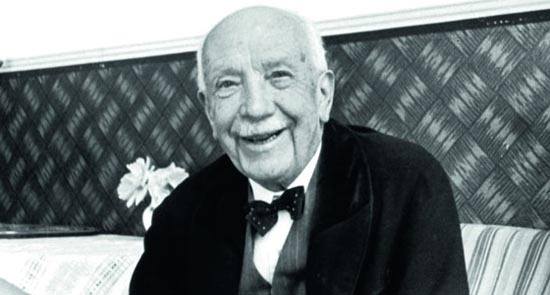
    PHOTO: Strauss, there is method in his madness
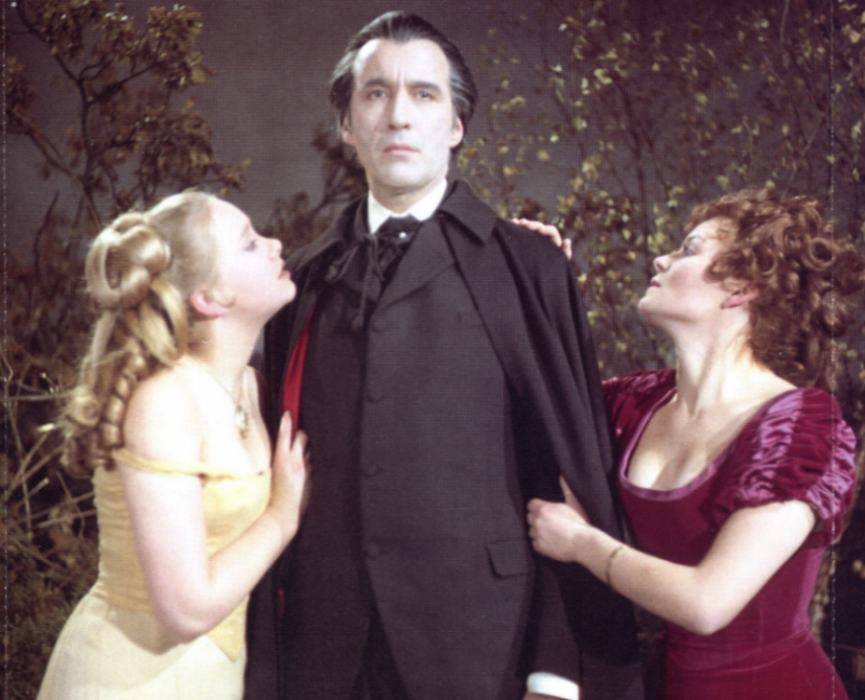
  • Christopher Lee Opera Secret Revealed

    Christopher Lee Opera Secret Revealed

    Christopher Lee, who died on Sunday – but whose passing was only just announced today (in order to allow time for the notification of family) – was a lifelong opera lover. In fact, in his autobiography, “Lord of Misrule” (previously released as “Tall, Dark and Gruesome”), he relates how he relished a stint in Scandinavia early in his career, since it gave him the opportunity to steal away with a regional opera company.

    On the recommendation of Jussi Björling, he auditioned for the Swedish Opera, and was accepted, but unfortunately he could not afford the training.

    He liked to claim his singing talent was genetic. His great grandparents founded the first opera company in Australia.

    In recent years, he stated his one regret in life was that he had not pursued singing professionally. But then he added philosophically that if he had, he most certainly would have had to give it up years ago, whereas as an actor, he just kept right on going.

    Opportunities to hear Lee employ his singing voice in film are sadly rare. Here’s a clip from 1970:

    https://www.youtube.com/watch?t=247&v=xWc3kUEjYOI

  • WPRB: Strauss, Messiaen & Princeton Festival

    WPRB: Strauss, Messiaen & Princeton Festival

    Here’s an idea of what you can expect to hear if you join me tomorrow morning on WPRB.

    Once again, we observe birthdays, belated, in anticipation, or right on the nose, including those of Richard Strauss (born 6/11) and Carlos Chavez (6/13). There will be a nod to Carlisle Floyd (6/11), along with the fulfillment of a request made last week for some American music conducted by Leonard Bernstein. I haven’t quite gotten Carl Nielsen (6/9) out of my system. And we’ll see, we may hit one or two others, as well. It’s been a busy week for birthday anniversaries.

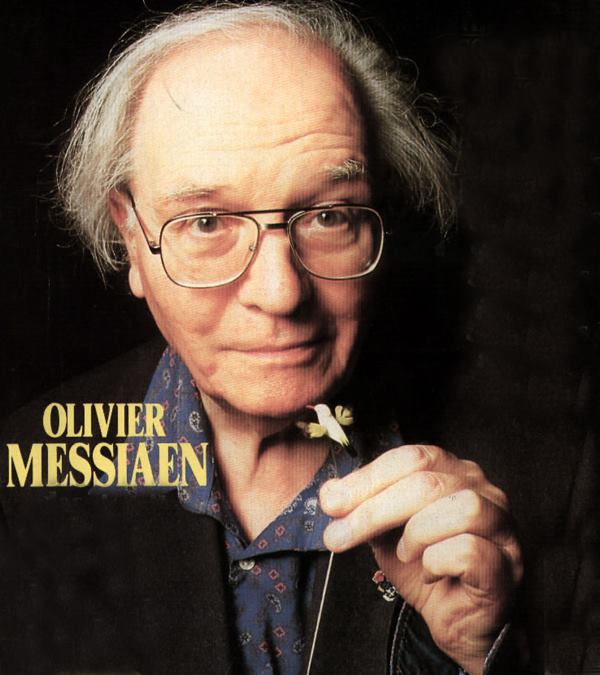
    Members of the Assisi Quartet, for 15 years resident quartet of Assisi Performing Arts, will drop by at 9:00, to talk a little bit about Olivier Messiaen’s “Quartet for the End of Time.” The ensemble will perform the work tomorrow night, alongside music of Franz Joseph Haydn, on a 7:30 p.m. concert at Bristol Chapel on the campus of Princeton’s Westminster Choir College.

    Richard Tang Yuk will be on hand at 10:00, to tell us about The Princeton Festival, now in progress, and this year’s production of Mozart’s “The Marriage of Figaro.” Tang Yuk will conduct three performances of the opera at McCarter Theatre, on 6/13, 6/21 & 6/28.

    Everything is extremely subject to change (I can’t seem to establish a playlist in advance, which makes it challenging since I bring all my own records), but in the best tradition of live radio, we will endeavor to push forward with a modicum of grace.

    Tune in tomorrow from 6 to 11 a.m. to WPRB 103.3 FM, or listen online at wprb.com, and keep it classy with Classic Ross Amico.

  • Carl Nielsen Celebrates 150 Years

    Carl Nielsen Celebrates 150 Years

    For you admirers of great Danes, today marks the 150th anniversary of the birth of Carl Nielsen, Denmark’s most celebrated composer.

    It would be several decades following his death (in 1931, of heart disease) before Nielsen’s music really started to gain traction abroad. It was Leonard Bernstein who prophesied, “I think many people are in for pleasant surprises as they get to know Nielsen: his rough charm, his swing, his drive, his rhythmic surprises, his strange power of harmonic and tonal relationships – and especially his constant unpredictability – all these are irresistible. I feel confident that Nielsen’s time has come.”

    Though Bernstein put his money where his mouth was by turning in one of the great Nielsen recordings (of the Symphony No. 5, in 1962), the composer’s reputation failed to blossom in anywhere near the same way that Bernstein’s other “rediscovery,” Gustav Mahler, had. Even in the pantheon of Nordic symphonists, Nielsen has consistently sat at the feet of Jean Sibelius.

    Which is really too bad. Nielsen’s music may be an acquired taste, but it is a rewarding one. There really is nothing else quite like it. The puckish wit, the ambiguities, the quirky juxtaposition of seemingly disparate melodies, harmonies and key signatures, all shot through very often with a sense of hope and optimism that rises above the chaos.

    Here’s Lenny, conducting the Danes on their own turf, in what may be my favorite Nielsen symphony, the Symphony No. 3:

    https://www.youtube.com/watch?v=d5sbcF7p0Pk

    Happy birthday, Carl Nielsen!

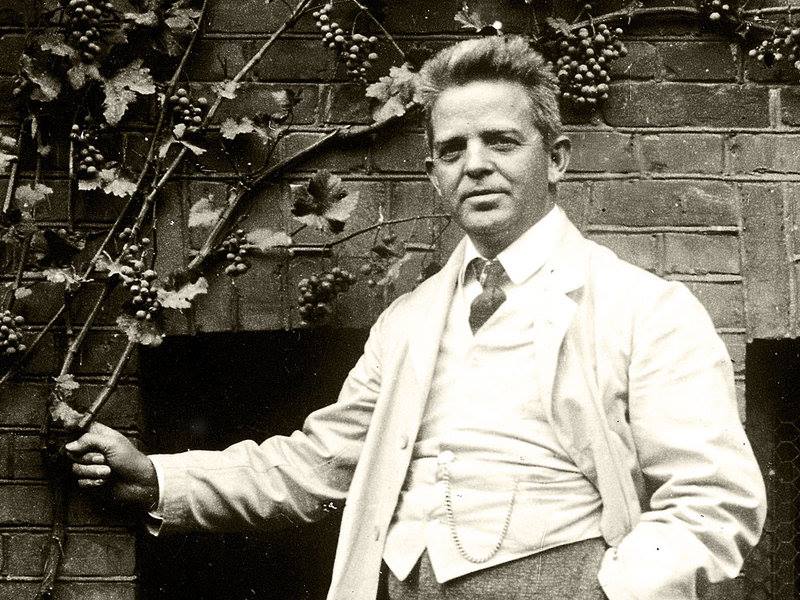
    PHOTO: In his most optimistic gesture, Nielsen wears white to a vineyard

  • Song of Love: Schumann, Hepburn, and MGM’s History

    Song of Love: Schumann, Hepburn, and MGM’s History

    The way it was (at least according to MGM):

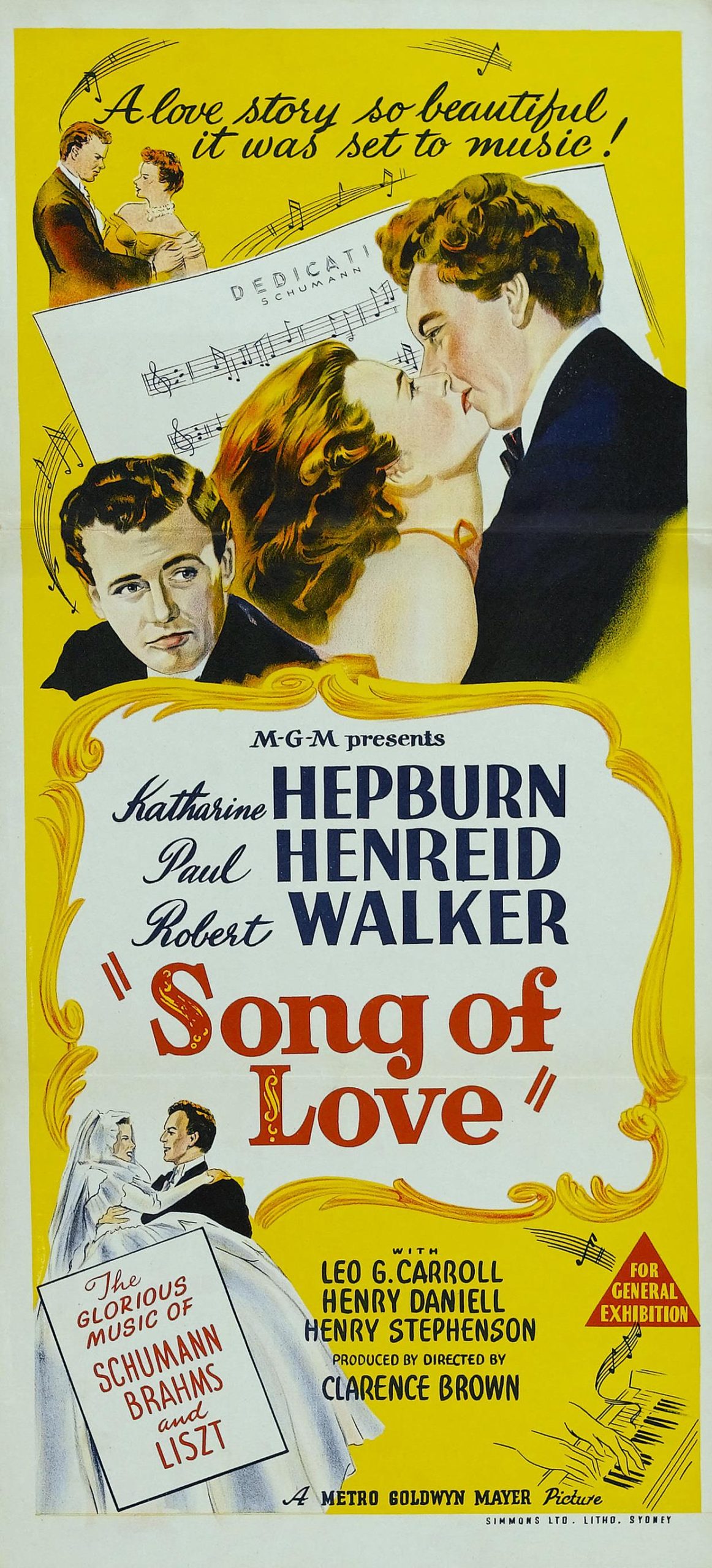
    For Robert Schumann’s birthday, here’s a clip from “Song of Love” (1947), with Paul Henreid as Schumann, Katharine Hepburn as Clara, and Robert Walker as Brahms. It’s also amusing to see Henry Daniell (as Liszt) playing something other than a villain, for a change. That’s Arthur Rubinstein on the soundtrack.

    You can watch the complete movie here:

    PHOTO: Roll over, Schumann…

Tag Cloud

Aaron Copland (93) Beethoven (95) Composer (114) Film Music (139) Film Score (143) Film Scores (255) Halloween (94) John Williams (195) KWAX (229) Leonard Bernstein (103) Marlboro Music Festival (125) Movie Music (154) Mozart (89) Opera (210) Philadelphia Orchestra (89) Picture Perfect (174) Princeton Symphony Orchestra (108) Radio (88) Ross Amico (244) Roy's Tie-Dye Sci-Fi Corner (290) The Classical Network (101) The Lost Chord (268) Vaughan Williams (103) WPRB (396) WWFM (881)

DON’T MISS A BEAT

Receive a weekly digest every Sunday at noon by signing up here


RECENT POSTS