In a rare display of efficiency and common sense, learned from Mom, I promote both my Saturday specialty shows – “Sweetness and Light” and “The Lost Chord” – within a single post, under the unifying theme of Mother’s Day.
First the light stuff, as we indulge in a suite of sweets on nursery themes by Grace Williams, Charles Williams, and Vaughan Williams (all unrelated). Also, Wolfgang Amadeus Williams – er, I mean Mozart.
Of course, Mom deserves more, so we’ll also hear Yo-Yo Ma (despite his name, not really a mother, though if inflected a certain way when spoken, guaranteed to get Mom’s attention) and Luciano Pavarotti (accompanied by Henry Mancini, no less).
Start the day with a musical candygram on “Sweetness and Light, this Saturday morning at 11:00 EDT/8:00 EDT.
Then drop back later, as we go long-hair, on “The Lost Chord,” with an hour of more substantial works honoring mothers.
Josef Suk, former pupil and son-in-law of Antonín Dvořák, composed the bittersweet cycle of piano pieces “About Mother” to enshrine his tenderest memories of his wife – Dvořák’s daughter Ottilie – in music, for his son, who would have been too young at the time of her death to remember her himself.
Craig Russell conceived the second movement of his Symphony No. 2, “American Scenes,” as a homage to his mother. Given the title “Gate City: Methodist Hymn,” the work is intended not only as a reflection of her personal faith but also the Appalachian beauty of her hometown of Gate City, Virginia.
Finally, Camille Saint-Saëns had his mother very much in mind when he composed his Cello Sonata No. 1. Here, the second movement is constructed on a theme from Giacomo Meyerbeer’s opera “L’Africaine,” of which his mother was particularly fond. Her influence also looms over the last movement, which the composer wrote as a hasty replacement after she objected to the original version (which was premiere at one of her salons). Gabriel Fauré described the sonata as one of Saint-Saëns’ finest works.
Mama knows best, on “I Remember Mama,” on “The Lost Chord,” this Saturday evening/afternoon at 7:00 EDT/4:00 PDT.
It’s a multifaceted celebration of Mom for Mother’s Day, on “Sweetness and Light” AND “The Lost Chord,” exclusively on KWAX, the radio station of the University of Oregon!
This week on “Picture Perfect,” with conclaves and popes very much in the news lately, it’s an hour of music from movies set in the Vatican.
It would appear that Alex North (born just south of Philadelphia, in Chester, Pa.) was Hollywood’s “go to” composer for papal scores. In “The Shoes of the Fisherman” (1968), Anthony Quinn plays Kiril Pavlovich Lakota, an archbishop who serves 20 years in a Siberian labor camp. He is released and sent to Rome where is promoted to the cardinalate. When the Pope dies, suddenly, Lakota, a dark horse candidate, is elected as his replacement. The story balances Lakota’s internal struggles and personal torments with mounting global turmoil. North juxtaposes the melancholy lyricism of Russian folksong with the steely grandeur of his music for the Vatican.
“The Agony and the Ecstasy” (1965), about the war of wills between Michelangelo (played by Charlton Heston) and the warrior-pope Julius II (played by Rex Harrison) over the painting of the ceiling of the Sistine Chapel, suggested a completely different approach. North’s other Vatican score is rich in allusions to authentic music of the era – and of the Church – which is most impressive when we think that the Early Music Movement was, at the time, in its very infancy, and the music of the pre-Baroque would not have been particularly well known.
Otto Preminger’s “The Cardinal” (1963) follows a fictional Boston Irish Catholic priest from his ordination in 1917 to his appointment as cardinal on the eve of World War II. Tom Tryon played the lead. Tryon later became a best-selling author (as THOMAS Tryon), with books such as “The Other” and “Harvest Home.” An interesting factoid: the Vatican’s liaison officer for the production was none other than Joseph Ratzinger, later Pope Benedict XVI.
The composer this time was Jerome Moross. The producers of the recording we’ll be sampling incorporate the sound of the actual bell of St. Paul’s Cathedral into the opening of the suite.
Christopher Reeve may have been trying just a bit too hard to shake his “Superman” image when he signed on to “Monsignor” (1982). Reeve stars as a Roman Catholic priest whose ascent through the ranks at the Vatican parallels his underhanded dealings with a mafia don and an affair with a woman in the postulant stage of becoming a nun (none other than Geneviève Bujold).
Likewise, composer John Williams received his only nomination from the Golden Raspberry Awards for Worst Original Score. Tune in for this rare opportunity to hear music from Williams’ first project after his Academy Award-winning contribution to “E.T.”
It’s a Pope-pourri of scores from movies set in the Vatican this week, on “Picture Perfect,” now in syndication on KWAX, the radio station of the University of Oregon!
Clip and save the start times for all three of my recorded shows:
PICTURE PERFECT, the movie music show – Friday at 8:00 PM EDT/5:00 PM PDT
SWEETNESS AND LIGHT, the light music program – Saturday at 11:00 AM EDT/8:00 AM PDT
THE LOST CHORD, unusual and neglected rep – Saturday at 7:00 PM EDT/4:00 PM PDT
More accurate than a Farmers’ Almanac is a prediction for enjoyable music-making in scenic West-Central New Jersey. That’s right, the first of the warm-weather music festivals is practically upon us. Now in its 36th year, Raritan River Music will beat the summer crush, once again presenting acclaimed soloists and ensembles in a variety of programs to be performed at historic venues in Raritan and Warren Counties.
The first of this season’s concerts will take place this Saturday at 7:30 pm, at Bethlehem Presbyterian Church in Pittstown. A trio of musicians from the Philadelphia-based Tempesta di Mare Baroque Orchestra will perform music by Bach, Couperin, Marais, and Telemann, among others, on flute, recorder, viola da gamba, cello, theorbo, and lute.
On Saturday, May 17 at 7:30 pm, at Old Greenwich Presbyterian Church in Stewartsville, pianist David Korevaar will share repertoire from his new release, “Beethoven: Heroic to Hammerklavier,” on the Prospero Classical label. The program will include the Sonata in F Major, Op. 54, the Sonata in F Minor, Op. 57 “Appassionata,” the Sonata in E Minor, Op. 90, and the Sonata in A Major, Op. 101.
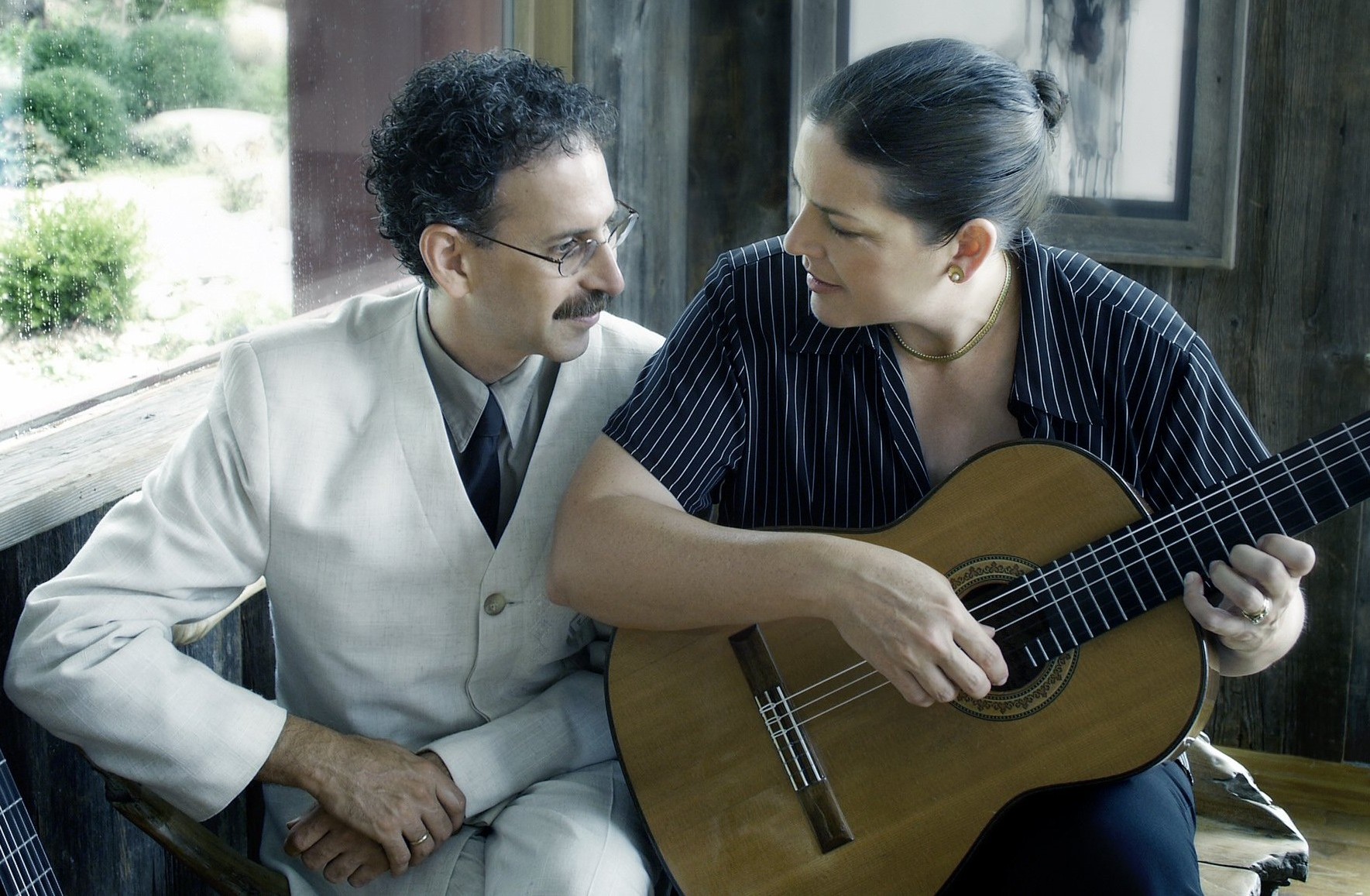
On Saturday, May 24, at 7:30 pm, at Stanton Reformed Church in Stanton, Raritan River Music founders (and Warren County residents) Michael Newman and Laura Oltman, a.k.a. the Newman and Oltman Guitar Duo, will be joined by the Bergamot String Quartet for “Music from the NEW World: 21st Century Masterpieces.” The program will include RRM-commissioned works by Daniel Binelli and Lowell Liebermann, the premiere of a new string quartet by New Jersey composer Payton MacDonald, selections by Bergamot violinist and composer Ledah Finck, and a work by Pulitzer Prize-and-Grammy Award-winning Princeton University alum Caroline Shaw.
The festival will conclude on Saturday, May 31, at 7:30 pm at Historic Hunterdon County Courthouse in Flemington, with “Americana Meets Old Masters.” Classical favorites and showpieces by Gershwin, Piazzolla, Bach, Rimsky-Korsakov, and others will be played on marimba, vibraphone, and piano by Greg Giannascoli, Behn Gillece, and Ron Stabinsky. Sounds like a good time to me.
The festival can also be accessed via online streaming. For more information, directions, and archived videos of past concerts, visit raritanrivermusic.org.
Ever since I learned some years ago that Johannes Brahms (1833-1897) and Pyotr Ilych Tchaikovsky (1840-1893) – who share a birthday on May 7 – actually met on several occasions, and that Tchaikovsky’s initial suspicion of, and contempt for, his colleague and rival softened into a genuine admiration for the man (if not his music), I haven’t been able to resist revisiting the story of this classical music true bromance.
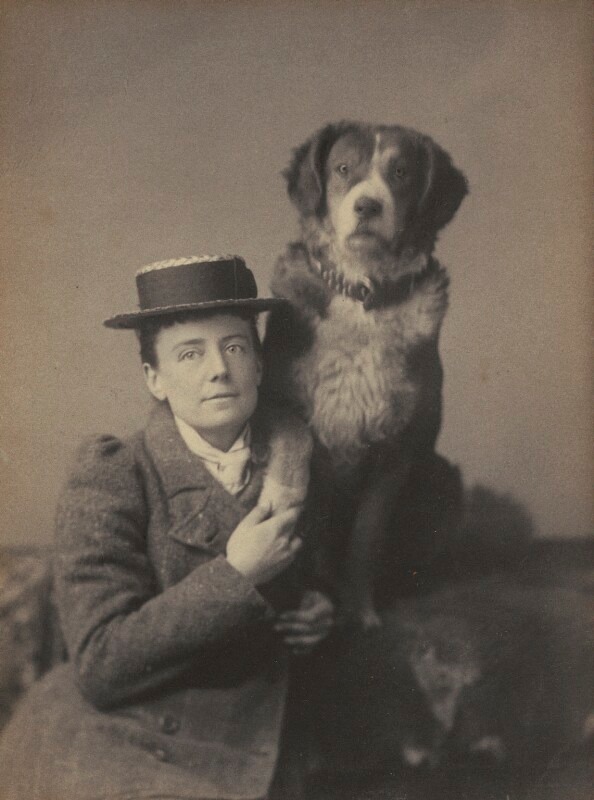
This year, I’ll put a different spin on it by sharing the observations of English composer Ethel Smyth (1858-1944) and the antics of her exuberant dog Marco. Smyth, whose steely determination to become a composer, in a day when it was the sort of thing that women simply didn’t do, wore down the opposition of her father – a major general in the Royal Artillery! – and enrolled at the Leipzig Conservatory in 1877.
When the conservatory didn’t measure up to her expectations, she acquired further polish through private studies with Heinrich von Herzogenberg (and fell in love with his wife). Her adventures in Germany brought her into contact with Dvořák, Grieg, Clara Schumann, and Herzogenberg’s friend, Johannes Brahms.
It was at a private performance of Brahms’ Piano Quintet, with the composer in attendance, that Smyth’s St. Bernard mix, Marco, burst through a door, toppling the cellist’s music stand, which, much to everyone’s relief, the notoriously prickly Brahms found hilarious.
Smyth also became friendly with Tchaikovsky, another visitor. Her first-hand accounts of her interactions and correspondence with both composers make for enjoyable reading. According to her, Tchaikovsky was “secretly terrified” of Marco, but whenever he wrote, he never failed to ask after him.
Brahms also kept in touch. It’s said that he carried a photo of Smyth with him until the time of his death.
In his diary, Tchaikovsky had characterized Brahms as a “scoundrel” and “a giftless bastard.” He was elated to find him, in reality, to be full of warmth and good humor. His preemptive hatred likely had more to do with the over-the-top and widely-broadcast veneration of establishment figures, such as Eduard Hanslick and Hans von Bülow, who hailed Brahms as the rightful heir of Beethoven.
“I’ve been on the booze with Brahms,” Tchaikovsky wrote after their first meeting. “He is tremendously nice – not at all proud as I’d expected but remarkably straightforward and entirely without arrogance. He has a very cheerful disposition, and I must say that the hours I spent in his company have left me with nothing but pleasant memories.”
I always find it oddly endearing that Brahms and Tchaikovsky were able to look past their personal aversions to one another’s music to actually grow to appreciate their individual qualities as people. There’s a lesson to be learned from that, I think. You can read more about it – and Marco! – at the links below to the website Tchaikovsky Research.
Happy birthday, boys. I’m glad it all worked out in the end.
Igor Stravinsky famously stated that “music is, by its very nature, essentially powerless to express anything.…” However, it seems anymore that in order for music to be taken seriously, especially by the Pulitzer committee, that it has to be “about” something. There is no room for the working out of abstract ideas within traditional forms. Opera wins because it’s representational – it has words and stories or ideas that even people who know nothing about music can get their heads around – but when was the last time the prize went to a symphony? I believe Jennifer Higdon’s Violin Concerto, recognized in 2010, was the last time it was awarded to a concerto.
That’s not to say there shouldn’t be points for originality. Caroline Shaw’s “Partita for 8 Voices,” the 2013 winner, is dizzyingly inventive, engaging, and entertaining. I feel rewarded, even exhilarated, when I listen to it. But most Pulitzer winners in recent decades, despite hitching themselves to big ideas, have been, from a purely musical standpoint, frankly pretty vapid. That’s not to say I don’t appreciate some of them, but do they maintain their power? Was there any power to begin with?
I wouldn’t mind if some kumbaya slipped through now and again – I have fairly diverse tastes and I’m open to new experiences – but once in a while toss me a bone and wow me with the fact that someone still knows how to actually write “serious” Western music that isn’t minimalist. How many “Anthracite Little Match Girls Become Ocean” are honored before they start to lose their luster?
One’s heart can be in the right place, and one can make a valid artistic statement in whatever way one chooses, but it doesn’t automatically follow that it qualifies for a Pulitzer, or at any rate attains the level of achievement that the Pulitzer standard once represented.
But perhaps there just isn’t anyone out there anymore that can still compose in a manner that does honor to centuries of tradition, contributing a verse to Whitman’s powerful play, with a personalized balance of inspiration and rigor? (And yes, I know, the Pulitzer music prize has only been around since 1943.) Can that race of giants truly have died-out? Perhaps. But it’s also probable that the quality of the judges has dropped. How many devote their lives to classical music anymore? Even people “in the business” fritter away their brain cells on popular garbage.
Not that the judges were ever perfect, mind you. Nothing human ever is. (Hell, I’m a case in point.) The committee has always had its prejudices, as evident during that period, beginning in the mid-‘60s, when we were getting one arid, academic award-winner after another, as it is now, when extra-musical philosophy, as pertaining to environmental concerns and social justice, and the neglected ethnic origins of a given composer are valued. I get it. I’ve got a heart, and I want the world to be a more compassionate, inclusive place. But what about the actual music? Beauty may be subjective, and our priorities can evolve, but genuine craftmanship is quantifiable.
Of course, the competition was opened up and dumbed-down in 2004 and it’s no longer about what it was. But even before that, the winners were pretty hit-and-miss. The sweetest spot was at the start, the “Appalachian Spring” era. 20 years later, the winners began to reflect the rarified taste of the Ivory Tower. A few bright spots aside, it wasn’t until the mid-90s that the prize began to acknowledge music that once again might appeal to a broader audience. Sadly, so little of it offers any meat. Must the trade-off for accessibility be vapidity?
As if sensing its lost grasp on relevance, the Prize decided to take a cliff dive into identity politics and extramusical social causes. Fine. That’s evolution, but I can’t pretend any of it is as good, as “classical music,” as the stuff that was being honored in the ‘40s and ‘50s. It doesn’t have to be “classical” to be art, but we shouldn’t pretend that the Pulitzer is anything like what it once was. The standards have changed, and frankly plummeted. I try to be a fair and open person in my life and politics, and as far as I’m concerned, everyone can like what they like, even if I personally happen to think it’s crap.
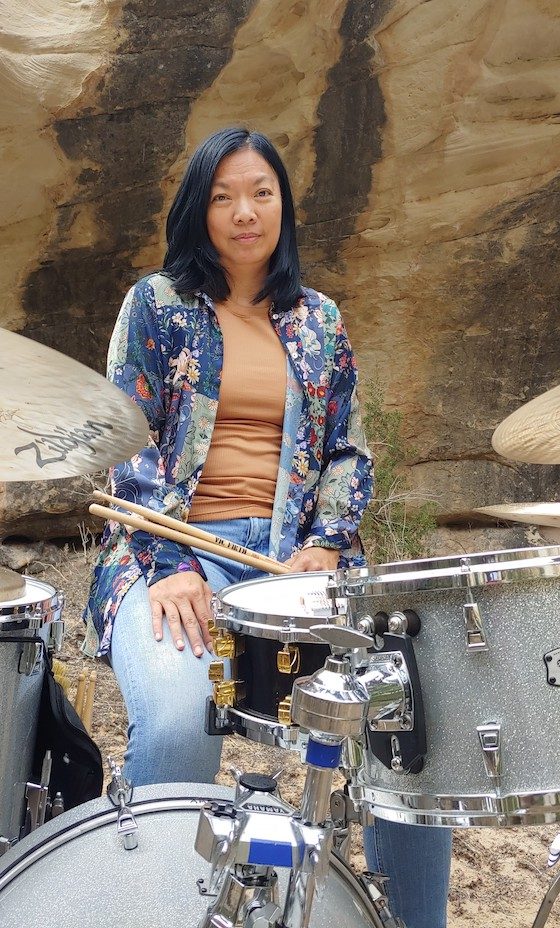
I’m not saying any of this in condemnation of this year’s winner, announced yesterday. Susie Ibarra has been recognized for her work “Sky Islands,” according to Wikipedia “a piece inspired by southern Filipino gong ensembles and the rainforest ecosystems of Luzon, at New York City’s Asia Society.” The Pulitzer committee characterizes it as “a work about ecosystems and biodiversity, that challenges the notion of the compositional voice by interweaving the profound musicianship and improvisational skills of a soloist as a creative tool.”
In her official bio, the composer is described as Filipinx-American. (She was born in California and raised in Texas.) Again, from Wikipedia: “As a composer, Ibarra incorporates diverse styles and the influences of Philippine Kulintang, jazz, classical, poetry, musical theater, opera, and electronic music. Ibarra remains active as a composer, performer, educator, and documentary filmmaker in the U.S., Philippines, and internationally. She is interested and involved in works that blend folkloric and indigenous tradition with avant-garde. In 2004, Ibarra began field recording indigenous Philippine music, and in 2009 she co-founded Song of the Bird King, an organization focusing on the preservation of Indigenous music and ecology.”
It’s not like the influences of world music or ethnic traditions are anything new. Colin McPhee and Lou Harrison were at this kind of thing back when my grandparents were young. But Ibarra lends a perspective of authenticity, through her heritage and experience.
From the clip posted, the music is accessible, perhaps even enjoyable. If it is played on the radio at 10:00 in the morning, nobody is going to be offended. There’s nothing about it that should really put a bee in my bonnet. Perhaps I even agree with the composer’s perspective. I just scratch my head and wonder where all the Walter Pistons have gone.
For anyone who reads this and despairs of ever winning the prize, remember Charles Ives, who had perhaps the most sensible reaction. On receiving his Pulitzer in 1946, for the belated premiere of his Symphony No. 3 (composed nearly 40 years earlier), he observed, “Prizes are for boys… I’m all grown-up.”
Congratulations to Ibarra and best wishes for all future success. Liking what I can hear of her piece is kind of spoiling my rant.