Category: Daily Dispatch

  • Shakespeare Inspires Princeton’s Music Scene

    Shakespeare Inspires Princeton’s Music Scene

    After 400 years, the Bard continues to provide some great shakes. Two Shakespeare-related works will be served up in the Princeton area over the course of the next week.

    Tonight at 8 p.m., the New Jersey Symphony Orchestra will unveil Darryl Kubian’s “O for a Muse of Fire” (which takes its title from the Prologue to “Henry V”), as part of a concert to be held at Princeton University’s Richardson Auditorium. Also on the program will be Rachmaninoff’s “Rhapsody on a Theme of Paganini,” with pianist Serhiy Savlov, and Tchaikovsky’s Symphony No. 6 “Pathètique.”

    Though written two hundred years after Shakespeare’s “Romeo and Juliet,” Bellini’s opera, “I Capuleti e i Montecchi” (“The Capulets and the Monatgues”), had a kind of parallel genesis, bypassing the Bard to draw from the same Italian Renaissance sources. Westminster Opera Theatre will perform the work next Friday and Saturday at 7:30 p.m., at the Bart Luedeke Center, Rider University, in Lawrenceville.

    Find out more in my article in today’s Trenton Times:

    http://www.nj.com/times-entertainment/index.ssf/2015/03/classical_music_shakespeare_in.html

    “Orpheus with his lute made trees,
    And the mountain tops that freeze,
    Bow themselves, when he did sing:
    To his music plants and flowers
    Ever sprung; as sun and showers
    There had made a lasting spring.”

    Henry VIII, Act III, Scene 1

  • Spring Movies Renewal and Second Chances

    Spring Movies Renewal and Second Chances

    Despite the wintry forecast, it is indeed the first day of spring. This week on “Picture Perfect,” we mark the occasion with music from movies on themes of renewal and starting over.

    You can’t get much more spring-like than “The Secret Garden,” after the novel of Frances Hodgson Burnett. A spoiled orphan raised in India returns to England and her aloof uncle’s gloomy mansion on the Yorkshire moors. Gradually, she is drawn outside of herself by a cantankerous gardener, a saucy robin, and a fey lad named Dickon, who has a particular affinity with wild creatures. Her transformation, signified by the titular garden, the maintenance of which teaches her to nurture, improves the lives of all around her.

    The story has been adapted numerous times, including a classic version with Margaret O’Brien, in 1949. In 1993, Francis Ford Coppola’s American Zoetrope backed a lovely adaptation directed by Agnieszka Holland. The music was by Zbigniew Preisner.

    “The Best Years of Our Lives,” from 1946, is one of the most beautiful films to treat the subject of American soldiers readjusting to civilian life, following World War II. A trio of veterans returns from overseas to find their lives irrevocably changed. It isn’t easy, but they rise to meet all challenges with the help of family and friends. The film is all the more moving and inspirational for its characters’ integrity and tenacity.

    The cast includes Frederic March, Dana Andrews and real-life veteran Harold Russell. Russell was awarded a special Academy Award for “bringing hope and courage to his fellow veterans through his appearance.” Russell had lost both his hands in an explosion. Honored also with an award for Best Supporting Actor, he is the only figure ever to win two Oscars for the same performance.

    The film won nine Oscars in all, among them Best Picture, Best Director (William Wyler), Best Actor (March), Best Screenplay (Robert E. Sherwood), and Best Music (Hugo Friedhofer).

    Based on a novel of Anne Tyler, “The Accidental Tourist,” from 1988, stars William Hurt as a travel writer, the loss of whose son leads to emotional sterility and estrangement from his wife, played by Kathleen Turner. He is eventually brought around by a quirky dog-trainer (Geena Davis, in an Academy Award-winning performance). It’s a movie about letting go, and having the courage to move forward. The understated score is by John Williams.

    Finally, sports movies have always been a popular genre through which to tell stories of resurrection and redemption. “The Natural,” Barry Levinson’s 1984 adaptation of the novel of Bernard Malamud, tells the tale of a baseball player (played by Robert Redford), who is struck down in his prime, only to be reborn in mythic triumph. The inspiring music is by Randy Newman.

    I hope you’ll join me for music from films about new beginnings and second chances, for the coming of spring. Unfortunately, because of the station’s Bach celebration, the show will be preempted today, so don’t come looking for it this evening at 6 ET. Like Omar Khayyam’s “Moon of Heav’n,” you will search through this garden for me in vain.

    However, you can catch the “rebroadcast” Saturday morning at 6, or enjoy it later as a webcast at http://www.wwfm.org.


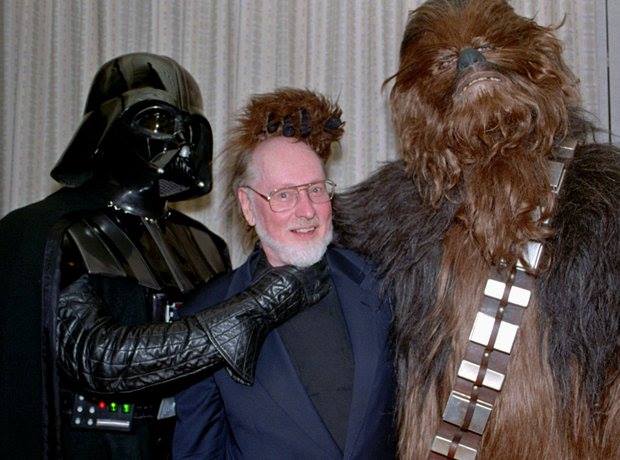
  • John Williams Out Spielberg’s Bridge of Spies

    John Williams Out Spielberg’s Bridge of Spies

    It’s been announced that John Williams will not be writing the music for Steven Spielberg’s upcoming Cold War thriller, “Bridge of Spies,” scheduled for release on October 18. This is perhaps not surprising, since Williams is committed to score the next “Star Wars” film, slated to open on December 18. The man is, after all, 83 years-old.

    However, it is not his age, but rather an unspecified, apparently minor health setback that caused Williams to walk away from the Spielberg project. It is said that the issue is now “corrected.”

    Thomas Newman will be stepping in to write the music. It will be only the second Spielberg feature not to be graced by one of Williams’ scores. (The other was “The Color Purple,” released in 1985.) Williams and Spielberg first worked together on “The Sugarland Express,” in 1974.

    I confess that this is a personal disappointment, since I was looking forward to two fine film scores this year, which has become a rarity in the Age of Zimmer.

    The last film scored by Williams was “The Book Thief,” in 2013. He plans to return for Spielberg’s next project, a film based on Roald Dahl’s novel, “The BFG,” projected for a July 1, 2016 release.

    Read the news here:

    http://www.theverge.com/2015/3/18/8243915/john-williams-not-scoring-spielberg-film

    PHOTO: I think you recognize the players

  • Rimsky-Korsakov’s Lost Operas

    Rimsky-Korsakov’s Lost Operas

    Today is the birthday of Nikolai Rimsky-Korsakov (Julian date Mar. 6, 1844), who wrote so much enchanting music, and yet so much of it is comparatively unknown.

    In particular, his operas have failed to really secure a toehold in the West. This, despite a pre-political hot potato Valery Gergiev’s efforts to bring a taste of their opulence and pageantry to BAM, the odd touring company (the Bolshoi) bringing concert versions to Lincoln Center, or the now defunct New York City Opera putting together an English-language version of “Le coq d’or” for Beverly Sills and Norman Treigle – now almost 50 years ago!

    His works for the stage are often dismissed by Western critics, who apparently find them insubstantial, as if (non-Wagnerian) folklore is somehow less valid than an evening of Italian oom-pah-pah culminating in a jester discovering his dying daughter in a burlap sack.

    Be that as it may, I find what I’ve heard of his operas (and I’ve probably heard more than most) enthralling. He composed 16 in all, if we count the original version of “Mlada,” which he wrote in collaboration with other composers of The Mighty Handful.

    Sadly, Gergiev’s cycle of recordings for the Philips label was curtailed after only five operas, leaving one to feel one’s way through the thickets of mostly unreviewed (at least in the West) Russian recordings. The sound quality on these can be hit and miss, and the singing can be variable, but every once in a while, one hits pay dirt.

    Why is it that the most powerful recordings are from the pre-stereo era, when larger-than-life figures like Feodor Chaliapin and Mark Reizen walked the boards? If you don’t mind listening through a soup can, anything conducted by Nikolai Golovanov will knock your socks off. If ever I acquire a time-traveling DeLorean, I would make it my mission to round up some modern recording engineers and slip into the Soviet Union under Stalin’s moustache.

    Happy birthday, Rimsky. We hardly know ya.

    Chaliapin as the Viking Guest, in “Sadko”:

    Arguably topped by Reizen!

    Golovanov conducts “Christmas Eve” (complete):

    Golovanov conducts “May Night” (complete):

    Golovanov conducts “Sadko” (complete):
    https://www.youtube.com/watch?v=AMq87z_ZkPc

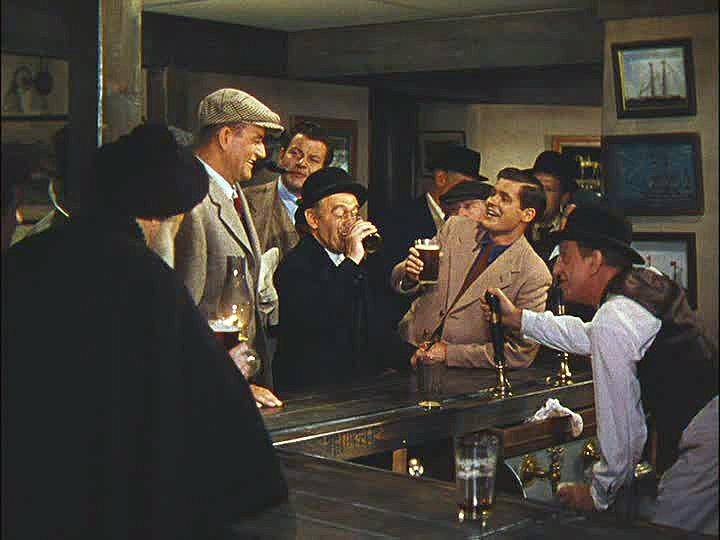
  • Happy St. Patrick’s Day Irish Films Barry Fitzgerald

    Happy St. Patrick’s Day Irish Films Barry Fitzgerald

    Happy St. Patrick’s Day!

    As an alternative to “The Quiet Man,” here’s Barry Fitzgerald as “the oldest man in the world,” in “Broth of a Boy”:

    Manic leprechauns from “Darby O’Gill and the Little People”:

    The great Albert Finney in “Miller’s Crossing.” (WARNING: This one’s a little violent. Poor resolution, too.)

    Finally, since I’m not on the air, here’s one for Steffi:
    https://www.youtube.com/watch?v=MB8NhXtgG_A

    Sláinte, everyone!

    PHOTO: St. Patrick’s Day death wish: keeping pace with Barry Fitzgerald

Tag Cloud

Aaron Copland (93) Beethoven (95) Composer (114) Film Music (139) Film Score (143) Film Scores (255) Halloween (94) John Williams (195) KWAX (229) Leonard Bernstein (103) Marlboro Music Festival (125) Movie Music (154) Mozart (89) Opera (210) Philadelphia Orchestra (89) Picture Perfect (174) Princeton Symphony Orchestra (108) Radio (88) Ross Amico (244) Roy's Tie-Dye Sci-Fi Corner (290) The Classical Network (101) The Lost Chord (268) Vaughan Williams (103) WPRB (396) WWFM (881)

DON’T MISS A BEAT

Receive a weekly digest every Sunday at noon by signing up here


RECENT POSTS