Okay, audience participation time:
What is it that Sibelius is holding in his left hand? (It looks like a cigarette, or maybe a pencil, in his right.) A hair brush? A shower massage? Have fun with it.
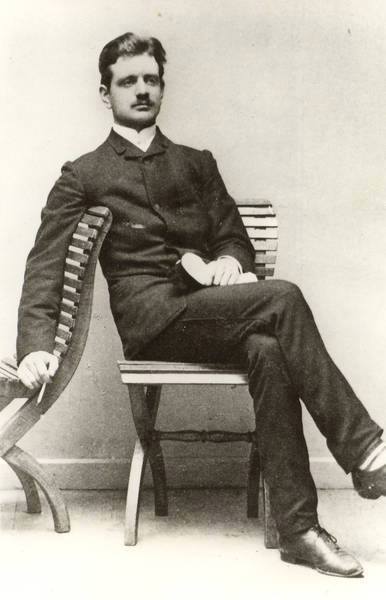
Okay, audience participation time:
What is it that Sibelius is holding in his left hand? (It looks like a cigarette, or maybe a pencil, in his right.) A hair brush? A shower massage? Have fun with it.
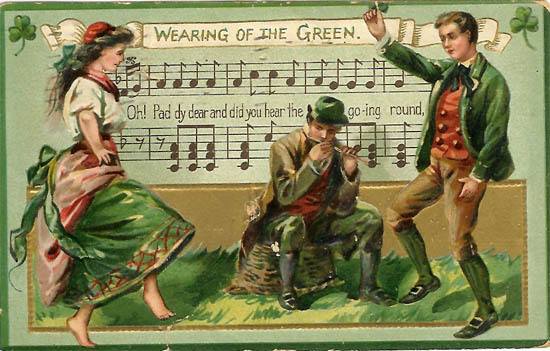
Don’t let the Italian surname fool you; my mother’s people came from Ireland. My own sensibilities tend more toward the Northern climes than to the Mediterranean.
This Sunday night on “The Lost Chord,” we anticipate St. Patrick’s Day, with music from, and in celebration of, the Emerald Isle. We’ll hear works by Irish composers John Larchet, Philip Hammond, Howard Ferguson and A.J. Potter, and works on Celtic themes by Percy Grainger, Sir Arnold Bax and John Foulds.
I hope you’ll join me for “The Sharing of the Green,” tonight at 10 ET, with a repeat Wednesday evening at 6; or that you’ll enjoy it later as a webcast, at http://www.wwfm.org.
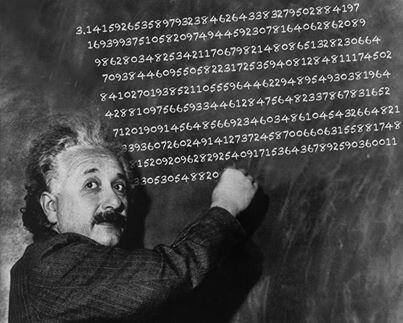
Today is International Pi Day (3.14, get it?). In fact, it is the only Pi Day this century to be 3-14-15, the first five digits of Pi, often represented by the Greek letter “p” (“π”), the ratio of the circumference of a circle to its diameter, commonly approximated as 3.14159 – though you could take it a good deal further, since the number is wholly irrational and refuses to fall into a repeating pattern.
Naturally, Princeton eats this stuff up. (It is Pi, afer all.) The borough is celebrating with a full day of events.
http://www.pidayprinceton.com/
Albert Einstein, longtime Princeton resident, was born on this date in 1879. “The difference between genius and stupidity is that genius has its limits,” he said. Is he saying, then, that Pi is stupid?
Not so Mr. Spock, who in this episode of “Star Trek,” defeats an evil computer by asking it to calculate to the end of Pi. That Spock is such a trickster. (R.I.P. Leonard Nimoy.)
All together now, as we sing the Albert Einstein Pi Day song!
The tyranny of Pi:
Face it, YouTube is crazy for Pi:
Scariest Pi song?
What does Pi actually sound like?
This way madness lies. Clearly, the possibilities are endless.
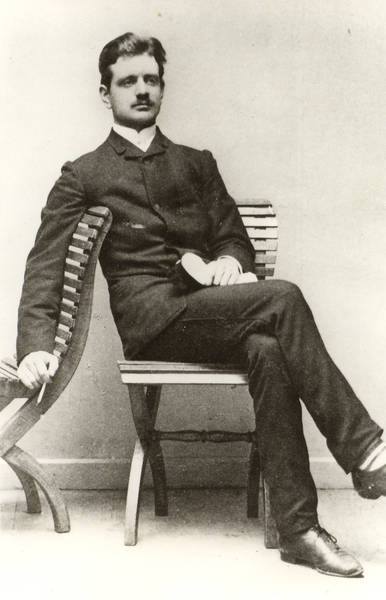
Now that moderate temperatures and Daylight Saving Time have lulled us into a sense of security, it’s okay for local symphony orchestras to trot out the Nordic composers.
On Saturday, Sinfonietta Nova will present music by the great Danes, Carl Nielsen and Niels Wilhelm Gade (on a concert which will also include works by Pablo de Sarasate and William Boyce), and on Sunday, the Princeton Symphony Orchestra will perform music by Jean Sibelius (on a concert which will also include works by Robert Schumann, Jules Massenet and Sebastian Currier).
Sinfonietta Nova will appear at the Prince of Peace Lutheran Church in Princeton Junction (Saturday at 7:30 p.m.); the Princeton Symphony will perform at Princeton University’s Richardson Auditorium (Sunday at 4 p.m.).
Put on your Bermuda shorts and read all about it in my article in today’s Trenton Times:
http://www.nj.com/times-entertainment/index.ssf/2015/03/classical_music_two_orchestras.html
PHOTOS: They scoff at your snow: Jean Sibelius (left) and Carl Nielsen

This week on “Picture Perfect,” we’ll have an hour of music from movies with Irish settings and Irish themes.
Tyrone Power plays an American journalist who travels to Ireland, where he gets in touch with his roots – and a full-size leprechaun, played by Cecil Kellaway – in “The Luck of the Irish” (1948).
No “Darby O’Gill”-style special effects here. Kellaway is just some guy in a leprechaun hat. When Power comments, “Say, aren’t you rather large for a leprechaun?,” Kellaway responds, “That’s a page of me family history I’d rather we not go into.” It was hoped that Barry Fitzgerald would have taken the role – and how perfect would that have been? – but he couldn’t be secured. In the event, Kellaway was nominated for an Academy Award for Best Supporting Actor.
The music was by the English-born Cyril J. Mockridge, who was Alfred Newman’s assistant at 20th Century Fox. Mockridge is probably best known for his score to “Miracle on 34th Street.” “The Luck of the Irish” is full of Celtic-style folk melodies and some shimmering leprechaun music, but why it quotes “Greensleeves” is anybody’s guess. Probably at the request of a producer. (Green = Irish, right?)
John Williams wrote a gorgeous, melancholy score for “Angela’s Ashes” (1999), adapted from Frank McCourt’s bestselling memoir. It’s refreshing to hear Williams give free rein to his lyrical side, beyond the context of lightsabers, magic wands and rampaging dinosaurs. The recording we’ll hear is from the difficult-to-acquire international release. The version issued stateside was marred by dialogue from the film. (Why do they do that?)
You can’t have an hour of Irish film music without including something with The Chieftains. “Circle of Friends” (1995) is based on the novel by Maeve Binchy, about three childhood friends who reunite in college, and their adventures with the young men they find there. The film starred Minnie Driver, Chris O’Donnell, Alan Cumming and Colin Firth. Michael Kamen wrote the score, but it’s The Chieftains, obviously, that lend it an air of authenticity.
Finally, we’ll have music from “The Quiet Man” (1952), surely Victor Young’s most charming project. Based on a short story by Maurice Walsh, “The Quiet Man” tells the tale of an American boxer with Irish roots who returns to the village of his birth.
John Wayne, Maureen O’Hara, Barry Fitzgerald, Victor McLaglen, Mildred Natwick, Ward Bond, and a whole slew of Irish character actors flesh out what must be John Ford’s most delightful film. It earned him his fourth Academy Award for Best Director, and the film itself was nominated for Best Picture.
The score is imbued with Irish folk song and popular melodies, perfectly complementing the tone of sustained whimsy, in what is essentially a love story unfolding in the face of cultural differences.
I hope you’ll join me in the wearin’ of the green, this Friday evening at 6 ET, with a repeat Saturday morning at 6 (as good a time as any for a pint of porter); or that you’ll listen to it later as a webcast, at http://www.wwfm.org.
Aaron Copland (93) Beethoven (95) Composer (114) Film Music (139) Film Score (143) Film Scores (255) Halloween (94) John Williams (195) KWAX (229) Leonard Bernstein (103) Marlboro Music Festival (125) Movie Music (154) Mozart (89) Opera (210) Philadelphia Orchestra (89) Picture Perfect (174) Princeton Symphony Orchestra (108) Radio (88) Ross Amico (244) Roy's Tie-Dye Sci-Fi Corner (290) The Classical Network (101) The Lost Chord (268) Vaughan Williams (103) WPRB (396) WWFM (881)