Category: Daily Dispatch

  • Schickele Hijinks & My Writing Woes

    Schickele Hijinks & My Writing Woes

    Okay, so maybe I lack Peter Schickele’s sense of humor.

    I think I’m generally a witty person, and I enjoy a good laugh, but when it comes to putting myself out there I can be fairly self-conscious. Therefore, I work hard to get it right, whether it be in my writing or in my editing for the radio broadcasts. At any rate, I do the best I can under the circumstances (which may include, among other things, tight deadlines, lack of sleep, impending holidays, and a worn-out voice that won’t cooperate).

    Which brings me to this week’s newspaper article.

    It looks like, in his or her haste to get to Thanksgiving, an editor altered my reference to Schickele being in Ewing for rehearsals last Thursday (was it too specific?), and in the process made gibberish of the original sentence.

    Now, I realize it’s no big deal. I hate to whine about these things every Friday – last week, I kept mum about the cuts, because they didn’t mar the piece – but it is frustrating to have someone make careless or capricious changes to something I worked on very hard because I want it to read well, so that it winds up appearing to be full of potholes and hiccups. I’m not a vain person, but I think I have a sense of my own worth as a writer. Give me a word count, and all I really need is a proofreader.

    I can live with the fact that they didn’t like “AAAAARRRRRGH!” in the upper case.

    I have not seen the print edition, so I have yet to find out to what extent I should be ashamed to show my face in public for another week.

    Anyway, enough about my smarting ego, and on to the content.

    Schickele will be at the College of New Jersey on Dec. 5 for a concert titled “Choral Shenanigans and Other Musical Hijinks.” The concert will include works published under his own name and some attributed to his famous pseudonym, P.D.Q. Bach, including the “Grand Serenade for an Awful Lot of Winds and Percussion,” “A Consort of Choral Christmas Carols,” and “Three Choruses from E.E. Cummings.” Also on the program will be Robert Sund’s “The Drunken Sailor” and Robert Cohen’s “Ho, Hosanna.”

    The event will feature performances by the TCNJ Chorale, College Choir, and Wind Ensemble. Schickele will introduce his works through brief and informal conversations with Wayne Heisler, TCNJ Associate Professor of Historical and Cultural Studies in Music.

    Schickele will also be my guest this week on “The Lost Chord,” which will include a mix of his “serious” concert works and riotous comedy bits. You can enjoy it this Sunday night at 10 ET, with a repeat Wednesday evening at 6; or listen to it later as a webcast at http://www.wwfm.org. Because of Thanksgiving, the program was assembled P.D.Q.

    Also on Dec. 5 (and 6), Westminster Opera Theatre will present Franz Joseph Haydn’s comic opera, “Il mondo della luna” (“The World on the Moon”).

    Haydn’s science fiction opera, on a libretto of Carlo Goldoni, concerns a sham astrologer who plans to dupe a rich old man into believing he has been transported to the moon, with the aim of tricking him into granting permission to marry his daughter.

    Music director William Hobbes will conduct students of Westminster Choir College in this fully staged production, in Italian with English supertitles. Performances will be held at Princeton Regional Schools Performing Arts Center in Princeton High School.

    It’s the holidays! Be of good cheer (like me). Read more about Schickele and Haydn in my article in today’s Trenton Times.

    http://www.nj.com/times-entertainment/index.ssf/2014/11/classical_music_choral_shenani.html

  • Black Friday Escape to the Wild Picture Perfect

    Black Friday Escape to the Wild Picture Perfect

    This week on “Picture Perfect,” for Black Friday, we flee “civilization” for the relative safety of the wilderness.

    We’ll hear music from “Born Free” by John Barry, “Hatari!” by Henry Mancini, National Geographic’s “Grizzly!” by Jerome Moross, and “The Jungle Book,” by Miklós Rózsa.

    I hope you’ll join me for “The Call of the Wild,” this Friday evening at 6 ET (leftover turkey and cranberry sauce sandwiches optional), or for the repeat Saturday morning at 6; or that you’ll listen to it later as a webcast, at http://www.wwfm.org.

    As something of a bonus, since it’s Thanksgiving, here’s a second helping of Rózsa, assembled from his score to “Plymouth Adventure”:

    The main title is based on the Ainsworth Psalter, written by English Separatist clergyman Henry Ainsworth. It was published in Holland in 1612 and brought to America by the Pilgrims in 1620.

    Happy Thanksgiving to all!

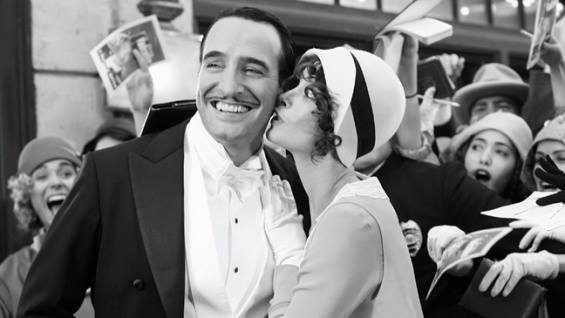
    PHOTO: I’d rather face Shere Khan than mall traffic

  • Thomson’s Louisiana Story Pulitzer & Ormandy

    Thomson’s Louisiana Story Pulitzer & Ormandy

    Yesterday, I posted about Virgil Thomson. On this date in 1948, the Philadelphia Orchestra gave the first performance of Thomson’s “Louisiana Story Suite.” As I mentioned, “Louisiana Story” was the first – and so far only – film score to be awarded the Pulitzer Prize for Music.

    Robert Flaherty’s semi-documentary, commissioned by the Standard Oil Company, whitewashes the impact of oil drilling in the bayous, which barely impacts a Cajun boy’s adventures with his pet raccoon. Much more irksome is a pesky alligator, for which Thomson composed a fugue.

    I’d also like to take this opportunity to give a belated nod to Eugene Ormandy, whose birthday I missed on Nov. 18. Ormandy, of course, was music director and conductor of the Philadelphia Orchestra for 44 years.

    Praise be! Somebody posted Ormandy’s recording of “Louisiana Story” on YouTube. I’m not sure that it’s ever appeared on CD. At any rate, it is currently unavailable.

    Here’s the complete film, if you’re interested. The print, posted by a Russian(!), is much better than an alternative, murkier print, also posted, if you can forgive the foreign subtitles.

    https://www.youtube.com/watch?v=lSvBQOSqHGI

    Happy Thanksgiving, everyone. Be careful driving!

  • Virgil Thomson: Americana and French Flair

    Virgil Thomson: Americana and French Flair

    I am sure there are those who are resistant to the art of Virgil Thomson – Thomson the composer, I mean. His brand of Americana-tinged simplicity could easily be reduced to “faux naïve.”

    Personally, I find the blend of French and American elements fascinating. Thomson, like Aaron Copland and so many others, studied in Paris with the legendary pedagogue Nadia Boulanger. The next time you listen to “Appalachian Spring,” or anything by Copland, note the French influence – the uncluttered textures, the neoclassical winds. It’s inescapable. If anything, these qualities are even more evident in Thomson’s music, and he adhered to a French sensibility for the rest of his life.

    Thomson was equally renowned (and feared) as critic for the New York Herald-Tribune. As a critic, he certainly was not afraid to speak his mind. He was also more vocal than most in his conviction that the alleged rarefied aesthetics of music, at least in his case, were secondary to the needs of the bank account. Fortunately for Thomson, the two were not necessarily incompatible.

    His most famous work, perhaps – other than the film scores he wrote for the documentaries “The Plow That Broke the Plains,” “The River,” and “Louisiana Story” (the only film score to date to be awarded a Pulitzer Prize) – is the “Symphony on a Hymn Tune.”

    The symphony, composed during his years in Paris, was inspired by Thomson’s memories of his Kansas City boyhood. The “Sunday best” of the church hymns occasionally gets tangled up in a few modernistic burrs – the exchanges between the violin, cello, trombone and piccolo at the end of the first movement, for instance – but in 1928, it was a landmark in establishing a distinctly American idiom.

    This is perfect Thanksgiving music.

    Happy birthday, Virgil Thomson!

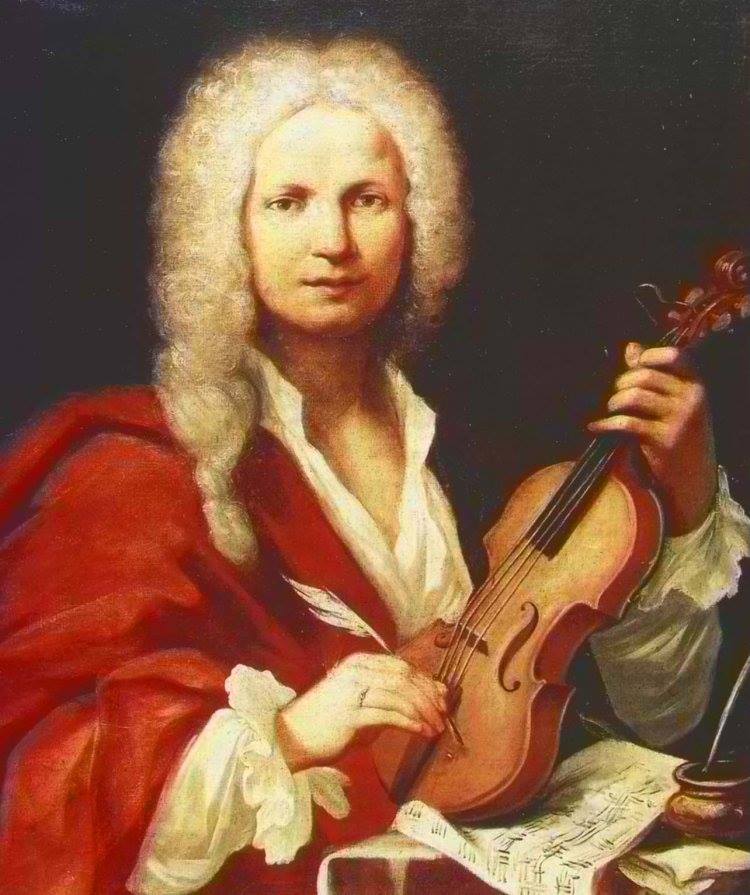
    PHOTO: Loved him in “The Addams Family”

  • Atlanta Symphony’s Thanksgiving: American Music

    Atlanta Symphony’s Thanksgiving: American Music

    Thanksgiving is always a good excuse to play American music, and this year, in light of all the organization has been through recently, I thought I’d devote an hour to recordings of the Atlanta Symphony Orchestra.

    The musicians and management recently reached an agreement, with the help of outside federal mediators, after ten months of contract negotiations that culminated in a two-month player lockout. The two sides arrived at a four-year deal, and the orchestra is back to work. As the major symphonic organization in the Southeastern United States, this is indeed a cause for thanksgiving.

    This Sunday night on “The Lost Chord,” we’ll hear two works co-commissioned by the symphony from representatives of the so-called “Atlanta School,” composers frequently championed and recorded by the orchestra and its music director, Robert Spano.

    Jennifer Higdon, now one of the most successful of American composers, a Pulitzer Prize winner who teaches at the Curtis Institute of Music, studied conducting with Spano at Bowling Green. She wrote a concerto grosso of sorts for the New Music sextet eighth blackbird (which identifies itself, modestly, in the lower case). The group performs with the symphony in “On a Wire.” The composer asks the listener to imagine six blackbirds, sitting on a wire.

    Birds also play a role in Michael Gandolfi’s “Q.E.D.: Engaging Richard Feynman,” inspired by the Nobel Prize-winning physicist.

    Gandolfi’s piece doesn’t focus on scientific inquiry. Rather it takes as its starting point two anecdotes shared by Feynman in interviews with the BBC, which the composer discovered on YouTube.

    The first concerns a challenge put by an artist friend of Feynman suggesting that as a scientist he cannot truly appreciate the beauty of a flower. Feynman counters that scientific knowledge, a greater understanding of the flower, only adds to its beauty, rather than detracts.

    The second grows out of an anecdote concerning Feynman’s boyhood ignorance of the name of a certain kind of bird, a brown-throated thrush, and his realization that a name tells nothing about the bird, but rather something about the people who named the bird. He concludes, “Now, let’s look at the bird.”

    The piece, scored for chorus and orchestra, is organized into two sections made up of settings of texts by various poets illustrating their respective themes, including those of Gertrude Stein, Emily Dickinson, Walt Whitman, Ralph Waldo Emerson, Siegfried Sassoon, and the Irish Republican Joseph Campbell (not to be confused with the mythologist).

    Both works appear on an album issued on the orchestra’s ASO Media label.

    I hope you’ll join me for “Georgia Peaches,” American music performed by the Atlanta Symphony Orchestra, this Sunday night at 10 ET, with a repeat Wednesday evening at 6 – or that you’ll listen to it later as a webcast at http://www.wwfm.org.
Tag Cloud

Aaron Copland (92) Beethoven (95) Composer (114) Film Music (119) Film Score (143) Film Scores (255) Halloween (94) John Williams (185) KWAX (229) Leonard Bernstein (99) Marlboro Music Festival (125) Movie Music (134) Opera (198) Philadelphia Orchestra (87) Picture Perfect (174) Princeton Symphony Orchestra (106) Radio (87) Ralph Vaughan Williams (85) Ross Amico (244) Roy's Tie-Dye Sci-Fi Corner (290) The Classical Network (101) The Lost Chord (268) Vaughan Williams (102) WPRB (396) WWFM (881)

DON’T MISS A BEAT

Receive a weekly digest every Sunday at noon by signing up here


RECENT POSTS