Category: Daily Dispatch

  • Leif Segerstam Dies at 80

    Leif Segerstam Dies at 80

    Oh no! Leif Segerstam has died.

    This Finnish conductor of Falstaffian dimensions was a characterful interpreter of the works of Jean Sibelius, Carl Nielsen, Allan Pettersson, Einojuhani Rautavaara, and other composers perhaps further afield. He served, at various times, as artistic director/chief conductor of the Stockholm Royal Opera, the Helsinki Philharmonic, the Danish National Radio Symphony, and the Savonlinna Opera Festival.

    He was also a violinist, a pianist, and a composer. If, by chance, he ever found himself with extra time on his hands, he would simply churn out a symphony. By the time of his death he had composed 371 of them. (That is not a typo.) He also wrote 30 string quartets, 13 violin concertos, 8 cello concertos, 4 viola concertos, and 4 piano concertos.

    Although he could hardly be said ever to have been a model of fitness, I am shocked to see him go. He always seemed to be inextinguishable, the very embodiment of Joulupukki, the Finnish Santa Claus, which he so strongly resembled.

    The name Leif is of Scandinavian origin and is associated with the Viking Age. What are the odds that this most vibrant and eccentric of Nordic conductors would die on Leif Erikson Day?

    Segerstam was 80 years-old. The man was a beast. R.I.P.


    Segerstam conducts Sibelius’ Symphony No. 5

    Just try to forget this “Scheherazade,” with its highly unconventional, piratical conclusion

    Cutting to the chase

    Rautavaara’s “On the Last Frontier,” after Edgar Allan Poe’s “The Narrative of Arthur Gordon Pym,” with Rautavaara in attendance

    Jolly Segerstam conducts grim Pettersson

    Segerstam… gives a TED Talk???!!!

    Segerstam’s Symphony No. 253 (again, not a typo)

  • Princeton Soundtracks Movie Music Talk

    Princeton Soundtracks Movie Music Talk

    Pulling together my thoughts, slides, and sound files for the next Princeton Symphony Orchestra Soundtracks talk, “Picture Perfect: Music and the Movies.” The event will be held in the second floor Newsroom of Princeton Public Library, 65 Witherspoon St., in Princeton, NJ, tomorrow (Tuesday) night at 7:00.

    I’ll share reflections on, and my affection for, some of my favorite film scores, within the context of broader observations on the evolution of movie music from the silent era to the present. If you have anything to add about Hans Zimmer, a Q&A will follow!

    It’s all free, so drop on by and take a load off. Popcorn not included!

  • The Vourdalak Review A Unique Historical Horror

    The Vourdalak Review A Unique Historical Horror

    If you ever wished that “Barry Lyndon” were more like a Hammer film, boy do I have one for you!

    Based on a novella by Aleksey Tolstoy from 1839, “The Vourdalak” (2023) certainly takes a novel approach to its monster. I won’t spoil it here, and hopefully you won’t either. In fact, I will say as little about it as possible (try not to read any reviews or watch the trailer), because it will retain its greatest potency if you go into it cold.

    I will say, it totally has a ‘60s/’70s historical horror vibe, in the best possible ways. Yes, it’s in French, and you will have to read subtitles, but it’s so absorbingly executed you’ll soon forget, and in any case the situations speak the universal language of nightmares.

    Adrien Beau’s debut feature is thoughtfully staged, shot, and paced, with an emphasis on practical effects over CGI. Furthermore, it manages to be both quirky and amusing without undermining the genre’s inherent sense of foreboding. I knew I was in good hands from the start, first with the classic-looking Oscilloscope Laboratories logo, and then a traveler’s shadow, cast by lightning on a stormy night, framing the face of a suspicious local, who denies him access while peering through a Judas door.

    At a lean 90-minutes, “The Vourdalak” is nevertheless leisurely paced (seductively shot in grainy Super 16 mm). It oozes with atmosphere and earns its chills with episodes of mounting, surreal dread. Don’t go into it expecting breakneck editing or vertiginous handheld cameras.

    Any vampire movie worth its bloodletting emerges from the shroud of subtext. Here, scented glove and periwig brush up against Central European superstition. Beau shifts the focus from Tolstoy’s xenophobia – Ottoman invaders as agents of vampirism – with metaphoric observations on questionable family dynamics (old school patriarchy, before it became a political buzzword, at its most destructive) and the uncertainty with which we may relate to those who have just returned from war.

    If you are fond of the Herzog version of “Nosferatu” or, more recently, Robert Eggers’ “The Witch” or “The Lighthouse,” you might want to give this one a shot. (Parenthetically, Eggers’ remake of “Nosferatu” is due in theaters on December 25th.) I streamed it on Kanopy, which allows free access with a library card, but it’s also available on other streaming platforms.

    As a rule I do not like new movies, much less new horror movies. This one receives a respectful tip of the tricorn hat from Classic Ross Amico.

  • Shana Tova Music for the Jewish High Holy Days

    Shana Tova Music for the Jewish High Holy Days

    Shana tova!

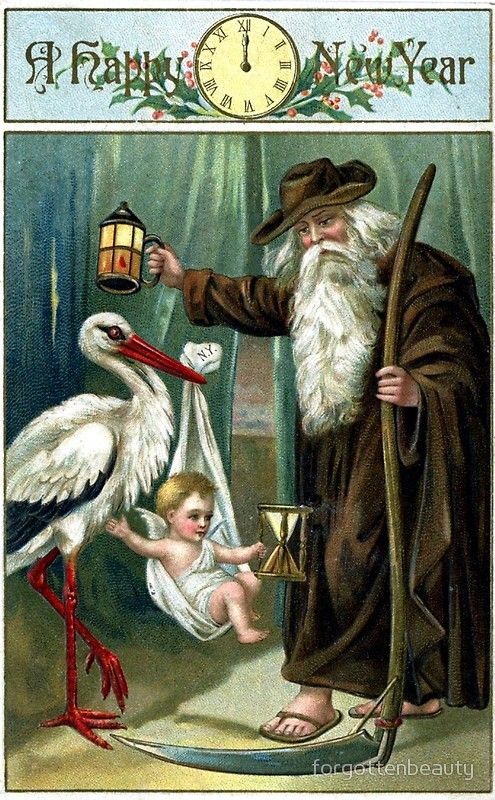
    This week on “The Lost Chord,” we welcome the year 5785 with an hour of music for the Jewish High Holy Days.

    Herman Berlinski (1910-2001) was a prolific composer, who made his mark largely in the field of liturgical music. His “Shofar Service” (1964) is scored for baritone, shofar, two trumpets, organ, and chorus. The shofar, traditionally fashioned out of a ram’s horn, is sounded, as applies here, during the Rosh Hashana or New Year service. The text is compiled from the Union Prayer Book.

    David Stock (1939-2015), a longtime resident of Pittsburgh, served on the faculty of Duquesne University. He was founder of the Pittsburgh New Music Ensemble, and acted as composer in residence for the Pittsburgh Symphony Orchestra and the Seattle Symphony. “Yizkor” (1999), Stock’s elegy for string orchestra, takes its name from the communal memorial service and prayer that honors the deceased. The custom is notably observed on Yom Kippur, or the Day of Atonement.

    Finally, we’ll turn to “The Chagall Windows” (1974), luminous, strange, and beautiful impressions of stained glass tableaux from the synagogue of the Hadassah Medical Center in Jerusalem, by the English pianist and composer John McCabe (1938-2015). The windows depict the twelve sons of the patriarch Jacob and the Twelve Tribes of Israel. McCabe addresses the windows in interlinked sections, so as to give the work a more symphonic, perhaps less episodic, feel.

    The world premiere recording was made for EMI in 1974. We’ll hear a live performance from the next year, captured in a more natural acoustic, with the London Philharmonic conducted by Bernard Haitink.

    Best wishes for a sweet, happy, and healthy new year. It’s a fresh start, from tekeeyah to atonement, on “Shofar, So Good” – music for the High Holy Days – on “The Lost Chord,” now in syndication on KWAX, the radio station of the University of Oregon!


    Clip and save the start times for all three of my recorded shows:

    PICTURE PERFECT, the movie music show – Friday at 8:00 PM EDT/5:00 PM PDT

    SWEETNESS AND LIGHT, the light music program – ALL NEW! – Saturday at 11:00 AM EDT/8:00 AM PDT

    THE LOST CHORD, unusual and neglected rep – Saturday at 7:00 PM EDT/4:00 PM PDT

    Stream them, wherever you are, at the link!

    https://kwax.uoregon.edu/

  • Beer Barrel Polka a Czech Oktoberfest Classic

    Beer Barrel Polka a Czech Oktoberfest Classic

    When lyrics were added to the best-known polka of Czech composer Jaromir Vejvoda, it also became perhaps the most famous Czech song.

    Originally conceived as the “Modřanská Polka” – or “Polka of Modřany” – with words it took on a new life as “Škoda lásky” (“Unrequited Love”). It was also a hit in Germany as “Rosamunde.” World-wide popularity followed, as soldiers adopted it as a drinking song during World War II and introduced it at home as the “Beer Barrel Polka.”

    This week on “Sweetness and Light,” in this season of the harvest and Oktoberfest, it will be one of our featured works as we roll out the barrels for a salute to BARLEY AND THE GRAPE.

    The hour will include the “Revelry Overture” by Montague Phillips and Leopold Godowsky’s “Symphonic Metamorphosis on ‘Wine, Women and Song’” after Johann Strauss II. We’ll raise our goblets to the god of wine with ballet music from Jules Massenet’s rarely-heard opera “Bacchus” and the “Procession of Bacchus” from Léo Delibes’ ballet “Sylvia.”

    We’ll also quaff to drinking songs by Reginald De Koven (“Brown October Ale” from the comic opera “Robin Hood”) and Henry Purcell (himself a casualty of one too many pub-crawls).

    We’ve a powerful thirst for BARLEY AND THE GRAPE on “Sweetness and Light.” The taps are open, this Saturday morning at 11:00 EDT/8:00 PDT, exclusively on KWAX, the radio station of the University of Oregon!

    Stream it wherever you are at the link:

    https://kwax.uoregon.edu/

Tag Cloud

Aaron Copland (93) Beethoven (95) Composer (114) Film Music (132) Film Score (143) Film Scores (255) Halloween (94) John Williams (193) KWAX (229) Leonard Bernstein (103) Marlboro Music Festival (125) Movie Music (147) Mozart (88) Opera (206) Philadelphia Orchestra (89) Picture Perfect (174) Princeton Symphony Orchestra (108) Radio (88) Ross Amico (244) Roy's Tie-Dye Sci-Fi Corner (290) The Classical Network (101) The Lost Chord (268) Vaughan Williams (103) WPRB (396) WWFM (881)

DON’T MISS A BEAT

Receive a weekly digest every Sunday at noon by signing up here


RECENT POSTS