I’ve been in radio for so long, when I began, recorded shows were being broadcast from reel-to-reel tape (edited by hand using a razor blade). Later, they were played from DAT tape (that is to say, Digital Audio Tape), and now from automation from a computer network.
So I really dug deep into the archive for this week’s broadcast of “The Lost Chord” – 21 years deep, as a matter of fact – extracting from a vein of probably about 100 shows that I found here on CD-R, which I likely transferred from DAT, before the station ditched the machines. According to the label on the jewel case, this particular episode aired in 2003 and 2007.
For all that, the technology is not quite as ancient as that employed for the actual recordings I selected for a nostalgic glimpse back at Christmases of yore. A few of of them date to the 1910s and 1920s. Among the featured artists are Enrico Caruso, Fritz Kreisler, John McCormack, Paul Robeson, Raymond Scott, and Fats Waller.
I hope you’ll join me, when I wipe away the cobwebs for “Ghosts of Christmases Past,” a special holiday edition of “The Lost Chord,” now in syndication on KWAX, the radio station of the University of Oregon!
Clip and save the start times for all three of my recorded shows:
PICTURE PERFECT, the movie music show – Friday at 8:00 PM EST/5:00 PM PST
SWEETNESS AND LIGHT, the light music program – ALL NEW! – Saturday at 11:00 AM EST/8:00 AM PST
THE LOST CHORD, unusual and neglected rep – Saturday at 7:00 PM EST/4:00 PM PST
I don’t know what conditions are like where you are, but I expect, if you celebrate, your adrenaline is already up, as you prepare for a last-minute dash to the stores, a little surreptitious gift-wrapping, some early baking, or perhaps already receiving family.
This week on “Sweetness and Light,” we’ll stick to the basics, with an hour of music inspired by familiar Christmas carols and traditional Christmas songs.
In the former category, we’ll hear works by Philip Lane, Benjamin Britten, and Rick Sowash. Then we’ll enjoy selections from a favorite Christmas album of mine, “Old Christmas Return’d,” from 1992, featuring early music performances by the York Waits. Some of these Christmas melodies have been around for an awfully long time!
In between, we’ll hear an original carol by John Rutter – now SIR John Rutter – unbelievably, composed all the way back in 1972. I remember when it was a fairly new piece!
None of us are getting any younger. Recollect the holidays of your misspent youth with an hour of traditional carols for Christmas, on “Sweetness and Light,” this Saturday morning at 11:00 EST/8:00 PST, now in syndication on KWAX the radio station of the University of Oregon!
This week on “Picture Perfect,” it’s a yuletide treat: I hope you’ll join me for an hour of musical stocking stuffers.
We’ll begin with selections from “Miracle on 34th Street,” from 1947. Maureen O’Hara, Natalie Wood, and Edmund Gwenn star. Gwenn won an Academy Award for his portrayal of Kris Kringle. Cyril J. Mockridge’s alternately bustling and sentimental score employs “Jingle Bells” as its Santa motif.
Then, drawing from the countless adaptations of Charles Dickens’ “A Christmas Carol,” we’ll turn to a 1938 version, featuring Reginald Owen as Scrooge. Franz Waxman’s music draws on traditional carols and, when Scrooge undergoes his Christmas morning transformation, a sly riff on Georges Bizet’s “Jeux d’enfants.”
For those who enjoy a little carnage with their Christmas, we’ll also hear selections from “Home Alone.” The 1990 film, in which diminutive Macaulay Culkin subjects would-be burglars Joe Pesci and Daniel Stern to a battery of cartoon violence, features a candy-coated score by John Williams.
There are those who consider “Ben-Hur” to be among the greatest film scores of all-time. From Miklós Rózsa’s work on the 1959 Oscar champ, we’ll hear music from the film’s opening Nativity sequence.
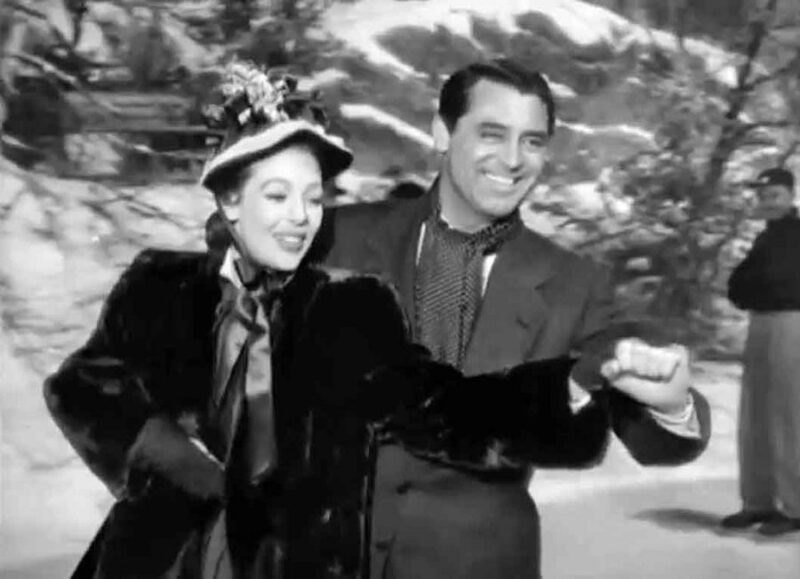
Then, Cary Grant plays an angel who answers the prayers of David Niven, attempting to raise funds for a new cathedral, in “The Bishop’s Wife.” Along the way, Grant also happens to fall for Lauretta Young. Monty Woolley, Elsa Lanchester, and James Gleason add to the whimsy. This charming 1947 romantic fantasy sports a memorable score by Hugo Friedhofer.
Finally, any sentiment in “The Holly and the Ivy,” from 1952, is hard-earned. Ralph Richardson plays the clueless patriarch of a troubled family, a village parson more concerned with his parishioners than those living under his own roof. When the family reunites for Christmas, longstanding frictions continue to wear, but they are gradually resolved. Malcolm Arnold’s score gives little hint of the film’s inherent drama. However, he does provide some boisterous arrangements of some familiar carols.
Pour yourself a cup of cocoa and settle in for a cinematic Christmas. Yule be glad you did, on “Picture Perfect,” music for the movies, now in syndication on KWAX, the radio station of the University of Oregon!
Clip and save the start times for all three of my recorded shows:
PICTURE PERFECT, the movie music show – Friday at 8:00 PM EST/5:00 PM PST
SWEETNESS AND LIGHT, the light music program – ALL NEW! – Saturday at 11:00 AM EST/8:00 AM PST
THE LOST CHORD, unusual and neglected rep – Saturday at 7:00 PM EST/4:00 PM PST
I note that ‘tis the season not only to be jolly, but for births of great conductors who reached full flower during the hi-fi era.
Arthur Fielder’s birthday anniversary was on December 17. For 49 years, Fiedler (1894-1979) was music director of the Boston Pops. He was not the Pops’ first music director – the group was founded in 1885 as an offshoot of the Boston Symphony Orchestra (which Fiedler joined as a violinist in 1915) – but he was certainly its best-known and arguably most-beloved.
Fiedler built the Pops into one of the best known and bestselling orchestras in the United States. He made his first recordings with the group in 1935. With the rise of PBS, he became a regular presence in American living rooms on “Evening at Pops” telecasts, beginning in 1970.
Allegedly, the Fiedler-Pops partnership yielded more recordings than any other conductor-orchestra combo in the world, with album, single, tape, and cassette sales exceeding $50 million.
Because of his phenomenal success as a light classics and crossover conductor, Fiedler’s talent in the more respected classical music repertoire was often overlooked. There’s a lot that he never conducted or that was never recorded, but in Liszt, Rimsky-Korsakov, and even Darius Milhaud, he was never less than first-rate. And as an accompanist to soloists like Earl Wild, he oversaw a number of popular (Gershwin) and cult (Paderewski) classics.
I myself once underrated him, but my long experience in radio set me straight. Once you filter out the kitsch, you’ll find the man made some truly marvelous recordings. On the evidence of these, in a certain kind of music, he could stand toe-to-toe with any conductor in the world. I remember just randomly airing his recording of the “Nutcracker” suite one morning and being struck by how satisfying it was on every level.
As for the splashy arrangements of showtunes and movie themes, and the amusing album covers (Fiedler surrounded by leotard or taffeta-wearing babes, or the one on which he dons Travolta’s iconic white disco suit for a program featuring arrangements of Bee Gees hits), the man knew how give the public what it wanted. How much he believed in the kitsch and how much was canny showmanship, I have no idea. I believe he laughed all the way to the bank, but if so, he did it wholly without contempt for his audience.
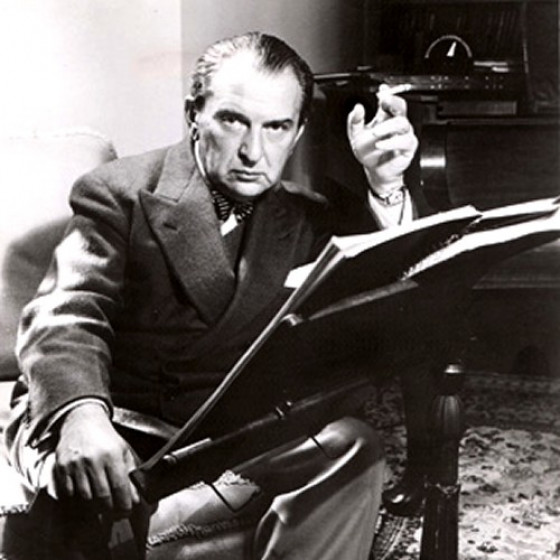
Fritz Reiner (1888-1963), on the other hand, is the last person I would ever imagine on the dance floor. Reiner, born on December 19, was one of the most dreaded conductors, from a musician’s standpoint, in an era when tyrants of the podium still very much roamed the earth. With a glower that could make Karloff quake (though he resembled more Bela Lugosi), Reiner was forged in Hungary at the twilight of the Austro-Hungarian Empire. Hungary at the time had quite the reputation for churning out great conductors. George Szell, Eugene Ormandy, Antal Doráti, Ferenc Fricsay, Sir Georg Solti, and István Kertész all achieved considerable international success.
Among Reiner’s own teachers was Béla Bartók, with whom he studied piano. Reiner would later repay the favor with what many consider to be the benchmark recording of Bartók’s “Concerto for Orchestra.” He also worked closely with Richard Strauss in Dresden, and his recordings of Strauss’ works are equally revered. All in all, the Chicago Symphony under Fritz Reiner was a surefire choice to give the ol’ hi-fi a good workout in the early days of stereo.
In 1928, Reiner became a naturalized American citizen. He began to teach conducting at the Curtis Institute of Music in Philadelphia, where among his pupils was Leonard Bernstein. His first American post was as principal conductor of the Cincinnati Symphony. He took over the Pittsburgh Symphony for a decade, beginning in 1938. Then he spent several years at the Met. But it was as music director of the Chicago Symphony that he attained legendary status.
For a master interpreter of some of the largest and most challenging works in the repertoire, his baton technique was notable for its precision and economy. Much of what he achieved, unfortunately, was through the brutality he exuded in rehearsals. Reiner emerged from an Old World steeped in aristocratic privilege. At the top of their profession, conductors then were regarded as gods-on-earth. When drive and ego were bolstered by absolute power, working conditions could become downright perilous. Before strong musicians’ unions, conductors exercised the authority to fire anyone on a whim. So when musicians played for Reiner, they played as if their lives depended on it – or at the very least their livelihoods.
Did it make for better musicmaking? You can’t argue with the excellence of Reiner’s Chicago Symphony. Unless, of course, you look to Fiedler and the Boston Pops.
Reiner conducts Beethoven
Big band Bach
Benchmark Bartók
Strauss’ “Salome”
And, to keep it seasonal, “Waltz of the Flowers” from “The Nutcracker”
I realize I’ve not been churning out with my usual vigor this time of year my characteristically voluminous posts on arcane Christmas lore. By now, I’ve usually written with ample cranberry relish about the Yule Goat, the Yule Lads, the Yule Cat, Saturnalia, (the historic) Saint Nicholas, even Krampus. But I’ve been busy, and anyway I’m just not feeling it this year.
That said, there’s always time for a good rant. On the birthday of soprano Rita Streich, I elaborate on this reflection from last year, on the dwindling culture of classical music Christmas, as sadly – if not unexpectedly – it still very much applies. And it’s not going to get any better. I will continue to carry old Christmas in my ears and sporadically in my CD player, but the wise should seek it only on the internet, for it is now no more than a dream remembered. You will search for it on American classical radio in vain.
For much of the time I worked at a certain radio station (for nearly three decades, in fact), it was the rule, for some reason, not to program any Christmas music until after December 16 – Beethoven’s birthday. That has changed, since they laid off all of their sub-managerial local hosts and started piping in most of their content from an independent, presumably more economical service in the Midwest. But for many years, Beethoven was the demarcation for Classical Music Advent to commence. Sure, you don’t want to hammer listeners with a month of brass arrangements of the usual ho ho ho; but for those of us with a little more imagination, who would really like to relax into the repertoire, nine days isn’t a heck of a lot of time.
Most of the grand and contemplative Christmas works (Franz Liszt’s “Christus,” Berlioz’s “L’enfance du Christ,” Vaughan Williams’ “Hodie,” Saint-Saëns’ “Christmas Oratorio,” Casals’ “El Pessebre,” Charpentier’s “Messe de Minuit,” Respighi’s “Laud to the Nativity,” Schütz’s “Christmas Story”) – basically, those that aren’t “Messiah” – are slipping away, as playlists pander to an increasingly A.D.D. society.
Over the years it’s been suggested to me that people “don’t like singing.” Or that they might find the religious content exclusionary or off-putting. (Somehow it’s never a consideration when we play Bach.) The squeaky wheel gets the grease, and the wider listenership has been trained to expect little more than consumer-friendly arrangements of the less-demanding carols. This sets a frustrating precedent, but at a time when even Beethoven symphonies are broadcast less and less frequently in their entirety (except perhaps for the shorter ones), what are you going to do?
Brass renditions of “Rudolph” and “Frosty” are sweetmeats that can give you a lift between meals, but on their own they offer very little sustenance. They are great palate-cleansers, for sure, and they are perfect for a parade or a public tree-lighting or as background for a holiday party, but you don’t necessarily want to down box after box of them.
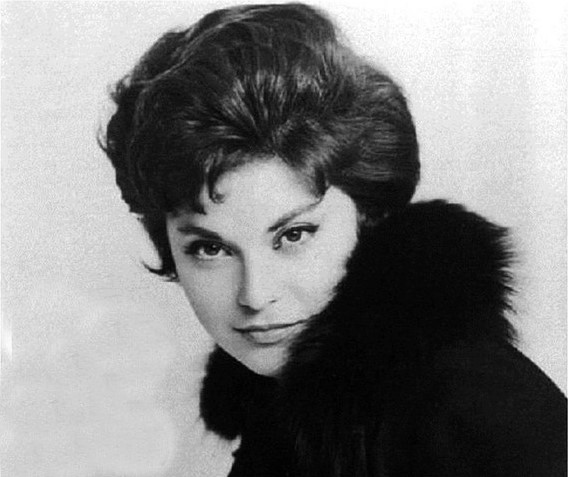
I muse on this every year, but especially so around the birthday of Rita Streich (1920-1987), whose crystalline voice I have always admired. If you’re going to do traditional carols, Streich is a paragon of how they really should be done. She sang them most enchantingly. Whenever I programmed one of her carol medleys on December 18, for the duration of the performance, it really felt like Christmas.
Streich is also the soprano soloist in a recording that has become dearer and dearer to me over the years of Josef Rheinberger’s “The Star of Bethlehem.” Rheinberger (1839-1901), everyone’s favorite composer from Liechtenstein, is likely remembered, if at all, primarily for his organ works. But he was also a distinguished teacher and left an uplifting piano concerto that really should be much better known. How I would love to hear it in concert!
I used to encounter “The Star of Bethlehem” on the radio every year. Of course, as one of the last of my kind, I myself picked up the standard and bore it proudly, working it into my programs when I still had a regular air shift. Streich’s recording originally appeared on vinyl, on the EMI label. It was reissued on compact disc on Carus. Good luck finding the CD for a reasonable price now that it’s out-of-print and in the talons of the secondhand market. (You’ll have better luck if you own a turntable and aren’t too finicky about condition.) Dietrich Fischer-Dieskau is the baritone and Robert Heger conducts.
A thousand years of Christmas music, and how much of it is ever played? It all seems to have disappeared so quickly.
I realize not everyone is Christian, radio stations are not churches, and we are living in an increasingly secularized society, but I assure you my concerns are more musical than they are religious. I join Hector Berlioz, Ralph Vaughan Williams, and others of their like in appreciating the transcendent beauty of so much music for the season, even in cases where the composers themselves may not have been the most devout believers. (Many most certainly were.)
Somewhere, I’ve got my old program guides for WFLN, Philadelphia’s classical music station for nearly 50 years. While still in its golden era, WFLN filled the airwaves with Christmas music for the entire span of Advent. True “classical” Christmas music. Granted, for a kid (I wasn’t even in my teens at the time I discovered them), it was pretty hardcore, and I was thankful for the occasional lighter interludes like Leopold Mozart’s “A Musical Sleigh-Ride” and Victor Hely-Hutchinson’s “Carol Symphony.” But this music came to characterize the Christmas season for me, other than those times, for the sake of my mother, we would decorate the tree to the Chestnut Brass. I’ll see if I can find one of the December program guides from back in the day and post what I can.
Watch this space, and happy birthday, Rita Streich!