Category: Daily Dispatch

  • Berlioz’s Crazy Genius at Bard Festival

    Berlioz’s Crazy Genius at Bard Festival

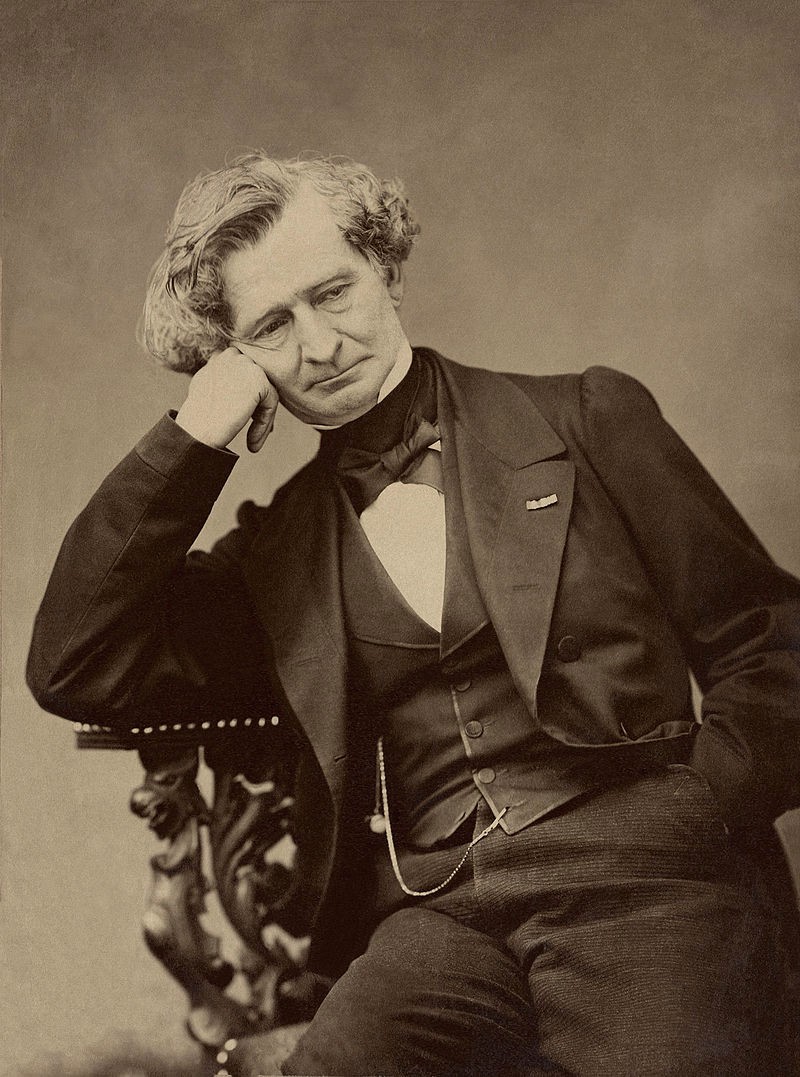
    Hector Berlioz was not the kind of guy to always go about things the way you might expect. For instance, if you wanted to impress a prospective lover, would you think it would be in your best interest to write a programmatic symphony, in which your obsession with her drives you to overdose on opium? Then, under its influence, to dream about murdering her, so that you’re condemned to execution by the guillotine? Then to vividly illustrate being tormented in the Hereafter by her spirit, now transformed into a jeering, cackling witch?

    Well, Berlioz, arch-Romantic that he was, was a guy who followed his gut. And what do you know, it worked! The Shakespearean actress Harriet Smithson, who inspired the piece (even though Berlioz didn’t speak English and she couldn’t speak French), said “I do.” Some chicks dig the crazy.

    Not that they lived happily ever after. I know, who could have predicted it?

    Anyway, this is the backdrop to Berlioz’s “Symphonie fantastique,” his most famous work, and it kicked off the Bard Music Festival, “Berlioz and His World,” at Bard College’s Fisher Center for the Performing Arts on Friday night. Leon Botstein, founder and co-artistic director of the festival (and president of Bard College), conducted The Orchestra NOW (TON for short), Bard’s graduate-level training orchestra.

    As is so often the case, if you own a recording of the piece, for as transporting as it might be, it just isn’t the same as hearing it live. Reencountering Berlioz’s forward-looking symphony (which must have caused heads to explode in 1830) blew my hair back, or what’s left of it, again and again. It’s hard to believe I once had a coif every bit as impudent as the composer’s. Why, it seems like only yesterday…

    But I digress.

    With its faltering chromatic harmony, beefed-up orchestra (for the period), Beethovenian length, and outlandish instrumental effects, it pushed the envelope decades into the future. Wagner (among others) glommed onto Berlioz, but the composer’s legacy truly flourished with the generation of Gustav Mahler, nearly 70 years later. That’s an entire lifetime. His concept of the “idée fixe,” a recurring motif that intrudes on the flow of every movement, signifying unbidden remembrances of the composer’s beloved, was also influential.

    On to the performance at hand: I may have heard wilder ones, but none quite so visceral. With the strings at stage level, the rowdier instruments were positioned on risers, and the bass drums in particular were like volcanoes that exploded into the audience. The chimes that herald the “Dies Irae,” a presentiment of the doom if ever there was one, were immediate and chilling. It was great fun to watch the strings put through their diabolical repertoire of col legno, con sordino, pizzicato, tremolo, and double stopping, and the ensemble was able to bring the energy to put the piece over the top and bring a sense of abandon at its peak moments.

    Also notable was the inclusion of the obbligato cornet in the second movement, the one in which composer’s pangs of longing contrast with the spirited whirl of festivity at a ball, a touch seldom employed. Apparently Berlioz added the cornet (perhaps for the virtuoso Jean-Baptiste Arban), but it never made it into the published score in the composer’s lifetime. I love you, Berlioz, but in this instance I think your original conception was best. For me, the cornet brings unfortunate associations with the gazebo or the boardwalk, and also obscures the elegance of this waltz through the composer’s haunted mansion – but it was ear-opening to hear the alternative version for once at Bard. Part of the festival’s mission, after all, is to be a platform for scholarly inquiry and display. If the movement were going to be done this way, this was definitely the context in which to do it. (I believe the cornet soloist was Jid-anan Netthai, but this I will have to confirm.)

    I confess, I had my reservations about starting the festival with such a substantial and well-known piece. When the program was first announced, I was puzzled as to why Bard, known for its exploration of unusual and the neglected repertoire, would open its festival with Berlioz’s greatest hit. But in the event, it certainly paid off and got blood pumping. I also realized after a moment’s reflection, its inclusion provided the necessary context for the full appreciation of the seldom-encountered “Lelio,” which was heard on the second half of the concert.

    A sequel of sorts to the “Symphonie fantastique,” “Lelio, or the Return to Life” comes across as a much more self-indulgent affair, if only because of the extensive dramatic commentary allotted to the narrator. Again, this is a heavily autobiographical piece. Unfortunately, if you take away all the lofty references to art and Shakespeare, it’s basically the whiny “reflections” of a lovelorn 20-something.

    The Bard presentation made it even more so. I have nothing against Babe Howard (the son of Debra Winger), who was presumably a late substitute for the scheduled narrator, Wyatt Mason, and I wish him all the best with his career. But here he came across as sorely miscast and underprepared, to the extent of not perhaps fully understanding the character of the figure he was meant to portray. I can think of no lower compliment than to say that I could have done it just as well myself. (I too spent much of my twenties as lofty, whiny, and lovelorn.) For me, it was just too much of a stretch to accept him as the convincing alter ego of a seething, half-mad artist, emerging from an opium-induced nightmare to grasp his breaking heart. About the only thing he played convincingly was young. Also, he didn’t impress me much as an actor accustomed to appearing on the stage. That’s not to say the technique will not come, but I imagine he would be much more at home in something more contemporary.

    That aside, the music was fascinating, and very well performed. Having previously known “Lelio” only from recordings – especially Jean Martinon’s, in which the narrator delivers his part in French – it was as if the scales had fallen from my eyes. THIS is what Bard is all about! I’ve aired the concluding “Fantasy on Shakespeare’s ‘The Tempest’” on my radio shows many times, but I had no idea the entire score was so varied and beautiful, with the quality of the music quite high. That said, it’s impossible that it will ever secure a place in the public’s affection equal to that enjoyed by the “Symphonie fantastique,” especially as presented here, as the composer originally intended, emulating the salon format, so popular in that era, but also in the guise of a melodrama, a largely-defunct genre in which narration and music are combined to form a cohesive dramatic statement.

    As always, the Bard Festival Chorus and vocal soloists were first-rate, with bass-baritone Alfred Walker delivering a lusty “Brigands’ Song” and tenor Joshua Blue (who returned on Saturday night to solo in Berlioz’s “Te Deum”) lending further allure to “The Fisherman Ballad” and the “Song of Happiness.” The cumulative effect was one of magnification of the impressive range of Berlioz’s genius, which ranges well beyond the heaven-storming orchestral works that are so well known, especially as a composer for voice.

    I pause to wonder: whatever happened to the brigand, anyway? It’s a career that seems to have gone the way of the melodrama.

    All in all, a rewarding, often captivating, and at times even thrilling evening, and presented in a manner that Bard has perfected over the past 33 seasons. Bravo, and more, please!

    The Bard Music Festival continues through August 18. For more information, follow the link.

    https://fishercenter.bard.edu/whats-on/programs/bard-music-festival/

    Fisher Center at Bard

  • Bard Music Festival Encounters Fisher Center at Bard

    Bard Music Festival Encounters Fisher Center at Bard

    One of the great pleasures of attending the Bard Music Festival is not only the obvious enjoyment that comes from listening to and learning about the subject at hand (this year, Hector Berlioz), but also the sense of conviviality experienced in the company of likeminded music lovers from all walks of life.

    Here I am with my newest friend from Bard. No, not Berlioz. That’s Bill Osborne on the left. Bill is a retired organist who studied at Fontainebleau with the venerable pedagogue Nadia Boulanger. For over 40 years, he served as Distinguished Professor of Fine Arts at Denison University.

    In that capacity, he also directed the Denison Singers, which brought him to Princeton a couple of times to perform at Westminster Choir College and Princeton University Chapel. He adds impishly that some of their belongings were stolen at Princeton High School. But Bill, a true gentleman and a lovely raconteur, shares all his stories with a laugh and a twinkle in his eye.

    As a student in France, he also encountered legendary organist-composers Marcel Dupré and Olivier Messiaen. During one memorable lesson, he was caught on the bench between Boulanger and André Marchal, the celebrated blind organist of St. Germain des Pres, with their at times conflicting philosophies, trying his best to diplomatically serve two masters.

    Boulanger was notorious for her strict instruction and strong opinions. Bill observed that she was a stickler for punctuality in her students, yet she herself was always late for lessons. Once, he too was running behind, and he ran into her in the courtyard. Mademoiselle, as she was affectionately known, demanded to know why he wasn’t already at their lesson.

    Back in the United States, during the course of some research he was conducting in New York, he was put up in a penthouse at the Dakota. I probably don’t have to tell you about the Dakota. It’s one of the top-tier apartment buildings on Central Park West. Anyway, he got a big kick out of that. The building is so crammed with celebrities that whenever he peered over a balcony a paparazzo would snap his photo from the street, assuming he must be somebody famous.

    Once, he walked out of the building just as a limousine pulled up. Who should spring out of the back seat but Leonard Bernstein. In his classic effusive manner, Lenny walked up to Bill, who was agog, and enfolded him in a warm embrace. Lenny said, “So good to see you again,” assuming that, if he lived at the Dakota, he must have known him; but of course, Bill had never seen him before in his life.

    Bill was also responsible for introducing the organ works of Petr Eben to the United States, after receiving the scores from the hand of the composer during a tour of Czechoslovakia. He went on to record an album of Eben’s works for Crystal Records.

    What an interesting, affable fellow! I enjoyed chatting with him over several days. You never know who you’re going to meet at Bard.

    This year’s Bard Music Festival, “Berlioz and His World,” continues through August 18. For more information, follow the link.

    https://fishercenter.bard.edu/whats-on/programs/bard-music-festival/

    Fisher Center at Bard

  • Bard Music Festival Berlioz Weekend One

    Bard Music Festival Berlioz Weekend One

    I’ve got a good start on typing up my impressions of the first weekend’s concerts at the Bard Music Festival. “Berlioz and His World” is now in progress at Bard College in Annandale-on-Hudson, NY.

    Writing about opening night even now, but so as not to rush the process, I offer as a stopgap a few glimpses of this year’s merch-for-purch: the Berlioz t-shirt, the tie-in volume of scholarly essays, and so many Berlioz CDs, along with recordings of music by other figures of his circle.

    After a few days’ respite, two supplementary concerts will be held on Thursday and Friday afternoon at Church of the Messiah in nearby Rhinebeck. I can tell you from experience, those concerts fill up fast, so if you plan to go, definitely reserve in advance.

    Concerts at the Fisher Center for the Performing Arts and Bard’s Olin Hall will resume next weekend, beginning on Friday evening. That will give you a few days to work through any opium-induced nightmares.

    For more information, visit: https://fishercenter.bard.edu/whats-on/programs/bard-music-festival/

    Fisher Center at Bard

  • Berlioz Te Deum Roars at Bard Music Festival

    Berlioz Te Deum Roars at Bard Music Festival

    Still reeling from a performance last night of Hector Berlioz’s “Te Deum.” I’m not sure it was the loudest Berlioz concert I ever attended, but with its roaring chorus and arsenal of skull-shattering cymbal crashes, it certainly came close.

    Nearly an hour in length, the “Te Deum” was originally conceived as the climax of a projected symphony celebrating Napoleon Bonaparte. The first performance in 1855 was led by Berlioz himself and involved over 900 performers. I can’t even imagine. Still, it’s like chamber music next to the composer’s heaven-storming Requiem. Say what you want about Berlioz, he was a guy who liked to swing for the fences.

    A much more intimate program on tap for this morning, with a concert of art song, mostly by French composers (hosted by the witty and erudite Byron Adams), and then later this afternoon, a performance of Pauline Viardot’s fairy tale opera, “Le dernier sorcier” (“The Last Sorcerer”). It’s not every opera that features a chorus of elves!

    I’ll write up a more complete report in the coming days. This year’s Bard Music Festival, “Hector Berlioz and His World,” runs through August 18 at Bard College in Annandale-on-Hudson, NY, with two supplementary midweek programs at Church of the Messiah in nearby Rhinebeck.

    You’ll find more information at https://fishercenter.bard.edu/whats-on/programs/bard-music-festival/

    Fisher Center at Bard

  • Josef Suk’s Summer’s Tale Healing Through Nature

    Josef Suk’s Summer’s Tale Healing Through Nature

    Josef Suk’s 30th year was a tragic one, marked by the deaths of both his young wife, Otilie, and her father, his former teacher, Antonín Dvořák. Not surprisingly, a sense of morbidity colors much of his mature output. The double-loss directly inspired Suk’s “Asrael Symphony,” named for the Angel of Death.

    This week on “The Lost Chord,” for this, his sesquicentennial year (he was born on January 4, 1874), we’ll take a look at “A Summer’s Tale,” the next step in Suk’s emotional rehabilitation. The work is a five-movement symphonic poem, the second of a four-part cycle that contemplates death and the meaning of life. More affirmative than the grim “Asrael,” which is full of pain, loss, and grief, “A Summer’s Tale” explores the healing powers of nature, in a score that at times reflects the epic romanticism of Gustav Mahler and at others the impressionism of Claude Debussy. It was composed over the course of just six weeks in the summer of 1907. Further tinkering took place over the next year-and-a-half. The work received its premiere in January of 1909.

    Suk later described the theme of the piece as “finding a soothing balm in nature.” I hope you’ll join me as we clear a path to “Healing by Nature” – Josef Suk’s “A Summer’s Tale” – on “The Lost Chord,” now in syndication on KWAX, the radio station of the University of Oregon!


    Clip and save the start times for all three of my recorded shows:

    PICTURE PERFECT, the movie music show – Friday at 8:00 PM EDT/5:00 PM PDT

    SWEETNESS AND LIGHT, the light music program – ALL NEW! – Saturday at 11:00 AM EDT/8:00 AM PDT

    THE LOST CHORD, unusual and neglected rep – Saturday at 7:00 PM EDT/4:00 PM PDT

    Stream them, wherever you are, at the link!

    https://kwax.uoregon.edu/

Tag Cloud

Aaron Copland (93) Beethoven (95) Composer (114) Film Music (124) Film Score (143) Film Scores (255) Halloween (94) John Williams (188) KWAX (229) Leonard Bernstein (101) Marlboro Music Festival (125) Movie Music (139) Opera (202) Philadelphia Orchestra (89) Picture Perfect (174) Princeton Symphony Orchestra (106) Radio (87) Ralph Vaughan Williams (85) Ross Amico (244) Roy's Tie-Dye Sci-Fi Corner (290) The Classical Network (101) The Lost Chord (268) Vaughan Williams (103) WPRB (396) WWFM (881)

DON’T MISS A BEAT

Receive a weekly digest every Sunday at noon by signing up here


RECENT POSTS