Category: Daily Dispatch

  • Berlioz Biopic La Symphonie Fantastique & Bard Fest

    Berlioz Biopic La Symphonie Fantastique & Bard Fest

    In preparation for this year’s Bard Music Festival, with its focus on Hector Berlioz, I finally pounded out my impressions of Berlioz’s book “Evenings with the Orchestra,” which I finished reading a few weeks ago. However, it will require some more smoothing before posting. Since I have a lot to do today, I’ll have to get to it tomorrow morning.

    In the meantime, here’s a French biopic about Berlioz, titled “La Symphonie fantastique” (1942), named of course for the composer’s most famous piece of music. The film was produced during the German occupation, and Goebbels was reportedly none-too-happy with its patriotic flavor.

    I haven’t watched it yet, but I look forward to seeing what the actors and filmmakers do with not only Berlioz, but his contemporaries, Victor Hugo, Eugène Delacroix, Prosper Mérimée, Alexandre Dumas, and Niccolò Paganini.

    The subtitles are in Portuguese (!), but I’m sure you intelligent folks will be able to figure out how to translate it to English.

    https://www.youtube.com/watch?v=4HACUovysAo

    If you find titles a distraction, here it is unadorned, in the original French, on Internet Archive.

    https://archive.org/details/la-symphonie-fantastique-1942-christian-jaque

    “Hector Berlioz and His World” will be held at Bard College in Annandale-on-Hudson, NY, August 9-18. Find out more about the concert programs and related events here:

    https://fishercenter.bard.edu/whats-on/programs/bard-music-festival/

    Fisher Center at Bard

  • Bidu Sayão Comic Brazil’s Opera Superhero

    Bidu Sayão Comic Brazil’s Opera Superhero

    Who really cares about Batman or Wolverine? Since we’re all basically living in the tropics anymore anyway, here’s a comic book about Bidu Sayão. Thrill to the adventures of Brazil’s most famous operatic soprano!

    You have to scroll down to the bottom of Bruce Duffie’s interview to see a more complete spread.

    https://www.bruceduffie.com/sayao.html

    Sayão was a great champion of the music of her compatriot, Heitor Villa-Lobos. Here she is, in Villa-Lobos’ “Bachianas Brasileiras No. 5,” with the composer conducting.

    Later, she came out of retirement to sing Villa-Lobos’ “Forests of the Amazon.” You can hear some of it at the end of these selections from some of her signature roles (Manon, Juliette, and Mimi). There’s even a Brazilian folk song tossed into the mix.

    She’s heavenly in Debussy’s “La Damoiselle élue,” after Dante Gabriel Rossetti’s “The Blessed Damozel,” recorded here with Eugene Ormandy and the Philadelphia Orchestra.

    And “Si mes vers avaient des ailes” (“If my verses had wings,” text by Victor Hugo), by Venezuelan-born French composer Reynaldo Hahn.

    Once she established herself at New York’s Metropolitan Opera, Sayão had the good sense to make her home in the cooler clime of Lincolnville, Maine.

    Her comic book dates from the 1940s. I’m hoping for a Jack Kirby-style cover, complete with Bidu punching out Hitler.

  • Berlioz: Underappreciated Romantic?

    Berlioz: Underappreciated Romantic?

    Is Hector Berlioz the Rodney Dangerfield of composers? *

    Despite being one of the foremost musical representatives of the Romantic era, let’s face it, Berlioz gets little respect. Or at least that was the case for much of his life and the decades following his death.

    Now he’s about to receive the full treatment from the Bard Music Festival. (More on that below.)

    Before recordings, assessments of Berlioz’s music leaned heavily on hearsay, a game of Whisper Down the Lane, distorted by prejudice, misperception, and so-called received wisdom. Even during his life – ESPECIALLY during his life – his music was met with confusion, opposition, and often outright hostility. So it always is with the new.

    And Berlioz was nothing if not original. If there was ever a composer who was ahead of his time, it was Hector Berlioz.

    Thankfully, this visionary artist has long since been vindicated. Enthusiasts are very enthusiastic indeed. But there remain those who are unconverted among the listening public. Because, let’s be honest, emerging as he did in the Paris of Boieldieu, Auber, and Meyerbeer, Berlioz was just weird. He’s still weird. With his moodiness, quirky orchestration, and willingness to shatter the rules in order to achieve his desired effects, he was a flagrant outcast among French composers. His cause was not helped by inept performances and push-back from the hidebound faculty of the Paris Conservatory (overseen by Luigi Cherubini).

    It’s interesting that this arch-Romantic worshipped at the altars of Gluck and Spontini. He felt everything so very deeply; he experienced everything so keenly, especially music. He was particularly transported by the noble simplicity of his heroes’ operas.

    On the other hand, he was also a champion of Paganini, whom he befriended in the violinist’s retirement, though he never heard him perform. (If only there had been recordings!) Paganini, of course, was legendary for his gymnastic manipulation of his instrument, as was Franz Liszt, of the piano – Liszt also admired by Berlioz. (The admiration was reciprocated.) These gentlemen could be as indulgent as Gluck and Spontini were chaste.

    Berlioz’s reaction when his fiancée broke off their engagement was more Dionysian than Apollonian. He formulated a murder-suicide plot every bit as over-the-top as something out of Alexandre Dumas (also his contemporary). It involved a vertiginous coach ride back from Italy, unlikely disguise – crossdressing, complete with a veil – and a contingency plan to administer poison in the event his pistols jammed or misfired. Thankfully, the composer’s head cooled once he discovered he had forgotten his dress.

    Since performances were scarce and often substandard, Berlioz earned much of his livelihood through his writings. And Berlioz was not one who was bashful about speaking his mind. His amusing and withering assessments, often couched in wry observation and sarcasm, earned him many enemies. He was in no way cut out for what he perceived – often rightly – as the superficiality of Paris, yet he loved and thrived on the city, and he would not leave. He was much better-received in London, and he entertained the idea of moving, but Paris was in his blood.

    Now, of course, we are blessed with recordings and radio broadcasts. Some of Berlioz’s works are standard repertoire. It is now easy to acquaint oneself with his eccentric symphonies – often symphonies, in the classical sense, in name only – his choral works, his songs, and his operas. His greatest hit, the “Symphonie fantastique,” loses some of its punch, unavoidably, through overexposure and the anesthetizing effect of all the developments in music since, but it will never be entirely free of its strangeness, thank goodness.

    “Harold in Italy,” the “Queen Mab Scherzo” (from the “Romeo and Juliet” Symphony), “The Damnation of Faust,” and some of the overtures, especially “Roman Carnival,” are here to stay.

    Lesser known are the cantatas, the songs, and some of the hybrid works, such as the melodrama “Lélio, or The Return to Life,” a sequel of sorts to the “Symphonie fantastique.”

    “Lélio” will receive a rare performance on a double bill with Berlioz’s most famous symphony – which itself concludes with a hair-raising evocation of a witches’ sabbath (that incorporates that horror movie staple, the “Dies Irae”) – to kick off this year’s Bard Music Festival. “Hector Berlioz and His World” will take place at Bard College in Annandale-on-Hudson, NY, August 9-18.

    Rarely-performed is what Bard does best, so there will be ample opportunities to enjoy musical curiosities. Morning and afternoon concerts will feature chamber music and songs; evening concerts will lean into the orchestral and choral works. Berlioz’s song cycles “Irlande” (“Ireland”) and “Les nuits d’’été (“Summer Nights”) will be performed, as will his monumental “Te Deum” and “The Damnation of Faust” (complete).

    The addendum “His World” will encompass music of his contemporaries, but also that of his influences and those he in turn influenced. Pauline Viardot’s opera, “Le dernier sorcier” (“The Last Sorcerer”), will be heard; also Louise Farrenc’s Symphony No. 3, Joachim Raff’s Symphony No. 10 “Autumn,” and Liszt’s transcription of Berlioz’s “Harold in Italy” for viola and piano.

    Bard being Bard, there will also be a concert devoted to “Berlioz’s Transformation of the World of Sound,” the program spiraling off into unsuspected territory, exploring works by Edgard Varèse, Olivier Messiaen, Luciano Berio, Steve Reich, and György Ligeti.

    As always, there will be pre-concert talks, scholarly symposia, and plenty of Berlioz merch for purch (including, but not limited to, the festival t-shirt and a book of critical essays compiled specifically for the occasion).

    The American Symphony Orchestra and The Orchestra Now (TŌN) will perform, under their music director, Leon Botstein (also the president of Bard College). In the afternoons, performers are drawn from Bard’s deep well of faculty, alumni, and visiting artists. This is not just a college music festival. I’ve seen some world-class artists and first-rate chamber ensembles there, including Christine Goerke, Stephanie Blythe, Nicholas Phan, pianists Piers Lane and Danny Driver, the Parker Quartet, and the Horszowski Trio, to name a few), along with the occasional actor, such as Michael York and David Straitharn.

    As always at Bard, you get out of it whatever you put into it. If total immersion is your thing, by all means, go for it. The festival is designed with you in mind. However, not to the exclusion of anyone who just wants to go and enjoy a good concert. Bard satisfies on that level too. Scholars, geeks, and dilettantes come together for two weekends of musical bliss (now bridged by a couple of mid-week concerts held at Church of the Messiah in nearby Rhinebeck).

    No matter how well you think you know a particular composer, I guarantee you will learn a lot. I’ve been boning up for the last month or two with a couple of volumes of Berlioz’s own writings. More about those another time.

    For now, vive le Bard!

    For more information, visit

    https://fishercenter.bard.edu/whats-on/programs/bard-music-festival/

    Fisher Center at Bard


    • Credit where credit is due! The observation was originally made by Facebook follower John M Polhamus.
  • Ballets Russes’ Lost English Composers

    Ballets Russes’ Lost English Composers

    Serge Diaghilev, impresario of the Ballets Russes, commissioned some of the most enduring ballet scores of the 20th century, from such composers as Claude Debussy (“Jeux”), Maurice Ravel (“Daphnis and Chloe”), Manuel de Falla (“The Three-Cornered Hat”), and Igor Stravinsky (“The Firebird,” “Petrushka” and “The Rite of Spring”).

    Less well known is the fact that two Englishmen were also approached.

    This week on “The Lost Chord,” we’ll listen to works by Constant Lambert and Lord Berners – both men so diverse in their interests, and possessing such outsized personalities, it isn’t really possible to do justice to either in the time allotted.

    Lambert was a brilliant polymath. In addition to his considerable talents as a composer, he was a conductor, arranger, and writer, as well as the lover of Margot Fonteyn. Alas, alcoholism and workaholism conspired with undiagnosed diabetes to hasten his demise at the age of 45.

    His ballet, “Romeo and Juliet,” presented as a play-within-a-play, turns Shakespeare’s tragedy of star-crossed lovers on its head, with the leads falling hard in a backstage romance with happier results. Lambert would go on to greater things, but the ballet is undeniably an impressive piece of work for a 20 year-old.
    Similarly, Lord Berners’ interests lie all over the place, but his was a much more relaxed character. Unfailingly productive as a composer, a painter, and a writer, nonetheless he never lost sight of the fact that life would be his magnum opus. And Berners lived well.

    Furthermore, his fortune ensured that he would never be taken to task for any of his whimsical behavior. This included having a 140-foot folly tower constructed on his estate (partly to annoy the neighbors) and keeping a horse and a giraffe to invite to his indoor and outdoor tea parties.

    Berners wrote novels, painted portraits (always sure to include a moustache, whether the sitter had one or not), and composed a respectable amount of music, especially for the ballet.

    For the Ballets Russes, he wrote “The Triumph of Neptune,” which became a great favorite of Sir Thomas Beecham. Sacheverell Sitwell provided the scenario, which concerns a sailor who is shipwrecked en route to Fairyland, and George Balanchine supplied the choreography.

    That’s a heady mix of hornpipes and pas de deux. I hope you’ll join me for “England à la Russe,” on “The Lost Chord,” now in syndication on KWAX, the radio station of the University of Oregon!


    Clip and save the start times for all three of my recorded shows:

    PICTURE PERFECT, the movie music show – Friday at 8:00 PM EDT/5:00 PM PDT

    SWEETNESS AND LIGHT, the light music program – ALL NEW! – Saturday at 11:00 AM EDT/8:00 AM PDT

    THE LOST CHORD, unusual and neglected rep – Saturday at 7:00 PM EDT/4:00 PM PDT

    Stream them, wherever you are, at the link!

    https://kwax.uoregon.edu/


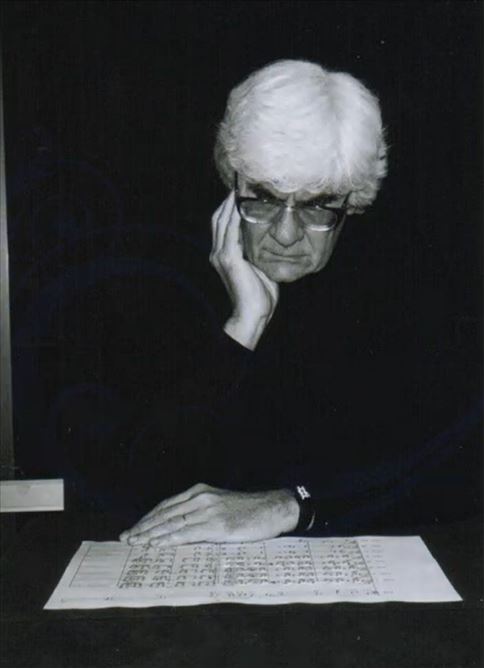
    PHOTOS: Berners, no doubt contemplating the placement of a moustache (right); and Lambert pushing Berners car

  • Lazy Summer Music Sleepy Lagoon Sweetness and Light

    Lazy Summer Music Sleepy Lagoon Sweetness and Light

    This week on “Sweetness and Light,” I invite you to join me by the sleepy lagoon, for an hour of languid music for a lazy summer day.

    We’ll hear easygoing works by Eric Coates, Cyril Scott, Frederick Delius, Jerome Moross, Leroy Anderson, Sergei Prokofiev, and Claude Debussy.

    Kick back with a cool drink and no cares. It’s summertime, and the living is easy. We’ll be drowsing in a musical hammock, on “Sweetness and Light,” this Saturday morning at 11:00 EDT/8:00 PDT, exclusively on KWAX, the radio station of the University of Oregon!

    Stream it, wherever you are, at the link:

    https://kwax.uoregon.edu/

Tag Cloud

Aaron Copland (93) Beethoven (95) Composer (114) Film Music (124) Film Score (143) Film Scores (255) Halloween (94) John Williams (188) KWAX (229) Leonard Bernstein (101) Marlboro Music Festival (125) Movie Music (139) Opera (202) Philadelphia Orchestra (89) Picture Perfect (174) Princeton Symphony Orchestra (106) Radio (87) Ralph Vaughan Williams (85) Ross Amico (244) Roy's Tie-Dye Sci-Fi Corner (290) The Classical Network (101) The Lost Chord (268) Vaughan Williams (103) WPRB (396) WWFM (881)

DON’T MISS A BEAT

Receive a weekly digest every Sunday at noon by signing up here


RECENT POSTS