Category: Daily Dispatch

  • X The Man with the X-Ray Eyes Movie Review

    X The Man with the X-Ray Eyes Movie Review

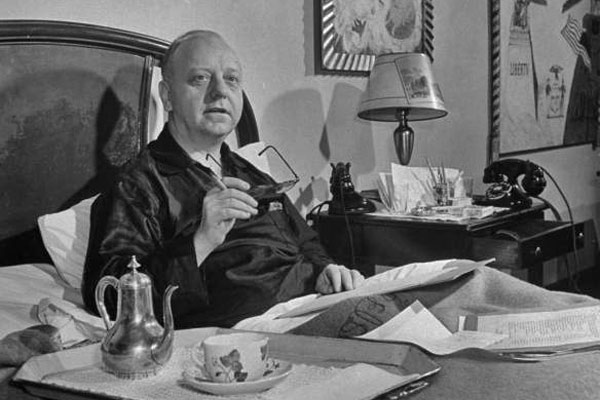
    The announcement “Take 2” would be enough to give a cost-conscious director like Roger Corman the night sweats. Nonetheless, we’ll try it again, as Roy and I discuss Corman’s “X: The Man with the X-Ray Eyes” (1963), rescheduled from Friday. The “eyes” will have it, when you join us for the next Roy’s Tie-Dye Sci-Fi Corner, livestreamed on Facebook, YouTube, etc., this Sunday evening at 7:00 EDT!

    https://www.facebook.com/roystiedyescificorner

  • Wolfgang Rihm German Composer Dies at 72

    Wolfgang Rihm German Composer Dies at 72

    The eminent and prolific German composer Wolfgang Rihm has died. With some 500 works to his name – including operas, orchestral music, and chamber pieces – Rihm is said to have been one of the most frequently performed contemporary composers in Europe.

    While no one would ever describe his music as a laugh riot, this is one of his more accessible works, helped along no doubt by the performance by violinist Anne-Sophie Mutter. The piece is called “Lichtes Spiel” (“Light Game,” or “Light Play”) and was composed in 2009. German-speakers might also detect it as a pun on “leichtes spiel” (“an easy job,” or more idiomatically, in English, “child’s play”).

    Rihm, who lived with cancer for over a quarter century, died on Friday. He was 72 years-old.

  • French Sea Music Beyond Debussy on The Lost Chord

    French Sea Music Beyond Debussy on The Lost Chord

    Claude Debussy wasn’t the only French composer to write music inspired by the sea. This week on “The Lost Chord,” we’ll find refreshment in an hour of “musique de l’eau.”

    Jacques Ibert served as a naval officer during World War I. One of his most frequently performed pieces, “Escales” (“Ports of Call”), conjures impressions of three Mediterranean locales: Palermo, Tunis-Nefti, and Valencia. Considerably less well known is his “Symphonie marine,” composed nine years later, in 1931. Ibert refused to allow the work to be performed in his lifetime, though exactly why is unclear.

    The music actually derives from a film score (for a short film titled “S.O.S. Foch”). Ibert was the first European composer to write music for a talking picture. He certainly wasn’t ashamed of his output for the cinema. In all, he wrote some 30 film scores.

    For whatever reason, the “Symphonie marine” was given its belated premiere shortly after the composer’s death, in 1963, with Charles Munch conducting. We’ll hear the City of Birmingham Symphony Orchestra conducted by Louis Frémaux.

    Joseph-Guy Ropartz (1864-1955) was a student of Théodore Dubois, Jules Massenet, and César Franck. He composed five symphonies, chamber music, and a number of choral works. When his friend, Albéric Magnard, was killed defending his home from German soldiers during the First World War – in retribution Magnard’s house was burned to the ground and his unpublished manuscripts destroyed – Ropartz was able to reconstruct the orchestration of Magnard’s opera, “Guercœur,” from memory, since he had conducted a performance of its third act.

    Ropartz was associated with the Breton Cultural Renaissance and an ardent supporter of Breton regional autonomy. He joined the Breton Regionalist Union in 1898.

    The central movement of his “Prélude, marine et chansons,” composed in 1928 – actually a quintet for flute, violin, viola, cello and harp – is clearly a seascape. The finale is based on an old Breton folk song, “What noise there is upon the earth.” We’ll hear a performance by the Linos Ensemble.

    Another composer with a connection to Brittany was Jean Cras (1879-1932). Cras, who was born and died in Brest, wrote a ravishing opera, “Polyphème” (“Polyphemus”), about a forlorn cyclops, unlucky in love, who wanders off into the sea. Not only was he a productive composer of meltingly lovely music, he was also a career naval officer. And one of distinction. He commanded a torpedo boat in the Adriatic, during the First World War. On one occasion, he sank an enemy submarine, then rescued one of his sailors who had fallen overboard. Clearly he would have written a lot more music if not for the demands of his day job.

    Cras’ “Journal de bord” (“Ship’s Log”) was composed in 1927. Like Debussy’s “La mer,” composed in 1903-05, the work suggests the sea at different times of the day and under various conditions.

    First: Eight to midnight quarter – swell on the open sea, the sky is overcast, clearing at sunset, nothing in sight.

    Second: Midnight to four quarter – beautiful weather, beautiful sea, nothing unusual, moonlight.

    Third: Four to midnight quarter: Land ahoy!

    We’ll hear the Luxembourg Philharmonic Orchestra, conducted by Jean-Francois Antonioli.

    I hope you’ll get yourself a crusty bread, then join me for “Fruits de mer,” a nourishing repast of French music for the sea, this week on “The Lost Chord,” now in syndication on KWAX, the radio station of the University of Oregon!


    Clip and save the start times for all three of my recorded shows:

    PICTURE PERFECT, the movie music show – Friday at 8:00 PM EDT/5:00 PM PDT

    SWEETNESS AND LIGHT, the light music program – ALL NEW! – Saturday at 11:00 AM EDT/8:00 AM PDT

    THE LOST CHORD, unusual and neglected rep – Saturday at 7:00 PM EDT/4:00 PM PDT

    Stream them, wherever you are, at the link!

    https://kwax.uoregon.edu/

  • Olympic Music on KWAX Radio This Saturday

    Olympic Music on KWAX Radio This Saturday

    This morning on “Sweetness and Light,” we’ve got a case of Olympic fever – and the only prescription is more Olympic music!

    Tune in for uplifting selections written for the opening ceremonies, licensed for media coverage, and otherwise related to the Games. We’ll hear works by Leo Arnaud, Michael Torke, Josef Suk, Richard Strauss, Philip Glass, Vangelis, Antonio Vivaldi (!), Arthur Honegger, John Williams, and Spyridon Samaras.

    Join me for this radio relay as we bear the torch for Olympic music on “Sweetness and Light,” this Saturday morning at 11:00 EDT/8:00 EDT, exclusively on KWAX, the radio station of the University of Oregon!

    Stream it, wherever you are, at the link:

    https://kwax.uoregon.edu/


    IMAGE: LeRoy Neiman, “American Gold” (1984)

  • Busoni’s Piano Concerto A Centenary & My Wake-Up

    Busoni’s Piano Concerto A Centenary & My Wake-Up

    Ferruccio Busoni died on his date one hundred years ago. He was 58 years old. The age I am now. I’d better get started on my epic piano concerto!

    More about Busoni’s titanic opus (with male chorus!) in this post I wrote in 2021:

    https://www.facebook.com/photo/?fbid=1812926358874646&set=a.279006378933326

Tag Cloud

Aaron Copland (93) Beethoven (95) Composer (114) Film Music (124) Film Score (143) Film Scores (255) Halloween (94) John Williams (188) KWAX (229) Leonard Bernstein (101) Marlboro Music Festival (125) Movie Music (139) Opera (202) Philadelphia Orchestra (89) Picture Perfect (174) Princeton Symphony Orchestra (106) Radio (87) Ralph Vaughan Williams (85) Ross Amico (244) Roy's Tie-Dye Sci-Fi Corner (290) The Classical Network (101) The Lost Chord (268) Vaughan Williams (103) WPRB (396) WWFM (881)

DON’T MISS A BEAT

Receive a weekly digest every Sunday at noon by signing up here


RECENT POSTS