Yeah, I know it’s an off-night. But any night we do this is bound to be an “off” night.
Roy and I have rescheduled Friday’s “Heroes of Sci-Fi” episode of Roy’s Tie-Dye Sci-Fi Corner for tonight, Monday, at 7:00 EST.
Again, the focus will be on our favorite sci-fi and fantasy heroes. Neither Roy nor I will share our top ten choices prior to the livestream – not even with one another – hopefully resulting in a spirited, spontaneous discussion, both on-camera and in the comments section, as we explain and defend our selections against all comers.
Friendships will be forged and broken, when we choose the hills we die on. It will be a hero sandwich full of sci-fi cheese and baloney, on the next “Roy’s Sci-Fi Tie-Dye Corner.” The proof will be in the provolone when we livestream on Facebook, YouTube, etc., THIS MONDAY EVENING AT 7:00 EST!
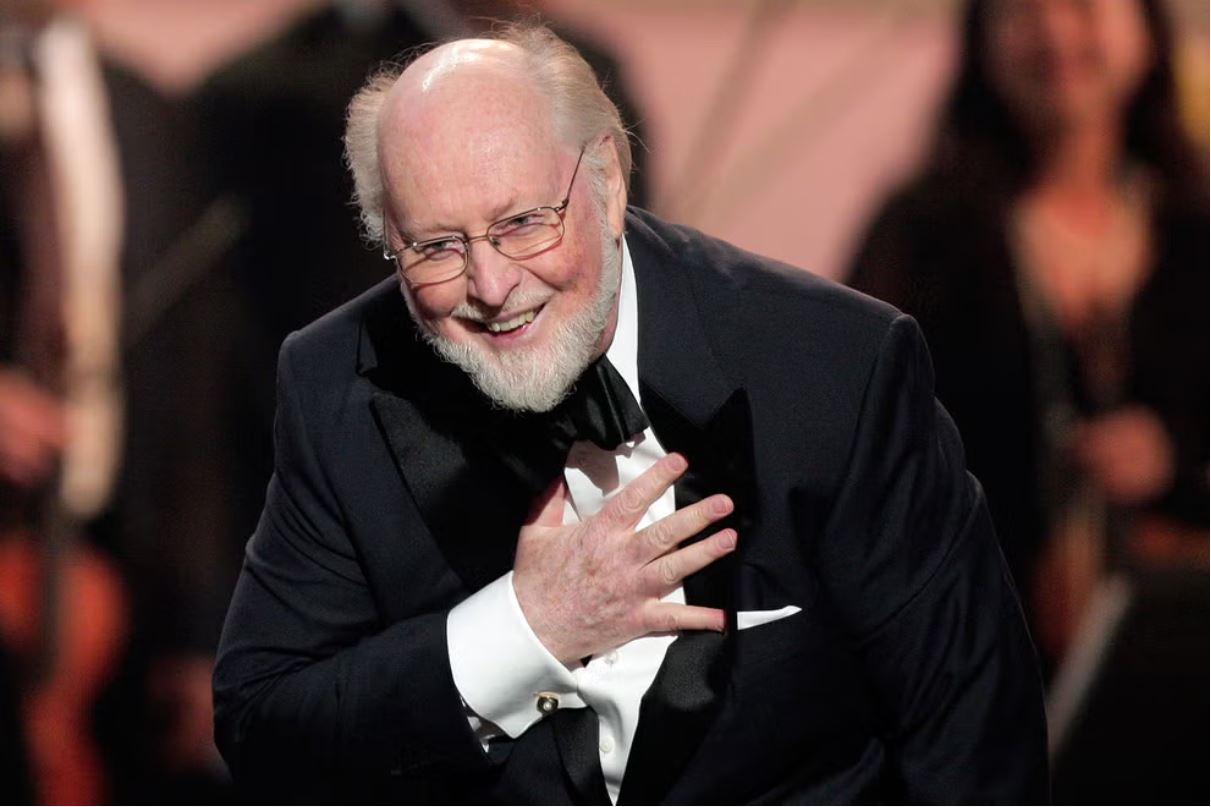
John Williams adds another Grammy to his buckling mantle, in the category of Best Instrumental Composition, for “Helena’s Theme,” the only good thing to come out of the execrable “Indiana Jones and the Dial of Destiny.”
Williams was also nominated twice in the category of Score Soundtrack for Visual Media, for both “Indiana Jones” and “The Fabelmans.” This brings the composer’s career Grammy tally to 26 wins and 76 nominations.
Ludwig Göransson won the Score Soundtrack award for his overbearing music for “Oppenheimer.” It’s not been a great year for film music, folks.
In truth, I could care less about the Grammys – as apparently the Grammys could care less about classical music – but if they can sell a few more records or bestow a little more prestige on classical artists, then good for the artists.
Feel free to Google the rest of the results.
Grammy Award-winning “Helena’s Theme,” arranged for Anne-Sophie Mutter
I prefer it in its original guise for orchestra (as if I could get any grumpier)
Dacapo Records, the self-described “Danish National label,” was founded in 1989 to promote the classical music of Denmark. Danish music composed over a period of a thousand years forms the core of the Dacapo discography. This week on “The Lost Chord,” I hope you’ll “Dane” to join me for representative works by Emil Reesen and Asger Hamerik.
Reesen made his mark in ballet, opera, and film score. He was also a concert pianist, who studied with Siegfried Langgaard, a pupil of Franz Liszt. In 1927, he was appointed conductor of the Danish Radio Symphony Orchestra. In 1931, he also began work as a ballet conductor at the Royal Danish Theatre. Later in life, he conducted the Vienna Symphony and made recordings with the Berlin Philharmonic.
Reesen is probably best-known for his operetta “Farinelli.” We’ll hear his 1928 “Variations on a Theme by Franz Schubert” (only a few days after Schubert’s birthday anniversary on January 31st).
Asger Hamerik studied at home with J.P.E. Hartmann and Niels Wilhelm Gade, in Berlin with Hans von Bulow, and in Paris with Hector Berlioz. Berlioz would remain a lasting influence, as would Dukas and Franck.
Hamerik went on to serve as director of the Peabody Institute in Baltimore for over a quarter century (1871-98). Many of his large-scale orchestral works were first performed by the Peabody orchestra.
He returned to Denmark in 1900. In his lifetime, he was considered the best-known Danish composer after Gade. (Things changed in a hurry with the rise of Carl Nielsen.)
We’ll hear his final symphony, the Symphony No. 7 – the “Choral” Symphony – from 1897, a work that drew comparisons to the works of Mahler for its sheer size. Its first performance in Baltimore employed hundreds of musicians.
I hope you’ll join me, as Danish music makes its mark this week, on “Denmarketing” – recordings from the Dacapo Records catalogue – on “The Lost Chord,” now in syndication on KWAX, the radio station of the University of Oregon!
Remember, KWAX is on the West Coast, so there’s a three-hour difference for those of you listening in the East. Here are the respective air-times for all three of my recorded shows (with East Coast conversions in parentheses):
PICTURE PERFECT, the movie music show – Friday on KWAX at 5:00 PM PACIFIC TIME (8:00 PM EST)
SWEETNESS AND LIGHT, the light music program – ALL NEW! – Saturday on KWAX at 8:00 AM PACIFIC TIME (11:00 AM EST)
THE LOST CHORD, unusual and neglected rep – Saturday on KWAX at 4:00 PM PACIFIC TIME (7:00 PM EST)
Stream all three, at the times indicated, by following the link!
There’s an article about Ruth Slenczynska, believed to be the last living pupil of Sergei Rachmaninoff, in today’s Washington Post. Slenczynska, who turned 99 on January 15th, now makes her home in Hershey, PA.
I love her recollection of Rachmaninoff’s first impression of her, when she met him in Paris at the age of 9. “This very tall man opened the door and looked down at me. He pointed at me with his long finger and said, ‘THAT plays the piano?’”
How many times have you heard Felix Mendelssohn’s “Spring Song” parodied, in cartoons or otherwise?
Yesterday, Punxsutawney Phil prognosticated an early spring, and today is Mendelssohn’s birthday (born on this date in 1809), so conditions are ripe to give it another listen. You’ll have your chance this morning on “Sweetness and Light.”
A selection of Mendelssohn’s “Songs without Words” (of which “Spring Song” is the most famous) will be offered, played by pianist Daniel Barenboim, as will one of the composer’s delightful string symphonies, written at the tender age of 12.
I will always associate “War March of the Priests” with the organ arrangement played by Vincent Price under the opening credits of “The Abominable Dr. Phibes.” We’ll hear it performed by Arthur Fielder and the Boston Pops. Also featured will be music from “A Midsummer Night’s Dream,” freely adapted for a 1935 film (starring James Cagney, Olivia de Havilland, and Mickey Rooney) by Erich Wolfgang Korngold.
Finally, we’ll enjoy two takes on the “Wedding March,” one in a paraphrase by Franz Liszt, given the Vladimir Horowitz treatment, and the other in a zany performance by Lara St. John’s polka band, Polkastra, that would have made Spike Jones proud.
I hope you’ll join me for an hour of felicitous Mendelssohn on “Sweetness and Light.” It will put a spring in your step and a song in your heart, when you tune in this morning at 11:00 EST/8:00 PST. Hear it exclusively on KWAX, the radio station of the University of Oregon!