Category: Daily Dispatch

  • Léon Minkus:  A Gentleman in Moscow (and St. Petersburg)

    Léon Minkus: A Gentleman in Moscow (and St. Petersburg)

    Who’s excited to celebrate Léon Minkus’ bicentennial? As I suspected, exactly no one.

    Before you double-check to see if this post was written by Timothée Chalamet, I hasten to add that in his day, Minkus was a much sought-after, quite successful composer for the ballet. Among his most celebrated works are “La Source” (co-composed with Léo Delibes), “Don Quixote,” and “La Bayadère.” He also wrote insert numbers for older ballets by other composers.

    Born in Austria (where he was known as Ludwig), Minkus briefly served as principal violinist at the Vienna State Opera before emigrating to Russia. There he became concertmaster and conductor of Italian opera at the Imperial Bolshoi Theatre. With a few years, he was promoted to the prestigious position of Inspector of Orchestras to the Moscow Imperial Theaters. He also taught violin at the newly-established Moscow Conservatory. In addition, he enjoyed a long association with St. Petersburg through his work with choreographers Arthur Saint-Léon and Marius Petipa.

    At 65, Minkus returned with his wife to Vienna to live in semi-retirement on a modest pension from the Tsar’s treasury. One of his later works was rejected by Gustav Mahler, then director of the Vienna Court Opera, for being too old-fashioned. He came to a sad end, as his wife predeceased him and the events of World War I cut off support from Russia. He died, childless, in poverty, having developed pneumonia during the bitter winter of 1917, at the age of 91. O Fortuna!

    While his music has not been embraced with the same level of affection as that of his colleagues Tchaikovsky and Delibes, whose ballets are frequently recorded and revived, in his day, Minkus enjoyed considerable success and will forever remain a notable figure in the history of Russian dance.

    Remembering him on the 200th anniversary of his birth!

    ———-

    To be fair, his ballets have never completely fallen out of the repertoire, and some balletomanes, I’m sure, love his stuff. Perhaps you will too. At the link is a Mariinsky production of “Don Quixote.”

    Apparently, until the 1930s, there was a dream sequence in which Quixote fights a giant spider. Contemporaneously, a notorious spider pit sequence was dropped from the film “King Kong.” People must really have been creeped out by giant spiders during the Great Depression.

  • Happy Music from the Highlands for the Birthday of Hamish MacCunn

    Happy Music from the Highlands for the Birthday of Hamish MacCunn

    It’s not a round birthday or anything, but since it’s a Sunday and it will make for a concise post, here’s a link to some music that just makes me happy every time I hear it – especially in this recording, made for EMI in 1968, by Alexander Gibson and the Scottish National Orchestra. The team later remade it in digital sound for Chandos Records in 1981 (reissued on CD in 1985), but the second recording cannot recapture the organic flow of felicitous sunshine and galloping thunder conjured in the original. (But do get the Chandos disc also for the best recording of Malcolm Arnold’s “Tam O’Shanter Overture.”) I hope you enjoy “The Land of the Mountain and the Flood,” first performed at London’s Crystal Palace in 1887. A tip of the tam to Scottish composer Hamish MacCunn (1868-1916) on his birthday!

    ——-

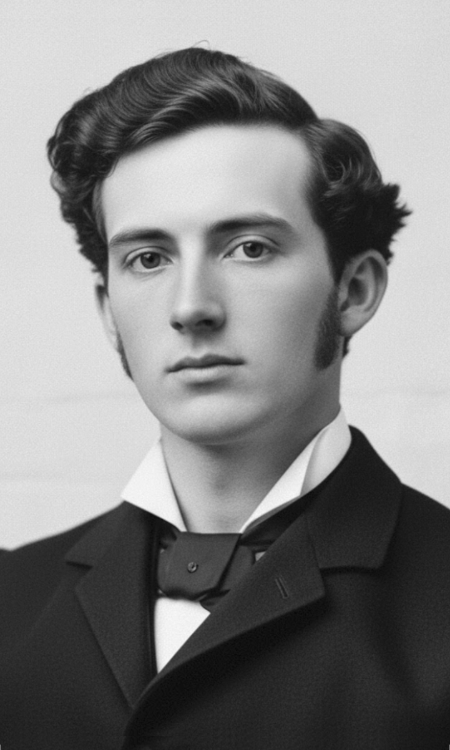
    PHOTO: Hamish MacCunn, before Michael Nesmith stole his look

  • Welcome Spring with “The Snow Maiden” on “The Lost Chord”

    Welcome Spring with “The Snow Maiden” on “The Lost Chord”

    Nikolai Rimsky-Korsakov was the composer of no fewer than 15 operas. But how many of them are known in the West?

    This week on “The Lost Chord,” we’ll have a chance to sample one of them, as we welcome spring with selections from “The Snow Maiden.”

    Based on an allegorical fairy tale of humans, quasi-mythological creatures, and the eternal forces of nature, it’s the story of a star-crossed love that brings about the end of a 15-year winter. The orchestral suite – which climaxes with the “Dance of the Tumblers” – is fairly popular, but the opera itself is seldom done, at least outside of Russia.

    The recording we’ll sample, on the Capriccio label, features the Bulgarian Radio Symphony conducted by Stoyan Angelov. It may not hold a candle to the best Rimsky opera recordings by conductors like Nikolai Golovanov, but it’s enough to give a taste of what American opera lovers are missing.

    I hope you’ll join me for “The Thaw of the Wild,” on “The Lost Chord,” now in syndication on KWAX Classical Oregon!

    ——–

    Clip and save the start times for all three of my recorded shows:

    PICTURE PERFECT, the movie music show – Friday at 8:00 PM EDT/5:00 PM PDT

    SWEETNESS AND LIGHT, the light music program – Saturday at 11:00 AM EDT/8:00 AM PDT

    THE LOST CHORD, unusual and neglected rep – Saturday at 7:00 PM EDT/4:00 PM PDT

    Stream them, wherever you are, at the link!

    https://kwax.uoregon.edu
  • March Madness on “Sweetness and Light”

    March Madness on “Sweetness and Light”

    Sir Edward Elgar completed five “Pomp and Circumstance” marches. Of course, the “Pomp and Circumstance March No. 1” is the most familiar. Anyone who’s ever attended a graduation ceremony knows it. No. 4 has also enjoyed some popularity. But I find, taken as a set, all five make for a satisfying emotional journey. Judge for yourself this morning on “Sweetness and Light,” as Elgar’s marches anchor an hour in 4/4 time. That’s right, it’s our annual “March Madness” show!

    As I’m sure aware if you follow this page, I’m an ardent anglophile, so you won’t be surprised to learn that I’ll also be including marches by Percy Whitlock and John Ireland. In addition, we’ll hear works by Tchaikovsky, Johan Halvorsen, and Beethoven.

    These boots are made for marching on “Sweetness and Light.” The madness begins this Saturday morning at 11:00 EDT/8:00 PDT, exclusively on KWAX Classical Oregon!

    Stream it, wherever you are, at the link:

    https://kwax.uoregon.edu/

  • Spring Into Documentary Music from England’s Green and Pleasant Land

    Spring Into Documentary Music from England’s Green and Pleasant Land

    This week on “Picture Perfect,” with the arrival of spring, we travel to “England’s green and pleasant land” for an hour of documentary music. The playlist will include scores by some of the country’s most respected composers.

    We’ll hear selections by Ralph Vaughan Williams, from “The People’s Land” (1941), Benjamin Britten, from “The King’s Stamp” (1935), William Alwyn, from “The Green Girdle” (1941), and Master of the Queen’s Music, Sir Arthur Bliss, from “The Royal Palaces of Britain” (1966). All four films are patriotic utterances on distinctly English themes.

    Historically, in the United States, writing music for the movies has often been regarded as “hack work,” but overseas it has been accepted as just another aspect of what it means to be a working artist. There is no disgrace in a composer earning a living, and some of the nation’s greatest musicians – including those in the employ of the Royal Family – have contributed finely-crafted scores to its body of cinema.

    You may not have seen any of these shorts, but the music sure is beautiful. I hope you’ll join me for music from English documentaries, on “The Lost Chord,” now in syndication on KWAX Classical Oregon!

    ——–

    Clip and save the start times for all three of my recorded shows:

    PICTURE PERFECT, the movie music show – Friday at 8:00 PM EDT/5:00 PM PDT

    SWEETNESS AND LIGHT, the light music program – Saturday at 11:00 AM EDT/8:00 AM PDT

    THE LOST CHORD, unusual and neglected rep – Saturday at 7:00 PM EDT/4:00 PM PDT

    Stream them, wherever you are, at the link!

    https://kwax.uoregon.edu

    ——–

    In the meantime, if you’re having a slow day, why not get a taste of the films themselves?

    “The People’s Land,” score by Vaughan Williams:

    https://film.britishcouncil.org/resources/film-archive/the-peoples-land

    “The King’s Stamp,” score by Benjamin Britten:

    https://www.dailymotion.com/video/x21r04k

    “The Green Girdle,” score by William Alwyn:

    https://www.youtube.com/watch?v=YOlnnshTsvQ

Tag Cloud

Aaron Copland (92) Beethoven (94) Composer (114) Film Music (116) Film Score (143) Film Scores (255) Halloween (94) John Williams (185) KWAX (228) Leonard Bernstein (99) Marlboro Music Festival (125) Movie Music (131) Opera (197) Philadelphia Orchestra (86) Picture Perfect (174) Princeton Symphony Orchestra (106) Radio (86) Ralph Vaughan Williams (85) Ross Amico (244) Roy's Tie-Dye Sci-Fi Corner (290) The Classical Network (101) The Lost Chord (268) Vaughan Williams (99) WPRB (396) WWFM (881)

DON’T MISS A BEAT

Receive a weekly digest every Sunday at noon by signing up here


RECENT POSTS