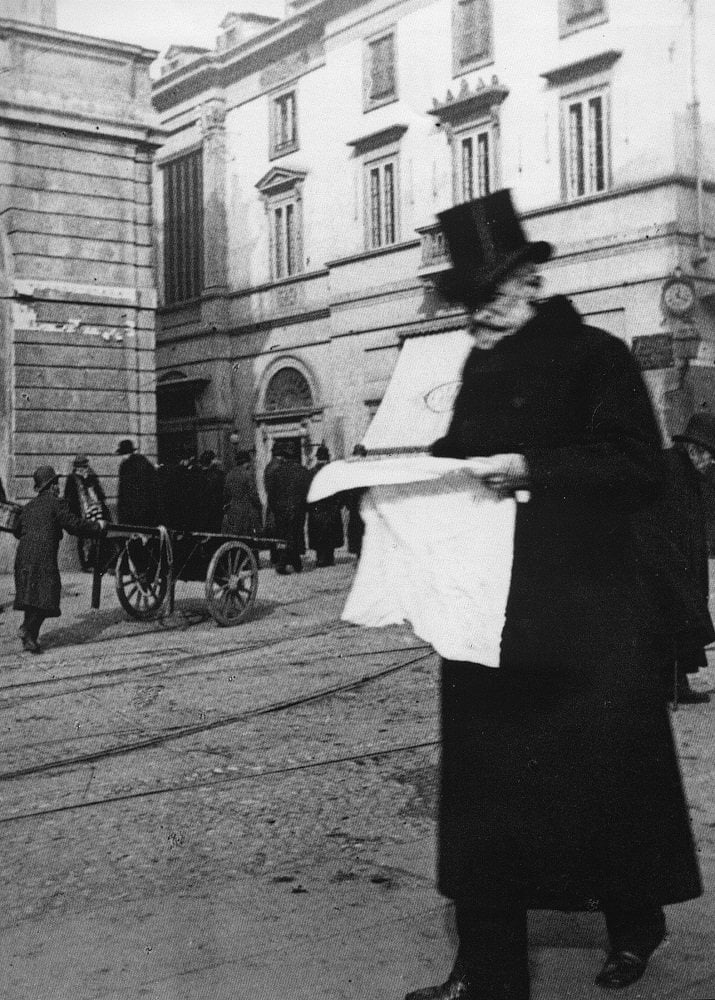
“Viva VERDI!” – the cry of Italian patriots on the eve of unification.
Italy of the 1850s was but a conglomerate of individual states, many of them still under foreign rule. The slogan “Viva VERDI!” was coined in 1859, following the premiere of the composer’s politically sensitive opera “Un ballo in maschera.”
Verdi’s ongoing troubles with the censors are well-known. It’s a safe bet that when he undertook an opera about a political assassination, he had a pretty good idea what to expect. The name VERDI was taken up by firebrands of the Risorgimento as an acronym for “Vittorio Emanuele, Re D’Italia.” King Vittorio Emanuele II of Piedmont was seen by many as the best hope for a free and united Italy.
This week on “The Lost Chord,” we’ll refrain for delving too much into Italy’s Second War for Independence, or of Garibaldi’s struggles with the Bourbons. Instead, we’ll enjoy examples of MUSICAL unification – various composers of Italian origin coming together to attempt cohesive works of art.
There are those who believe the serenata “Andromeda Liberata” may have been composed entirely by Antonio Vivaldi – but perhaps not. The likely impetus for its creation was the return to Rome of one Cardinal Ottobone, who was also a patron of both Arcangelo Corelli and Alessandro Scarlatti.
The story is that of Perseus and Andromeda. Andromeda has already been rescued from the sea serpent at the start of the piece, which mostly explores the ambiguous feelings of its characters, with a few extraneous love interests tossed into the mix to provide romantic conflict.
The two-hour entertainment contains in its second part a single aria known definitively to have been composed by Vivaldi. The authorship of the rest remains in doubt. The long-lost manuscript, dating from 1726, was rediscovered as recently as 2002.
In 1868, Verdi’s great operatic predecessor, the long-retired Gioachino Rossini, died. Rossini had completed his last opera nearly forty years before. Verdi undertook to bring together 12 of his contemporaries, now largely forgotten. The oldest, Carlo Coccia, at age 87, was actually a decade Rossini’s senior!
Within the year, a collaborative mass was compiled in Rossini’s memory, for which Verdi provided the concluding “Libera me.” In fact, the music looks forward to Verdi’s own masterful Requiem. The completed work doesn’t attain anywhere near the lofty heights of Verdi’s solo run. However, it’s an interesting compendium of contemporary styles, and even the music of lesser talents serves to cast Verdi’s genius in a new light.
Remarkably, the work lay unperformed in Verdi’s lifetime. Talk about politics! Here was Verdi, a Milanese, trying to kindle some sort of enthusiasm in Bologna (the location of Rossini’s earliest successes), for a project which was to bring together a bunch of compositional dinosaurs, to salute a figure who, for all intents and purposes, had retired from public life some four decades earlier. Bologna at the time was in the process of becoming a stronghold of the musical avant-garde.
All these factors, along with puzzling stipulations, such as the work being locked away after its first performance, to be trotted out only on special occasions, doomed the project virtually from the start. It remained unheard for another 120 years, resurrected only in 1988.
Roll over, Verdi; tell Rossini the news!
That’s “Viva VERDI!” (for Verdi’s birthday) – Italian unification through music – on “The Lost Chord,” now in syndication on KWAX Classical Oregon!
________________________________________
Clip and save the start times for all three of my recorded shows:
PICTURE PERFECT, the movie music show – Friday at 8:00 PM EDT/5:00 PM PDT
SWEETNESS AND LIGHT, the light music program – Saturday at 11:00 AM EDT/8:00 AM PDT (***now with a repeat Sunday at 9:00 PM EDT/6:00 PM PDT***)
THE LOST CHORD, unusual and neglected rep – Saturday at 7:00 PM EDT/4:00 PM PDT
Stream them, wherever you are, at the link!
https://kwax.uoregon.edu/
Category: Daily Dispatch
-
“The Lost Chord”: Roll Over, Verdi; Tell Rossini the News!
-
Ralph Vaughan Williams on “Sweetness and Light”
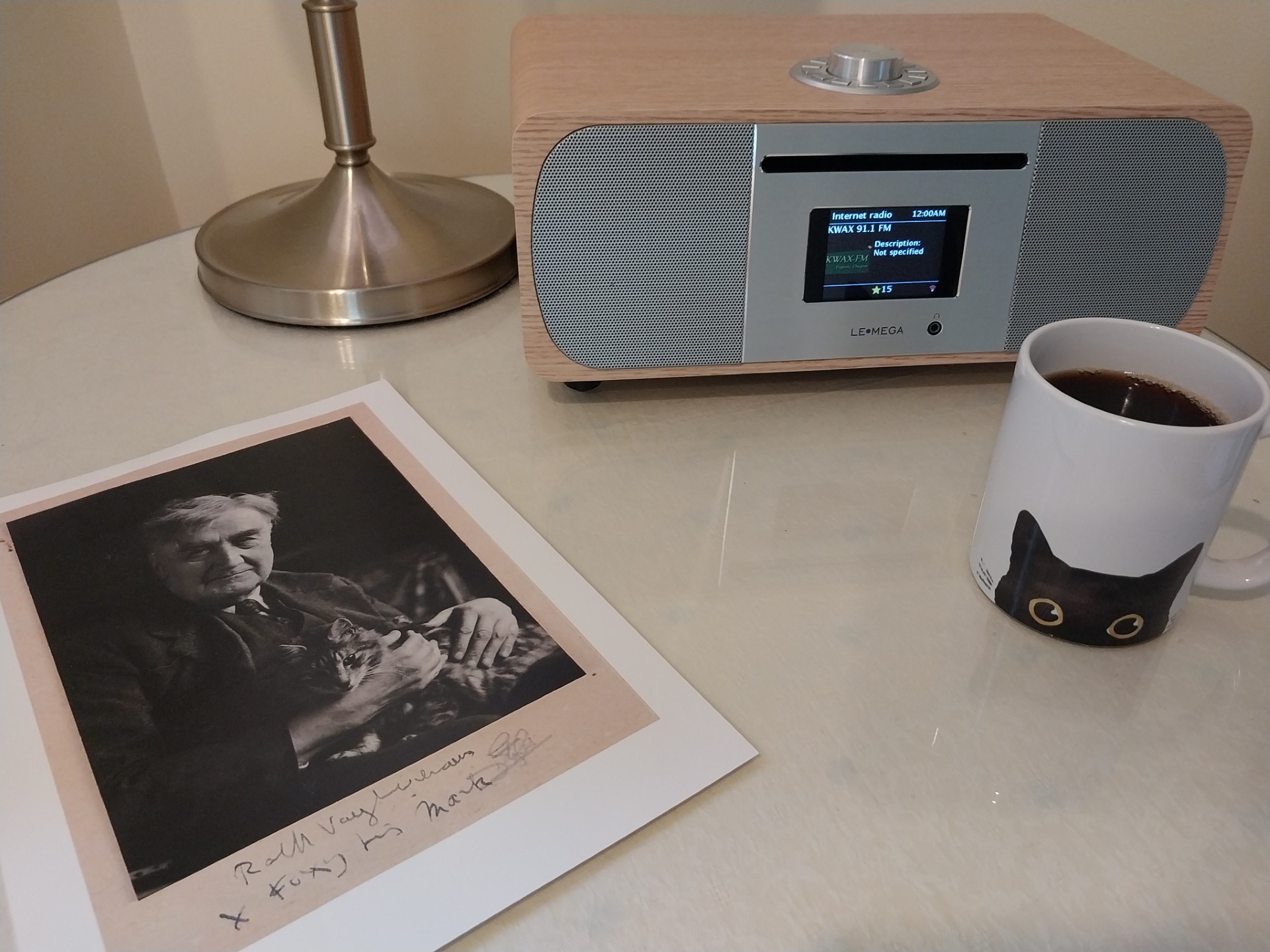
A cup of coffee, an internet radio, and an 8 1/2 x 11” glossy of Ralph Vaughan Williams and Foxy. All set for Saturday morning contentment on “Sweetness and Light.” Tune in at 11:00 EDT/8:00 PDT – NOW WITH A REPEAT, Sunday evening at 9:00 EDT/6:00 PDT – exclusively on KWAX Classical Oregon!
Stream it, wherever you are, at the link: https://kwax.uoregon.edu/ -
Brian De Palma Thrillers on “Picture Perfect”
Brian De Palma is an extraordinarily adept filmmaker, who has been criticized for his adherence to “genre trash.” He has always been attracted to suspense and crime thrillers, usually of an especially violent nature, many of them tinged with horror.
This week on “Picture Perfect,” with Hallowe’en right around the corner, we’ll hear music from four of De Palma’s films.
It’s hardly surprising that such an admirer of Alfred Hitchcock would also hire Hitch’s signature composer. Bernard Herrmann scored two films for De Palma – “Sisters,” in 1973, and “Obsession,” in 1976.
“Obsession” is a spin on Hitchcock’s “Vertigo.” A botched rescue attempt results in the death of a businessman’s kidnapped wife. Years later, he encounters someone who could be her doppelganger. The film stars Genevieve Bujold, John Lithgow, and a very tan Cliff Robertson.
“The Fury,” from 1978, is a supernatural thriller based on a novel by John Farris. Two teenagers, endowed with powers of telekinesis and extra-sensory perception, are targeted by researchers who plan to harness them for their own nefarious ends. For a time, Kirk Douglas has fun as a former CIA agent, and John Cassavetes is a particularly slimy villain. Cassavetes’ comeuppance makes for one of the most memorable movie endings of its era – and we’ll leave it at that!
Critic Pauline Kael praised the music, which is by none other than John Williams – hot off his third Academy Award, for “Star Wars” – characterizing it as “as elegant and delicately varied a score as any horror film has ever had.”
Of course, “The Fury” was not the first De Palma film to deal with telekinesis. His adaptation of Stephen King’s “Carrie,” from 1976, became one the decade’s landmark horror films. It broadened King’s popularity and propelled De Palma into the A-list of Hollywood directors. It also essentially launched the careers of Amy Irving, John Travolta, and Nancy Allen, among others. Sissy Spacek was nominated for an Academy Award for her performance in the title role, as was Piper Laurie as Carrie’s overbearing, fundamentalist mother.
The music was by Pino Donaggio. The director had wanted to continue his collaboration with Herrmann, but the composer died before the film could be completed. Donaggio, though classically trained, made his fortune writing popular songs. His biggest hit was “You Don’t Have to Say You Love Me,” which was recorded by Dusty Springfield and treated to a well-known cover by Elvis Presley. Donnagio went on to become a regular De Palma collaborator, providing the music for seven of his films.
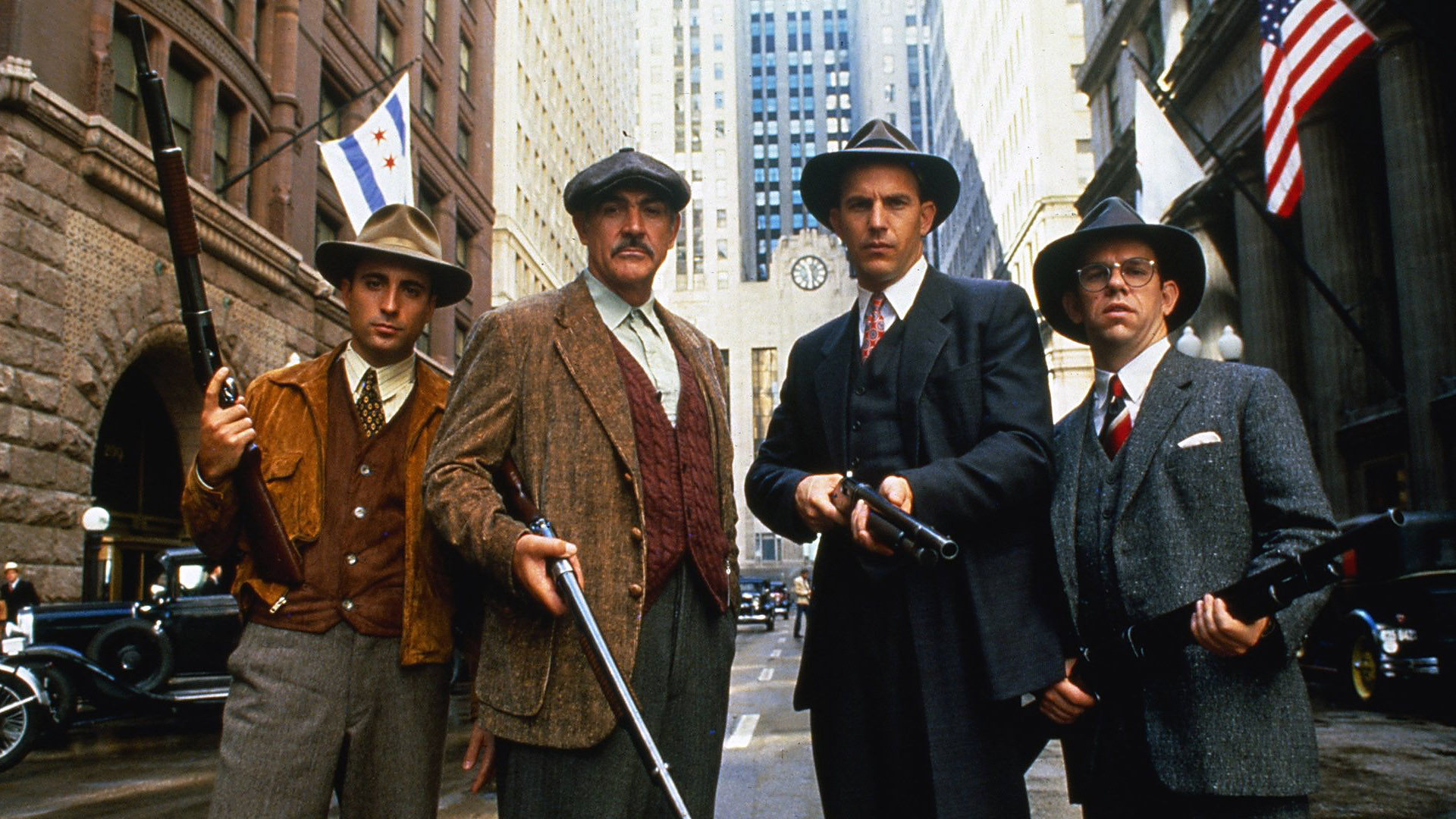
Finally, we’ll turn our back on horror, to listen to music from a successful period crime thriller, loosely based on the real-life exploits of Eliot Ness and his fellow prohibition agents – “The Untouchables,” from 1987. Kevin Costner plays the by-the-book federal agent who is given a valuable lesson in street smarts by an Irish beat cop played by an Academy Award winning Sean Connery. (“He pulls a knife, you pull a gun. He sends one of yours to the hospital, you send one of his to the morgue. That’s the Chicago way, and that’s how you get Capone.”) Capone is played, incidentally, by a baseball bat wielding Robert De Niro.
The score is by Ennio Morricone. Morricone, of course, was propelled to fame through his work on Sergio Leone’s spaghetti westerns. He applies some of that same mythmaking skill to this big screen adaptation, which had previously been published as a memoir and developed into a popular television series starring Robert Stack. The high point of the film must be the director’s nail-biting homage to Sergei Eisenstein, a slow motion shoot-out around a baby carriage as it teeters down the stairs of Chicago Union Station.
Start your weekend with a step in the right direction, with music from the films of Brian De Palma, on “Picture Perfect,” music for the movies, now in syndication on KWAX Classical Oregon!
———-
Clip and save the start times for all three of my recorded shows:
PICTURE PERFECT, the movie music show – Friday at 8:00 PM EDT/5:00 PM PDT
SWEETNESS AND LIGHT, the light music program – Saturday at 11:00 AM EDT/8:00 AM PDT (***now with a repeat Sunday at 9:00 PM EDT/6:00 PM PDT***)
THE LOST CHORD, unusual and neglected rep – Saturday at 7:00 PM EDT/4:00 PM PDT
Stream them, wherever you are, at the link!
https://kwax.uoregon.edu/ -
Vaughan Williams Birthday Salute on KWAX
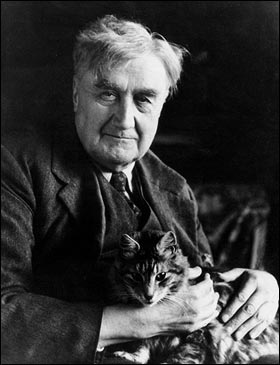
I’ve just tied the bow on another lovingly-wrapped gift for one of my favorite composers, Ralph Vaughan Williams. Vaughan Williams was born on October 12, 1872. I hope you’ll join me for my annual salute, on “Sweetness and Light.”
This year, I’ll be featuring one of his rarely-heard piano works, the Suite in G major, which he later arranged for strings as the “Charterhouse Suite,” some recordings issued on Albion Records – the record label of the Ralph Vaughan Williams Society – including an extensive orchestral rhapsody on tunes from the opera “The Poisoned Kiss,” and a delightful acoustical document of the composer himself conducting his overture to “The Wasps.”
I’ll provide the cake, but Vaughan Williams will provide the candles, on “Sweetness and Light.” Remember, the program is now repeated. So you’ll have two chances to enjoy it – this Saturday morning, at 11:00 EDT/8:00 PDT, and Sunday evening, at 9:00 EDT/6:00 PDT, exclusively on KWAX Classical Oregon.
Stream it, wherever you are, at kwax.com! -
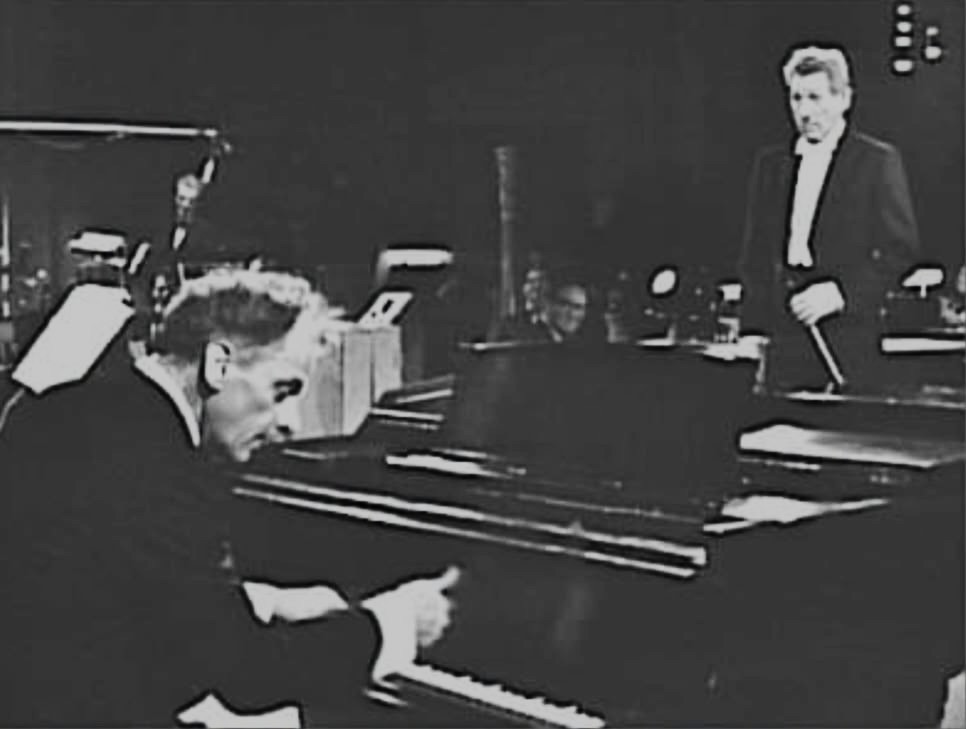
A Danny Kaye Concerto (with Art Carney)
Yesterday, thanks to something that turned up in my Facebook feed, I learned of this episode of “The Danny Kaye Show” from 1964. Not only is there a wonderful send up of a concerto – with Art Carney, no less – there’s also some modern dance choreographed by Tony Charmoli, and a cameo by Rod Serling. The episode opens with a seasonally appropriate sketch at Castle Dracula. (Series regular Harvey Korman answers the door.) All in all, I found it ridiculously entertaining.
I’ll cue it right up to the concerto sketch at the first link. Of course, Kaye is horsing around, but his grace and musicality are evident. He’s a very convincing conductor.
https://www.youtube.com/watch?v=JbnG9tG2X5w&t=2118sLater in life, he did indeed make appearances conducting many symphony orchestras. Kaye had no formal musical training. He couldn’t even read sheet music. When it was noted he was able to get a better sound out of orchestras than some professionals, Kaye chalked it up to pure memorization. There’s no question, the man had a highly-developed ear and an unerring sense of timing.
Here’s the complete episode, also featuring Jamie Farr.
https://www.youtube.com/watch?v=JbnG9tG2X5w
Is Art Carney really playing the piano? Years later, on “The Tonight Show,” Carney claimed he was a frustrated pianist and that the instrument was really his first love. He even studied, he observed, for “about seven or eight minutes.” Here he is, tickling the keys for Johnny Carson.
Of course, we all know he also helped Ralph Kramden cram for the $99,000 Answer.
These were true entertainers. Gaze upon your past, America. It will come again no more.
Tag Cloud
Aaron Copland (94) Beethoven (95) Composer (114) Film Music (148) Film Score (143) Film Scores (255) Halloween (97) John Williams (196) KWAX (232) Leonard Bernstein (105) Marlboro Music Festival (125) Movie Music (163) Mozart (91) Opera (215) Philadelphia Orchestra (90) Picture Perfect (174) Princeton Symphony Orchestra (110) Radio (90) Ross Amico (244) Roy's Tie-Dye Sci-Fi Corner (290) The Classical Network (101) The Lost Chord (269) Vaughan Williams (107) WPRB (397) WWFM (881)