When I listen to Roger Sherman’s “The Organ Loft” tonight, it seems I will touch her soft lips and part for the last time. “Touch her soft lips and part” from William Walton’s film score for “Henry V” serves as the closing theme for Sherman’s program, which he has produced for Seattle’s KING-FM since 1993. It has become part of my Sunday evening routine since my own shows have been picked up by KWAX Classical Oregon (which airs the “The Organ Loft” in syndication).
Alas, as Schiller tells us, even beauty must die. Today will mark the final broadcast of “The Organ Loft,” always an enjoyable balance of organ and choral music. Sherman, Associate Organist Emeritus at Seattle’s St. Mark’s Cathedral and Artistic Director Emeritus of Orcas Choral Society, is also CEO of Loft Recordings. Loft manages The Gothic Catalog and Clarion Records, among others. Unsurprisingly, many recordings on those labels have been presented on the program.
Gothic has left a big footprint in Princeton, NJ (where I live and work), through its recordings of Princeton University Chapel’s Aeolian-Skinner/Mander organ, organist Joan Lippincott at Princeton Theological Seminary, and Westminster Choir College alumni, such as organist Peter Richard Conte.
Sherman has further distinguished himself as executive producer of well over 100 choral and organ recordings and has engineered, edited, and mastered dozens of recordings for the Loft, Clarion, Gothic, and reZound labels.
Yet again, I thank my lucky stars for my internet radio, which brings so much beauty into my living room and into my life from around the country and around the world. Sherman’s show has been a warm and welcome visitor on Sunday evenings.
Walton’s wistful music is often the last thing I hear on Sundays before heading off to bed. For those 90 seconds, I stop whatever I’m doing and make sure that I am wholly present. Whenever I listen to this arrangement for cornet and organ (at the link), I will think of Roger Sherman.
“The Organ Loft” airs on KWAX Classical Oregon at 6:00 p.m. PDT, but when I stream it here on the East Coast it’s 9 PM.
I know from experience that a lot of love and a lot of sweat goes into producing a satisfying and polished radio program every week. Thank you, sir, for all your hard work and for sharing your knowledge and life’s passion with thousands of listeners you will never meet.
https://www.youtube.com/watch?v=OU9-M_zch6Y
Category: Daily Dispatch
-
The Last of “The Organ Loft”
-
Our Love Is Here to Stay: Celebrating Gershwin on “Sweetness and Light” and “The Lost Chord”
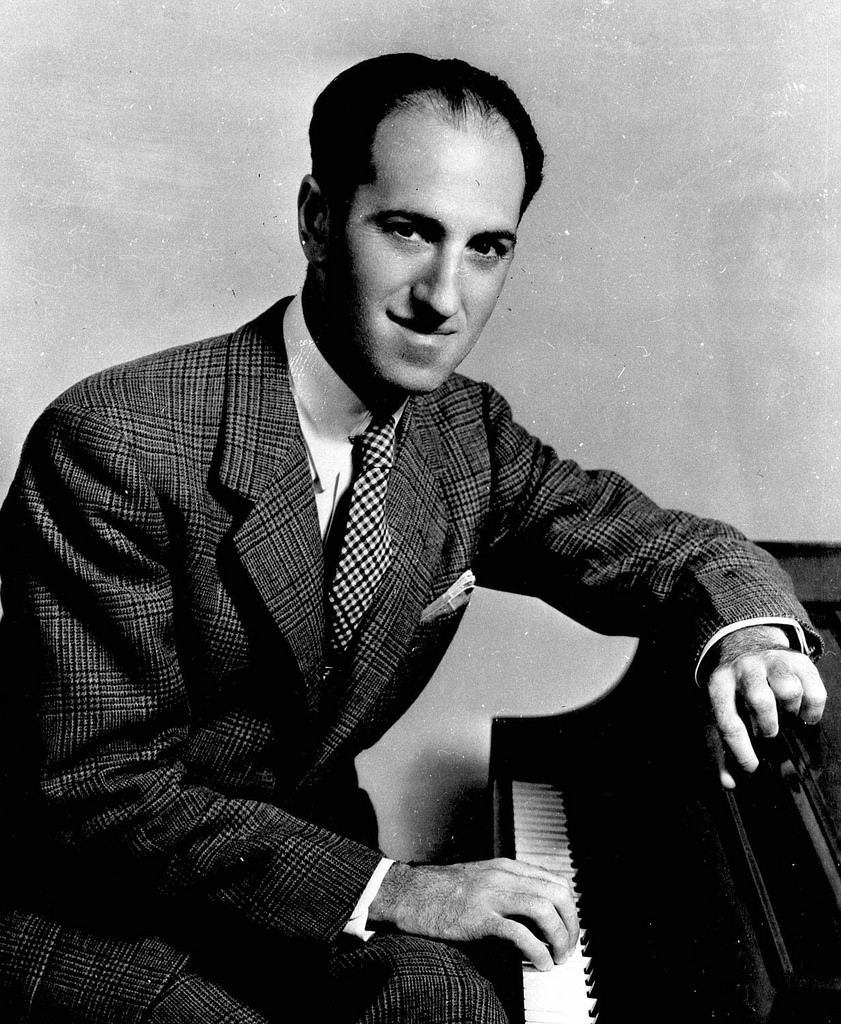
Why, it’s Gershwin’s birthday, by George! We’ll have two chances to celebrate today, on both my Saturday radio shows.
George Gershwin, of course, was one of our most versatile composers. He occupied a unique place in American music, rising from Tin Pan Alley scrapper to Broadway royalty. From there, he conquered the concert hall and even the opera house, with his blend of popular song, jazz, blues, spirituals, and European classical forms.
Like Franz Schubert a hundred years before, Gershwin managed to churn out an astonishing amount of music over a comparatively brief span. His songs, in particular, have been of enduring interest. His gift of lyricism and invention defied early critics as he bestrode the worlds of popular and classical music like an American colossus.
Sadly, at the peak of his success, he died of a brain tumor at the age of 38. But 89 years later, George, we’re still crazy for you.
This morning on “Sweetness and Light,” Gershwin will be one of four composers whose music we’ll enjoy in a salute to classic American musical theater. We’ll hear selections from Eubie Blake & Noble Sissle’s “Shuffle Along” (the 1921 all-Black musical that spawned the breakout hit “I’m Just Wild about Harry”), Leonard Bernstein’s “On the Town” (the ballet music, before it was distilled into the familiar “Three Dance Episodes,” with a 24-year-old Bernstein conducting), Gershwin’s “Porgy and Bess” (conceived by the composer as an opera, but produced on Broadway several times over the decades before finally being elevated to the pantheon), and Richard Rodgers & Lorenz Hart’s “On Your Toes” (the climactic “Slaughter on Tenth Avenue” sequence).
It’s guaranteed to get your toes tapping, for the most part, but I’ll also include a grand piano fantasy on themes from “Porgy” by Earl Wild. It’s showtime, this Saturday morning at 11:00 EDT/8:00 PDT!
Then later on today, on “The Lost Chord,” we’ll sample Gershwin’s artistry in recordings of his era, including several songs performed by Al Jolson, Fred Astaire, and Ella Logan. (So many excellent ones to choose from!)
We’ll also hear the world premiere recording of “An American in Paris” – performed by the Victor Symphony Orchestra (really members of the Philadelphia Orchestra), with the composer himself on the celesta – and the Concerto in F, performed as part of a Gershwin memorial concert at the Hollywood Bowl, with the composer’s friend, Oscar Levant, as soloist.
Three of these recordings date from 1937, the year of the composer’s death. All are from his era. I hope you’ll join me for “Vintage Gershwin,” this Saturday at 7:00 EDT/4:00 PDT.
It’s nice work if you can get it. Not that you need someone to watch over you, George. Our love is here to stay.
Strike up the band and let ‘em eat cake! Of thee I sing, on “Sweetness and Light” AND “The Lost Chord,” on KWAX Classical Oregon!
———-
Clip and save the start times for all three of my recorded shows:
PICTURE PERFECT, the movie music show – Friday at 8:00 PM EDT/5:00 PM PDT
SWEETNESS AND LIGHT, the light music program – Saturday at 11:00 AM EDT/8:00 AM PDT
THE LOST CHORD, unusual and neglected rep – Saturday at 7:00 PM EDT/4:00 PM PDT
Stream them, wherever you are, at the link.
https://kwax.uoregon.edu/ -
Animated Shostakovich on “Picture Perfect”
Dmitri Shostakovich is justifiably celebrated for his monumental symphonies and probing string quartets. This week on “Picture Perfect,” however, for the composer’s birthday, we’ll enjoy two examples of his cartoon music.
While still in his teens, Shostakovich helped support his family as a pianist in movie houses, enlivening silent images with his mercurial improvisations. This was great practice for his later collaborations with a number of notable Soviet filmmakers.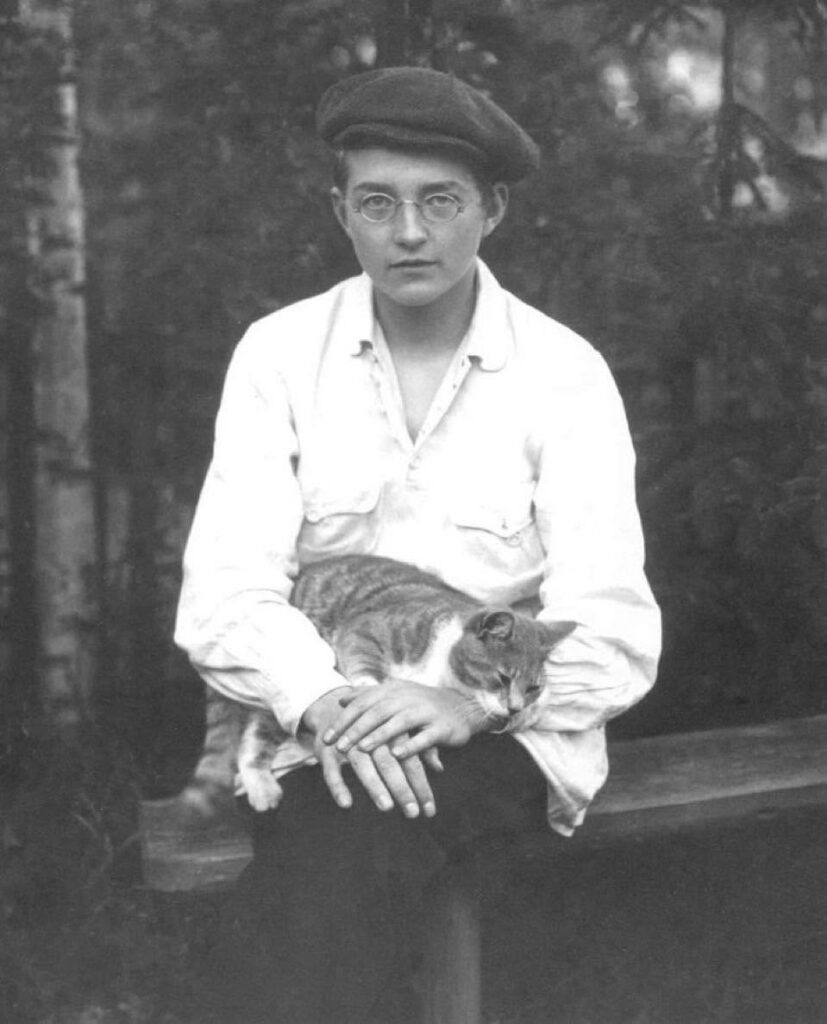
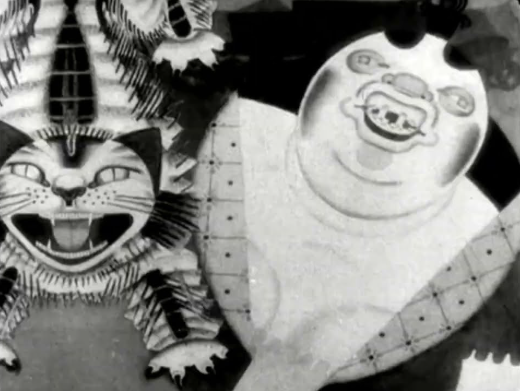
Shostakovich was about 27 years-old in 1933, when he was hired by experimental animator Mikhail Tsekhanovsky to supply the manic underscore for “The Priest and His Hired Worker Balda.” Visionary though he was, Tsekhanovsky probably didn’t count on just how manic Shostakovich could be. The composer’s inspiration flowed like water down the Neva, and Tsekhanovsky struggled to keep up, all the while pushing himself to create images worthy of his collaborator.
Then, in 1936, following the debut of the opera “Lady Macbeth of Mtsensk,” Shostakovich was condemned by the Soviet authorities in an infamous “Muddle Instead of Music” denunciation in Pravda, and the composer decided he had better cool his jets. The potentially inflammatory Symphony No. 4 went into a drawer, and he halted work on the film, which he had already been involved with, on and off, for nearly three years. When the denunciation came, he was in the process of wholly reorchestrating the existing music, at the studio’s request, for smaller forces.
While the feature would remain unfinished, Tsekhanovsky compiled what he had – some 40 minutes in all – and the work was put into storage at the Lenfilm archives. Unfortunately, nearly all of it would be destroyed by fire during the Nazi siege of Leningrad in 1941.
Only the bizarre bazaar scene survives. I’m willing to bet this clip will haunt the rest of your day.
We’ll hear selections from Shostakovich’s score, shorn of the nightmare carnival imagery. We’ll also hear music he composed for the 1940 short “The Tale of the Silly Little Mouse.”
The program will also include examples of the artistry of American cartoon luminaries Carl Stalling (Merrie Melodies, Looney Tunes, Silly Symphonies) and Scott Bradley (Tom and Jerry, Droopy Dog, Barney Bear) and conclude with excerpts from Disney’s groundbreaking “Snow White and the Seven Dwarfs,” featuring songs by Frank Churchill & Larry Morley and underscore by Paul J. Smith and Leigh Harline.
Aaa-OOOGAH!! It’s an hour of music from the golden age of animation with Dmitri Shostakovich and friends, on “Picture Perfect,” music for the movies, now in syndication on KWAX Classical Oregon!
———-
Clip and save the start times for all three of my recorded shows:
PICTURE PERFECT, the movie music show – Friday at 8:00 PM EDT/5:00 PM PDT
SWEETNESS AND LIGHT, the light music program – Saturday at 11:00 AM EDT/8:00 AM PDT
THE LOST CHORD, unusual and neglected rep – Saturday at 7:00 PM EDT/4:00 PM PDT
Stream them, wherever you are, at the link.
https://kwax.uoregon.edu/
———-
BONUS! Shostakovich demonstrates his keyboard prowess, playing a selection from “Lady Macbeth of Mtsensk”
https://www.youtube.com/watch?v=azFHiEh1jhk -
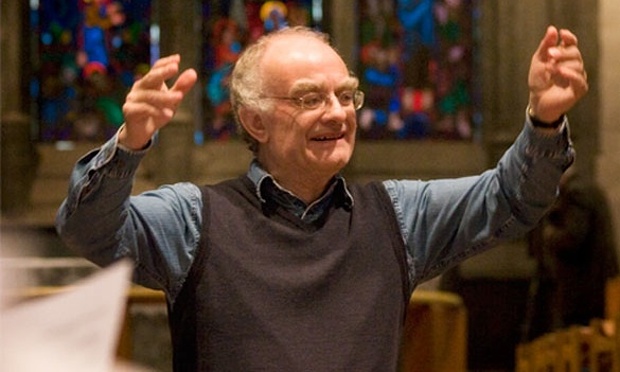
Rutter’s Heavenly Requiem
Maybe it’s too many lumps of sugar for some, but what can I say? I’ve a cotton candy soul. For me, John Rutter’s “Requiem” is the perfect music for autumn.
Rutter, of course, is one of England’s most successful choral composers and conductors. His music is everywhere at Christmastime, a natural melodic gift informing dozens of beloved carols. So it’s hardly surprising that his Requiem is full of good tunes.
The work is dedicated to the memory of his father. I find it a great comfort, especially as it’s performed here by the choir he built, the Cambridge Singers, founded in 1981. I was transported by it when I first heard it on the radio, back in the mid-‘80s, when the work was practically brand new. I am happy to say, I still am.
Rutter is 81 today. Many happy returns! -
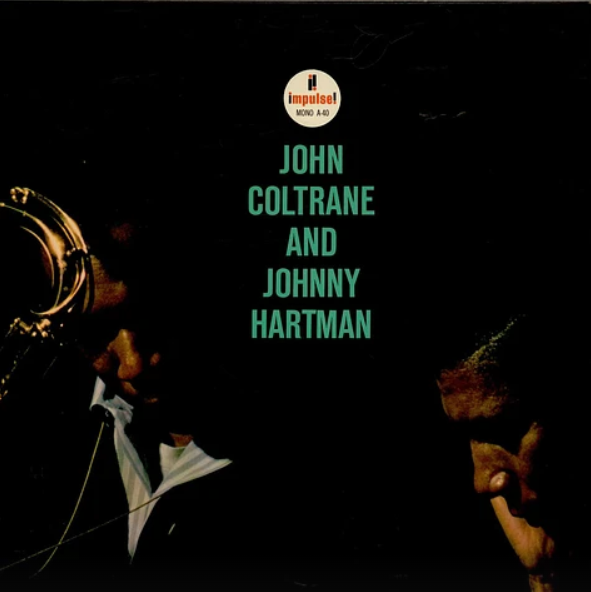
Coltrane and Hartman: Too Beautiful
John Coltrane was born 100 years ago today. In 1963, he teamed with vocalist Johnny Hartman to record one of the great make-out albums of all time. According to Hartman, each of the songs was done in a single take, except “You Are Too Beautiful” – because Elvin Jones dropped a drumstick. But alternate takes have since come to light. Hey, when it comes to this album, I am willing to go with the legend. Originally, Coltrane wasn’t even on the track, allowing McCoy Tyner his moment to shine. The album was reissued with additional Coltrane obbligato on three of the songs. The enchantment is so powerful, it bends reality. I can’t listen to it without it taking me to some very wistful places.
Original versions of “My One and Only Love,” “Lush Life,” and “You Are Too Beautiful,” juxtaposed with reissues featuring more Trane
Tag Cloud
Aaron Copland (94) Beethoven (95) Composer (114) Film Music (148) Film Score (143) Film Scores (255) Halloween (97) John Williams (196) KWAX (232) Leonard Bernstein (105) Marlboro Music Festival (125) Movie Music (163) Mozart (91) Opera (215) Philadelphia Orchestra (90) Picture Perfect (174) Princeton Symphony Orchestra (110) Radio (90) Ross Amico (244) Roy's Tie-Dye Sci-Fi Corner (290) The Classical Network (101) The Lost Chord (269) Vaughan Williams (107) WPRB (397) WWFM (881)