We don’t know exactly when Shakespeare was born, but he was baptized on April 26, 1564 – so it could have been a few days before that. Since he died on April 23, 1616, and because human beings love symmetry, the Bard’s birthday is most commonly observed on the presumptively-shared anniversary of his death. His little life may have been rounded with a sleep, but posterity has fluffed the pillows in an impulse to keep things tidy.
Be that as it may, this time of year is an excellent excuse to make much ado about Patrick Doyle. This week on “Picture Perfect,” we’ll enjoy selections from Doyle’s scores composed for the films of Kenneth Branagh.
In 1987, Doyle joined Branagh’s Renaissance Theatre Company, for which he provided incidental music. Two years later, Branagh – and by extension, Doyle – made a leap to the big screen, where they achieved a remarkable feat, rethinking Shakespeare’s “Henry V.” Remember, this is the play that propelled Laurence Olivier to worldwide fame in 1944, both as a filmmaker and the Bard’s most celebrated interpreter, and William Walton’s score is regarded as one of the best of all time.
Branagh’s version is quite different. Though equally rousing, it doesn’t shy away from Henry’s more complicated nature and the grittier aspects of what it means to go to war. It was a bold gamble, but one that paid off. Not only did this revisionist “Henry” receive nearly universal acclaim, the film was a box office success, and Branagh would be nominated for two Academy Awards, like his predecessor, in the categories of Best Actor and Best Director. Certainly, the film’s score deserved to be recognized – but in the year of “The Little Mermaid,” it failed even to secure an Academy Award nomination.
An interesting footnote: Doyle himself is the baritone who introduces “Non nobis Domine,” a prayer of thanksgiving, following the Battle of Agincourt.
In 2006, Branagh directed an adaptation of “As You Like It.” As has become his custom, he took a celebrity approach to its casting, although perhaps not so wildly uneven as some of the cameos in his big screen “Hamlet.” Kevin Kline plays Jacques; Alfred Molina the fool, Touchstone; and Branagh regulars, Brian Blessed and Richard Briers appear, as well.
The most radical liberty taken with the play is that Branagh transplants the action to 19th century Japan. The language remains firmly rooted in Shakespeare’s text, although there are striking cross-cultural elements, including ample kimonos, kabuki theatre, ninjas, and a sumo wrestler. Still, it’s a long way off from the astounding bomb that was Branagh’s American Songbook-interpolated “Love’s Labour’s Lost.”
While Olivier’s “Hamlet” won four Academy Awards in 1948, including those for Best Picture and Best Actor, Branagh’s 1996 version is cinema’s first adaptation of the complete text. It is, unavoidably, an uneven interpretation, with some puzzling casting choices – including walk-ons by Jack Lemmon, Robin Williams, and Gerard Depardieu – but there are enough merits, certainly, to make the four-hour trek worthwhile.
Finally, Branagh teamed with his then-wife, Emma Thompson, for a “merry war” of wits, as Benedick and Beatrice, in his 1993 adaptation of “Much Ado About Nothing.” Again, the film features an eclectic supporting cast of classically trained actors and pop Hollywood phenomena. Briers, Blessed, and Imelda Staunton share screen time with Denzel Washington, Michael Keaton, and Keanu Reeves. Yet, somehow, despite the different nationalities, ethnicities, and accents, the entire enterprise works. There is an exuberance to the over-the-top opening sequence which sets up a momentum that carries through the rest of the film.
Sigh no more! Join me for the Shakespeare scores of Patrick Doyle on “Picture Perfect,” music for the movies, now in syndication on KWAX Classical Oregon!
——–
Clip and save the start times for all three of my recorded shows:
PICTURE PERFECT, the movie music show – Friday at 8:00 PM EDT/5:00 PM PDT
SWEETNESS AND LIGHT, the light music program – Saturday at 11:00 AM EDT/8:00 AM PDT
THE LOST CHORD, unusual and neglected rep – Saturday at 7:00 PM EDT/4:00 PM PDT
Stream them, wherever you are, at the link!
https://kwax.uoregon.edu
Category: Daily Dispatch
-

Strike Up, Pipers! Patrick Doyle Does Shakespeare on “Picture Perfect”
-

In the Blink of an Eye, Michael Tilson Thomas Is No More
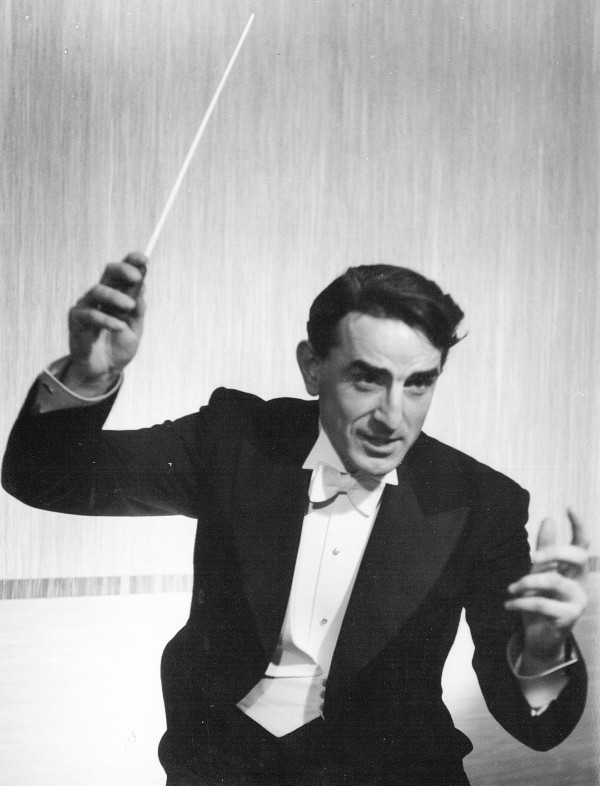
This is one of those days I always knew would come – at least for the last five years or so – and now I am very sorry it’s here. For the conductor Michael Tilson Thomas has died.
In my memory, Tilson Thomas will always be the effusive, boyish protégé of Leonard Bernstein. There are many, I’m sure, who during those early years predicted he would inherit Bernstein’s mantle as the most recognized and beloved American conductor. Alas, it did not come to pass. It’s not that he wasn’t recognized and beloved, but there could be only one Leonard Bernstein. Still, MTT had a great career and a rewarding life. You can’t fault excellence for not attaining superstardom.
At one time or another, he held positions as music director of the Buffalo Philharmonic, chief conductor of the London Symphony Orchestra, founder and artistic director of the New World Symphony (an ensemble made up of gifted young musicians), and music director of the San Francisco Symphony. He also enjoyed a fruitful relationship with the Boston Symphony Orchestra, of which he was once assistant conductor and with which he made some classic recordings.
Over0 the course of his career, Tilson Thomas amassed a cabinet full of Grammys, a Peabody Award, a National Medal of Arts, and a Kennedy Center Honor. Like Bernstein, he was also a composer. A few of his works reflected his Jewish heritage and honored his grandparents’ experience in the Yiddish theater. (He was the grandson of Boris and Bessie Thomashefsky.)
There’s plenty in his discography that’s given me great pleasure over the years: recordings of the symphonies of Charles Ives; orchestral works of Aaron Copland and Igor Stravinsky; a colorful selection of “Bachianas Brasileiras” by Heitor Villa-Lobos; a fascinating curio, “The American Flag,” by Antonín Dvořák; an album of the late choral works of Beethoven (including “Calm Sea and Prosperous Voyage”) that I acquired on vinyl from my local record store when I was in high school; of course his Gershwin records, especially the one with “Rhapsody in Blue” in its original version; and a knock-out disc of American orchestral works, including Walter Piston’s Symphony No. 2, Ives’ “Three Places in New England,” and that prickly masterpiece, Carl Ruggles’ “Sun-Treader.”MTT recorded the complete works of Ruggles, a cantankerous, problematic composer, who wrote music of uncompromising integrity and dissonance. These were released on a two-LP set on CBS Masterworks. It must have sold about five copies, because the label never bothered to reissue it on compact disc, so that it became a kind of Holy Grail among collectors. It finally reappeared on the independent label Other Minds, 37 years later, in 2017! It would have been nice had they retained the design of the original album, but some of the elements were the same. Significantly, they were able to hang on to the program notes, which were supplemented by photos and an essay by Lou Harrison.
Tilson Thomas conducted the first concert I ever saw with the Philadelphia Orchestra at the Mann Music Center in the summer of 1984, when he was joined by André Watts, the soloist in Rachmaninoff’s Piano Concerto No. 2, and after intermission led the ensemble in Bartók’s Concerto for Orchestra – with a thunderstorm looming, no less. Why they didn’t clear the lawn, I have no idea. You were just expected to pull your shirt over your head or run for cover in those days.
The last time I saw him was in Philadelphia in 2008, this time indoors at the Kimmel Center for the Performing Arts, when he was joined by Paul Jacobs for Copland’s Organ Symphony and then, on the concert’s second half, he conducted Mahler’s Symphony No. 5.
As is so often the case, we tend to take what’s available to us for granted. So it was like a splash of ice water, when five years ago, Tilson Thomas was diagnosed with glioblastoma, an aggressive form of brain cancer. Although he scaled back his activities for treatment and to husband his resources, he continued to perform, and during the period, a sort of sustained victory lap, he was received by audiences everywhere with notable warmth.
His husband, Joshua Robison, died only two months ago. The two met in junior high school and were together for 50 years.
Tilson Thomas is one of those figures I will always remember in the summer of his youth. I recollect watching him play Copland’s Piano Variations on a PBS television documentary about the composer, broadcast over 40 years ago now, and his commentary about the piece, which he compared to a skyscraper in sound. I can’t get over how quickly time passes.
Michael Tilson Thomas was 81 years-old. R.I.P. -

Botstein, Dodging Bullets, Conducts Berlioz Edition of Weber’s “Der Freischütz”
One of the times I saw John Williams in concert, he conducted some selections from his then recently-composed score to the Disney “Star Wars” revival, “The Force Awakens.” In between numbers, he remarked to the audience that he would continue to write music for the next installment, “The Last Jedi.” When the applause subsided, he followed it up with a quip, something along the lines of he really didn’t want to do it; but he really didn’t want anybody ELSE to do it either.
I remembered that on Thursday night when I was at Carnegie Hall to hear a concert performance of Hector Berlioz’s edition of Carl Maria von Weber’s “Der Freischütz.”
Weber’s magnum opus, which took Europe by storm following its premiere in 1821, ignited a bold, new, Romantic era of lurid sensation in the opera house. German opera, in particular, would never be the same. The scenario and music reveled in an idealized past of roistering huntsmen and folk-like melodies, but also pushed into the darker territories of dread, emotional turmoil, and pacts with the Devil. The work traveled well, to New York, Rio de Janeiro, Cape Town, Sydney – everywhere it seems except Paris.
Despite its near-universal appeal, “Freischütz” was dismissed by effete Parisians as being unsuited to their traditions. The Paris Opera forbade spoken dialogue, and the audience would have been scandalized had there not been a ballet in one of the later acts (a traditional diversion for aristocratic gentlemen who preferred to linger over supper, before settling into their boxes to ogle their mistresses among the dancers). As late as 1861, there were shouts of disdain when Wagner gave a big eff you to the French by placing his ballet at the beginning of “Tannhäuser.” When the second performance was disrupted by literal dog whistles, Wagner cancelled the rest of the run. If “Freischütz” were ever going to play Paris, it would require a major touch-up. And the Opera planned to do just that.
Actually, it had been attempted once before at a rival house, the Théâtre de l’Odéon, in 1824, when Henri Castil-Blaze exercised a heavy hand in editing Weber’s original, cutting, reordering material, and even adapting vocal lines for a production retitled “Robin des Bois” – the French name for “Robin Hood,” even though the opera has nothing at all to do with the English folk hero.
Berlioz was wild for “Freischütz,” to the extent that he lauded it in his memoirs and elsewhere as among his favorite operas. Unsurprisingly, he came to regard the Castil-Blaze version as an “insulting travesty, hacked and mutilated,” although enough of Weber’s magic remained, apparently, that he was compelled to attend several performances. Previously his operatic paragons had been the high-minded works of Christoph Willibald Gluck and Gaspare Spontini. Weber’s fantastic drama would have a profound influence on Berlioz’s subsequent development.
Berlioz in 1845
When Berlioz was approached by the Paris Opera to create his own edition of “Freischütz” (as “Le Freyschutz”) in 1841, he was not enthusiastic. Like Williams, who really didn’t want to do the next “Star Wars” movie, he feared what somebody else – somebody with less talent, less refinement, and less investment in the source material – might do with it. So Berlioz determined to commit to the project and worked hard to honor Weber’s legacy and actually make it good. And quite frankly, his version of the opera comes off better than anyone could ever hope.
The title always sounds awkward in English. It’s often translated as “The Free-Shooter.” And the construction of the piece is about as clunky as the title would have you to expect. The work is not through-sung in the manner of a traditional opera, but rather it is a singspiel – you know, like Mozart’s “The Magic Flute” – with the arias, ensembles, and choruses linked by spoken dialogue. This has often posed a problem in recordings, as often it requires a major suspension of disbelief on a listener’s part to accept the actors who are assigned the spoken parts as analogous to the characters portrayed by singers of the roles. Also, for anyone who is not fluent in German, the spoken passages can very quickly wear out their welcome.
So perhaps it is unsurprising – although it was a delightful surprise to me – that I actually found myself enjoying Berlioz’s edition more than Weber’s original. From a musical standpoint, it just goes down a whole lot easier, since Berlioz takes all those tiresome spoken lines and lends them musical interest by tastefully scoring them as recitative. “Der Freischütz” gains, therefore, from an unbroken musical flow. This might be considered blasphemous in some circles – no doubt German speakers will find more sustained interest in Weber’s original design – and for sure, there is a kind of bizarre alchemy that takes place if you allow yourself to think about the hybrid analytically. The sung French subtly changes the character of piece. The sound of the vocal lines is softened, and the text flows more mellifluously than it does when spiked with the harder, more intrusive consonants of German. And without drawing attention from Weber’s arias, Berlioz sustains and even enhances the atmosphere and dramatic momentum through his subtle artistry.
In terms of the performance itself, listening to the execution of the overture on Thursday, I was reminded of Sir Thomas Beecham’s “two golden rules for an orchestra: start together and finish together. The public doesn’t give a damn what goes on in between.” It would have helped had the musicians been able to play with more commitment and intensity, to get the evening off to a good start. The horn passages were not particularly impressive, which was worrisome for an opera with plenty of exposed horn-playing, since after all it is brimming with huntsmen.
Happily, whatever sense of foreboding instilled by the playing in the overture was dispelled immediately, as the horns were on point for the rest of the night. Furthermore, the performance ended strongly, with Leon Botstein and his musicians, especially the always superb Bard Festival Chorale (prepared by James Bagwell), tapped unsuspected reserves for the work’s Mozartian finale, which played like Sarastro’s grandest apotheosis ever. I didn’t see anything like it coming. So yes, it sent me out of the hall feeling uplifted and happy.
The team of vocal soloists assembled for the evening included some familiar faces, from both American Symphony Orchestra and Bard Festival concerts. (Botstein directs both.) While I had my personal preferences, in terms of timbre, intensity, and projection, each had their individual strengths. The singers were mostly well-matched, but I found tenor Freddie Ballentine, in the lead role of Max, at his strongest in moments like his Act II trio, in which he blended sensitively his female costars.
On a purely charismatic level, soprano Cadie Bryan – who sang Milada in last year’s production of Smetana’s “Dalibor” at Bard and here filled the supporting role of Annette – upstaged soprano Nicole Chevalier as her anguished cousin Agathe, whose character, let’s face it, is a real Debbie Downer. This despite the fact that Chevalier sang her arias beautifully.
I’ve seen bass-baritone Alfred Walker a number of times, and he’s always very good – he had a meaty role as Saint-Saëns’ Henri VIII at Bard and also sang the King in “Dalibor” – but here, as Max’s duplicitous rival, he’s given less to do, especially since the opera in this performance was not staged. Essentially, the singers stood, sang, and emoted at their music stands.
Naturally, where any concert performance of “Freischütz” suffers the most is in the celebrated Wolf’s Glen sequence, with its creepy midnight rendezvous to barter souls for magic bullets. There should be specters, thunder and lightning, owls roosting in withered tress, and an all-important human skull. Thursday night’s audience pieced out these imperfections with their thoughts, while one of the choristers (unidentified in the program, alas) offered diabolical interjections from the balcony as Satanic Samiel, the Black Huntsman.
Among the supporting singers, baritone Adam Partridge as Kilian, a good-natured peasant who outshoots Max in the contest of the opera’s first act, had a great voice and a commanding presence, and bass Philip Cokorinos, a familiar presence, here as Kuono, head gamekeeper and Agathe’s father, sang his part with satisfying resonance.
The whole plot hinges on Max winning a shooting contest so that he can attain job security (as worthy successor to Kuono) and Agathe’s hand in marriage. His poor luck at the start leaves him open to the temptations of Gaspar, who himself has sold his soul to Samiel, the Dark Huntsman, for some magic bullets. Gaspar hopes to delay his hour of reckoning by luring Max to damnation and Agathe along with him.
While bass-baritone Jason Zacher, who towered physically over the rest of the cast as the Hermit, really didn’t have all that much to do – he only really gets to sing at the end – this deus ex machina character always amuses me in his earnestness. What I would pay to hear him break character and cry, “Wait! I was going to make espresso!”
For the ballet music, Berlioz orchestrated Weber’s piano piece “Invitation to the Dance” – which, in its new guise, became a breakout hit, even if, technically, it seems as out-of-place as the Viennese waltz interlude Erich Wolfgang Korngold employs during the rustic banquet in “The Adventures of Robin Hood.” A universal truth: for as long as Berlioz’s arrangement has been around, and for as frequently as it’s been played, people still applaud before the quiet cello denouement.
The opera’s performance, taken as a whole, was a satisfying one, and as always, Botstein and his players should be proud to have shared yet another unusual, not insignificant, indeed revelatory work with such a large audience. (The concert was well attended.)
As is often the case, Botstein, who has been music director of the American Symphony Orchestra for 34 years, delivered a pre-concert talk an hour before the performance. As president of Bard College for over half a century, he has long been a master in the art of public speaking. He imparts his information articulately and with impressive fluency, and an off-handedness that belies the care and lucidity of his thought. Key to his success as a communicator, I think, is that he always somehow manages to keep the intellectual balancing act both conversational and engaging. He also has a wry sense of humor, and he’s not afraid to use it.
When he returned to the stage for the performance itself, the audience received him warmly. There were no boos or catcalls or demonstrations – no indication at all of the emotional turbulence that has roiled Bard campus since his name has been linked with that of Jeffrey Epstein.
In a nutshell, Botstein, as college president and its most prominent fundraiser, did everything he could to court Epstein, after the latter’s unsolicited donation of $75,000 to the institution. Although Botstein himself has not been accused of any criminal activity, his allegedly having turned a blind eye to Epstein’s six-years-earlier conviction for soliciting prostitution from a minor has blown up at Bard since the release of the Epstein files, with outraged activists calling for him to step down. Botstein, who is pushing 80, but remains in good physical and mental health, has talked about retirement, with the possibility of him staying on to teach and conduct Bard’s graduate ensemble, The Orchestra Now. An independent investigation is ongoing.
Botstein is scheduled to conduct a staged production of Richard Strauss’ “Die ägyptische Helena,” or “The Egyptian Helen,” at the school’s annual arts festival, Bard SummerScape, July 24-August 2. Presumably, he will then return to preside over this year’s Bard Music Festival, “Mozart and His World,” August 7-16, although the marketing so far has been very quiet regarding his hopeful participation.
Botstein, of course, makes a specialty of resurrecting unusual and neglected repertoire. Mozart is unusually down-the-middle for him, but Bard is celebrated for its curve balls. We’ll see what they do with it.
Incredibly, Thursday was the first time the Berlioz edition of “Der Freischütz” had ever been presented in the United States. There were no projected supertitles during the performance. Rather, the America Symphony Orchestra did it the old-fashioned way, with the complete French-English libretto included as an insert in the program booklet. I found it surprising, although it is certainly an incentive for me to hang onto mine. (It tickles me to see Wolf’s Glen, the haunted ravine where all the supernatural business goes down, translated as Gorge du Loup.) I am astonished to find there has been only one recording of the Berlioz edition. From what I gather, it is worth having for the curiosity value, even if the performance itself isn’t on a level with any of the primary recommendations of the standard German version.
For as welcome a discovery as it was – and I would attend a performance of it again in a heartbeat – the sung dialogue and added ballet music made for a long evening, with three acts of roughly 50 minutes each and one intermission. With stopped traffic at the Lincoln Tunnel, I finally decided to take a chance and zip down to the Holland Tunnel, which turned out to be a big mistake. Even though by then it was after midnight, I don’t know how many lanes were funneling in from how many different directions, but once inside the tunnel there was construction, and everything was down to a single lane. It was nearly 2:00 by the time I arrived home in Princeton. More than once, my glacial escape from New York made me wish for one of Samiel’s magic bullets.
But I will always have the memory of the night’s performance, capped by that rousing ending, with singers and instrumentalists joined in a grand finale that would have done Sir Thomas Beecham proud. It’s the kind of experience that makes attending a live musical event, under whatever circumstances, worthwhile.
Weber in 1825
——-
“The Egyptian Helen” at Bard SummerScape, July 24-August 2
https://fishercenter.bard.edu/series/the-egyptian-helen/“Mozart and His World” at the Bard Music Festival, August 7-16
-

Give ‘Em Holst, Harry!
Busy day today. Looks like I’ll need another one to complete my “Der Freischütz” concert report. In the meantime, last week Mather Pfeiffenberger alerted me to a Facebook post by the Harry S. Truman National Historic Site about the president’s musical interests and extensive record collection. It drove me to visit the actual website, which includes a complete listing of its contents.

“Truman was not fond of what he called ‘modern noise,’ preferring the traditional classical music of his youth. He collected many records over the years and kept them in his study next to his Magnavox phonograph. Speaking of his favorite composers he said, ‘[Now] we can get them all on records, of course, and I have several of those…great pianists of the past playing those wonderful things of Mendelssohn and Beethoven, Mozart and Bach and Chopin.’
“The Trumans amassed a collection of over 680 records – some purchased by the family, others received as gifts. Much of the collection reflects the types of music the family enjoyed, including classical music and Broadway scores. Gifts were received from famous musicians and average citizens who shared Harry Truman’s love of music and the piano.”
https://www.nps.gov/hstr/learn/historyculture/truman-record-collection.htm
There are several videos on YouTube of Truman noodling around at the keyboard. Here he plays a little Mozart.
https://www.youtube.com/watch?v=xIKOVziQMDQ
This list of books in his home study might also be of interest.
https://www.nps.gov/hstr/learn/historyculture/truman-home-study-book-list.htm
Proposed sign for Truman’s desk: THE BOOK STOPS HERE!
(Yes, that is Lauren Bacall.) -

Sunday Leftovers with Stokowski
I’ve been typing up my impressions of Thursday’s night’s Carnegie Hall performance of Berlioz’s edition of Carl Maria von Weber’s “Der Freischütz” (a U.S. premiere, believe it or not, in this version), but since it’s blossoming into quite the novella, and since I’ve got some other things I’d like to do with my Sunday, I’ll probably polish it up and post it tomorrow.
In the meantime, with the artistry of Leopold Stokowski still resounding in our ears, following yesterday’s birthday anniversary, here are some interesting Stoky odds and ends I discovered on YouTube. I hope you find them as fascinating as I do.
Stokowski: The Conductor Speaks, with music by Purcell, Bach, Bax and Enescu
A student symphony composed by Stokowski
Actually an old favorite of mine: Stokowski conducts Debussy – at the age of 90!
And of course I’ve always loved this one. How big is that hair going to get?
Still haven’t had enough? Search for past posts under “Stokowski.”LEOPOLD!
Tag Cloud
Aaron Copland (92) Beethoven (95) Composer (114) Film Music (123) Film Score (143) Film Scores (255) Halloween (94) John Williams (187) KWAX (229) Leonard Bernstein (101) Marlboro Music Festival (125) Movie Music (138) Opera (202) Philadelphia Orchestra (89) Picture Perfect (174) Princeton Symphony Orchestra (106) Radio (87) Ralph Vaughan Williams (85) Ross Amico (244) Roy's Tie-Dye Sci-Fi Corner (290) The Classical Network (101) The Lost Chord (268) Vaughan Williams (103) WPRB (396) WWFM (881)