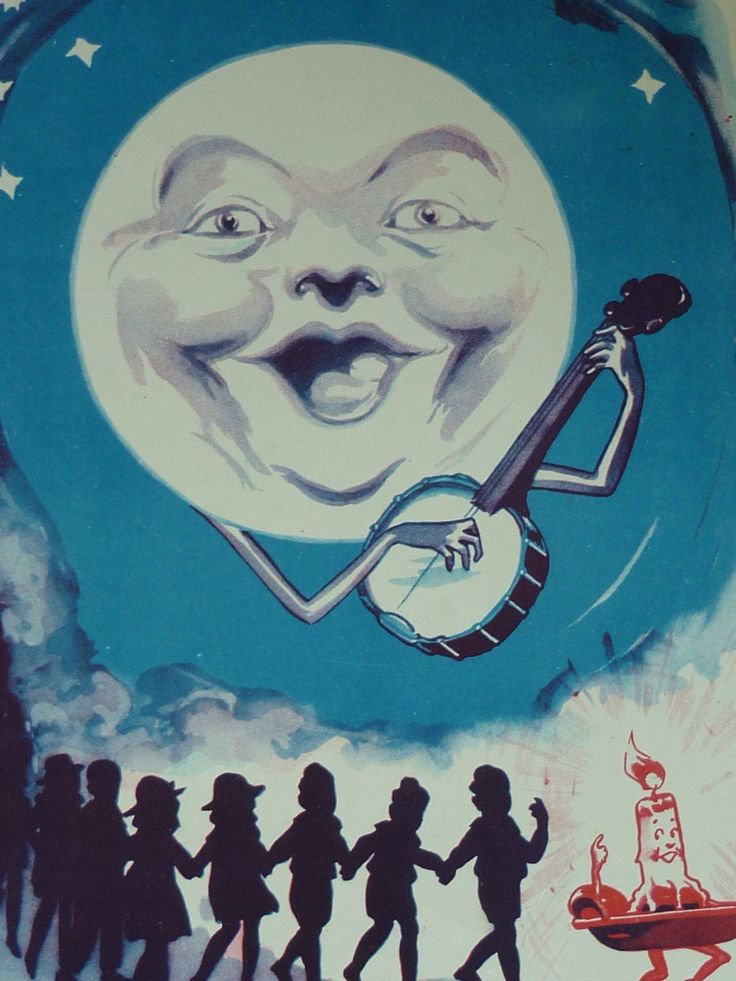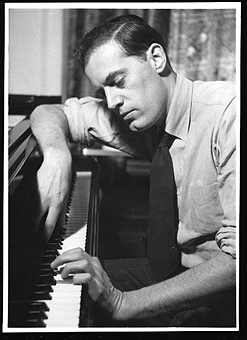
With wild hair, dove-like hands, and a faux middle-European accent (as the son of a Polish-born cabinet-maker who emigrated to and worked in London), Leopold Stokowski certainly knew how to work a crowd. But he also knew his way around a score.
He could be flamboyant in manner, controversial in his interpretations, and an easy target for parody. But he was also magnetic and, at his best, a true magician of the podium.
I hope you’ll join me today for both of my Saturday radio shows as I honor Stokowski on the anniversary of his birth. (He was born on this date in 1882). You’ll find more information at the bottom of this post.
Stokowski was a natural for the movies. He appeared in more than a dozen motion pictures and documentaries and was frequently parodied in cartoons during Hollywood’s golden age. His most enduring film has been Walt Disney’s “Fantasia,” in which he conjures flights of animated fantasy from his art deco perch, and even shakes hands with Mickey Mouse. The recordings made for the actual film pioneered multi-channel stereo.
Stokowski always did have a reputation for embracing experimental technologies to capture or even enhance the fidelity of sound. On stage and in the recording studio, he was meticulous in arranging his musicians to achieve the sonic results he desired. It was really he who established the so-called “Philadelphia sound,” with its celebrated string sonorities, which he managed to replicate to a greater or lesser extent with many of the orchestras he worked with.
The quintessential Stokowski performance often stood apart for its dramatic flair and opulence. He was often at his best in the colorful French and Russian classics, where he really knew how to make the instrumental colors pop. But he also had an insatiable curiosity and a drive to introduce new music and unusual, off-the-beaten-path works.
On the other hand, there were occasions when he could truly astonish by driving a Mozart symphony like a team of wild horses. You truly never knew what this sorcerer was going to pull out of his hat.
One should never come to a Leopold Stokowski performance with an air of complacency, even if one thinks one knows the music inside out. Equally, one should never learn a score from a Stokowski recording. The extent of his recreative powers can only be fully appreciated when listening to him once you’ve heard everyone else. (There was often a lot of creativity in his “recreativity.”)
Some of his inspirations were genius – I love when he holds the chorus at the end of his London Phase 4 recording of Ravel’s “Daphnis and Chloe” Suite No. 2 – and in case it isn’t provocative enough, he actually has the engineers thrillingly boost the sound – but even for me, his swooning additions to his 1970s recording of “Siegfried’s Funeral March” are a bridge too far. Not everything he did will delight everyone, but the guy was not afraid to take chances.
Stokowski, who trained as an organist, possessed intimate knowledge of the keyboard music of Johann Sebastian Bach. At a time when such repertoire would have been comparatively unknown to orchestra subscribers, Stoky brought Bach to the concert hall by way of his own imaginative transcriptions. Hard to believe these were considered controversial at the time.
Clearly, Stokowski was a remarkable figure for so many reasons. Among them was his astonishing longevity. At the time of his death in 1977, at the age of 95, he had signed a contract that would have kept him busy in the recording studio until he was 100. It’s astonishing that so many of his late recordings were as good as anything he had ever done.
In common with Oscar Wilde, Stoky knew there is only one thing worse than being talked about, and that is not being talked about. His ever-evolving origin story. His wealthy marriages. His celebrity love affairs. His elegant bearing and riveting showmanship. It’s not just because of Bugs Bunny that music-lovers still revere him or toss up their hands in incredulity and gasp “LEOPOLD!”
——–
Join me on KWAX Classical Oregon for “Sweetness and Light,” Stokowski conducts music by Ottokar Novacek, Paul Dukas, Fikret Amirov, Johann Sebastian Bach, Wolfgang Amadeus Mozart, and Claude Debussy, this Saturday morning at 11:00 EDT/8:00 PDT.
Then on “The Lost Chord,” Stokowski conducts Wagner in vintage recordings featuring the Philadelphia Orchestra, this Saturday evening/afternoon at 7:00 EDT/4:00 EDT.
Stream them, wherever you are, at the link!
https://kwax.uoregon.edu/
Category: Daily Dispatch
-

Leopold Stokowski on “Sweetness and Light” and “The Lost Chord”
-

Think Pink: It’s Henry Mancini’s Birthday
Think “Pink!” Once again, it’s the anniversary of Henry Mancini’s birth.
Like any great film composer, Mancini always knew just how to set the tone – as demonstrated at the links below.
Musical hook for grappling hook
Perambulating with pachyderms
Sunday night by flashlight
Early morning elegance
Gunning for Blake Edwards
“CBS Sunday Morning” salute (featuring John Williams)
Mancini medley led by the Master
Gone, but not forgotten. Thanks, Hank. You helped make it a great age. -

Mucho Dinero for Kurt Atterberg
Wallet feeling a little light on Tax Day? Why not cash in on a career in the arts!
I know, worst advice ever. But every once in a while, it’s possible to score a nice pay day.
In 1928, Swedish composer Kurt Atterberg entered his Symphony No. 6 into a contest held by the Columbia Record Company in honor of the 100th anniversary of the death of Franz Schubert. For his effort, he was awarded a first prize of $10,000. (Not bad for 1928!) The work became known as Atterberg’s “Dollar Symphony.” It remains the composer’s most-recorded piece, starting all the way back with Sir Thomas Beecham and Arturo Toscanini.
Though Atterberg was the winner of the international competition, divisional winners (by “zone”) included the now-forgotten English composer John St. Anthony Johnson, for his work “Pax Vobiscum,” and the equally-forgotten American, Charles Haubiel, for a piece called “Karma.”
Franz Schmidt was recognized in Austria, for his Symphony No. 3. Havergal Brian won second prize in England, for the first three movements of his “Gothic Symphony.”
You can find all the details here:
https://en.wikipedia.org/wiki/1928_International_Columbia_Graphophone_Competition
For a time at least, Atterberg’s “Dollar Symphony” was one of the darlings of Classical 24, a syndicated satellite service out of Minnesota used by classical music radio stations around the country to save on the cost of maintaining local announcers. However, characteristically, C24 only ever plays a single movement.
Whether it’s 1928 or 2026, money makes the world go ‘round. Ka-ching!
——-
Atterberg, Symphony No. 6 – the whole thing – on YouTube
John St. Anthony Johnson, “Pax Vobiscum”
Charles Haubiel, “Karma”
Franz Schmidt, Symphony No. 3
Havergal Brian, “Gothic Symphony” -

Timothée Chalamet and the Performing Arts: No Such Thing as Bad Publicity?
Trolling Timothée Chalamet for his blithe dismissal of opera and ballet as no longer relevant is so last month. But the media is not done with it. This morning a friend texted me a link to an article from the BBC in which Sir Alex Beard, chief executive of the Royal Ballet and Opera, thanks Chalamet for actually boosting ticket sales. Of course he did! Because this tempest in a teapot actually put opera and ballet in the news. And there’s no such thing as bad publicity.
In case, like most of the world, you’ve already moved on, Chalamet’s misstep occurred during an exchange with Matthew McConaughey about the preservation of cinema, which took place at the University of Texas before a live audience. “I don’t want to be working in ballet or opera, or you know, things where it’s like, ‘Hey, keep this thing alive,” Chalamet let drop, presumably to underline the comparative vitality and relevance of film. Carried away by his own eloquence, he continued, “‘… even though, like, no one cares about this anymore.’”
In all likelihood immediately sensing the remark was a little extreme (his own family includes three generations of ballet dancers), he quickly added, “All respect to the ballet and opera people out there.” Then he actually made it worse with an aside: “I just lost 14 cents in viewership.” Ouch.
Not the end of the world, of course, but in the age of social media, where sharpened knives are no further away than a cell phone or a computer keyboard and everyone is looking for a chance to be offended, Chalamet’s attempts to come across as a regular, relatable dude were received as fightin’ words.
It’s not hard to understand why they would get a rise out of anyone in the arts – who wants to be told that their life’s passion is meaningless? – but the wider backlash irrupted into a dogpile. Yeah, he’s an ignorant jackass, but so what? That’s democracy.
Widespread indignation, naturally, brings out the vultures, carpetbaggers, and trolls, so that following the initial salvo of outrage came all the reactionary posts, articles, and cartoons lampooning everyone for pearl-clutching by asking the rhetorical question, when was the last time any of you have been to an opera or a ballet?
For myself, I can say truthfully that I’ve been to more performing arts events in the past few years than I ever have. But I realize I am not widely representative of John Q. Public.
Actually, some of the arts organizations themselves did some of the best trolling. I’m not sure that any of them outdid Seattle Opera, which immediately responded with a 14-percent discount on tickets when using the promotional code TIMOTHEE. That was savage
.
From a certain point of view, perhaps counterintuitively, the Chalamet kerfuffle is proof that the arts are still powerful. The problem is not relevance, as art will always be relevant; it’s lack of exposure.
Time was when kids were exposed to the arts at school. At home, they encountered Arthur Fiedler, Yo-Yo Ma, and the Metropolitan Opera on PBS. Pavarotti and Virgil Fox were on talk shows. Rudolf Firkušný and Manuel Barrueco did television commercials. Samuel Ramey was on “Sesame Street,” singing about the letter “L.” Bugs Bunny cross-dressed to Wagner. Danny Kaye, in front of an orchestra, and Victor Borge, at the piano, made our parents laugh, and us too. Classical music was still a part of the conversation.
But somewhere along the way, some fat cats in a boardroom somewhere began to wonder why in the world the media was wasting valuable resources on all this long-hair stuff, when it could be maximizing profits by dumbing down and squeezing juice from the wallets of the lowest common denominator.
In the meantime, there was a longstanding tradition among populist entertainers of mocking the arts. So you have The Three Stooges flipping grapes and bananas into opera singers’ mouths. Not that I don’t love that stuff. Anything with staid traditions and certain protocols is easy to ridicule. Comedy mocks the establishment. It punches up, seldom down. To really enjoy music, you have to sit still and pay attention and actually listen to it. That’s just the way music and theater work. But I admit, it can seem ridiculous to an outsider, especially to one with no experience of it.
That said, the arts are no more “elitist” than rock concerts or sporting events, and they are often a lot less expensive. What’s more, they lend just as much to the economy, as people who attend concerts have to park, they have to eat, they like to shop, and since concerts frequently take place in cities, ticket-holders often come to town early and take in other attractions. A lot of businesses benefit. Also, nobody drinks too much and there’s comparatively little property damage afterward.
I find, once the novelty wears off, that the average sporting event has stretches more boring than anything I’ve ever endured in an opera house. Presumably the fans hang in there for the high points – the adrenaline rush of a touchdown or a homerun, the thrill of a close contest as the clock runs down, the euphoria of victory, the camaraderie of a roaring crowd.
We experience similar sensations in the performing arts: the emotional impact of an acrobatic aria, the grace and physicality of ballet, the spinetingling climax of a grand romantic symphony. Just like with a ballgame, not every experience is a world-beater, but when it’s at its best, there are moments you will carry with you for the rest of your life.
Moreover, it reminds us of the necessity of beauty and keeps us in touch with our shared humanity. That somebody born 150 years ago and lived their life in a foreign land without what we take for modern conveniences can continue to communicate with us, and even move us, in a language that transcends discernible words is miraculous.
If an orchestra plays and no one is there to hear it, does it still make music? Whether or not Chalamet really meant what he said, the performing arts endure for those of us who will have them. The public just needs to be reminded that they’re there. So yes, thank you, Timothée Chalamet.
Tag Cloud
Aaron Copland (92) Beethoven (95) Composer (114) Film Music (123) Film Score (143) Film Scores (255) Halloween (94) John Williams (187) KWAX (229) Leonard Bernstein (101) Marlboro Music Festival (125) Movie Music (138) Opera (202) Philadelphia Orchestra (89) Picture Perfect (174) Princeton Symphony Orchestra (106) Radio (87) Ralph Vaughan Williams (85) Ross Amico (244) Roy's Tie-Dye Sci-Fi Corner (290) The Classical Network (101) The Lost Chord (268) Vaughan Williams (103) WPRB (396) WWFM (881)