To a great many, Memorial Day is the unofficial start of summer, a time for picnics and trips to the shore, for Hollywood to flood the multiplexes with soulless blockbusters, a signifier of the end of school, and the beginning of three long, lazy months of way too much daylight.
But it didn’t always bear those associations. The precursor of Memorial Day was Decoration Day, first widely observed in 1868, to honor and remember those who died in the Civil War. It was a time for decorating graves, making solemn speeches, and marching in parades. These customs metamorphosed to the point where, after World War I, Memorial Day was seen as an occasion to honor those who died in ALL American wars.
Regardless of how one may perceive armed conflict, of whether any given war may be called just or unjust, it is not war itself or conflict in general that is being celebrated. Rather, it is the sacrifice of those who died in defense of a larger cause, and ostensibly that cause has been for the common good.
One would think, were one an idealist, that by this stage of our collective development, when any disruption in the global fabric obviously effects all of us, that wars would be considered obsolete. But sadly, human nature being what it is, there will probably always be reasons to remember.
This week on “The Lost Chord,” we’ll salute those who made the ultimate sacrifice, by listening to three works commemorating the dead of World War II, including “For the Fallen,” a berceuse for orchestra by Bernard Herrmann; Aaron Copland’s Violin Sonata, dedicated to Lt. Larry H. Dunham, who was killed in the Pacific in 1943; and the peace cantata “A Time for Remembrance,” by John Duffy.
Duffy himself was a World War II veteran, who lied about his age when enlisting. He became part of the Amphibious Scouts and Raiders, forerunners to the Navy SEALs, before deploying on the USS Hopping, a destroyer escort in the Pacific. His duties included detonating Japanese mines by shooting them from ship deck. When his ship took fire from shore batteries at Okinawa, the sailor standing next to him was killed. Duffy had to stand guard over the dead man’s body until burial at sea in the morning. That night watch determined the course of his life. “Since our time is so fleeting and unpredictable,” he later commented, “I knew I had to dedicate my life to music.”
War is no picnic. I hope you’ll join me for “Requiescat in pace,” on “The Lost Chord,” now in syndication on KWAX Classical Oregon.
——–
Clip and save the start times for all three of my recorded shows:
PICTURE PERFECT, the movie music show – Friday at 8:00 PM EDT/5:00 PM PDT
SWEETNESS AND LIGHT, the light music program – Saturday at 11:00 AM EDT/8:00 AM PDT
THE LOST CHORD, unusual and neglected rep – Saturday at 7:00 PM EDT/4:00 PM PDT
Stream them, wherever you are, at the link!
https://kwax.uoregon.edu
——–
John Duffy on his war experiences and his decision to become a composer:
Category: Daily Dispatch
-

No Picnic: “Requiescat in pace” on “The Lost Chord”
-

Memorial Day Picnic on “Sweetness and Light”
For many, Memorial Day marks the unofficial start of summer, as people take advantage of the three-day weekend, and the hopefully mild weather, to celebrate.
Of course, Memorial Day itself is a rather solemn holiday, as we’re meant to honor the sacrifice of those who laid down their lives in defense of our country.
That said, this morning on “Sweetness and Light,” since there’s little “sweet” or “light” about war, I figured rather we’d take the hour to enjoy a little Memorial Day picnic, if you will.
I hope you’ll join me for an outdoor overture, a barbecue divertimento, a carousel waltz, some gazebo dances, a pickle-and-pepper rag, a teddy bear’s picnic, and, yes, even a musical moment of reflection for the fallen.
The first of the summer’s patriotic holidays is upon us. Wrap yourself in the flag and everything else in bacon, this morning on “Sweetness and Light.” The three-legged races and pie-eating contests commence at 11:00 EDT/8:00 EDT, exclusively on KWAX Classical Oregon!
Stream it, wherever you are, at the link:
https://kwax.uoregon.edu/ -
Valor and Sacrifice for Memorial Day Weekend on “Picture Perfect”
This week on “Picture Perfect,” it’s all about valor and sacrifice, as we anticipate Memorial Day.
Memorial Day has its roots in Decoration Day, established in 1868 to honor the Civil War dead. We’ll hear music from “Glory” (1989), inspired by the extraordinary courage of Colonel Robert Gould Shaw’s 54th Massachusetts Voluntary Regiment, an all African American outfit that distinguished itself in an impossible assault on Fort Wagner, near Charleston, South Carolina. The outstanding cast features Morgan Freeman, Matthew Broderick, and Cary Elwes, with an Oscar-winning performance by Denzel Washington. The poignant score is by James Horner.
Gary Cooper had one of his best roles as “Sergeant York” (1941), based on the true story of Alvin C. York, who went from backwoods hell-raiser to devout pacifist. After a period of soul-searching, York was able to reconcile his strong moral convictions with the unfortunate reality that sometimes it really is necessary to fight. He went on to distinguish himself on the battlefield and become one of the most-decorated soldiers of the First World War. The folksy score, evocative of York’s Tennessee roots, is by Max Steiner.
In director Michael Cimino’s “The Deer Hunter” (1978), three men from a small Pennsylvania steel town serve in Vietnam, then struggle to cope with the war’s psychological impact. The harrowing film, especially memorable for its scenes of Russian roulette in a P.O.W. camp, won five Academy Awards, including Best Picture and Best Director. Christopher Walken was honored with the award for Best Supporting Actor. Stanley Myers wrote the music. We’ll hear his famous “Cavatina,” performed by guitarist John Williams, not to be confused with…
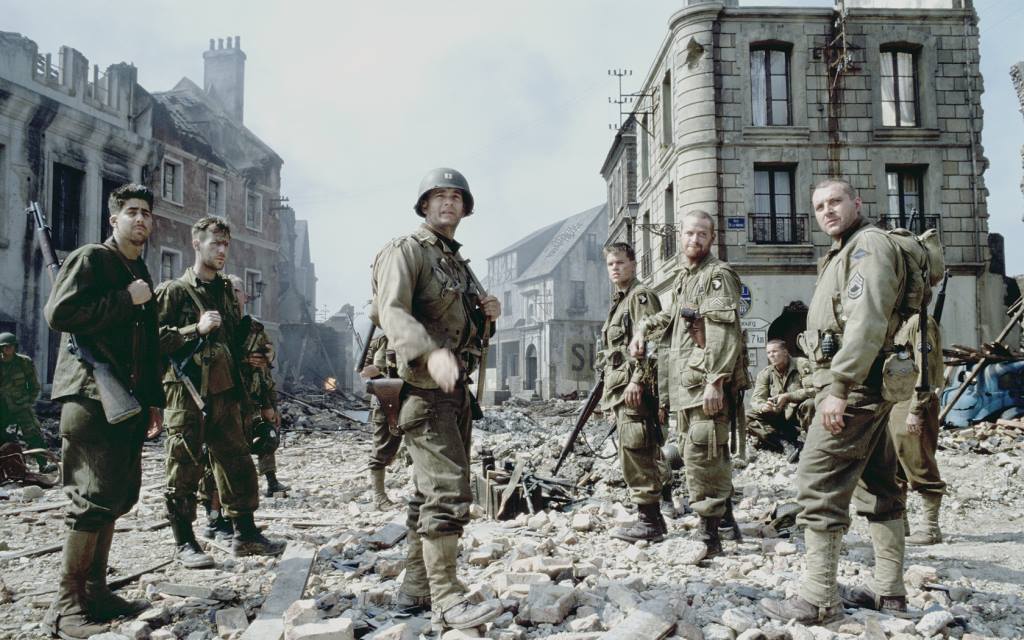
… composer John Williams, who provided one of his sparser scores for “Saving Private Ryan” (1998). Steven Spielberg’s war-is-hell narrative yet manages to honor the sacrifice of the fighting men of World War II. The opening – a sustained “you-are-there” battle sequence on Omaha Beach – is unforgettable. Remarkably, it is presented wholly without music, Williams preferring to allow the tension of the mise-en-scène to speak for itself. Spielberg picked up his second Academy Award for Best Director. The film, however, inexplicably, lost to “Shakespeare in Love.”
I hope you’ll join me for music from these cinematic meditations on the costs and consequences of war, as we honor the valor and sacrifice of soldiers who died while serving in America’s armed forces, on “Picture Perfect,” music for the movies, now in syndication on KWAX Classical Oregon!
——-
Clip and save the start times for all three of my recorded shows:
PICTURE PERFECT, the movie music show – Friday at 8:00 PM EDT/5:00 PM PDT
SWEETNESS AND LIGHT, the light music program – Saturday at 11:00 AM EDT/8:00 AM PDT
THE LOST CHORD, unusual and neglected rep – Saturday at 7:00 PM EDT/4:00 PM PDT
Stream them, wherever you are, at the link!
https://kwax.uoregon.edu -
For the Second Time This Month, It’s “Mother’s Day”
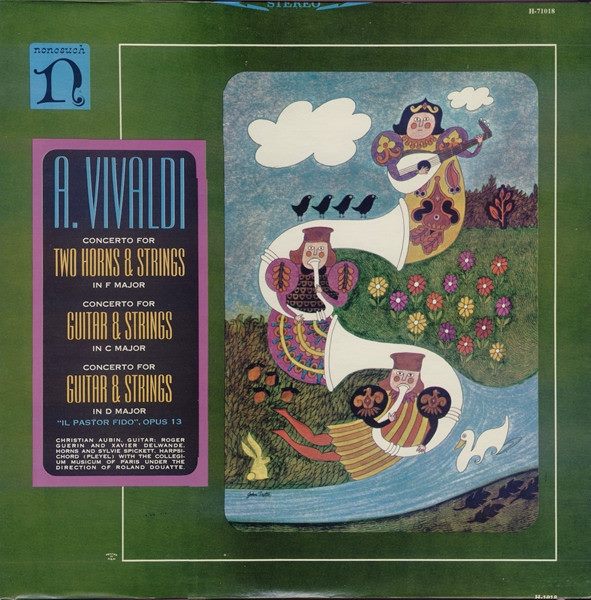
One of my favorite Easter memories is of when I came downstairs and found a couple of Vivaldi LPs next to my basket. Now, Vivaldi isn’t even remotely my favorite composer, but I thought that was just the greatest thing ever. I listened to those records with every bit as much pleasure as I experienced when I devoured my chocolate rabbit (and of course they’ve lasted a great deal longer).
That’s the kind of thoughtful gesture my mom would make. She always started with something nice and then took it to the next level. Mom was fond of Vivaldi’s Guitar Concerto in D. We weren’t a “classical music” family – I was the first to fall under the spell – but Mom caught on fast. She liked Vivaldi and Bach and jogged to Sousa marches.
That’s not to say she didn’t always have an appreciation for it. She took me to plenty of piano and chamber recitals after she realized I had been bitten by the bug, and we attended every Gilbert & Sullivan production in the area. She encouraged me in my record collecting. I wonder if she ever thought, “My god, what have I done?”
In her last few years, Mom became interested in learning more about opera, after I had gotten her a nice compilation of arias for a gift. I could see she was a little puzzled by it at first, though Mom being Mom, she never would have expressed anything other than gratitude. But she actually grew to really enjoy it.
A number of years earlier, she had attended part of a dress rehearsal for “The Marriage of Figaro” I had assistant stage managed with what was then the Opera Company of Philadelphia. It made her proud to see me in the wings with my headset, doing something I enjoyed (which was mostly cueing singers when it was time for them to go on and signaling stage hands when to smash flower pots). There was a lot of funny business on stage, though no supertitles until the actual performances. But it was pure farce, with powdered wigs flying around and people diving under furniture. I think she probably was already interested in seeing a complete opera then. I don’t know why my parents couldn’t make that one – they lived only about an hour and a half away – since that would have been pretty much ideal.
Instead, I wound up taking her to a threadbare production of Boito’s “Mefistofele” at the New York City Opera. It was essentially the same production Norman Treigle had triumphed in, in the early 1970s, but 20 years later it was looking kind of shabby – which surprised me, since everything I had seen at City Opera up until that point (Korngold’s “Die tote Stadt,” Busoni’s “Doktor Faust,” Hindemith’s “Mathis der Maler,” Tippett’s “The Midsummer Marriage”) had been so good. I should have just taken her across the plaza to the Met for a buffo romp. It’s one of my regrets that I did not. Hopefully they’ve got “Figaro” in heaven.
Our last concert together featured the Chamber Orchestra of Philadelphia in Mozart’s final three symphonies.
Happy birthday, Mom. Thanks for everything.https://www.youtube.com/watch?v=rvHOGyzqvVc0
-
Unexpected Piratical Interlude in Otherwise Bland Bruch Symphony
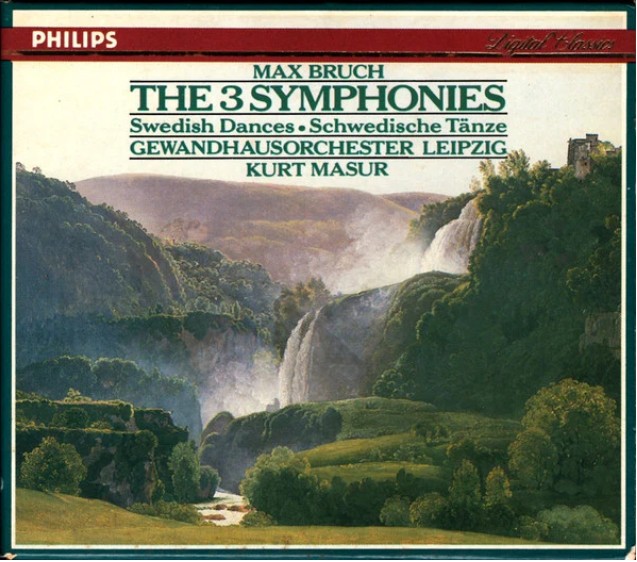
On Mondays, I deliver and sort fruits and vegetables from a nearby farm at the local wildlife rescue center. This gives me some substantial time in the car (I tend to pile on a lot of other errands), so I am always grabbing random CDs from my library to keep me company on the road. This week, I happened to espy a boxed set of Max Bruch’s symphonies sitting in the middle of a stack, waiting to be shelved, so on an impulse I grabbed it.
Too often, I gravitate toward the later Romantics or 20th century music. Then when I do radio, I’ll look back to the 18th century to provide contrast. So the middle-Romantics, those of the Mendelssohn-Schumann era, often fall through the cracks – even though, when I do listen to them, their works often provide me with much pleasure. It’s just that when I’m programming, in leaping back and forth from Franz Schreker to Johann Friedrich Fasch, I tend to forget all about them.
But when the temperatures rise, it’s an agreeable time to enjoy the modest charms of the 19th century, before seething angst became such an overriding force.
Max Bruch is a very interesting character, in that he was born in 1838, making him a contemporary of Johannes Brahms, yet his music often impresses me as old-fashioned, even when compared to that of his traditional-minded friend. Then Bruch went and outlived Brahms by nearly a quarter century. So this guy who wrote these anodyne, at times Mendelssohnian, symphonies, died in 1920. It’s hard to imagine Bruch in the era of “The Rite of Spring.” Debussy died two years before he did!
Not that everything he wrote sounds like it was composed in 1830. The two oratorios of his I am familiar with (“Odysseus” and “Moses”) push a little more into the future. If I ever want to knock anyone back on their heels, I will play his Suite No. 3 for Organ and Orchestra – written in 1904! – for Good Friday. (Bruch reworked material from the piece into his Concerto for Two Pianos in 1912.) And of course the Violin Concerto No. 1, composed in 1866, is timeless.
The symphonies are often pleasant enough, and I have programmed them occasionally, especially during those years when I was looking to fill time during my six-hour morning air shifts, but none of them are truly memorable. It’s hard to believe it’s the same composer who wrote the violin concertos, the “Scottish Fantasy,” and “Kol Nidrei.” Minus the inherent drama between solo instrument and orchestra, the intensity and inspiration lose their focus. That’s not to say these aren’t enjoyable works, but they are not, by any stretch of the imagination, neglected masterpieces. I would rather look to somebody like Schubert contemporary Franz Berwald for underplayed, truly rewarding symphonies of the 1840s.
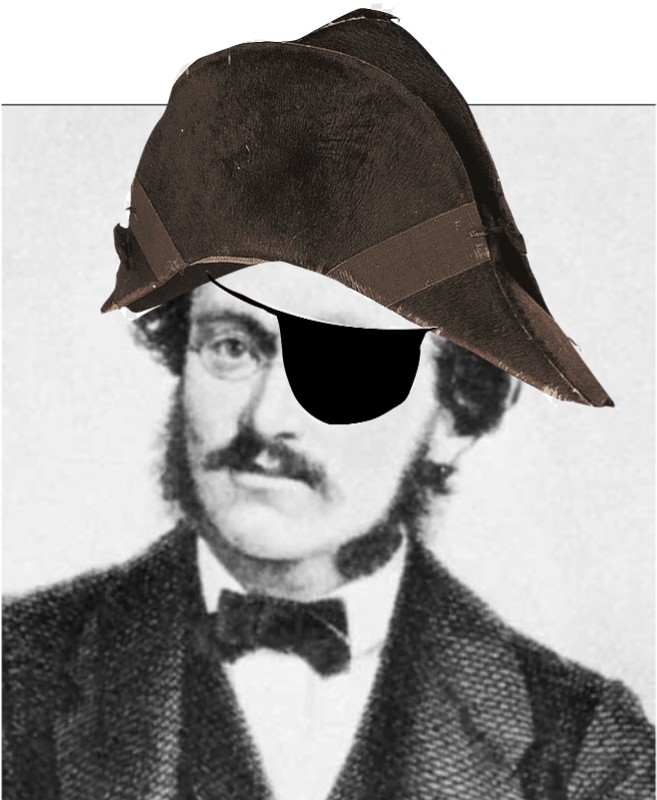
I would probably have returned to the pile by now if not for the scherzo of the Symphony No. 1, which is a true earworm. Yes, there’s lots of Mendelssohn fairy music in it, but I’ll sell my mother for a case of rum if, once it gets rolling (starting at around 1:30), it doesn’t sound like it could have been written for a classic pirate movie. How much more enjoyable the Jack Sparrow movies might have been had they been scored in this fashion!
Kurt Masur and the Leipzig Gewandhaus Orchestra play this repertoire as to the manner born, about as idiomatically as one could expect, but some recorded competitors (there aren’t many) are said to apply a lighter touch. I don’t know. I’m happy with what I’ve got. Masur conducts my set of the complete works for violin and orchestra as well, and he does a fabulous job.
Here, despite the competency of the performances, and the fact that Bruch hit the target square several times during the course of his long career, I sincerely doubt there is any more treasure to be trawled from the Davy Jones’ locker of the composer’s symphonies. That scherzo from the First makes me want to grab my saber, though!
——
Haha! I see Bruch composed some actual pirate music, “Seeräuberlied” – “Song of the Pirates” – as the first of his “Three New Male Choruses,” Op. 68. Alas, if it’s been recorded, it doesn’t appear to have been posted on YouTube.
Tag Cloud
Aaron Copland (94) Beethoven (95) Composer (114) Film Music (149) Film Score (143) Film Scores (255) Halloween (98) John Williams (197) KWAX (232) Leonard Bernstein (105) Marlboro Music Festival (125) Movie Music (164) Mozart (91) Opera (215) Philadelphia Orchestra (90) Picture Perfect (174) Princeton Symphony Orchestra (110) Radio (90) Ross Amico (244) Roy's Tie-Dye Sci-Fi Corner (290) The Classical Network (101) The Lost Chord (269) Vaughan Williams (107) WPRB (397) WWFM (881)